The truth is erasure.

Saturday morning, I chip at my day’s list, persistent: my thousand creative words, email that shouldn’t linger, the house chores of wood and compost. On the nearby trails, I ski and later drink coffee with my beloveds, and we ponder construction that will tie up this town, Hardwick, until the sundress-wearing season. At home again, I finish the 2025 taxes, stow things in boxes, preparing for a carpenter who will remove a kitchen wall and put a window in my kitchen. This plan I hatched while I was marooned in my house for months, struggling through chemo. Now, this winter, I wondered, Am I mad? Will I still proceed? But opening the heart of my house to the view of the village seems a hopeful act, a kind of creative resistance against dismal five-year survival statistics, an act of beauty in contrast to the darkening world.

I abruptly need the sky and the muddy earth beneath my boots. I consider phoning this friend or that friend to walk with me, but I doubt anyone will jump at the sudden request. On this ridgeline road, I see a friend who quickens my blood. We walk and talk for bit about the things that nourish my winter-worn soul: about the unexpected in our lives, about writing and doubt, an April event of poetry and art and food. About what Bashō called “the journey itself is home.”

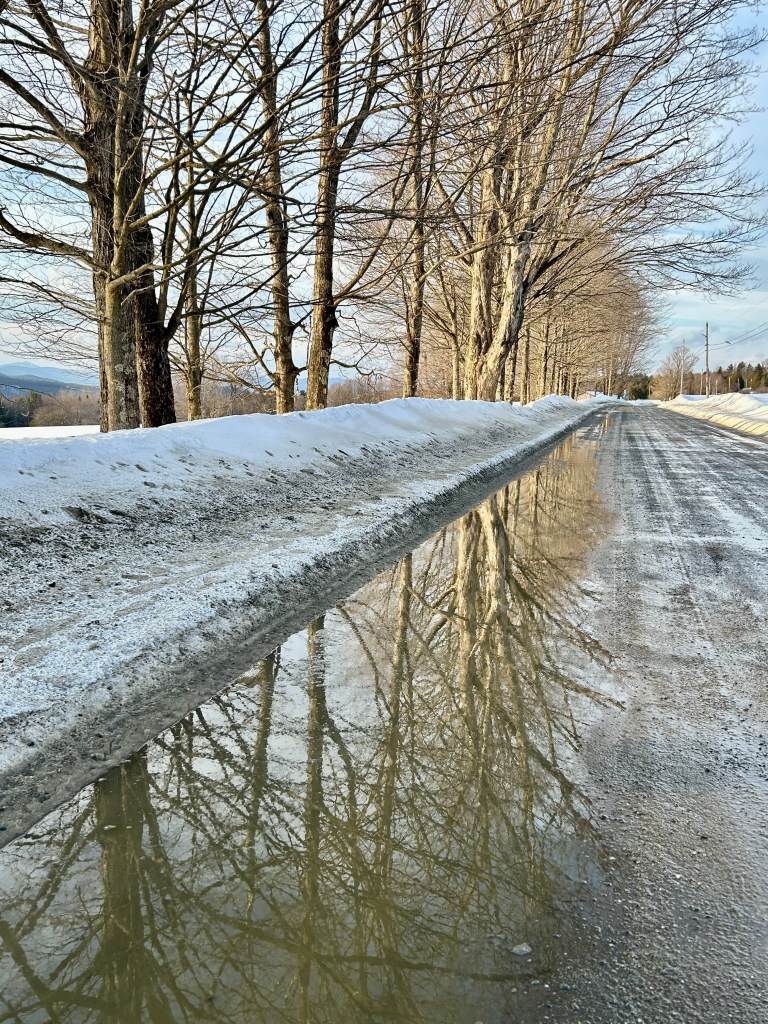
She heads home, and I keep on along the maples. All winter I’ve walked here. One frigid January, I’d gone too far and considered flagging a stranger in a car for a ride, but I didn’t. I kept on, as we all do. An eagle spreads its wings over a hayfield then disappears over a treeline. Blackbirds sing. A skunk waddles along the road. The snowbanks are above my head. The creature and I consider each other. Then, on our respective sides of the road, we each ease along. When I look back, the skunk is hurrying along, too.

Another spring. So many years I’ve lived through a New England winter, so many springs, and yet each March arrives as a surprise, a fresh reckoning. The wind smells of the opening earth. Twilight will soon be nestling in, and I’ll be home again, feeding my cats and the woodstove, eating a blood orange. A friend plans to visit, and we’ll keep each other company. Better to think of the days without names or numbers. Wiser to place these with a friend’s name, with skunk, puddle, blood moon.

You ask the sea, what can you promise me
and it speaks the truth; it says erasure.

… Nothing can be forced to live.
The earth is like a drug now, like a voice from far away,
a lover or master. In the end, you do what the voice tells you.
It says forget, you forget.
It says begin again, you begin again. ~ Louise Glück
The Goddamn Gray, the Brilliance of Language.

A year ago, my daughter was driving me to the local ER, yet again, under the frigid winter sky. Wordless, I leaned my head against the side window of her Subaru, staring at the faraway pricks of stars vanishing and reappearing among the clouds. In the darkness, I fixated on one thought—the white hospital bed, the clear liquid drugs that would make the pain cease—and held to that, my lifeline. Cancer-and-chemo, in its infinite complexity, is a monotone landscape. In all those months, my existence was the blackness of pain, the temporary light of relief-from-pain, the crimson drug injected into my veins. Occasionally, a cardinal at a feeder, blood oranges, and then I couldn’t eat those, either, and I remained alive on Saltines and water.

I keep thinking of those below zero nights as I drive this night to the opposite end of town. There, with a friend in a place where I’ve never been, we eat drunken noodles and green curry, and then drive again through the darkness and the drifting snow that’s no threat, simply prettiness. At the Vermont Studio Center for the Arts, we settle into the dining hall with the residents. We’re greeted warmly, and the room is scented with the lingering remains of a savory dinner, of coffee and wine and the fragrance of flowers likely from the tables freshly scrubbed. This is a dear place, where I’ve been lucky to stay and work hard, meet friends and share stories about creativity, its hardness and joy.

Rigoberto González reads magnificently, his words, reminding me of when I was a teenager reading James Joyce for the first time, thinking yes, yes, this is what writing can do, push us into a place where we glimpse the world for a moment in all its shimmering and confounding complexity, its immense sorrow, utter fun, or the way a hand plucks a pebble from a river and holds it dripping and glistening to the sunlight.

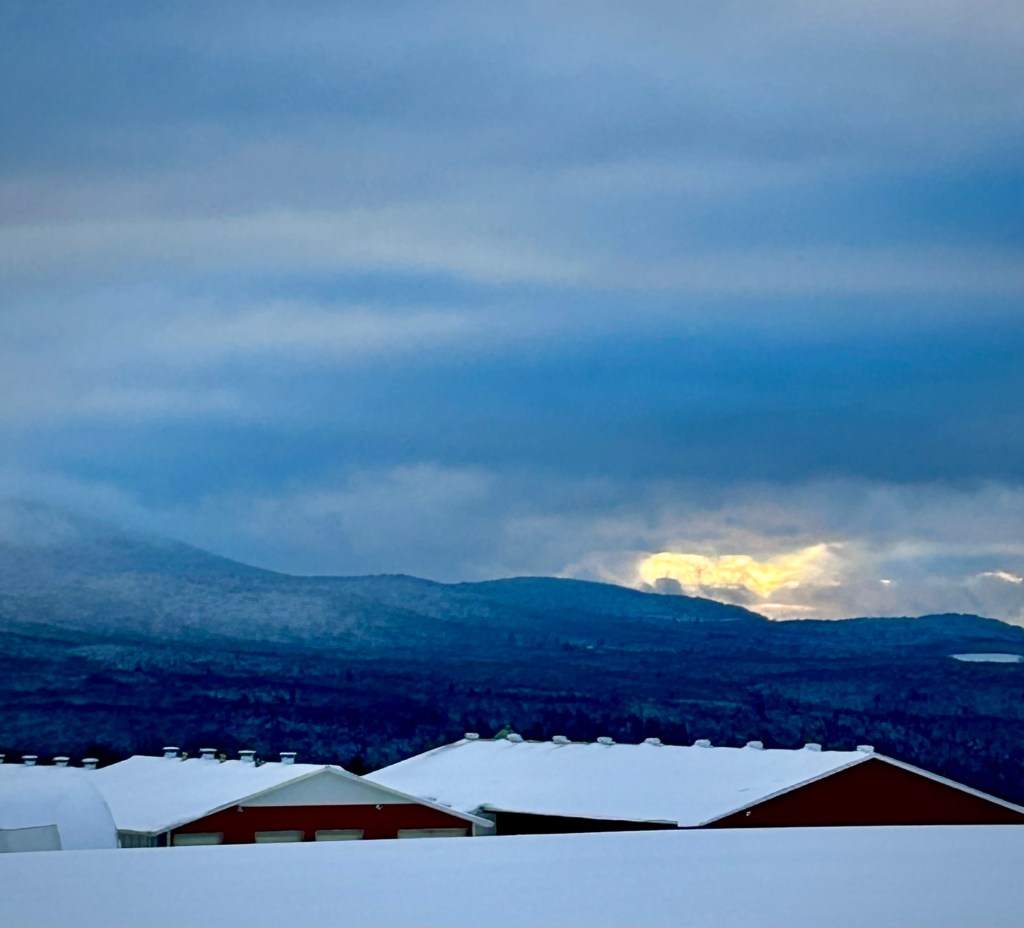
At home, I stand in the darkness that is sodden with cold, a forerunner of the mighty freeze rushing this way. The crescent moon pushes against the clouds. In those underworld months, the goddamn gray occasionally scattershot with goldfinches exploding from bare branches, my fate might easily have veered another path. A storm and brutal cold loom over this nation submerged beneath political nefariousness.

This terrible disease, this exacting instructor, taught me brutal lessons. Among these, savor these draughts of warmth, recognize heart. Know this value. Do not disparage.

“Every person with a body should be given a guide to dying as soon as they are born.”
― Anne Boyer

Brief Thaw.

In the January thaw, a wind — balmy for winter — curls around my house, and all night long the chimes hung on the back porch jangle their melody. The chimes are the song of this house, in all the seasons of this northern climate.

Despite the thaw, the hours of these days are yet short. I wake ages before light bleeds over the horizon, my cats ready for breakfast, the woodstove in need of feeding, myself hungry for hot coffee and work. I gather what I can of my energy and cup this in my hands, gauging how the day lies ahead. Not so long ago, I could work, and work, and work. Offer me twenty dollars for a quick edit, and I’d jump. Post-cancer, post-chemo, not so.

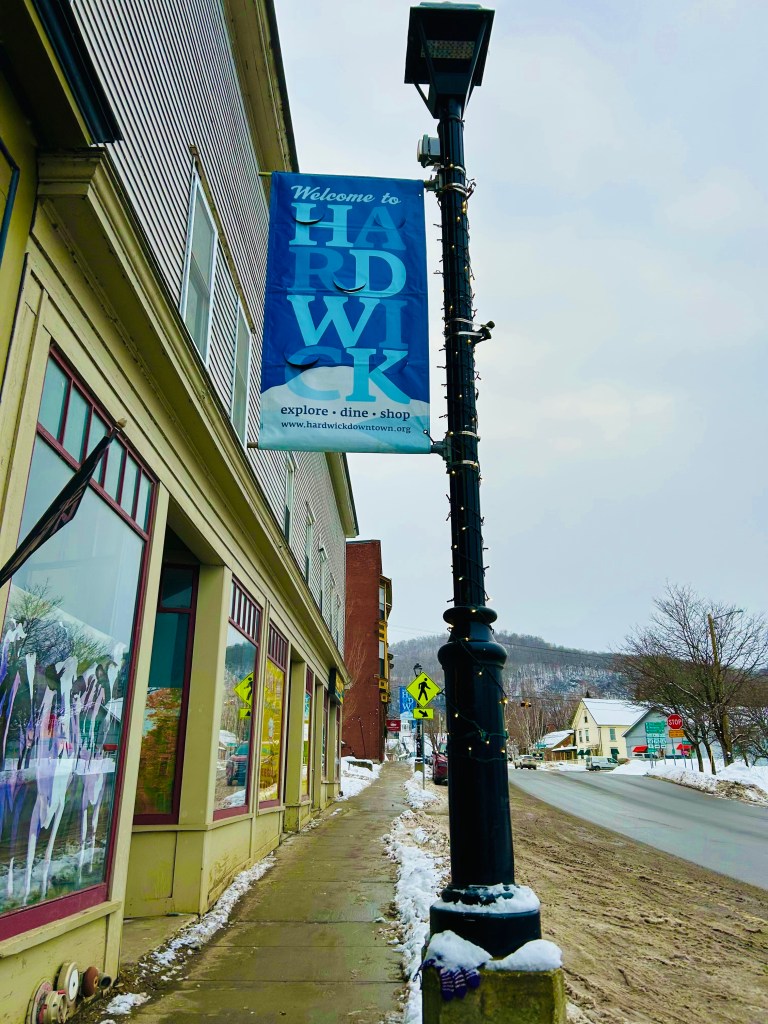
Walking downtown, I pass the coffee shop. Two friends at a window table wave at me to come in, come in. Inside, I shrug off my coat that’s in need of washing and set my backpack on the floor. We talk books and woodpile status, politics and the amnesia of American consciousness. Above the coffee shop is the yoga studio with the gleaming maple floors, where I stand at the window, watching traffic ebb into the diner parking lot. The river bends through the village here, heads westward beneath the cover of ice towards Lake Champlain, whose waters flow north. In the alley between this brick building and the next, the wind cuts upward. Snow drifts towards the sky.

There are days when I think that everything I know is upended. That snow has no mind for gravity.

Before dawn, I carry out ashes and stand in the dark, icicles dripping, cold breath from the snow grabbing my wrists. In the thaw, the earth smells of rotting compost, woodsmoke from my house and my neighbors’, the assured promise of spring, yet far in the offing.

… I work with the consciousness of death at my shoulder, not constantly, but often enough to leave a mark upon all my life’s decisions and actions. And it does not matter whether this death comes next week or thirty years from now, this consciousness gives my life another breadth… — Andre Lorde

Keep Reaching.

Dark as a pocket or the inner chambers of my heart — so goes these December nights. The nights descend earlier, more afternoon than evening. I randomly meet friends on Main Street with the darkness kicking around my ankles. We step into a community center, pulling off our coats and hats and talking about random things — the price of gas, the upcoming holidays. For those who don’t live in a northern climate, a public building in Vermont sometimes has a curtain just the inside the door to stave off winter’s wind and snow. I push aside the curtain, and we step into a well-lit room.

It’s a simple/not simple thing. We eat bowls of hot soup and chunks of fresh bread at a long narrow table. A couple I’ve never met sits beside me with a brand-new infant, gustily sucking. I refrain from bending my head and breathing in the child’s milky scent.

Darkness presses against the windows as we talk and keep talking, and eventually the three of us are all leaning our elbows on the table, our heads propped on hands, spent. People appear, say hello, offer a hug, disappear, and still we’re talking about what might happen with the schools and our old parents and the persistence of memory from early childhood. How do we reconcile our stories? Escape or rewrite our stories?

Eventually, sodden with sleepiness, I pull on my boots and step out. The weather has turned, and the sidewalk is slick. I head out of the village. The wet air is not so much clean but fresh, a mystery of fomenting things both lovely and fearsome. But for now at least, I carry these gems of companionship in my heart. A pleasure, a warm joy.

…. and a poem from a friend….

Keep Reaching

The trick is to keep reaching

for the light you will never touch,

and to be nourished by the stretch

toward impossible things.

The trick is to bloom where you are,

not calling it a failure because

you wanted a different outcome.

Live each day devoted to awe, 

so that when a monarch lands 

on the tip of a coneflower, seeming 

to swell with that sudden infusion 

of sweetness, you don’t miss it. 

So that, while you watch, a pair 

of hard-won wings seems to open 

and close, and open again in you.~ James Crews

Wildfire Smoke.

Are these days hot or chilly? All afternoon, working on my back porch, I put on and take off my sweatshirt, step into the sun to make phone calls, lean against the cool clapboards with my laptop. For days now, the air has been smoky with wildfires far away in the north. In the mornings, I wake coughing, wondering how people are breathing, so much nearer these fires.

August, and the raucous summer abruptly quiets. Walking in the woods with a friend, she notes a bird singing — wood or hermit thrush? — but all else is quiet save for our conversation. I’ve been here before, the pause between high summer and early autumn, when the swimming’s still good and the sunset lingers long after supper, but the mornings are filled with cool mist, and the shadows are not warm.

In past years, the faintest shadow of Long Winter has filled me with dread. Again, I will lose my tan, carry my laptop to the kitchen table, maybe go mad talking to my cats. Or not. Twice a day, I water the nasturtiums hanging in baskets on my back porch, listen to the neighbor boys biking. These days are yet long.

From Sunday poetry readings at the local arts center…

Wavering

What makes you think you’re so different? 
That was my weaker self hanging around outside the door. 
The voices over the telephone were accusing, too. 
“Must you always be you?” (They had the advantage, 
More bold without faces. They swirled a few ice cubes 
With a suggestive pause.) For a moment 
I took my heart out and held it in my hands. 
Then I put it back. This is how it is in a competitive world. 
But, I will not eat my own heart. I will not.

~ Ruth Stone

Keeping Company. Neighbors.

A friend mentions her mother has an art opening that evening in the sprawling building that was once the village inn. We’ve just returned from a walk and stand in a field where, 25 years ago, she sold homemade pies and I sold maple syrup. We each held a nursing baby, in those years.

Her mother lives beside me, so about eight o’clock, the time I’m usually brushing teeth or walking around the house putting water glasses and cat bowls in the kitchen sink, I pull on a sweater (hello, Vermont July) and walk downtown. Monday, hardly anyone is out this evening, as the sunset does its peach-and-rose watercolor magic along the mountains.

I’m amazed, again, at my neighbor’s talent, her unique vision a mixture of O’Keeffe and Cézanne. I stand holding her hand and talking, this woman who lived plenty of lives before I met her. When I weed my front yard garden, she’ll sometimes lean out of her door and holler, “Hello, neighbor!” her hair in plastic curlers.

I walk the long way home through neighborhoods where the children have been called in for the night. Stray teenagers are out; no one else. There’s no glimmer of moon, but the stars are winking into their nightly places. I take an extra loop, and the darkness folds around me.

I’m in this odd place where people I hardly know touch my shoulders, rub my growing-back hair, as if to confirm that, yes, I’m alive. Or I’m looked at silently, uncertainly. The cancer’s made me rougher and gentler. Disinterested in cattiness, willing to visit a neighbor when my body aches to lie down.

At home, I linger on the house steps, the tree frogs serenading. These summer days are long, long, with some hours of work. More than anything, I’m determined to finish a draft of this third novel, determined to sell this book, too. Stubborn my mother would tell me. You’re so stubborn. By now it’s dark, the scattered village lights cupped in the town’s narrow valley, the Milky Way a silent celestial river. My mother despised my stubbornness, this trait that mirrored her. Or maybe I’m completely wrong about that.

I water the hanging plants, and yet I’m not willing to go in for the night, lie down and read, sleep. Last November, I was sitting on these steps in the darkness, the news of having cancer fresh and raw. A different neighbor appeared and sat with me. We talked about opioids and THC. She told me about her husband’s death. In the chilly November, we sat in our coats, a quiet between us, she keeping me company.

“The purpose of poetry is to remind us
how difficult it is to remain just one person,
for our house is open, there are no keys in the doors, 
and invisible guests come in and out at will.”
― Czesław Miłosz