Pieces of Writing, Things of Life

Twice this summer, as I’ve driven along the Vermont interstate, a blue pickup has swung out in front of me at the same exit, a man at the wheel, but what caught my attention both times was the Greek omega symbol on its side, leering up at me like some distant memory of high school science. As a writer, I can’t help but think, That needs to wind into my book.

One keen advantage of writing is that, while I’m often half-blind, at times I’m tuned in razor-sharp, wondering in what way the universe is patterning around me, with this truck and this omega so near I could stretch out my arm and grasp its curve. Perhaps the deeper advantage of this is that writing forces you to look, and look hard at times, for meaning and relevance in the world.

Writing a scene the other morning, I realized a female character, in a dim kitchen, held an ear of corn from her garden and was abstractedly picking the ear apart, peeling loose the husk and each strand of silk, bit by bit. Inside, she discovered those gleaming, uneven rows of kernels, new as milk teeth. Would she eat the corn raw? Steam it? Offer it to her stepdaughter? Heave it in the compost? Chuck it out to the chickens?

The things of the world we live in matter. It’s different to wear acrylic or hemp, to eat fast food hamburgers or brandywines from the garden, whether your house has walls of glass or hardly any windows at all. Neither, perhaps, good nor ill, but the things that return into your life might not be wholly arbitrary. What’s near to your hand might be there for a reason.

The simplest pattern is the clearest.
Content with an ordinary life,
you can show all the people the way
back to their own true nature.

–– Tao Te Ching

IMG_7906

Photo by Molly S.

How Things Grow

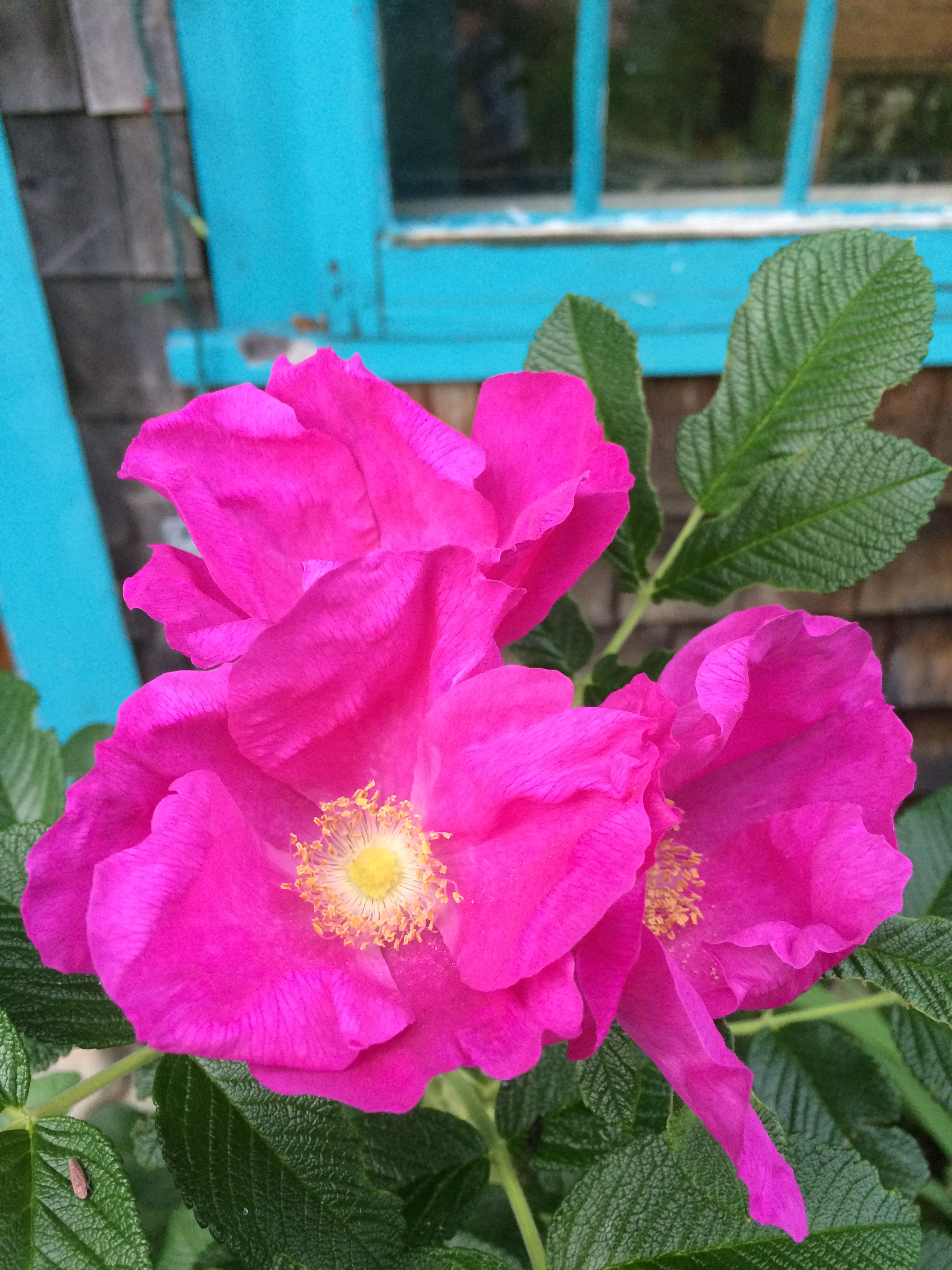
Early this spring, I planted a rosebush beside the back door, in some attempt to transform a little bit of our cedar-shingled house into a Red Rose imbued cottage. Gardening brilliance was wholly lacking. The rose bush has thrived, blossoming profusely, and yet again. In this poor Vermont soil–out of stone and sand and clay–deep glossy green emerges, rose hips fatten, tender petals perfume the air. In and out I go, sometimes all day, and this fragrance rises up to greet me.

He sendeth sun, he sendeth shower,
Alike they’re needful for the flower:
And joys and tears alike are sent
To give the soul fit nourishment.

–– Sarah Flower Adams

IMG_2461

Weeping and Hovenweep, one year later

Just about a year ago, my daughters and I spent a long afternoon in Hovenweep National Monument, in Utah. Even now, the sound of that name – Hovenweep – makes me want to press my fingers over my face. We sat under a slatted aluminum covering over a picnic table, unable to stir out into the heat, unwilling even to walk a short distance to what I imagined was the edge of a canyon. By this point in the summer, we had traveled thousands of miles, slept in many different places, and trod the gamut of human emotion. Hovenweep become our literal edge of the world, the place where, when you get there, you can no longer admire the abyss of the canyon.

All afternoon, under a broiling sun, my daughters and I sat beneath that crude cheap covering, playing Hearts, playing Yahtzee, the girls eating Nutella so hot it dripped from a spoon. We were waiting for a particular person to either appear, or not. As we waited, I watched a storm cloud in the distance, so far away in that eternal Utah horizon. Would it mass over us and rain?

The drama of our little family unspun that afternoon in an immense landscape of dust and small pebble and a few sprigs of sage, a land of no rain. I believed I could walk all day long in that desert, and, at the end of the day, I could still look back and see where I had begun. Hovenweep is a territory of stunning high desert beauty, and yet inescapably saturated with the crumbling, inexplicable ruins of the past. All that afternoon, filled with trepidation, anger, grief, I sensed the vast watchfulness of that place; how many, many women must have lived in that dry land, with joy surely, and surely also with terror for themselves and their children, as their demise reared up, with neither cheap shade nor nutella.

How much I would have liked to have seen one of my sisters from long ago that afternoon, a woman who might have known how things break apart. Who might have understood how I look at my daughters with mine, mine in my eyes. Who might have offered me her hand, as I would have toward her.

This is what human beings have felt from the beginning of time. If you want to be a full, complete human being, if you want to be genuine and not pretend that everything is either one way or the other way you can hold the fullness of life in your heart….

–– Pema Chödrön, Fail Fail Again Fail Better
IMG_8406

Failure and Writing

One of the real assets to working in a bookstore is the Advance Reader Copies–those paperbacks that appear in a white box shortly before everyone else gets their hands on them. Early this morning I read a little book of Pema Chödrön’s, Fail Fail Again Fail Better but, heads up, the interview at the end is the better part of the book. An eighty-year-old nun now, Chodron is refreshingly honest about her mistakes as a young woman, her two failed marriages, her struggles with parenting.

In this book, she writes about how to live a life in the present–with mindfulness–and yet acknowledge the wrongs we’ve all committed in our lives. In other words, how to reconcile what we’ve screwed up–and we all screw up, badly, one way or another–with a creative and loving and productive life. Isn’t that a fine place to aim for? To hold the past, acknowledge it, hold it before you like the foulest and ugliest of your fears, and yet move on.

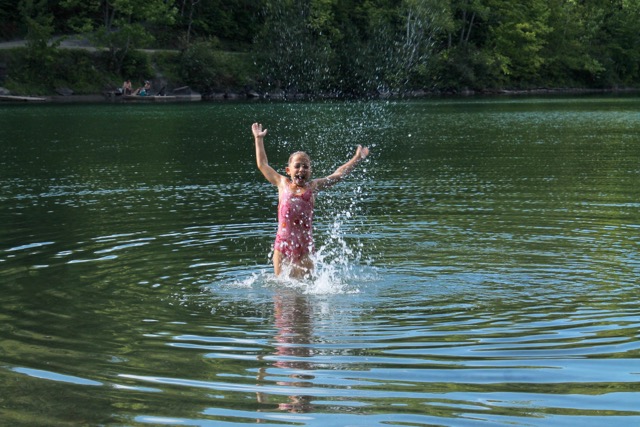
Canoeing with my daughters today is a wholly present moment–sunlight and dragonflies, the water almost too warm at the surface, then cooler the deeper down I dove–and yet I carried with me, secreted, as if beneath a middle rib, thoughts of the book I’m rewriting–taking apart and taking apart–and will begin to put back together, better. Finer. Smarter.

“Fail better” means you being to have the ability to hold… “the raw of vulnerability” in your heart, and see it as your connection with other human beings and as a part of your humanness. Failing better means when these things happen in your life, they become a source of growth, a source of forward… If it’s something like writing, just start–don’t not write the book.

–– Pema Chödrön

IMG_8448

Photo by Molly S. Number 10 Pond, Calais, Vermont

Writing Your Life

By this time of year in Vermont, much of what will come to fruition has been sowed and thrives. You’ve either had a crop of blueberries or not. The strawberries have long since gone by, only the verdant green remaining. Carrots, kale, squash, all should be well on their way.

What’s gone is gone. My chard, devoured by the woodchuck, will not grace my kitchen table this year. This digs at the question of poetry. I could turn my gaze and blind myself to how my garden lies at this time, weedy and gnawed in places, the peppers sweet and savory, the green ripening on the ear, the cucumbers proliferate. A metaphor for raising a child, acknowledging where wiser tending could have happened – or not. The elements of rain and cold and disease will thrust in.

But writing, perhaps, is a different endeavor than life. You get a rough draft; with diligence, you can rewrite and rework, burnishing your words. Easier, less risky, less dear.

Isn’t this all a matter of hunger, of desire in one raw form or another, a great maw of longing for satiation? The woodchuck to fill his belly. The carrots to thicken. A writer’s desire to reflect and hold the world’s mysterious complexity and beauty. A child’s yearning for growth and expansion.

A mountain can be a great teacher–not only because it manifests that cosmology of sincerity and restless hunger with such immediacy and drama, but also because it stands apart, at once elusive and magisterial…. (Walking up Hunger Mountain) reminds me yet again that things in and of themselves remain beyond us, even after… the most concise and penetrating poem.

–– David Hinton, HUNGER MOUNTAIN

DSCF0031 1

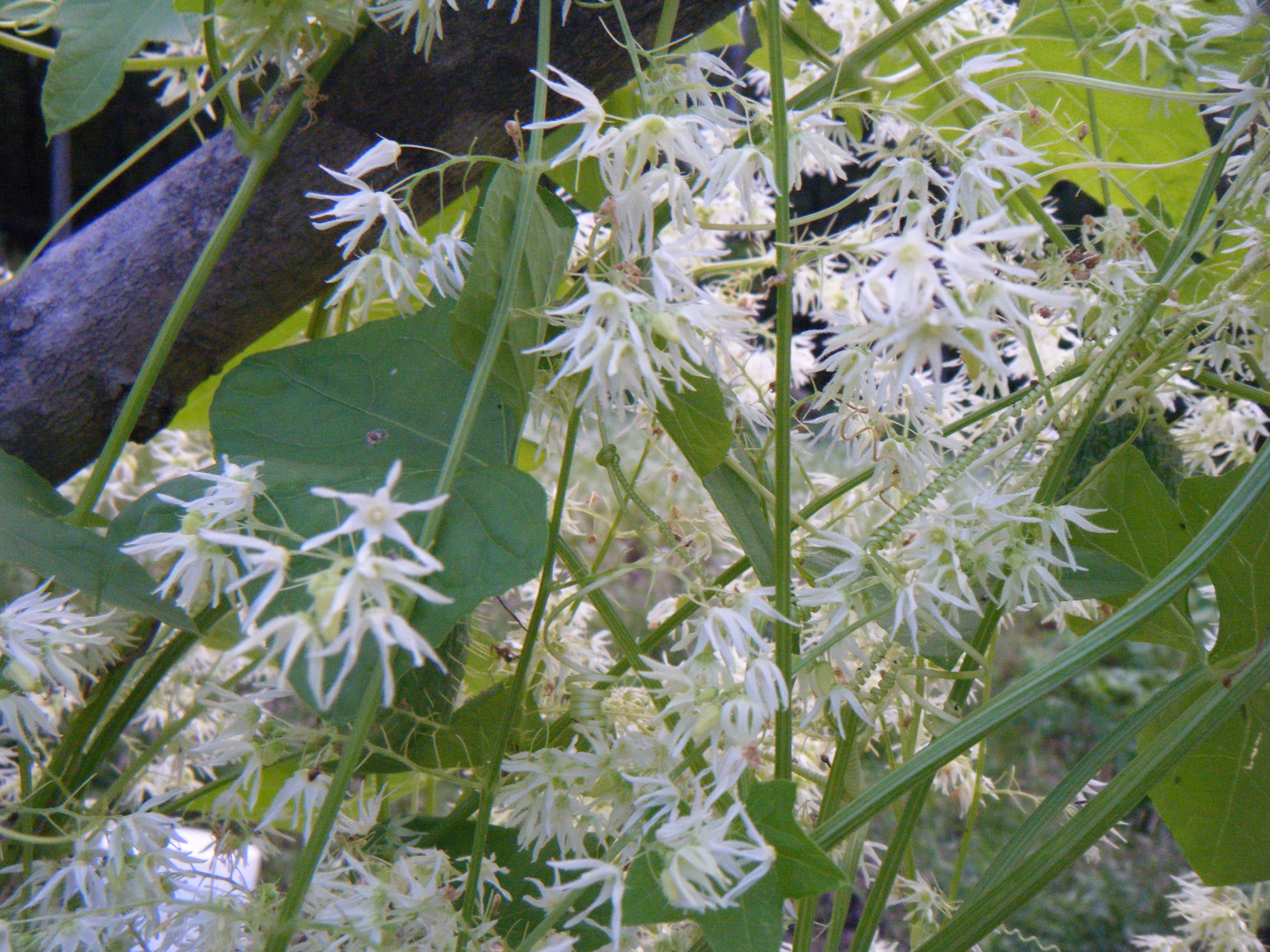
Wild cucumbers.

Place in Writing

Abbreviated intro to the reading I did tonight at the Greensboro Writers’ Forum, which leads, more importantly perhaps, to Lorca.

The most important thing I can say about place and writing is that we are place. Landscape is not merely green fields dotted with cows. My thinking around place has been significantly influenced by Lorca’s essay on duende: on what he calls this “mysterious force that everyone feels and no philosopher has explained which is… the spirit of the earth.” The power of literature arises from our soulful connection to the earth–with all the light and also all the darkness that encompasses.  My book, set on a rural Vermont farm, unwinds as the characters evolve from a youthful idealism to the day-to-day reality of struggling to earn a livelihood from agriculture. All farms confront failure in one way or another; whether in small doses or wholesale catastrophe–much as we do in our own lives. In the end, perhaps, that’s the rub in this world–that mixed, gray place between intense joy and utter sorrow–where our own human stories unfold, and that’s where literature thrives.

So, then, the duende is a force not a labour, a struggle not a thought. I heard an old maestro of the guitar say: ‘The duende is not in the throat: the duende surges up, inside, from the soles of the feet.’ Meaning, it’s not a question of skill, but of a style that’s truly alive: meaning, it’s in the veins: meaning, it’s of the most ancient culture of immediate creation.

–– Lorca

IMG_7546

Photo by Molly S.