These Unbroken Days

Nearly July, we’ve had rain, and we’ve had sun — an apt metaphor for life, I suppose.

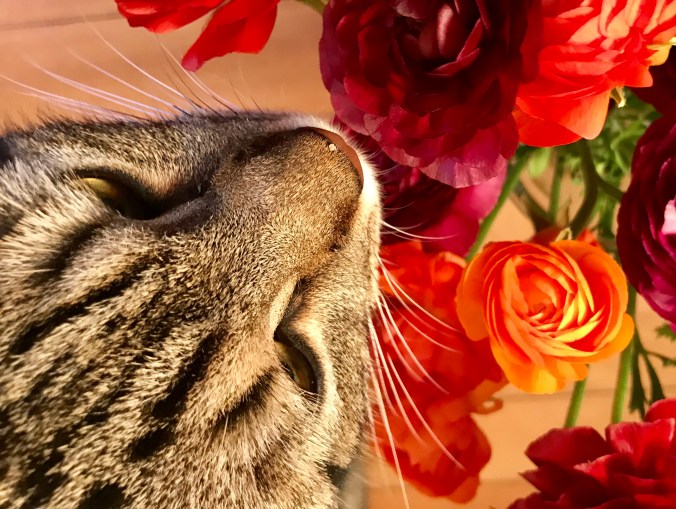
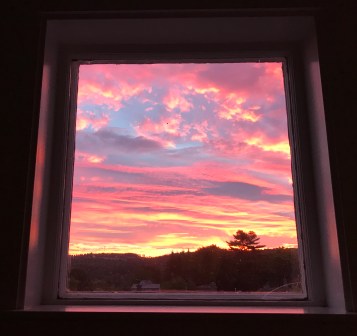
Early this morning when the sun spread its inimitable crimson across the horizon, and the cats stepped on my hands, reminding me gently of their hunger, I lay listening to the birds and thinking how wrong I was to envision my life as pieces — work for these hours, sandwich in volleyball, the endless litany of email, handfuls of garlic scapes I picked from the garden, hanging laundry on the line.

Our lives — my daughters’ and mine, the others around us — flow as one stream, sometimes turbulent, sometimes sweet as a June rose petal.

I’m folding up the laptop for a few days, in this summer melody.

 According to Flannery O’Connor, the fiction writer’s material falls into two categories: mystery and manners. The latter are, for the most part, observable human behaviors, often socially constructed…. while the former, which reside at our human center, constitute the deeper truths of our being. These truths we often keep secret, because to reveal them makes us vulnerable. To my mind, an even deeper mystery than the secrets we keep is the mystery of the way our hearts incline toward this person and not that one, how one soul selects another for its company, how we recognize companion souls as we make our way through the world…

— Jennifer Finney Boylan, She’s Not There: A Life in Two Genders

IMG_2321

To water or not to water?

The Vermont gardener question.

With my sandy soil, I’m watering — a showery hymn to growth.

One of the hottest and driest places I’ve ever been is Utah’s Hovenweep. A few years ago, my daughters and I spent one eternally long August afternoon beneath an aluminum picnic shelter, watching the sky. Thunderheads moved majestically slowly, then veered away, taking their rain — if they ever shed it — elsewhere.

Here in Vermont, we’re hardly parched. And yet, water, water…..

The work of the world is common as mud.
Botched, it smears the hands, crumbles to dust…
Hopi vases that held corn, are put in museums
but you know they were made to be used.
The pitcher cries for water to carry
and a person for work that is real.

— Marge Piercy, “To Be of Use

IMG_2281.jpg

Antidote

A photograph of my daughter and her friend is on a Good Citizen poster.

What the heck does that mean, she asks? Who’s a good citizen?

I drag up my standard answers: that history matters, that good fortune doesn’t equate with good character, that our actions affect others, whether we see — or want to see — this or not.

Later, I realize I should add this in: read and write poetry.

Poems build our capacity for imaginative thinking, create a tolerance for ambiguity, and foster an appreciation for the role of the unknown in human life. From such compact structures of language, from so few poems, so much can be reinforced that is currently at risk in our culture.

— Tony Hoagland, Twenty Poems That Could Save America

IMG_2241


Age 13

My 13-year-old returns from her travels slightly shifted, changed in a perceptible way. She’s tasted a bit of the world cracked open. The younger sister, she’s now taking steps — err, leaps — into her own life. Who am I, and what do I want to do?

These early summer mornings remind me of my own wanderlust at that age, how as a child our family was happiest on the road. A number of summers, my parents packed up the Jeep, and we drove west from New Hampshire with a vague itinerary and nothing more. Maybe Wyoming, maybe Mexico. Always Colorado.

13 — such an age, such a year. While adult years all blend together — that was my wild twenties, the childbearing thirties, the hard forties — there’s age 13, the year my daughter is a child and began stretching toward not-a-child.

Chicken tending chores, her best friend, ice cream for lunch.

How we spend our days is, of course, how we spend our lives.

— Annie Dillard

IMG_2245

Hardwick, Vermont

Age 19

Oh, ode to June in all her lovely greenery.

Remember being 19-years-old? Remember desire, desire, desire?

The summer river.
It’s happy to walk across it.
My hands with zori sandal.

—Buson

IMG_2215

Dog River, Berlin, Vermont

Three Quarters Through the Night

It’s a bird-eat-bird world the young woman with a hawk on her arm tells the kids in my library. The kids ask question after question, from Why is the bird’s head bobbing up and down to Why is that little screech owl in such a big box?

That bird-eat-bird world is a hungry world.

Returning home, my older daughter rolls out pizza dough. The chickens have been squawking at a woodchuck running behind the barn. I eye my newly-planted garden. The younger daughter appears with six eggs in her basket. Overhead, the turkey vultures glide in spirals.

This morning, in the early dark, rain falls. I stand on the porch in the dark, listening, too early yet for even the songbirds to have risen. The darkness smells of wet earth. I think of my bean plant seedlings, their first leaves unfurling, stretching out further, drinking in this June rain.

Green, how much I want you green.

— Lorca

IMG_2139.jpg