Natural resurrection.

I am reminded of spring by the quality of the air . . . It is a natural resurrection, an experience of immortality. ~ Henry David Thoreau

Friday begins raw and shivery. I’ve shed my long underwear and regret it. By mid-afternoon, the sun’s emerged. I park along a muddy road and hike up through a soggy pasture to the stone cellar holes. A hundred years ago, a farm must have been rooted on this hillside, bracing against winter’s snowy wind, full of summer sun. A view of mountains and the Lamoille River Valley. Sugar maples dominate what remains.

As I approach, robins flutter, fly, resettle, their singing unbroken. I tie my coat around my waist, cram my hat in my pocket. At home, green nubs of lilies and crocuses emerge, just beginning their greening. Among the lilacs, I look for those daffodils.

Mighty spring, season of healing. The winter’s debris of compost and spent woodpile and last fall’s unclipped perennials emerge. Every year, spring rushes in with a surprise. A certain reminder of mortality, but so lovely, so marvelously endearing…

Cold.

The cold lingers. A friend texts about walking, proposed temperature 5 degrees. It’s a balmy 3, the sun dazzling on fresh snow. A year ago, I sat miserably in her car, hardly able to walk around the high school — did I manage that loop twice? This end-of-January, we walk and talk. Later, sprawled before my woodstove, revising a manuscript that my cat uses as a nest, twilight and then darkness press against the windows. I have not forgotten how easily a body breaks, how rapidly the world shifts from wellness to suffering.

The world propels through flux, and while I’m (at least momentarily) emerging towards fuller health, so much human darkness deepens. My college student daughter phones from Burlington — Vermont’s big city on our own Great Lake — the streets jammed with protestors. The mayor issues a statement as officials prepare for an ICE invasion. “Stay steady,” she urges.

Under the moon hanging in the sky, we head downtown to the coffee shop to admire photographs of the northern lights. The photographer plays a short film of footage shot in locations the audience knows well, roads and lakes and a ridgeline above the village. Turns out, he wrote the music, too, weaving in calling coyotes and chirping crickets, loon songs. It’s no antidote, no balm, but a radiant reminder of the vast universe, of how the horizon shifts from black to pink to green, that we are driven by love of beauty, too. A steadiness.

On Frozen Fields

1 
We walk across the snow,
The stars can be faint,
The moon can be eating itself out,
There can be meteors flaring to death on earth,
The Northern Lights can be blooming and seething
And tearing themselves apart all night,
We walk arm in arm, and we are happy.

2
You in whose ultimate madness we live,
You flinging yourself out into the emptiness,
You - like us - great an instant,

O only universe we know, forgive us. ~ Galway Kinnell

Lists, Loons.

My kitchen table, notebook, car console is littered with yellow post-its, my hand-scrawled lists of work things, schedules, BUTTER written on several versions, COFFEE BEANS, sandwiched between AT&T — my reminder to figure out the phone bill.

How good to have a list again — more, multiple lists — my daily roadmap under constant revision. An acquaintance tells me about a weekend of work and he’s looking forward to Monday. Of course, he says, on Monday I’ll look forward to Tuesday. On Tuesday… Isn’t my list a variation of this?

In contrast, I consider the loons who swim near us, diving under the pond’s still surface, reappearing, vanishing. Four sleek birds: two parents, two juveniles, the loon nuclear family charming us with their haunting songs, the younger ones still halting and squeaking.

Sunday evening, I stack my crumpled post-its into a pile and shove this in the recycling bin. To circumvent my churning thoughts, I email myself a Monday morning list. Autumn’s moving in, the majesty of these long summer days clipped shorter and shorter at each end, the daybreaks dewy and cool…. I pull on my sweatshirt and Danskos and lie on the picnic table’s bench, fingers in the unmown grass. The lilac leaves are withered brown with thirst. The woodchucks have been eaten by the foxes, or they’ve packed their own valises and headed out for new territory. Dusk creeps in, and still I’m there, the wood and my bones and flesh keeping some kind of wordless company. That afternoon’s loons and the swifts darting overhead, the crickets sizzling, and myself, too, each of us in our own language. At last, the rain patters down, drip-dropping, ubiquitous.

“How lightly we learn to hold hope,
as if it were an animal that could turn around
and bite your hand. And still we carry it
the way a mother would, carefully,
from one day to the next.” ~ Danusha Laméris

Born in 1933…

William Maxwell writes in his riveting short novel So Long, See you Tomorrow: “The reason life is so strange is that so often people have no choice.”

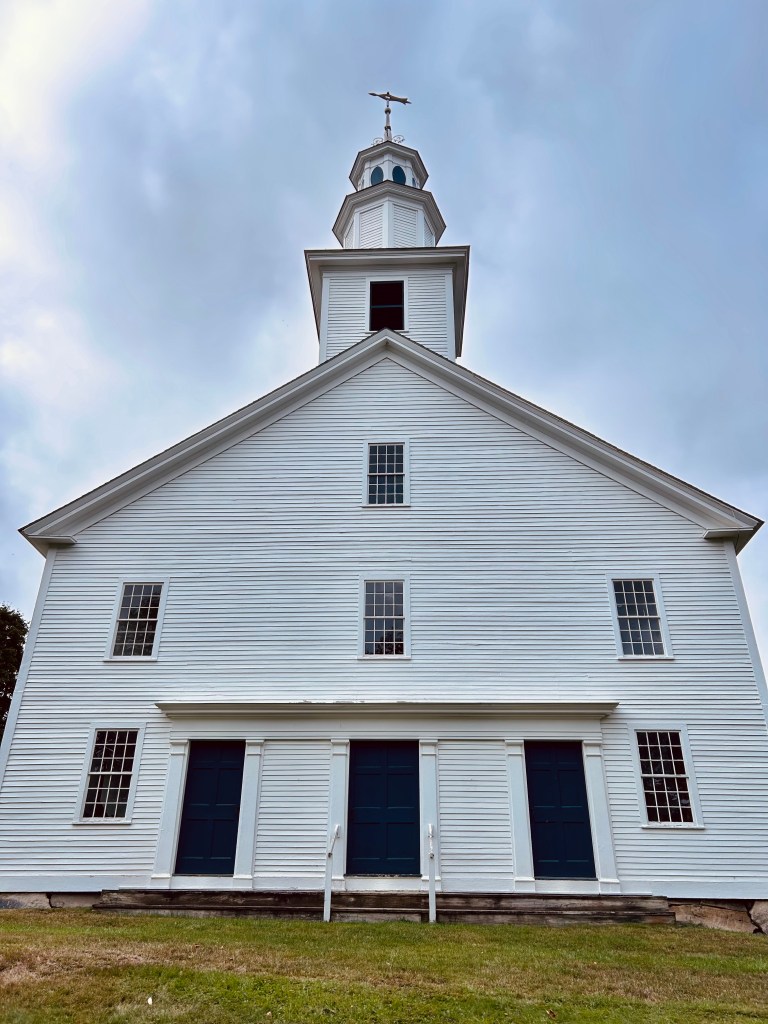
This strange world, indeed. My daughter drives us up Vermont’s long loneliness of I-91, the interstate running above the river. Villages are tucked into the blue and snow-sprinkled mountains, these tiny clusters dominated by spires of white clapboard churches. This has been a week of in-and-out of ERs and hospital rooms, of resurgence in energy and a low so low I’m unable to bother to speak. Now, the ride home, the passing through of this winter country, where the new snow (so pure white) piles high on tree branches. This northern land in midwinter is territory I know with a familiarity akin to the veins on the backs of my hands. A haven of cold, often slow-going, a muted palette of pale blue, sooty gray, evergreen nearly black.

We talk until we’re spun out from chatter. I lean my head against the cold Subaru window. In the last room where I stayed, my companion was a woman born in 1933. 1933 marked the end of Prohibition, the year stenciled on the green-glass-bottled Rolling Rock beer we drank in college. 1933, the year of Roosevelt’s New Deal. The woman’s voice was clear as a spring stream, often studded with small wry jokes. When she saw me, her face glowed in a smile. Of all the things I’ve learned from this week and scribbled into my notebook, this woman’s radiant smile and easy language sticks with me. A few times, I wandered her way, hoping to have some of her joy rub my way.

Tiny flames, ice.

Bootstep by bootstep, my strength begins to return. It’s cold, darn darn cold, slicing at my eyes and cheeks. The cold and I are no strangers. I made maple syrup for years in an unheated outbuilding, raised my daughters in a house with scant heat, have spent decades of my life tromping beneath snowy trees in search of…. what? The usual things I suppose, by which I mean the unexpected. Or maybe just the sheer loveliness of a fresh snowfall.

Here’s my barometer for how I know I am improving, the cancer lessening. A long ago college friend appears at my house with the flu, explaining away his symptoms. At first, I don’t understand; what is he asking me? My old moxie rears up, fueled perhaps by the Red Devil chemo drugs. I’m taking in a poison to save my life, after all. As if it’s not enough to have cancer, I had to send him away, banish him from our hearth, point that what, whatever he thought he might be doing had nothing to do with me at all. It was all him. At this precise moment, there’s no space here for that, or for the flu.

Later that night, neighbors appeared with ice lanterns made from five-gallon buckets. I grabbed my coat and stood outside, talking, while they lit beeswax candles and shared news of town. When they left, the tiny flames glowed brightly in the starless night, sure evidence that fire can burn even surrounded by fat ice.

Vessels, Rooms, the Unbounded Sky.

16 degrees on this sun-kissed Sunday, my cat considering the squirrels.

In cancer land, still putting my muscles together, I’m outdoors only with someone else these days, the long solitary walks yet a future promise, again. Early mornings, I brew coffee, fill the cats’ bowls with their breakfast. All day long, we’re filling and emptying things: water glasses and soup bowls and cat dishes (again), filling a notebook page with penciled words, a suitcase with my daughter’s clean clothes as she heads back to college, a new lightbulb in an empty socket.

Likewise, this disease has filled my body for months, now emptying; illness has slipped into every crevice in my family’s life, too, like the power of freeze in a river, rearranging the flow.

In a year that’s begun with so many families losing their homes on the other side of the country, the sunlight on this morning, a chilly walk this afternoon, the cold scraping at my cheeks – yes, yes – a scrap of gratitude for January Vermont sunlight. Here’s line from one of my favorite writers, Andre Dubus, who knew loss keenly.

“We receive and we lose, and we must try to achieve gratitude; and with that gratitude to embrace with whole hearts whatever of life that remains after the losses.”