Oatmeal Chat, Vultures.

Vermont sends its swiftwater team to North Carolina, repaying a favor when Vermont was in need. Word comes of similar terrain and climate causes, but far worse devastation. We send them our empathy, our skilled folks, certainly money, to their world broken apart….

In Vermont, these weeks have been tepid, the foliage gently rotating to gold, the sun warm in the afternoons. This year, the purple asters decorate the landscape everywhere, pallets of brushiness.

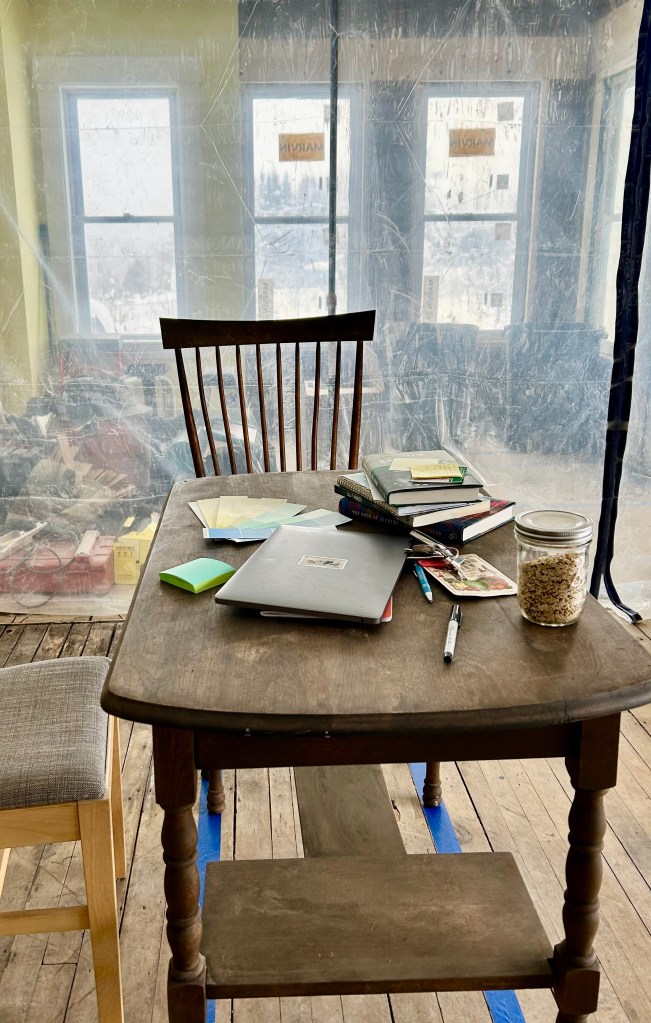
Thursday afternoon, I take my laptop to our picnic table, the bluejays creeping near, curious, my bent-over sunflowers in the garden shaking with feathered gleaners. I’m stuck on this notion of impermanence my father and sister and I have been kicking around, when we connect in our disparate parts of the country via our laptops. Autumn in Vermont personifies impermanence. Stepping out for firewood in the early morning, geese clack over my porch roof, getting their V formation together, out of here for warmer waters.

In the co-op, I round an aisle and meet an old friend filling a paper bag with oatmeal. You can imagine me, he tells me, standing at my back door, just staring at the mountainside. What perfection today. From there, our conversation quickly bends into small town democracy, how each of these three adjacent towns are different. We step to the aisle’s side and dig into the grittier details of a legal letter circulating on email. My friend, thinking like me, asks about motivation. Who’s desiring what? Why? What’s the intent, for what human footing?

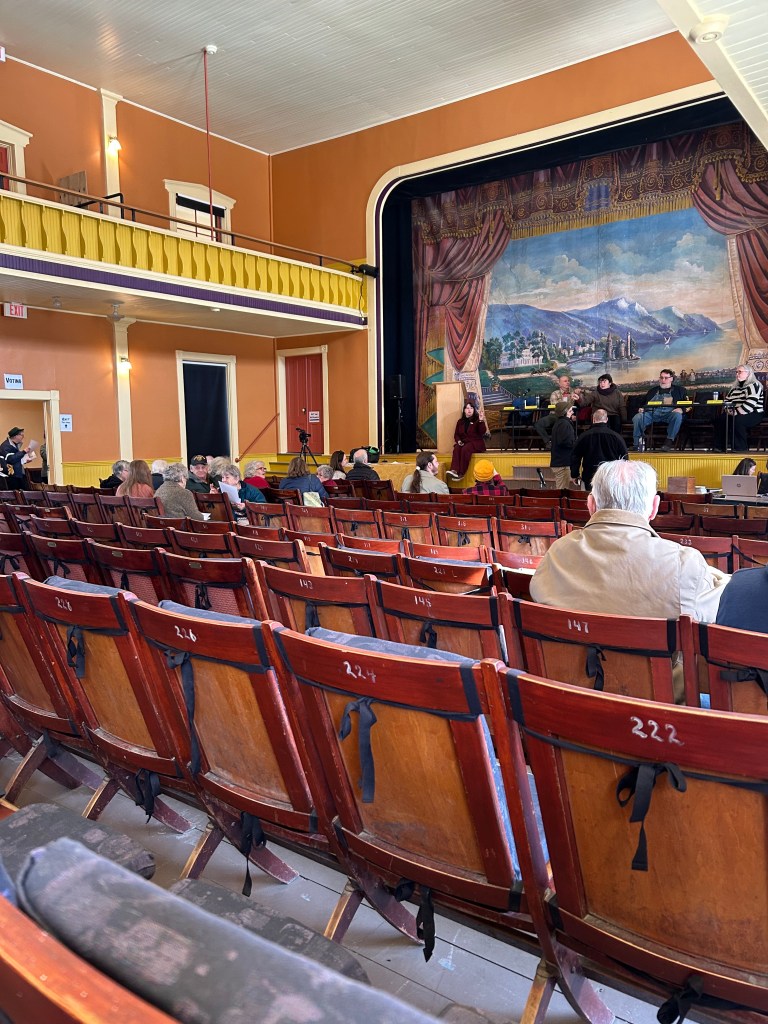
Fascinating questions. Vermont Selectboard meetings are generally unfettered democracy. Anyone can show up and speak their piece, ask questions.

Later, I step outside with my pound of coffee and pound of butter. The turkey vultures are circling, swooping low over this section of highway and co-op and river. In my wool sweater, barefoot in Danskos, I stand watching for the longest time, the sun falling behind the hillside.

A passerby, walking in, glances up, too, and shudders. “Them. Those birds.”

I start up the hillside, under the gyrating vultures.

 Even  in Kyoto—
hearing the cuckoo’s cry—
 I long for Kyoto.

— Bashō

Finding a Thread.

On my way home, I stop at Number Ten Pond. The water temperature is at that sweet spot, exactly perfect — and how often do you touch perfect? — and I wade right in. A woman stands in the pond, two children splashing around her. She laughs when the minnows bite her toes.

I swim far. In the pond’s center, I float on my back. With my eyes closed, my mind’s eye turns red, with blood or sunlight, who knows, and I’m no longer sure which way is up or down, water or sky. I’m distant enough from shore that only the loon call reaches me. By the summer’s end, these swims will add up to an invisible chain of experience: of water and weather, of whatever language drifts my way. July here, just a handful of fleeting days.

"Everything Is Made Of Labor"
Farnaz Fatemi

The inchworm’s trajectory:
pulse of impulse. The worm
is tender. It won’t live
long. Its green glows.
It found a place to go.
Arrange us with meaning,
the words plead. Find the thread
through the dark.

The sound of one hand clapping, revisited.

This week, I unexpectedly find myself waiting for someone I don’t really know and end up reading a copy of Ken Wilber’s collected writings. Winter has finally come. The purest and loveliest of snowfalls fills up our world. I wait much longer than I had guessed. A woman comes in to sweep the floor, and we talk for a bit. Sunlight pours through enormous windows.

Here’s some Ken Wilber I soaked in:

You know the Zen koan, “What is the sound of one hand clapping?” Usually, of course, we need two hands to clap – and that is the structure of typical experience. We have a sense of ourselves as a subject in here, and the world as an object out there. We have these “two hands” of experience, the subject and the object. And typical experience is a smashing of these two hands together to make a commotion, a sound. The object out there smashes into me as a subject, and I have an experience – the two hands clap together and experience emerges.

And so the typical structure of experience is like a punch in the face. The ordinary self is the battered self – it is utterly battered by the universe “out there.” The ordinary self is a series of bruises, of scars, the results of these two hands of experience smashing together. This bruising is called “dukkha,” suffering. As Krishnamurti used to say, in that gap between the subject and the object lies the entire misery of humankind.

On my way home, I do something I’ve never done in the winter. I park along the edge of an unfamiliar road. I’ve forgotten my hat. The wind is wild, as if I’m on a stormy sea. My hair tangles over my eyes. Oh sun, oh wind, oh endless snow.

Midwinter, here.

Talking Past Dark.

A friend comes to visits, heads to my picnic table, and we commence talking. Hours later, a dewy dusk has descended. I’m shivering, my sweater cuffs pulled all the way over my hands. Inside, my cats are grousing for a fire in the wood stove.

I remember my friend’s oldest son sitting on my couch, about an eon ago. The boy was so small his legs didn’t reach the end of the couch. Now, he’s thinking of heading into a PhD program.

I haven’t seen this friend in months, since before I traveled to Europe and decided I was born on a continent that mismatches me. Yet, we start talking as though I was a young mother again, walking along the dirt road with a toddler, my hair unbrushed for days.

It’s a cliche of course, how the world changes and how it remains the same, that one long Heraclitus river — always the stream, never the same.

The foxes didn’t return to den behind my house this year. A few stray lilacs bloomed in late September. The harvest moon sails up in the sky. All our hours of talking and we solve absolutely nothing, not a single problem, except this, perhaps: a fattening of our friendship, this woman who assured me I would survive my divorce, that my life would continue. The sun heads down, and we keep on talking.

Worms for the Body, Philosophy for the Soul.

A little light rain falls as I pull a few weeds from the Sweet William in my garden. I planted these flowers when I moved here, putting my shovel into this terrain, vying for flowers and vegetables versus lawn. At the moment, the flowers flourish. I’m thinking a little about a writers roundtable I participated in the morning before, how I urged writers to remember that cause and effect drive the world we live in. All the pretty and noble thoughts we have about ourselves are only illusions. Character lies in our actions, for good or ill, whether we chose to see this or not.

On this Father’s Day, I remember those conversations my siblings and I had with my father at our kitchen table, so many decades ago. This sense of the world comes from the Aristotle he had us read. It’s a lesson that I’ve been hammering out, over and over and over in my life, through garden (what truer way to learn cause and effect), through writing and childrearing, through work, divorce, friendship.

On my deck, the robins’ nest has open-beaked fledglings, tufted and mewling. All day, the parents fly in and out, worms draping from their beaks, feeding their young, this great Herculean parenting endeavor. My cat Acer lies on a kitchen chair, staring through the glass door, mesmerized. The robins, in their robin way, have taken a chance nesting just above my door. Will this pan out? Will the young survive?

Wendell Berry wrote that “Parenthood is not exact science.” Nor, by any means, is bird or human life. My father gave his three children worms and philosophy. He taught us to love bread for the body, wine for the soul.

Where We Are.

Mackville Pond, Vermont

My daughter and I drive around in the evenings. It’s a teen/parent compromise I suppose — a walk in the town forest where I gush over blooming trout lilies and spring beauties and trilliums as if ephemerals have never done this amazing show before. My daughter is cool and tough, utterly on that rugged cusp of childhood and womanhood. It makes my heart ache. It makes my heart swell.

We drive around in what might appear to anyone else as aimless nothingness, checking out geese and listening to the peepers. In our driveway again, I slip off my sandals and lean back in the carseat. Goddamn, I could sleep in her car, that the slip of moon would rise over us, and then we’d just begin again in the morning. Maybe we’d drive to Nebraska. Maybe to her high school. Maybe we’d just keep sitting here, talking, or not.

Meanwhile — spring goes on. Leaves unfurl.

My wrists and eyes and heart are baggy with wrinkles. That is how old I am. Meanwhile, I keep thinking of a line about doubt by Søren Kierkegaard. As a young woman, I thought this doubt thing was for the weak and the foolish. I believed in striking out, holding firm, sucking up the consequences of my actions. Now, it’s a koan that keeps rattling around in my late night, my early morning, my stray driving thoughts: “Doubt is conquered by faith….” I think, take heart from from that. Then, when I look up the line, I realize I’d forgotten the second half: “… just as it is faith which has brought doubt into the world.”

I think, Go listen to the peepers again.