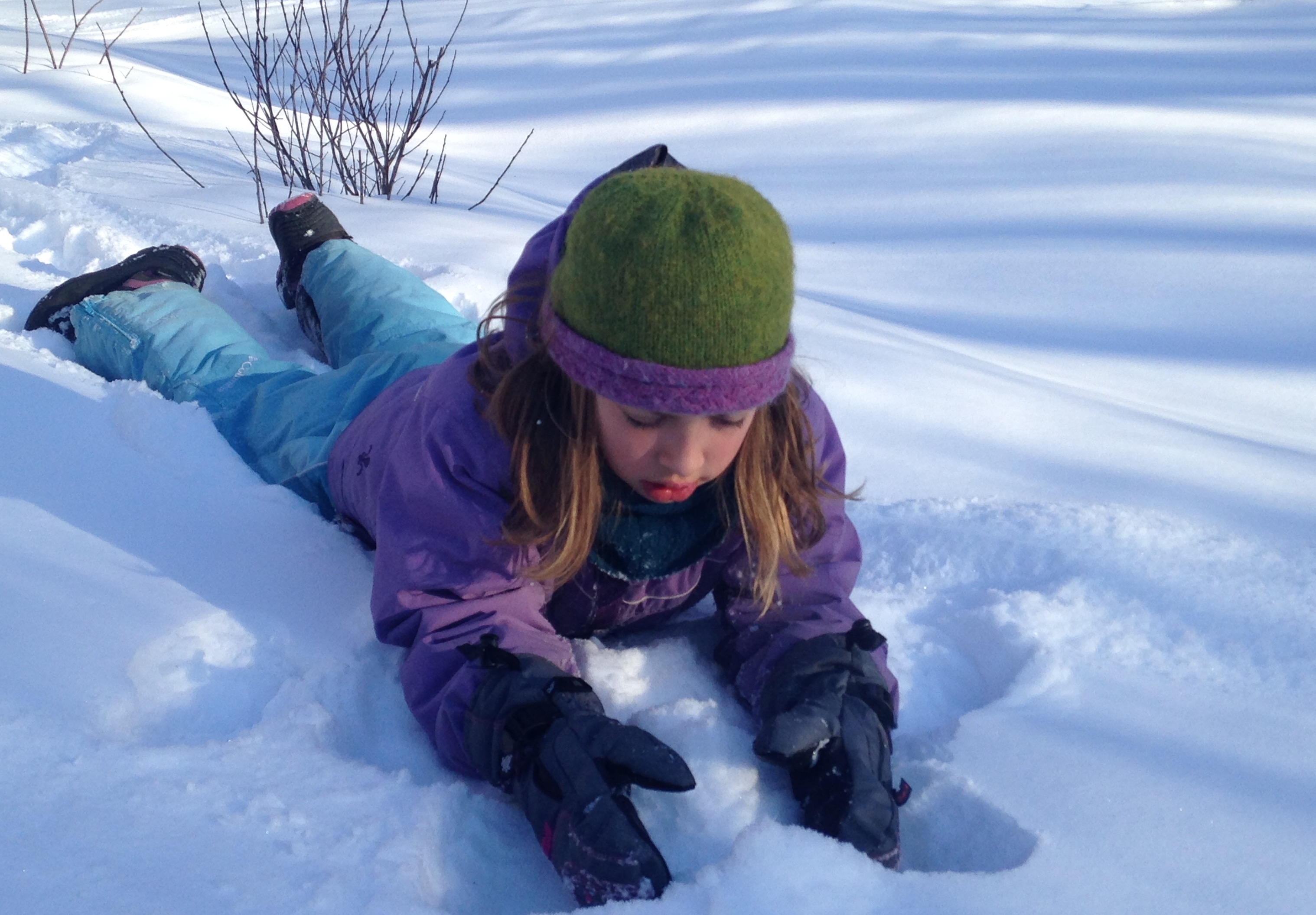
The red of my friend’s daughter’s hair matches this autumn—sunshot red—remarkable. Walking along a dirt road flanked by immense maples, abundant with purple asters, the child races forward, drags behind, curious as heck about the world as she gathers stones from the road and wonders if we might follow this inviting path in the woods. Where does it go?
She’s curious, too, about me and what I might say. My dog loves to bite. (The dog does not.) She holds out her hand to illustrate that it looks like mine. Walking, talking with my friend who’s doing her own fascinating unique adult things, a line from Dr. Paul Kalanithi’s book When Breath Becomes Air returns to me. Holed up in my hand-me-down chair from another friend, nearly incoherent with fatigue by the working week’s end, I’ve just reread this little gem. “There is a moment, a cusp, when the sum of gathered experience is worn down by the details of living. We are never so wise as when we live in this moment.”
In ways, the book is a meditation on that Buddhist proverb, for advice post-enlightenment: “Chop wood, carry water.”
One result of what appears to be a permanent stamp of intermittent fatigue (not a sleepiness alleviated by a nap) is a double-edged parsimony and generosity. I’ve refining a few simple sentences in email and meetings—that’s all I have for this—but I also often ignore the hours; I lose track of time in ways I never allowed myself before.
My friend climbs an apple tree and shakes the fruit loose. Her daughter considers an apple seriously. The tree was planted years ago and has now gone wild, unpruned, its branches an immense tree bouquet. The apple’s skin is crimson, tart, the flesh sweet. The child rubs her thumb over a bump in the skin and then bites into the apple. She eats gleefully.
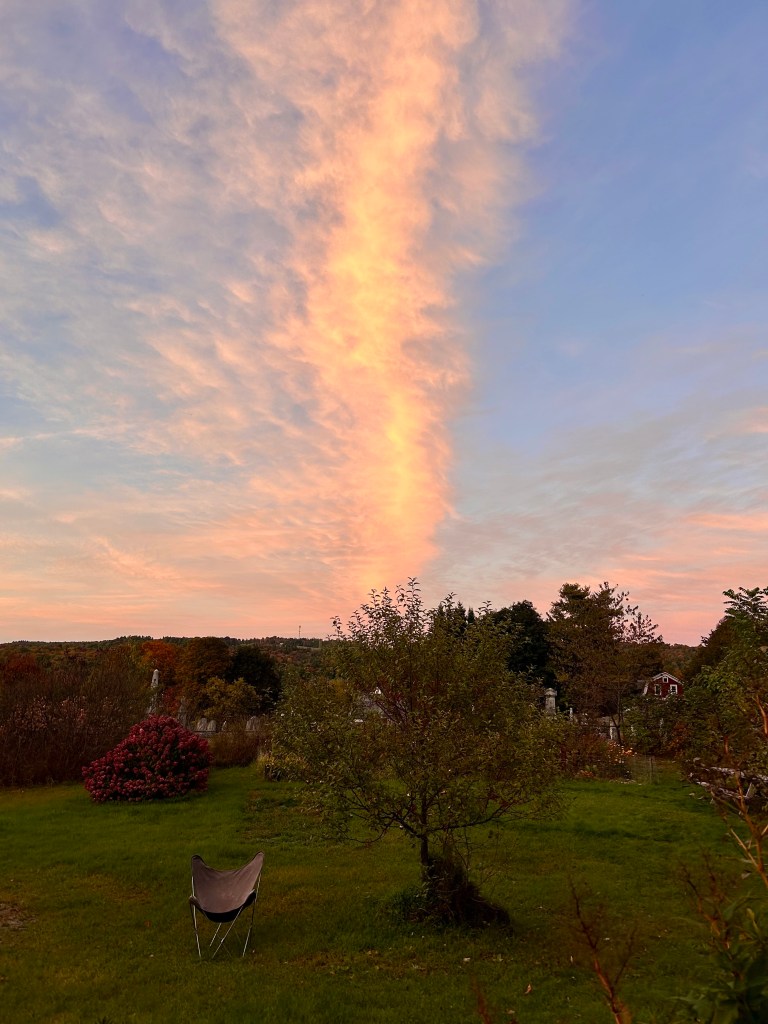
If I timestamped this, I’d note, somewhere in Vermont, late September, gnawed apple cores tossed back into the wild.