Garlic Planting/Rough Draft

I planted the garlic this afternoon, late in the season, a few weeks beyond my more orderly neighbors. Sleet fell this morning when I walked around the property with the logger who delivered firewood. He and his nephew had bought a sugarbush, and we shop talked sugaring. By afternoon, the sleet had wandered off, but the remaining light is meager as November presses in. Working alone, I remembered how long it took to plant garlic with my one-year-old. She dropped each clove into the hole I dug, even then diligent, careful to set ragged roots down.

Despite the bleakness settling in, garlic is hands-down my favorite crop to plant. My cloves this year, from last year’s harvest, are some of the fattest and savoriest I’ve ever grown. Deep in this rich black earth they’ll hibernate all winter, covered with compost and a matted quilt of dry maple leaves. Next spring, the question goes around, How’s your garlic looking?

The garlic is like the second novel I’m writing, where the seeds of the rough draft have been silently sleeping, and now this book is rising and stretching. Grow, I think, in what way will you grow? I’ve carefully sown and fertilized these seeds, and now is the time to dig in with my hands and scrape off that matted mulch and let the green begin to rise and see where it might grow.

 Our bodies are garbage heaps: we collect experience, and from the decomposition of the thrown-out eggshells, spinach leaves, coffee grinds, and old steak bones out of our minds, come nitrogen, heat, and very fertile soil. Out of this fertile soil bloom our poems and stories. But this does not come all at once. It takes time. Continue to turn over and over the organic details of your life until some of them fall through the garbage of discursive thoughts to the solid ground of black soil.

–– Natalie Goldberg
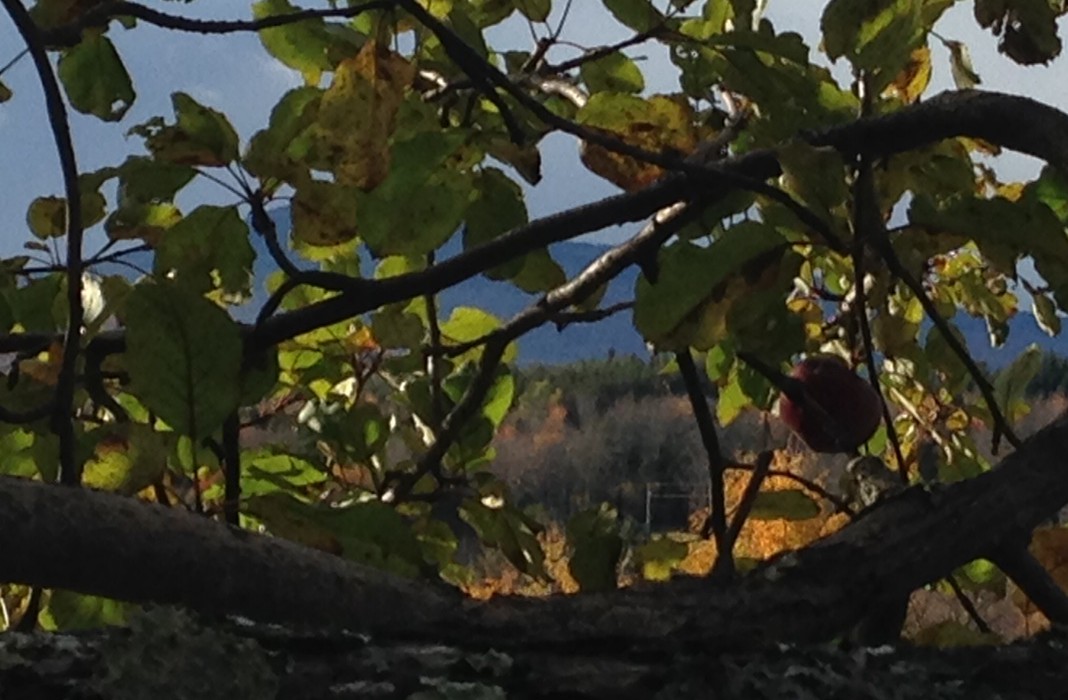
IMG_0118

Apple Tree & Elmore Mountain, West Woodbury, Vermont

Shells, Sea Glass, and Stories

My daughters have no school for a few days, so they came to work with me today, around Mt Elmore, around Mt Mansfield, and along the beautiful Winooski River valley. Inevitably, the drive is longer than I think, after a hurried jumble to get out, we need to leave in the morning, then coffee drinking in the car while the girls either laugh or bicker. The clouds all the way along the interstate were shot through with dark gray and glimmering gold, as if the weather itself couldn’t decide whether to shine or cry.

At the very end of my drive, I arrive at a street’s crest and the city suddenly dips down, and there’s the lake, the great expanse of it, white-capped over cold slate, undulating upward as if twisting deep in its marrow.

My daughters walked off on their adventure, while I went into my windowless office and set my mind fiercely to work. Later, finished, my proofs for weekend work tucked into my bag, I stepped out of that building. The parking lot edges up to a railyard where train cars are stored on dead-end lengths of track, besides enormous piles of gravel, and seagulls swoop down over the lot, hungrily screaming. With my face up to October’s meager’s light and the wind gustily blowing, I thought of the college class with aspiring writers I sat in yesterday, where we talked about the story beneath the story. This odd lot was rife with stories, stretching on out to the mighty granite block building at the corner, where commence a hundred years ago must have once teemed at the lake.

My daughters returned from their exploration along the lake’s edge, where they discovered diminutive shells and sea glass, more bits of stories carried out of the lake and into their hands.

Everything that does not migrate
has fattened up, bedded down,
cocooned up, and seeded itself.
Life’s two principles–
reproduce; survive to reproduce again….
And by this process, even beyond
the evident hand of man, the world
slowly changes utterly.

– Leland Kinsey, Winter Ready

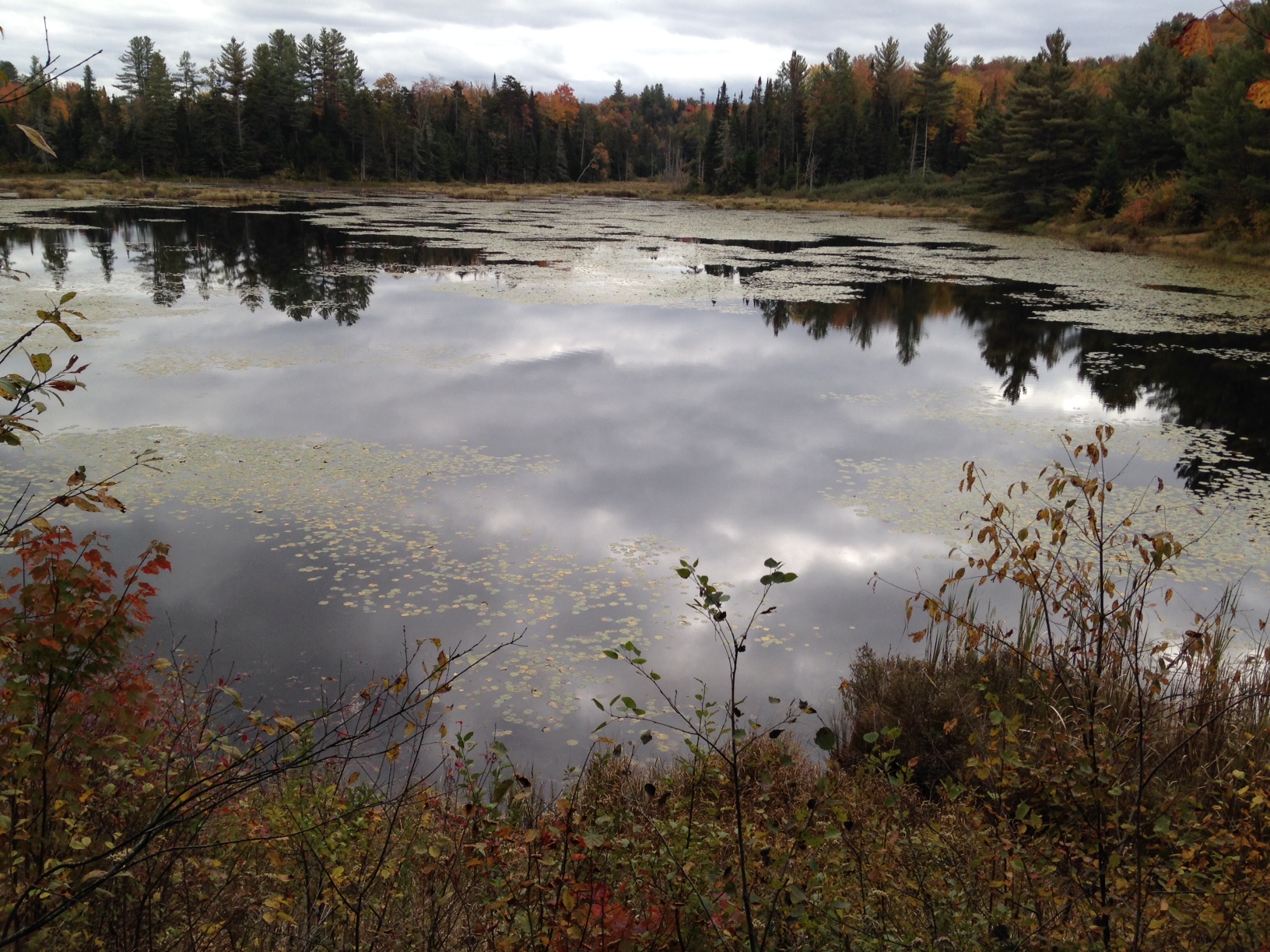
IMG_0140

Beside Lake Champlain, Vermont

Storm Windows, Fiction

While I was at work yesterday, my daughters washed and latched storm windows on the kitchen windows. They also biked in the season’s first snow, baked a chocolate cream pie from Pie which the younger daughter is reading, argued, played memory games, and spread out a rug in front of the wood stove as an official opening to the wood stove/snow season. Already, the piles of games and books and knitting are growing in uneven piles on that rug.

As my own book nears its publication date, I’m pushed to speak more about how I came to write this book, and why. In my own busy household that mixes children and rural Vermont, what’s increasingly clear to me is that writing is a human activity as essential to our lives as stocking your root cellar or bank account or however you do it for the long, colder season ahead. Our culture emphasizes material gain above pretty much everything else, but, really, at the day’s end, there’s little else of relevance besides stretching your bare toes toward a hot fire, with the children nearby, and the windows buttoned up against the growing dark and cold.

The society to which we belong seems to be dying or is already dead. I don’t mean to sound dramatic, but clearly the dark side is rising. Things could not have been more odd and frightening in the Middle Ages. But the tradition of artists will continue no matter what form the society takes. And this is another reason to write: people need us, to mirror for them and for each other without distortion – not to look around and say, “Look at yourselves, you idiots!,” but to say, “This is who we are.”

Anne Lamott, Bird by Bird

IMG_0119

October/West Woodbury, Vermont

Stellar Fifth Grader

My teenager often ponders her career path these days. She wants a salary (likely because neither of her parents, being self-employed, ever managed that little detail). She wants to love what she does.

My younger daughter listed the various what-I-want-to-be desires she’s cycled through: a pop star, a race car driver, a jeweler in Boston. Then she thought for a moment and said, I’m happy doing what I’m doing now. I’m a really good fifth grader.

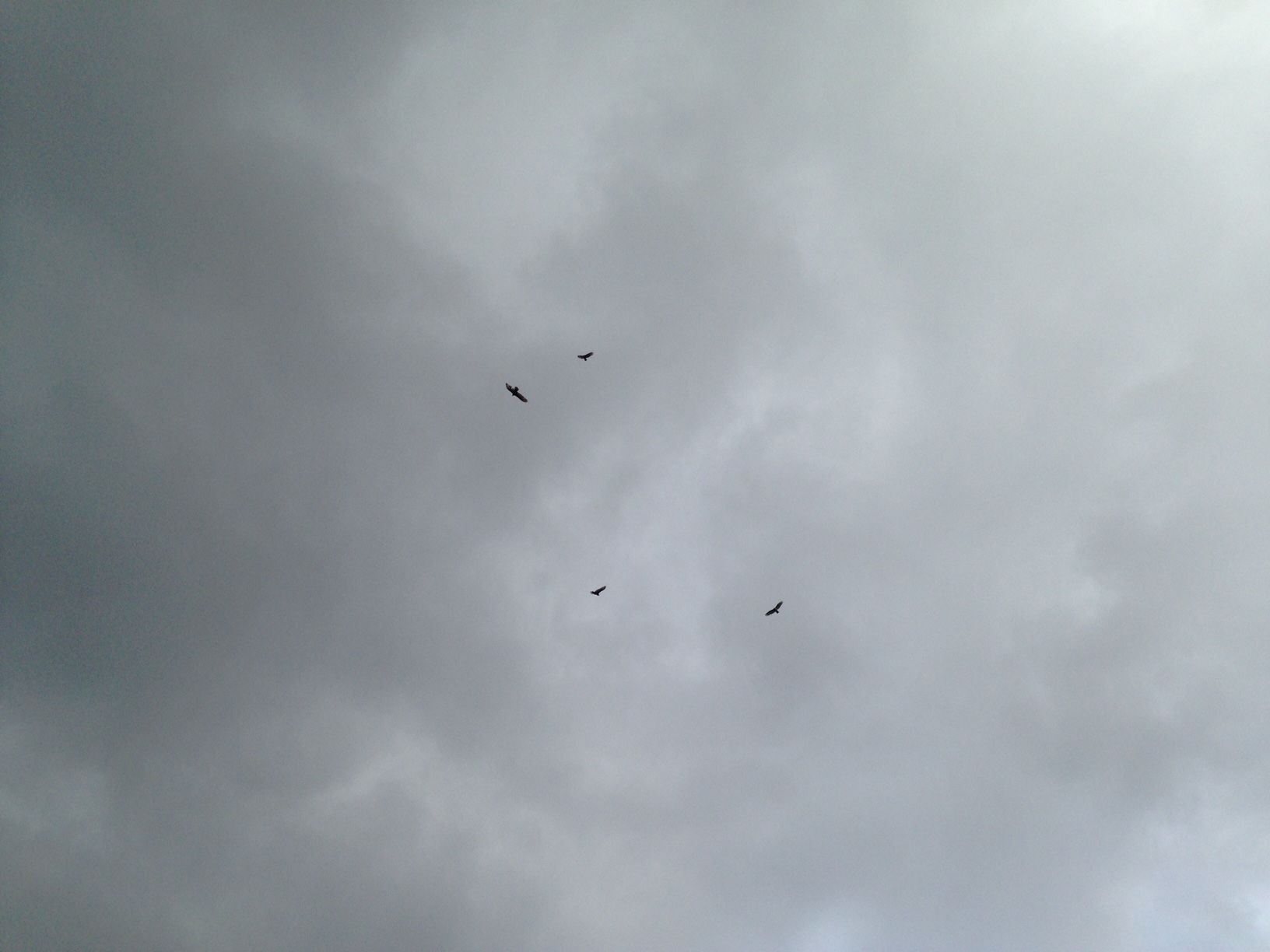
I interrupted their conversation to pull over on the road’s shoulder at the mini-storage, and we stood on a strip of frost-bitten grass staring up at a confluence of turkey vultures, circling around and around in the air currents.

Back in the car, my older daughter in her pragmatic way told her sister, Do fifth grade while you’re there, and then worry about the rest of your life.

If these rescuers (of Jews in WWII) had anything in common… it was self-knowledge. When you know yourself there is little to say. This is worth brooding upon as we consider how we, who know ourselves so poorly and have so much to say about ourselves, will respond to challenges to come.

— Timothy Snyder, Black Earth

IMG_0105

Hardwick, Vermont

Shine On

The before-school mornings have now turned intractably toward dark, the air nippy at the bus stop. My older daughter argues against going to school. The truth is, I hated high school, I hated middle school, I hated elementary school, I probably even hated nursery school, the whole she-bang of schooling until I hit college. I remember insufferable boredom, staring through the windows in third grade at azure autumn skies, and wanting to be in the woods. I longed for the smell of dead leaves against my face. I’m sympathetic and yet, apparently, not that sympathetic. Still, I often stew about this daughter all day.

Driving along Route 15, as it follows the Lamoille River, I glanced up where sunlight crashed through a jumble of clouds, gray and black and white, as though the weather were confused, too. The light descended in immense heavenly shafts. Woodbury Mountain was scattershot with gold patches, intermingled gray where the foliage has already passed. Sprawled along the river was the transfer station, that pestilent site radiantly bathed in October light.

This afternoon, my daughter was glowing when I met her at the high school. She had been charged with a particularly difficult task, and there was no way she was getting out of this assignment. She sensed a real challenge, but one she could tackle, too, with no escape hatch, no back door possibility of complaining enough to me so I’d cut her slack and let her off the hook.

Buckling in for the drive home, she relayed with real joy a compliment she had been given. I, she said, am a shining star.

(My daughter) was sixteen years old. I hoped someday she’d remember how it felt, how invincible, how alive. I’d heard it said that one tenth of parenting is making mistakes; the other nine are prayer and letting go.

— Justin Cronin, “My Daughter and God”

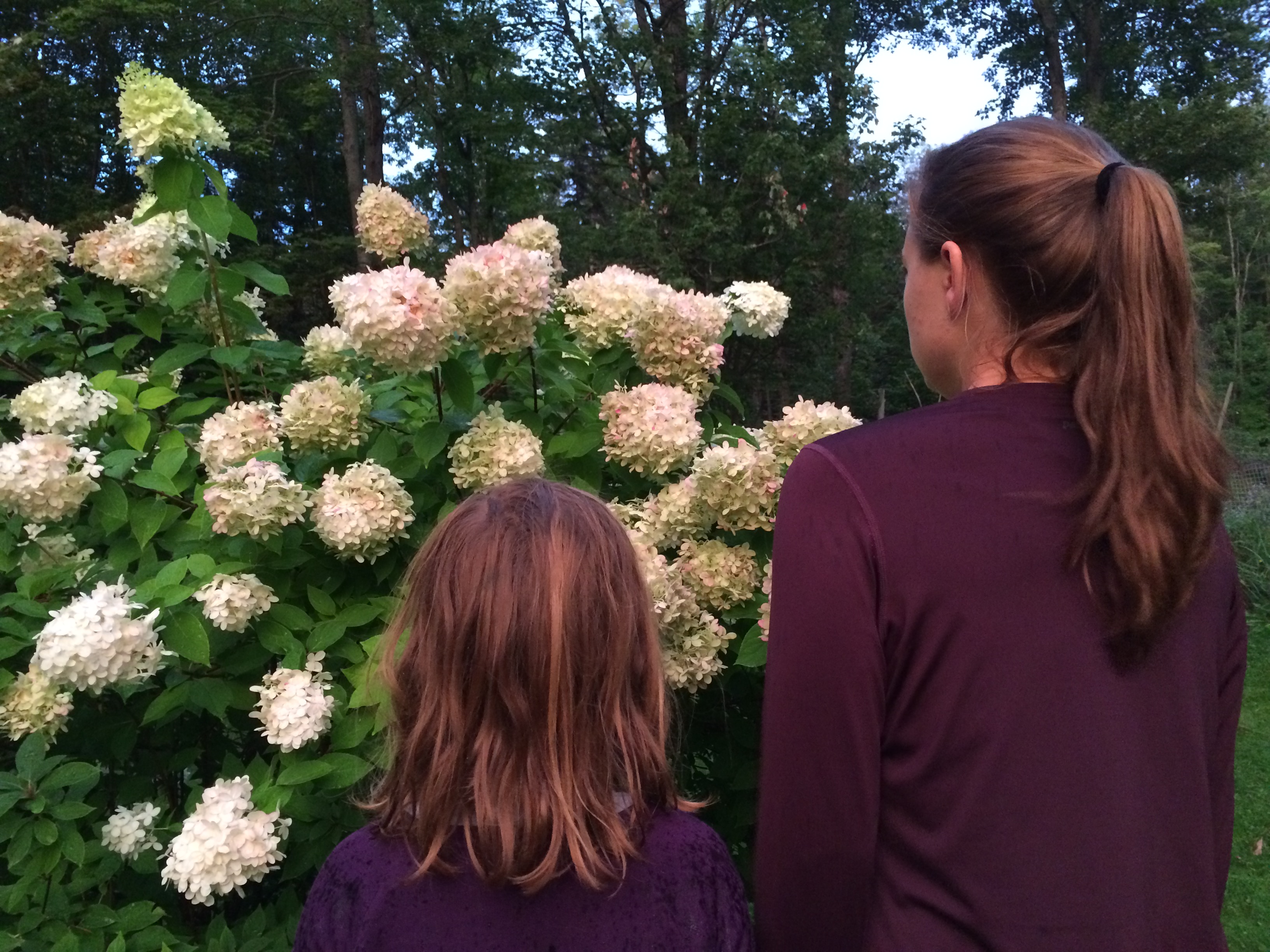
IMG_0066

October. Woodbury, Vermont

This Child I Nursed

Sixteen summers ago, I was selling maple syrup and homemade ice cream at the little Hardwick Farmers Market. The market was so small then, sometime we had just a few vendors. One lovely Vermont July afternoon I sold a bowl of ice cream to a woman in her fifties who ate the ice cream while chatting with me. Just me and the baby had come in the old pickup, and when she began to fuss, I sat on a cooler and nursed her. The woman and I kept talking, and she finally said, I’m so glad you can do that. When I had babies, women had to hide away when we nursed.

I think back now on my scrappy self then, in cut-offs and a t-shirt faded from infinite washings, my absolutely gorgeous red-cheeked baby in my arms, so young I believed my youth would last forever, and I realize that was the first time I had seen my personal life as political.

Tonight, this girl all stretched out into her own lengthy self, dressed up in new black boots and dangling earrings she bought with baby-sitting money, drove my car to her first high school dance.

Where did all that go, I sometimes wonder, my le leche league fervor, my farmers market zest? But if anything, my energy has intensified and strengthened, as a stream running down a mountain gains force, momentum, might. The channel of my force has diverted – to writing a book, keeping a small school open, guiding my oldest toward adulthood. The shadow of that much younger woman is yet deep within me, and someday, when my girls have their own beloveds, I intend to offer my daughters a bowl of ice cream while they nurse.

the lost baby poem

the time i dropped your almost body down
down to meet the waters under the city
and run one with the sewage to the sea
what did i know about waters rushing back
what did i know about drowning
or being drowned

you would have been born into winter
in the year of the disconnected gas
and no car we would have made the thin
walk over genesee hill into the canada wind
to watch you slip like ice into strangers’ hands
you would have fallen naked as snow into winter
if you were here i could tell you these
and some other things

if i am ever less than a mountain
for your definite brothers and sisters
let the rivers pour over my head
let the sea take me for a spiller
of seas let black men call me stranger
always for your never named sake

–– Lucille Clifton

IMG_2530