Children Laughing

A number of years ago, we were having dinner with friends in our kitchen, laughing and talking, when suddenly one of us ordered the others to be quiet. Our friend held up his hand. I had recently laid my baby in her crib upstairs, in that rosy end-of-the-day glow. She lay there babbling her echolalia, singing away happily in her own baby world. Our friend, whose children were older then, insisted we listen. Our own clamorous adult chatting ceased, and from the open room just above, we listened to the baby’s talk.

This morning, I sat on the couch and ceased my own work for a moment. My ten-year-old daughter and her friend were whispering in the bunk bed they had slept in together, giggling and planning their day off from school. Like a brook, their laughter tumbled to me, clear and sweet.

…Laugh at the night,
at the day, at the moon,
laugh at the twisted
streets of the island,
laugh at this clumsy
boy who loves you,
but when I open
my eyes and close them,
when my steps go,
when my steps return,
deny me bread, air,
light, spring,
but never your laughter
for I would die.

— Pablo Neruda

IMG_9507

Photo by Molly S.

November Blooms

I drove along the road to East Hardwick today, a narrow road I’ve driven countless times. I’ve transported numerous kids in many vehicles, often to the lake’s beach, wearing our swimsuits, the trunk filled with floaties, our bags packed with sunscreen and snacks and knitting. This road means to me little children in diapers, stacks of library books, and the long winter the crew worked on an old farmhouse along this road. The snow blows mercilessly across this road. This road means the public library at the end, and the general store where I buy groceries, mud boots, sugaring supplies and lemonade.

Today, driving a companion to a doctor’s appointment, we talked about his dream to get piglets and sheep. You have to think about something, he said.

There’s a line from a TC Boyle novel, World’s End, where a character defines himself as hard, soulless and free. How I aspired to that in my brash youth. But now, fully immersed in Dante’s woods, I see hardness crazes and breaks, whereas a malleable heart, smeared across the terrain of a road and intersecting journeys and lives, offers a tensile strength, the possibility for growth, the chance to bloom in this brief, dear life.

… The spring
will come soon. We will have more birthdays
with cakes and wine. This valley
will be full of flowers and birds.

–– Hayden Carruth

IMG_2678

Molly S. Photography

Child’s Starry Point of View

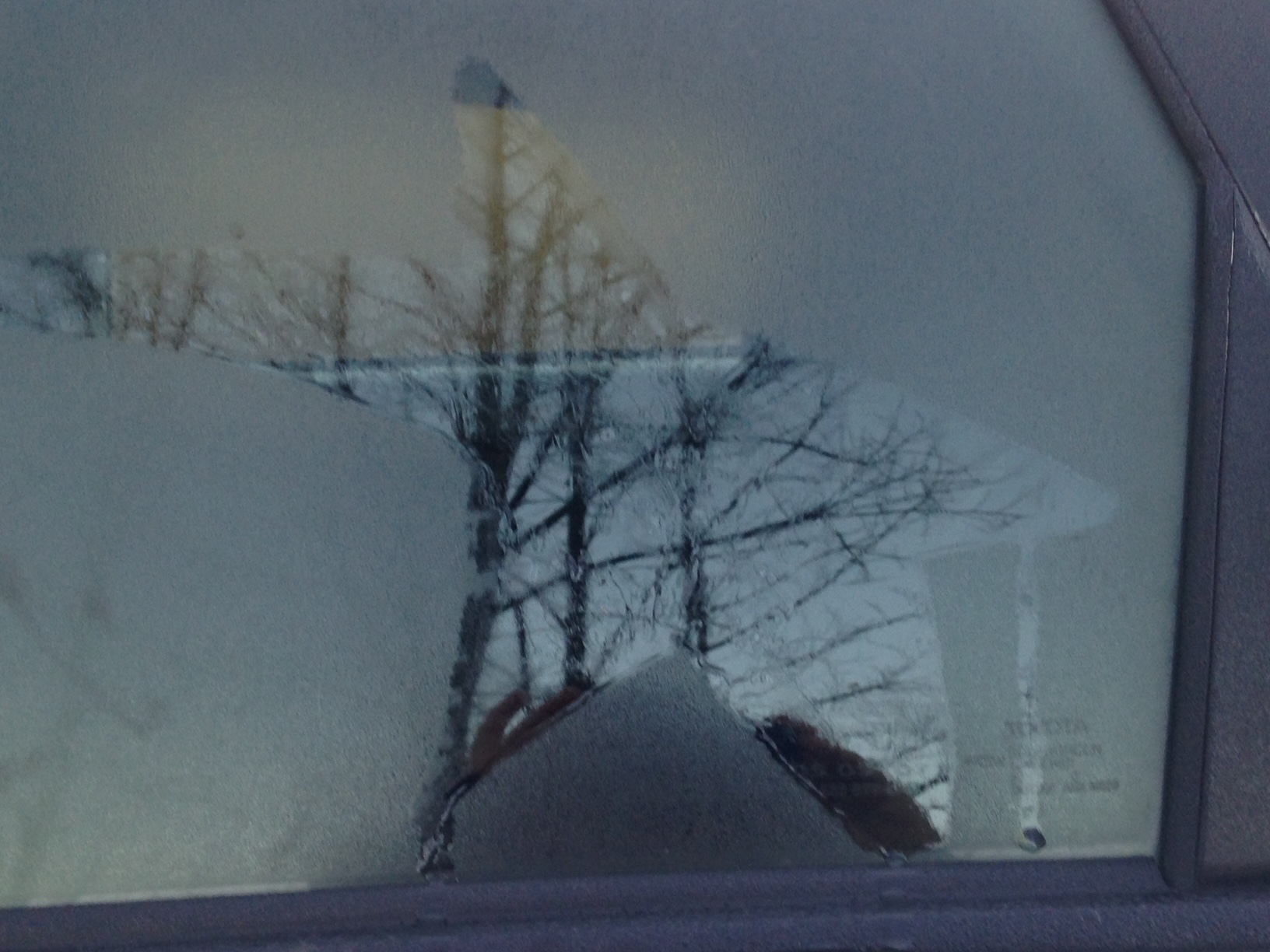
This November morning, stepping out on the porch in the early light, the air was balmy, that tender place of a nascent day. In the dew on the car’s back window, my younger daughter rubbed a five-pointed figure. So I can look out through a star, she told me.

From the clear day on our hillside, we drove down into the thick fog along the Lamoille River, and then up through the Woodbury gulch, where the clouds thinned and abruptly ceased. When we got to school, she gathered her things, then stood for a moment outside the car, looking at the window where the star had disappeared, leaving no trace.

She tipped her head to one side and pressed her hand over the glass. I asked her name.

She shrugged and laughed, then went into school to begin her day. Overhead, a heron winged its silent way to the wetlands.

If gold has been prized because it is the most inert element, changeless and incorruptible, water is prized for the opposite reason — its fluidity, mobility, changeability that make it a necessity and a metaphor for life itself. To value gold over water is to value economy over ecology, that which can be locked up over that which connects all things.

— Rebecca Solnit

IMG_0223

Ten-Year-Old Point of View

Both my children were very much planned and desired babies. I desperately – more than anything – wanted to become a mother. But what I didn’t anticipate was how much fun the kids would be. Now years past the baby and toddler stage, I returned from another long school meeting to my children reading beside the wood stove. The younger daughter, when she looked up at me, immediately launched into the rather long and complicated plot of the novel she’s reading.

She rubbed her fingertips over the pages and said, I love this book.

I love that she loves this book. Of course I do – I’m a writer and a reader myself – and, for  better or worse, I know parents often desire their children to be at least somewhat like themselves. Beyond myself, though, this child at 10 is opening up into her own person, too excited at night to sleep because she’s excited for school the next day. She’s curious and questioning and articulate about her world, living more deeply into what a writer calls POV: point of view. Her POV is her lens of the world, dynamic and shifting and, generally, infinitely interesting to me.

What’s most intriguing is that this child is decidedly not me, that she’s her own unfolding person. By the roadside this morning, on the way to school, she released a mouse from the trap. Look, mama, she insisted. The mouse is cute, really.

I crouched down beside my child and joined her point of view for a moment. The mouse, I saw, was perhaps not that vile, after all….

Take point of view. Editors will breezily comment that POV is child’s play, that naturally one is on top of simple stuff like that. But one is not. POV is far more subtle, complicated, and permanent….

–– Thomas McCormack

IMG_0220

West Woodbury, Vermont, November

Cycle of Seasons, Firewood, Re-Envisioning Your Soul….

Driving home today, last week’s mantel of golden leaves had fallen from Elmore Mountain, leaving only a dull gray and dark evergreen. In Vermont, the seasons change fierce and hard, the fall hammering away summer’s softness, the spring mud swallowing winter’s crystalline beauty.

The last of our winter’s firewood has yet to be stacked, sprawled over the grass. I’m impatient, anxious for the wood to be stacked and drying, my precious heat. My older daughter complains about the ceaselessness of this chore: we cut and split the wood, stack piles, carry armloads into the house, load the stove, shovel the ashes out, and do all this again. And again, and so on….

I point out this year I actually bought firewood.

Whatever, she says, rolling her eyes, exasperated.

As kindly as I can (which might be little), I say, But that’s life.

She’s sixteen; she’s not buying my advice. I can hardly fault my daughter. At sixteen, my own eyes were on the linear horizon, eyeing the freedom of the open road, the sky unbounded. I believed I could remake – or re-envision – my own soul. Perhaps, yet, even with my hands full of firewood and ashes, I still believe I can.

But you can’t get to any… truth by sitting in a field smiling beatifically, avoiding your anger and damage and grief. Your anger and damage and grief are the way to the truth. We don’t have much truth to express unless we have gone into those rooms and closets and woods and abysses that we were told not to go in to. When we have gone in and looked around for a long while, just breathing and finally taking it in – then we will be able to speak in our own voice and to stay in the present moment. And that moment is home.

–– Anne Lamott, Bird By Bird

IMG_0162

Burlington, Vermont

My House

While the girls and I were taking down screens and putting up storms today, I noticed a pane of glass had fallen from one of the windows. I was alone on the that side of the house and the window is slightly above my head, in an odd place above a bed of chives. This old window had fallen into such disrepair, its glazing entirely decrepit, that the pane had merely slipped down the house. I lifted the glass, about sixteen square inches, between my hands. That window with its peeling teal paint I had intended to scrape and paint this fall, but I had found neither time nor inclination for any of the windows. I held the pane up to the sunlight as if it were a smudged tear from the house, then set it carefully behind the chives where it wouldn’t be broken. I imagined the house shedding that tear of glass in the night.

My house seems more alive to me than it ever has before, with its rooms of children’s artwork, yarn, books, cobwebs and mud crumbles and the crates of garden onions I’ve yet to carry to the basement. Our house sings with light and joy and color in places; other corners need care and paint and trim. Like everything else in our lives, this house has a story, too, one that began before we arrived with the sprawling clutter of our lives, and one that will continue when we are gone, too.

This afternoon, we attended a memorial service for a neighbor, this woman who had helped build so many houses for family and friends. What a good thing, I thought. What a gift that will last.

Storm Windows

People are putting up storm windows now,
Or were, this morning, until the heavy rain
Drove them indoors. So, coming home at noon,
I saw storm windows lying on the ground,
Frame-full of rain; through the water and glass
I saw the crushed grass, how it seemed to stream
Away in lines like seaweed on the tide
Or blades of wheat leaning under the wind.
The ripple and splash of rain on the blurred glass
Seemed that it briefly said, as I walked by,
Something that I should have liked to say to you,
Something . . .the dry grass bent under the pane
Brimful of bouncing water . . . something of
A swaying clarity which blindly echoes
This lonely afternoon of memories
And missed desires, while the wintry rain
Unspeakable the distance in the mind!)
Runs on the standing windows and away.

Howard Nemerov

IMG_0111