Here: Where I/We Are.

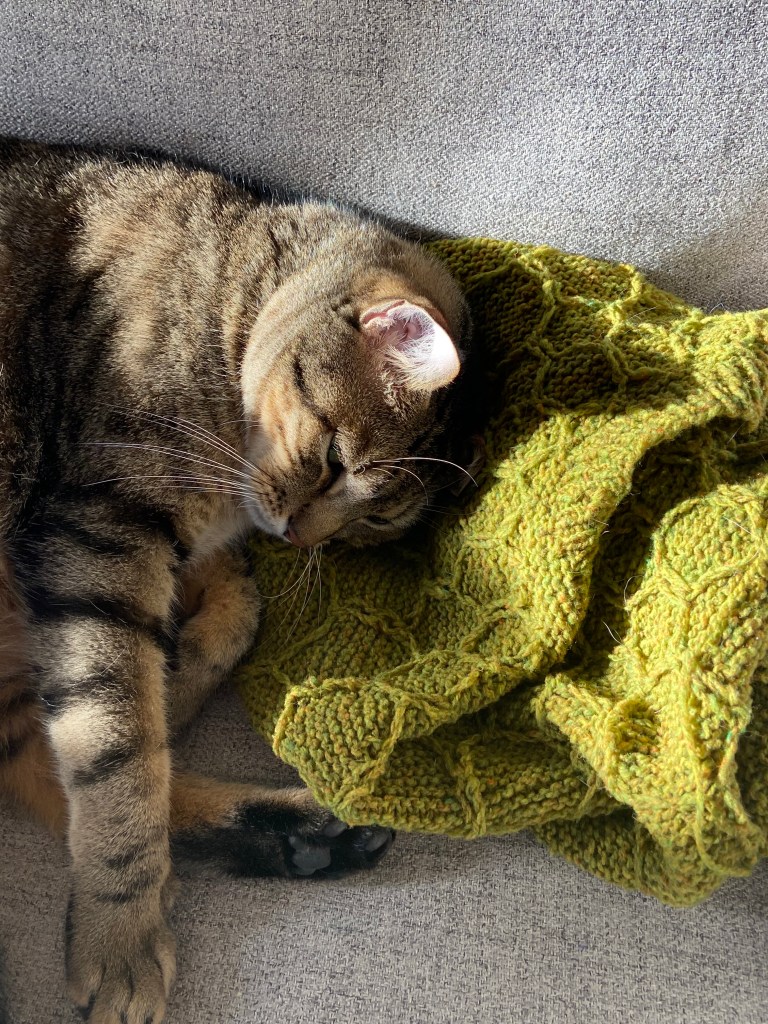
Post leaving my daughter in her college dorm, the cats and I hole up and read Here by Richard McGuire. A sample of this amazing book is:

Here: the cats and I wake, in the morning that’s yet dark, to the rain pattering through the open windows on the stones and leaves around our house. One more week of August remains, and the swimming prognosis is lousy.

Around me: backroads in places still barely passable, bridges out, the riverbanks strewn with human junk — pieces of the ripped-apart motel, wires wound around wood and twisted clothing and two cars and so much plastic. I started this summer, July 1, driving to an Independence Day celebration, cloudy with smoke from the Canadian wildfires, noting that day as my own marker: the smoke has become part of our life. We accepted it, kept on with our lives, as we had — and have — to do.

A summer of the strangest things. The world’s great problems, my own petty woes. In all this, we filled our days with working and drinking coffee, hiking and playing cards and eating tacos and talking, so much talking. Gravy.

On this rainy Friday morning, a Raymond Carver poem:

“Gravy”

No other word will do. For that’s what it was. Gravy.
Gravy, these past ten years.
Alive, sober, working, loving and
being loved by a good woman. Eleven years
ago he was told he had six months to live
at the rate he was going. And he was going
nowhere but down. So he changed his ways
somehow. He quit drinking! And the rest?
After that it was all gravy, every minute
of it, up to and including when he was told about,
well, some things that were breaking down and
building up inside his head. “Don’t weep for me,”
he said to his friends. “I’m a lucky man.
I’ve had ten years longer than I or anyone
expected. Pure gravy. And don’t forget it.”

Ordinary Mystery.

The moon shines brilliantly tonight as I walk down the street to the co-op for cheese and cauliflower. Lady Moon: round as a dime and luminescent like no earthly thing.

In the best of times, January can rage like a shrieking stranger, a visitor who’s arrived with too many needs.

This year, time has slowed to incomprehensible. We wake; we do our things. Work and email. I paint a room. I endeavor to write another book. I keep Unstitched moving along.

The ordinary happens: snow falls. All day and into the night. When I wake in the morning, there’s inches and inches of fresh, sparkling snow. It’s not a blizzard, not feet upon feet. I have little trouble finding my Subaru in the morning. But the snow sugars our world for this day in utter beauty.

The rest of everything is still there — the pandemic, the crumbling American Empire, the chaos of human relationships in my house and all around — but walking home, the cold is so sharp that the snow squeaks beneath my boots. For a moment, I’m a child again, mystified that fluffy snow can yield a squeak. But there you go. A mystery incarnate.

Here’s an interesting essay emailed in by a reader about growing saffron in Vermont — yes, saffron & Vermont.

Tasting Snow.

Where we are now….

In fresh snow, I walk through the little neighborhoods around us. One man shovels snow. A few plow trucks hurry through. It’s nearing dinner, and streetlights are turning on, one by one, in the December twilight.

It’s been a week of phone calls and problems with no clear solutions, simply the inevitable change that comes to all our earthly doings. I’ve wandered on this walk without real intention, drifting away from chopping firewood and shoveling paths.

I turn a corner and see a house where I once bought sugaring equipment from a man who lived there. He’s passed on, and his wife sold the house and moved away. A family lives there now. Two little boys call at each other in the street. There’s no traffic about, and they’re standing beneath the streetlight. As I walk closer, I see their heads are back, and they’re catching falling snowflakes in their open mouths. Their voices are loud and excited about this small thing.

A man comes out and says, Get in the car. They get in the backseat of an idling car, and he drives away. Back at my house, my daughters have brought in the night’s firewood and swept the floor.

And because bell hooks was so amazing, another line from her:

For me, forgiveness and compassion are always linked: how do we hold people accountable for wrongdoing and yet at the same time remain in touch with their humanity enough to believe in their capacity to be transformed?

Fox in the Night.

My daughter brings home a booster shot and sticks my arm. That night, I wake with dreams of email and work, of words that move through my mind, and then all of that passes. The cats and I lie before the wood stove, watching the flicking red embers through the glass. After each of my children’s births, I felt as though I had reached through a channel and touched the other world, that realm where I originated and where someday again I’ll return. A friend’s brother passes from Covid. She tells me, God must have a plan, but I don’t know what it is. For a moment, I think wicked thoughts about Catholicism, but that passes, too. Who am I to judge her faith, what will carry her and her family through hard days? In these December days of scant light and long nights, my daughter comes into my room and opens my window, waking me. A fox screams. We kneel at the window, gazing at the snow on the giant mock orange beside our house. The fox shrieks again. We listen, hard. In my mind, I begin imaging a message here — the two of us, the cold air, the moonless night, wild creature. Then I quit and simply listen.

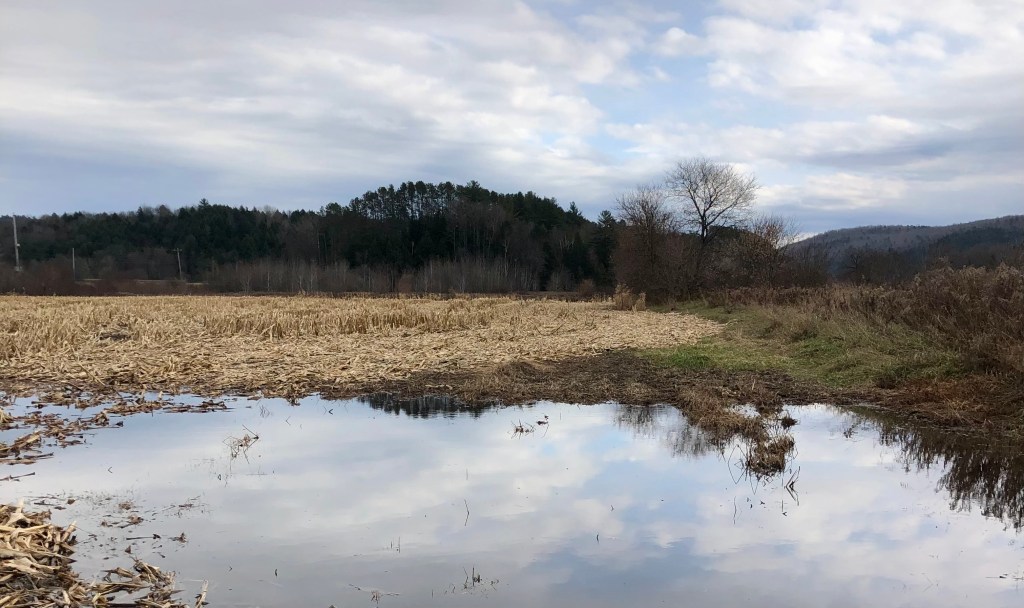
Reflective Waters.

Hello, November. Hello, time of reflection. Hello long holiday season, and all that complicatedness.

In that vein, here’s a few lines from Lawrence Weschler’s essay Vermeer in Bosnia.

… what that story [of Jesus parting the Sea of Galilee] is trying to tell us is simply that in times of storm, we mustn’t allow the storm to enter ourselves; rather, we have to find peace inside ourselves and breathe it out.”

I would add to this — do this through cooking or writing or knitting or painting the living room wall. Hands, hearts, and minds.

Resilience.

There’s few folks at the high school on a rainy late afternoon I appear. The November rain is soot-gray and cold as river stones. I haven’t been to a teacher conference in years now.

For a moment, I step into my life, six years ago, when my oldest daughter was in this same exact classroom, with this same teacher. He’s a parent now. I’m divorced, and I’ve published another book.

The majority of my daughter’s and her peers’ high school years have now been immersed in the pandemic. Her teacher reiterates, These kids are resilient.

I walk back out in an early twilight, removing my mask and breathing in the wet air. This is the strange, otherworldly time of year — twilight at four. There’s plenty of waking hours yet ahead of me — those games of Uno my daughter and I will play while she shares seagull-sized snippets of her day. We’ll cook bacon and eggs for dinner. In the dark, I’ll leave her to her homework, and I’ll drive to another town for a Development Review Board hearing. That night, I know it will be myself, alone, in that three-story former schoolhouse, fulfilling the state’s in-person requirement, while everyone else is in their living room. I know the meeting will be civil and pleasant and full of the open kindness I expect from these people. When we’re finished, I’ll fold up my laptop and stand for a moment outside again, beneath the door’s overhang, the rain pouring down, sparkling in that single outdoor light, small bits in the unbreakable darkness.

My own resilience is like a river stone, a worn-down, solid thing. Rain, darkness, the breeze from the lake hidden in the cedars. Kids, I think, kids. I carry that word kids home in my heart.

Postcard I received in the mail yesterday from Vermont Almanac — a second collection of Vermont writers due out shortly. How great is that?