The Long Night Moon.

In the year’s tail-end days, the neighbors’ children sled down their short hill, hats off, snowsuits unzipped in the warm afternoon. I wander over with a tin of sweets and chat for a bit about sledding conditions, getting the low-down on the mixture of slush and ice. The full moon rises silently, December’s Long Night Moon. Various blues layer the sky, the hues that remind me of the sea in my land-locked geography.

During the in-between pieces of holiday and work, I’m slowly savoring The Eight Mountains by Paolo Cognetti, an Italian novel about deep friendship and love of great mountains. A main character, Bruno, speaks about rebuilding a tumbled-in Alpine house: “Look, it doesn’t matter how long it takes. If you try to think too far ahead with this kind of work, it’ll drive you nuts.” Likewise: writing a book, parenting, living a life.

The neighbors’ children offer me a handful of wet snow, chock-full with dirt and last year’s sunflower seed hulls.
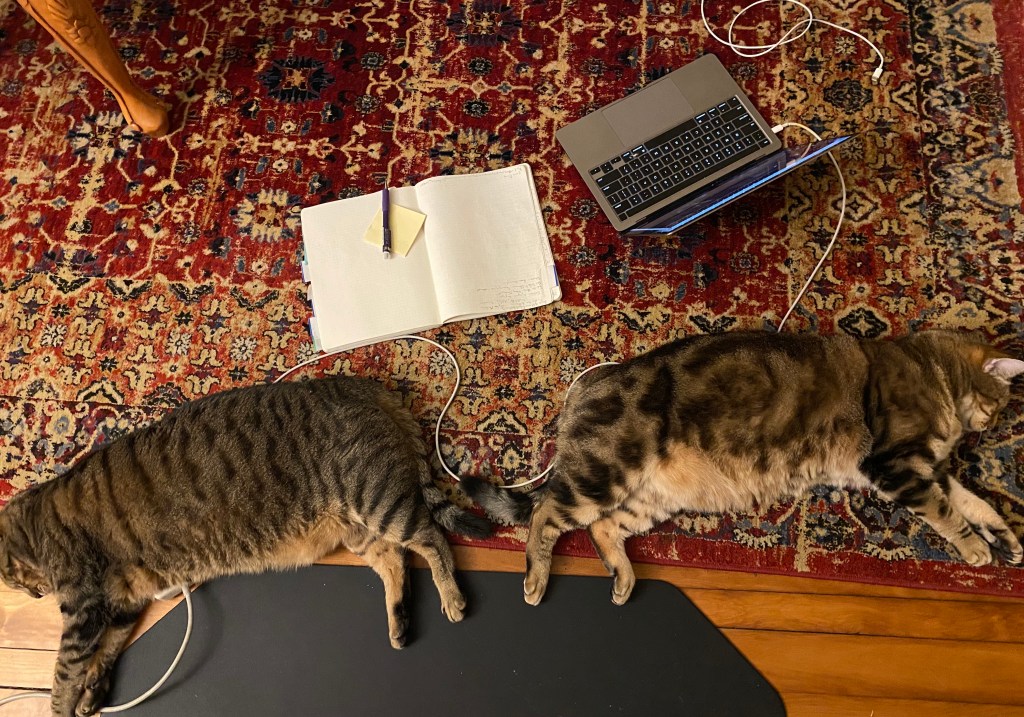
Your place in the world.

A rare mid-December day of sunlight, and the town seems festive, stirred by the truly false promise of spring. Not true, not true.

December’s a season of reckoning, of that inevitable look back across the months, to a year ago, to five, more. I’m old enough now that the seasons jumble into a Jacob’s Ladder of years: the Christmas of the hoar frost, the year a mouse drank from our Christmas tree stand, the 60 degree Christmas Eve my brother’s dog went swimming and gasped from the cold. The December snow fell every single day. That year, holed in the house with sick children, I wondered if I would go mad; I did not. All past, all somehow yet still with us. Heraclitus reminds us that the single constant in this life is change, and yet it’s still the same molecular stuff arranging and re-arranging, by the force of the universe and our sheer human will.

Oh December: you heartbreaker, you. Sleet and radiant sunlight in the span of a few days. Icicles drip. Chickadees whistle in the white pines. My wood chores finished, the compost bin dug out, I linger in the sun, leaning against the house, reading Paolo Cognetti:

You find your place in the world much less predictably than you’d imagine.