“…the strange idea of continuous living…”

A knock at my kitchen door wakes me. Midafternoon, home from a long morning at Dartmouth for routine things, nothing major, but a day that began in the dark after scant sleep. The week before, I’d left a message for a man who painted three sides of my house a few years ago to ask about an estimate for my barn and that fourth side that somehow I’d never painted. Last fall, sick and not knowing the (cancer) reason why, I’d managed to get out my sander, but that was about as far as that plan went.

The painter is a person my daughter and I know in our overlapping circles, so I’m not surprised when he says he’d heard of my illness. We talk for a bit in my kitchen. Then I grab my sweater, and we walk around the barn. A stunning sunlight makes me blink. Our conversation winds around primer and caulking and ladders. In the back, where the woodchucks claim domain, the painter turns the conversation towards politics and the word that’s so commonly used now — cutting. We talk about cancer research (which saved my life) and the bitch of enduring chemotherapy. A house finch perches in the honeysuckle in the wild tangles below my house. The honeysuckle’s bent branches are dotted with tiny fans of new leaves.

It’s been a day for me. I once had unbounded energy that I spent so easily with my garden shovel, my paintbrush, laptop, trowel, my two hands. I lean back against the barn’s peeling clapboards, beside last summer’s clematis vine that appears shriveled, used-up, no good. I have complete faith this beauty will bloom again this year. Listening to the painter, I wonder, why make any guesses about anyone or anything, really? What will happen will happen. Yet, I can’t help myself. I’m betting on the clematis and its purple flowers. The painter offers me his good will, and I take that, too.

Instructions on Not Giving Up

More than the fuchsia funnels breaking out
of the crabapple tree, more than the neighbor’s
almost obscene display of cherry limbs shoving
their cotton candy-colored blossoms to the slate
sky of Spring rains, it’s the greening of the trees
that really gets to me. When all the shock of white
and taffy, the world’s baubles and trinkets, leave
the pavement strewn with the confetti of aftermath,
the leaves come. Patient, plodding, a green skin
growing over whatever winter did to us, a return
to the strange idea of continuous living despite
the mess of us, the hurt, the empty. Fine then,
I’ll take it, the tree seems to say, a new slick leaf
unfurling like a fist to an open palm, I’ll take it all.

~ Ada Limón

We are every experience we’ve ever had…

A sunny morning, I’m at a place I’ve never been before, a sizable post-and-beam gallery at the end of a road. A fenced vegetable and flower garden shines orange and gold. A marble bust smiles mysteriously.

I love this about Vermont: these unexpected pockets of mighty talent. The woman’s house is built around the gallery — a beauty of wood and stone and glass. We talk for a while, and we discover that her artist parents were from the same midwest area as my father — Detroit — and then she opens the gallery and takes me in. Let me say here: I’ve been around the block a few times, seen my share of museums and art; I’m also feeling this sunny morning like the dirt road my Subaru tires pounded into, driving uphill.

The gallery ceiling soars in a peak. The wooden space holds the owner’s and her deceased parents’ work. She allows me walk through the metal sculptures wordlessly. Then I stand beside an oil portrait of a woman wearing a black and red dress that reminds me of a velvet blouse I bought for a friend, many years ago, when she graduated from college. The woman in the painting rests her chin on her fist.

The owner looks at me. “It’s always the females who are drawn to her.”

“She’s me.” Woman of a thousand and one sleepless nights, bread baker, hearth tender, the woman who swam under the luscious full harvest moon. Woman hard as these back roads, fragile as coreopsis.

We walk upstairs and finish the tour. Before I leave, though, I stand again before this portrait, a long soulful moment. “Gracious,” I say, “gracious.”

“…we are everything, every experience we’ve ever had, and in some of us, a lot of it translates and makes patterns, poems. But, my God, we don’t even began to touch upon it. There’s an enormous amount, but we can touch such a little.” – Ruth Stone

Monsters. Childcare.

I stand outside the town office building, eating leftover beet-carrot-garlic salad for lunch, watching the sky alternately break apart in sun or drop rain. If there’s a rainbow, it eludes me. A retired couple who lives up the street walks by, returning from their daily post office walk. We kick around the news: a petition to close the town’s elementary school and how last night’s snow turned to rain.

Slushy, slushy.

The wind kicks up a hint-of-late-February warmth, the way that month can smell of thawing earth, of the gradual thaw-and-freeze-and-thaw that morphs into spring. Midwinter here, the weather out of whack. The afternoon opens into sunlight. The sun’s rare January appearance carries me through the afternoon and into a cheerily ebullient Selectboard meeting, and home again along an icy road, the stars glittering over hayfields, to play cards with my daughter while the cats savor their feline leisure, sprawled before the wood stove.

I lay awake late reading Claire Dederer’s Monsters. Dederer writes:

… the genius is not you. Not me. The genius, as we understand it, is not the person who spends most of her time, and I mean that quite literally, thinking about childcare. My major artistic concern for the past twenty years has been childcare, it has preoccupied me more than any other subject; even now that my children are mostly grown I’m still not sure I managed it well, I lie awake worrying about it, and meanwhile old Pablo was putting out cigarettes on his girlfriend’s face.

The Pleasures of Creation.

An old friend and I walk through the hilly town forest, sharing the tenor of stories that are manna for my soul: which ways our lives have turned and bent, what are the elements that shape us and our families. A little sleet or maybe rain patters down on what remains of the leaves.

On my way home, I stop at the coffee shop and drink espresso in my damp sweater smelling of sheep — a lovely barnyard smell or a repulsive one, depending on the person I suppose. I carry my laptop and my notebook back home to my wood stove and my cats who remind me their needs are few and the most reasonable constant in this house.

By five, it’s dark as the inside of a pocket. Public radio spins in the greater world. In my tiny dining room, I pull a book from shelf and set it on the table, then another and another. In an hour or so, by then listening to This American Life about rats, I’m in the basement searching for the half-full can of Sunshine paint I used in the bathroom last winter.

Three more walls await me. I’m out of paint and decide a lime-lemon will suffice. I’ll need to drive that half-mile to the hardware store, which annoys me as I have brand-new studs on my snow tires, and why waste those on dry pavement?

All this: it’s that old familiar question, that rub between creation and destruction. Espresso and sunshine-yellow paint have never cured the world’s ills, but a slice of pleasure can’t harm.

In my bookshelves, I find a poem I printed out shortly before the pandemic nailed shut Vermont, still utterly relevant today:

Blackbirds
by Julie Cadwallader Staub

I am 52 years old, and have spent
truly the better part
of my life out-of-doors
but yesterday I heard a new sound above my head
a rustling, ruffling quietness in the spring air

and when I turned my face upward
I saw a flock of blackbirds
rounding a curve I didn’t know was there
and the sound was simply all those wings,
all those feathers against air, against gravity
and such a beautiful winning:
the whole flock taking a long, wide turn
as if of one body and one mind.

How do they do that?

If we lived only in human society
what a puny existence that would be

but instead we live and move and have our being
here, in this curving and soaring world
that is not our own
so when mercy and tenderness triumph in our lives
and when, even more rarely, we unite and move together
toward a common good,

we can think to ourselves:

ah yes, this is how it’s meant to be.

Making Things…

Mid-January, the earth is covered with ice and a crunchy snow a few inches deep. The meditative qualities of walking are swallowed up by fear of slipping or the grinding of hard snow beneath boots. People complain. Complaining is a normal winter’s activity, so are ice and snow, and yet — I’ll reiterate for what seems like the hundredth time again — we’ve slipped out of the cog of normalcy.

What I do:

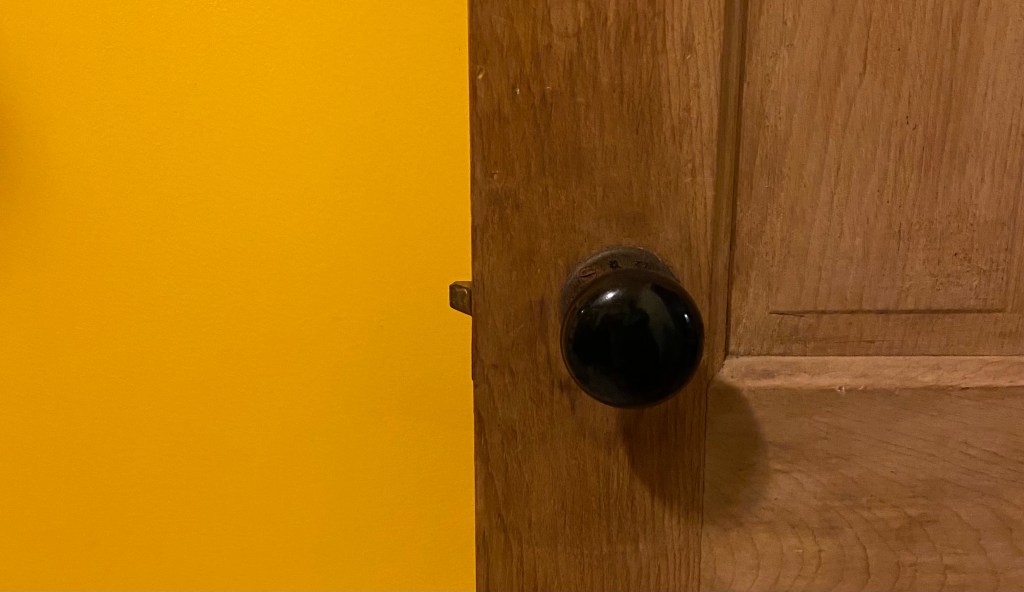
I finish painting the bathroom (one Sunshine wall, the others Vanilla Ice Cream).

I’m diligent at my work.

My daughter and I go out for coffee, struggle through the CSS profile on financial forms, talk and talk and circle around.

I rise early every morning and rewrite my novel, snip, stitch, elaborate, with my imagination and my hands. In the night, I wake and lay more wood on the fire, pieces of my life arising in words: loons and dahlias and betrayal and desire.

On a Jane Alison bender (Meander, Spiral, Explode: Design and Pattern in Narrative), I inter-library-loan Alison’s memoir of how her parents switched partners with another couple, The Sisters Antipodes. Alison writes, “Making things helps make you.”

Sunlight on Sunday, a stiff breeze that jangles the wind chimes.

Pique.

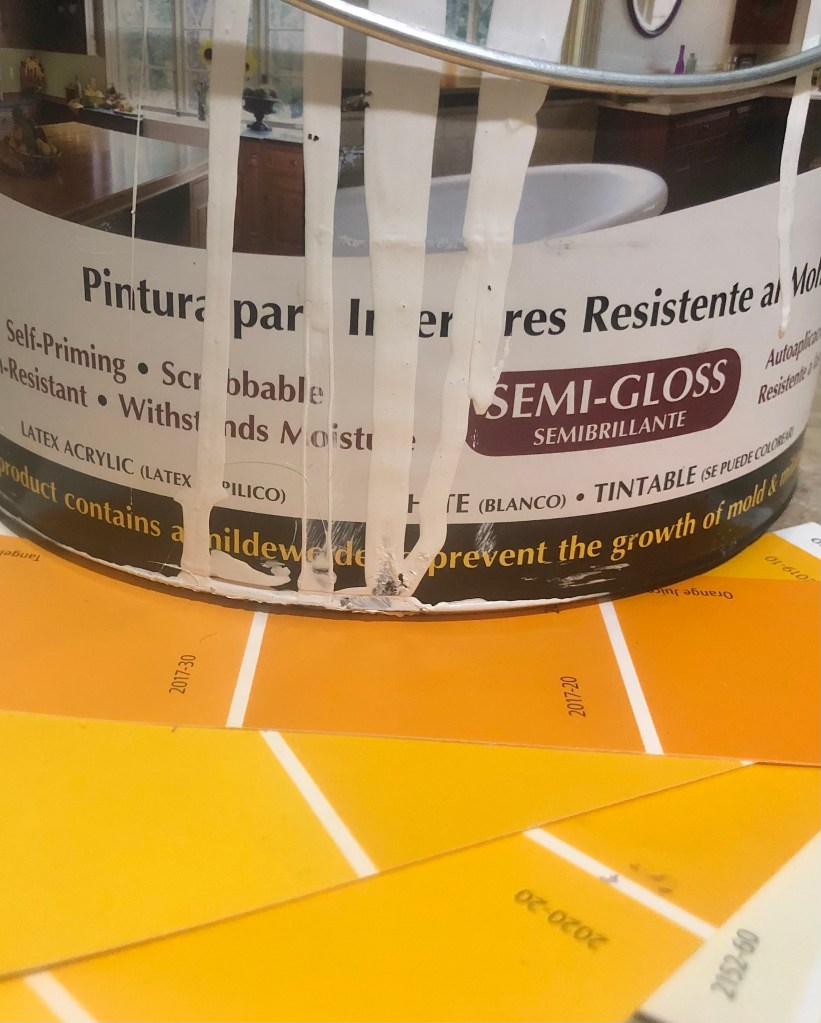
Anyone who knows me knows that winter pulls out my mania for painting. In a fit of what I can only describe as sheer irritation, I bleach mold from the bathroom ceiling and then ask for primer advice at the hardware store.

The store is darn near empty, save for two clerks and a black cat who rolls on its back on the counter and flicks a pearl-tipped tail at me. A clerk walks back with me to the paint section. She and I have been on a first name basis for years. While my gallon of primer is on the shaker, she shares her bathroom ceiling painting experience, and I offer this small problem and ask her to solve it. We walk back slowly to the front counter. She’s been my height for years, but as we walk and talk, I realize she’s slipped down below my height, and my height is definitely (as my brother might claim) substandard.

A man in logger’s chaps pays for discounted Christmas tree lights and a Twix bar and grouses about the rain and the mud, and how can there be a January thaw when we’ve had no winter?

The clerk spreads my paint samples over the counter and asks if I’ve narrowed down any color choices. She lays one finger on the color named Sunshine. “This one,” she suggests.

I gather my primer, stir stick, the lightbulb for over the kitchen stove, and head out. Ahead of me lies an afternoon of careful work, of NPR and stories from around the world, so many places hemorrhaging in ways that far outstrip my tiny mold project. As I’ve always done, I join my head and hands in a creative project. My own imagination won’t heal the world, but surely it won’t harm.