How Does Your Garden Grow?

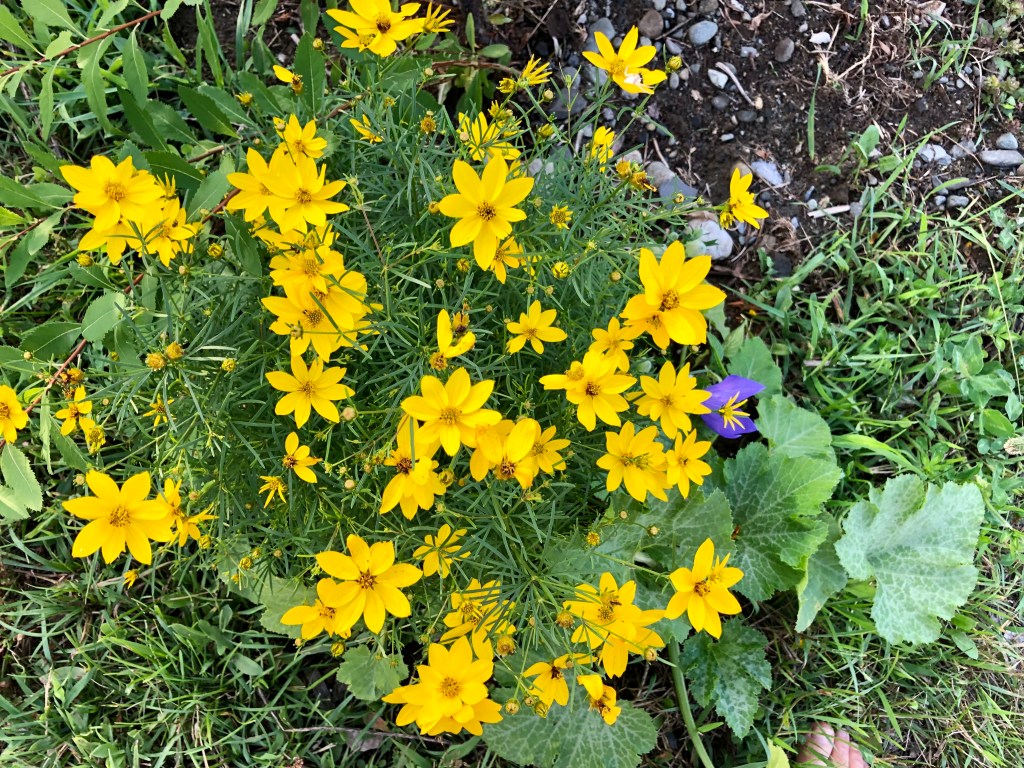
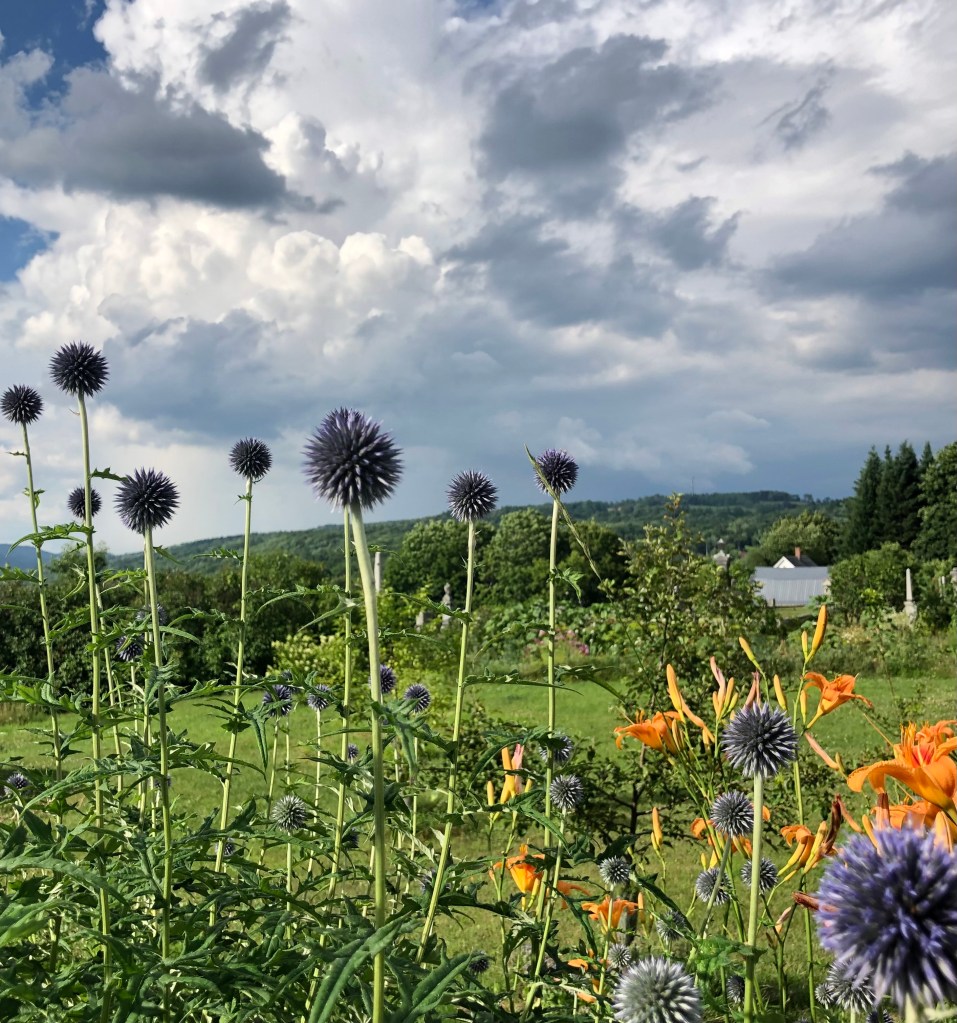
This year, I planted the garden how I was drawn to this patch of earth in spring — not how I thought I should plant it. For years now, I’ve been the most diligent of gardeners — all those tidy rows of beets and broccoli. This year, I ate some radishes and let the rest go to seed and flower. Marigolds run rampart. I duck beneath the sunflowers. Somewhere in the calendula the peppers are hidden.

There’s a definite metaphor here, a clear lesson, but to heck with that. August and flowers. They’ll last little enough as it is.

July 31. Swim.

The dog is a new thing in our lives. My oldest daughter lives nearby with a sweet and curious dog. Yesterday, we brought the dog into our house to meet our two house cats. One cat remained on the kitchen table in his beloved cardboard box (I know, I know who allows things like this? a cat in a box on the kitchen table not for an hour or a day but for months?), paw crooked over the edge of the box, looking at the dog in the cool disdainful way of felines. Our other cat trembled in the doorway, holding his ground. Curious, cautious, verging on endearing and ridiculous. The dog seemed just happy to be there.

We decided to swim and took a giant floatie shaped like a pineapple that I had bought last year for camping. Jammed in the trunk, the floatie hung over the backseat which bothered the dog, who moved into the passenger seat. My daughters sat in the back under the floatie. I drove and talked to the dog. The wind blew in through the windows, muting my daughters’ voices. So many miles I drove with kids in the back, looking over my hands on the steering wheel. For few miles, I was back in the world of young motherhood.

Despite the heat, the lake wasn’t crowded in the least. A woman walked down the sandy path holding a beer can. She and the group at the far end exclaimed that they hadn’t seen each other in thirty years. My oldest whispered, Thirty years? I answered, What’s thirty years, really, forgetting entirely for a moment my daughter is far younger than thirty.

The drive to the lake was a short one. After swimming, we went up the road to the general store and ate pizza on the deck. We chatted with people we saw all the time, and some we hadn’t seen in years. The dog — good creature — waited patiently.

Authenticity.

With a stranger, I have a passing conversation regarding a documentary about Gabor Maté. My father recommended the documentary. I originally pointed my father in the direction of Maté when I picked up In the Realm of Hungry Ghosts in a house where my daughters were catsitting. And so it goes…

This stranger, too, has coincidentally just seen the documentary. We’re standing outside the post office, talking, the afternoon sun bright in our eyes. The documentary is about drama and authenticity. I ramble on about authenticity, how I once considered an authentic life something like enjoying cheese, whether it was artisan cheese or Velveeta, just really leaning into life. What an utterly superficial understanding of authenticity, I muse.

What about doubt? What about fear?

This morning, fog lies in the valley, forerunner of fall. Authentic as all get-out.

“You may do this, I tell you, it is permitted. Begin again the story of your life.” 

― Jane Hirshfield

Clouds.

Saturday morning, I pick up a stack of library books at a town just north of where I live. As I drive away, I see an acquaintance crossing the road with a baby against his shoulder. This is a tiny town with a white-fenced green in its center where a farmers market has sprawled. I stop my Subaru in the middle of the road and jump out. “Let me see your baby!”

The baby is beautiful, its cheeks fat beneath a sunhat, rosebud mouth gnawing on a blanket.

The father and I talk just for a moment. He shares the baby’s name, and I tell him how rarely I seem to see infants these days. A car appears behind us, and I get back in my car. As I’m leaving, the father calls after me that he loved my book.

Driving home, I pass Lake Eligo, a deep glacial cut, all the blues and greens I can think of mixed into this sunlight-glittering beauty. From work, I know the skinny roads around this lake, and I follow a dirt lane to a dead-end. I park and wander down to the wetland shore. I’m thinking of an essay I’m writing about my last pregnancy, puzzling over how to arrange pieces of time. What makes sense? A linear timeframe, but we experience the world beyond the linear timeframe of course.

The lake empties both north and south, an anomaly, too. The planet is burning up, but the edge of this lake is almost cool. A bullfrog bellows in the weeds. I let those words and that writing koan slip away. For this moment, I’m in no rush. Clouds, water, and the reflection where they meet fill my sight.

Saturday. Stories.

In the classic scenario of Saturday plans waylaid, I end up driving here and there this morning, for errands that may or may not make any difference at all. That seems to be where we are these days — maybe, maybe not.

July has warmed, and I work on the back deck, in the shade of our table umbrella, drinking cold coffee.

An acquaintance I haven’t seen in a while stops by. We stand in the shade of my house, talking. He found my book in a yard shade and bought it. Then he tells me his own story of drinking and how he rose up against it. I’d known a few strands of this story, little bits, here and there, that he’d freely given me before. But his telling and my listening slips me back into that sacred space of stories. The telling. The listening. Nothing maybe about that at all.

“A story has no beginning or end: arbitrarily one chooses that moment of experience from which to look back or from which to look ahead.”

— Graham Greene

Travels and Home Again.

Portland, Maine

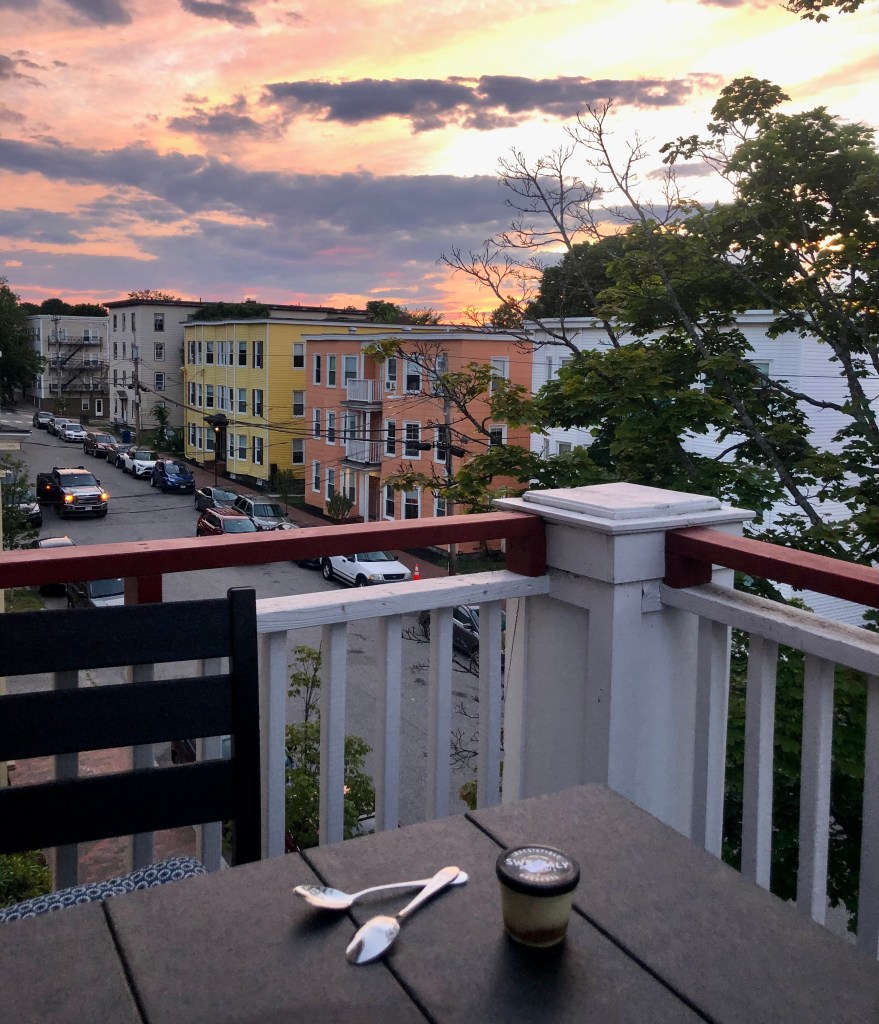
In the bit of time my brother and I drove through Portland recently, we talked about a few things — where to find a good cup of coffee and that my family grew up in the pandemic. Like that — and somehow, not like that. The next morning, with real regret, I sweep up the few things we’ve left around the apartment I’ve rented for a few days, gathering cherries from the refrigerator and sandy towels from the entryway.

At home later that evening, I wander through my garden. The hydrangeas and blueberry bushes I planted five years ago have now begun to thrive — or some of them. With my fingers, I slip off Japanese beetles.

July in Vermont is the season of utter growth, the one shot to rocket forward to the sun. Each day dawns with possibility — swim or don’t swim. Work long hours with an aim of working less on sunnier days. This is summer’s calculus. Slow down, slow down.

“To me, poetry is somebody standing up, so to speak, and saying, with as little concealment as possible, what it is for him or her to be on earth at this moment.” 

— Galway Kinnell