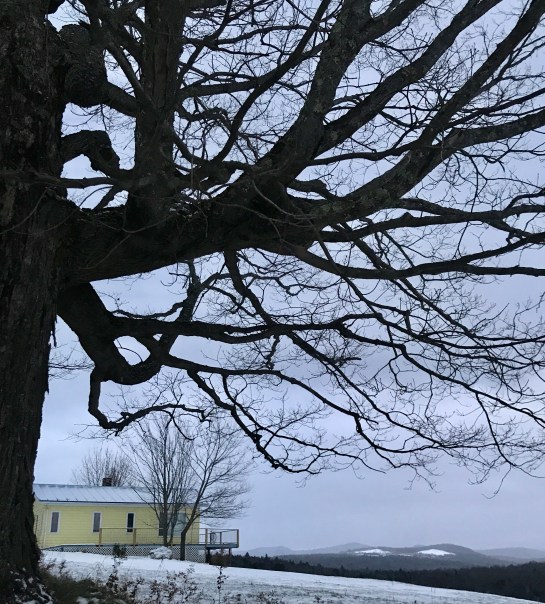
Saturday morning, we wake to a snowfall — gorgeous fat flakes swirling down — the kind of sparkling snow that miraculously turns the world brand-new and utterly beautiful.
In early afternoon when I return from work, the girls have shoveled the paths and driveway and deck. Inside, they’re drinking tea in front of the wood stove and putting together a puzzle my sister sent from Virginia, a pretty blue puzzle with birds.
I stand at the glass door drinking coffee, thinking where I stood that morning, on the shores of Caspian Lake, its center obscured by drapes of falling snow. Bundled in hats and masks and scarves, I stood talking with another woman about the small town planning process. Then our conversation wandered into the oddities of human life, how determined we all are at times — and I’ll put myself firmly there — to keep our attention focused on our own little stamp of land and home, be it a postage-stamp-sized piece or hundreds of acres. Meanwhile, the snow, the rising and setting sun, the wandering woodland creatures, continue on.
Saturday afternoon, I claim my own place near the fire and read The New Yorker‘s recent “The Plague Year” by Lawrence Wright, reading aloud pieces to my daughters, saying, This is the history you’re living through. This is your story, too…. It’s a lesson for me, too, when I dream of living elsewhere, where sleet doesn’t fall, where the cost of living isn’t crazy-high, where the sun shines even in the heart of winter — a reminder for me to embrace my own accidental luck to live here.
Nations and states that have done relatively well during this crisis have been led by strong, compassionate, decisive leaders who speak candidly with their constituents. In Vermont, Governor Phil Scott, a Republican, closed the state early, and reopened cautiously, keeping the number of cases and the death toll low. “This should be the model for the country,” Fauci told state leaders, in September. If the national fatality rate were the same as Vermont’s, some two hundred and fifty thousand Americans would still be alive.
— Lawrence Wright