A Few Words

My daughter drives through a thunderstorm while, in the passenger seat, I try to conjure all the terrible things she might drive through — sleet and squalls — as if my imagination can create a charm against bad luck for her.

It’s idiotic, I know, but I keep talking until she tells me I’m wasting my words. You keep using up words, she tells me, and you only have so many words to use.

I start laughing. Since when, I ask, is there a limit on words? Hello? As a writer, I believe words are limitless.

No, she says. You only have so many.

And then what? I ask.

Then, you die.

As she drives northward, the rain lessens, and eventually the pavement is dry. We wind through the loveliest landscape of apple trees bent under white blossoms, as if we’ve entered into a watercolorist’s landscape.

I had no idea, I say.

Well, she says, her eyes merry. Now you do.

Unfolding, Opening Up

Midday Friday, I’m driving and listening to the Governor’s Friday press conference. For maybe 14 months now, the Governor and his cabinet have answered questions from the press all over Vermont every Tuesday and Friday — with no time limit.

I’m listening so intently, I make a wrong turn, back around, and drive on a dirt road along a river, looking for a bridge and the chance to cross. It’s May, and the roadside are strewn with brilliantly gold marsh marigolds.

I cross, then pull over and clamber down a steep embankment to the river. I’m late, already, to where I’m headed, but this May midday is so green and warm, so filled with sunlight and the promise of spring, that I feel out-of-time, as if this moment might linger forever.

I crouch near the current, broken in place by rocks that have been worn down by the ages of water and ice. I remember, so long ago, in March 2020, listening to one of the Governor’s first press conferences about the pandemic, standing in my living room with my youngest. She was delighted to be out of school for a bit; I kept wondering, what is happening?

Now, so many months later, I’ve heard hours of: look at the facts, admit what you don’t know, be decent to others, and act as a member of a society. As a writer, I interpret this as context matters. We live in the context.

We’re somewhere in May now, the ice cream cone season in Vermont. Eventually, I take off my sandals and walk barefoot up that riverbank, the day drenched in beauty.

The cool breeze.

With all his strength

The cricket.

— Issa

Travels

Saturday, my daughter and I drive through Montpelier, Vermont’s capitol city. I’m in the passenger seat, as I always seem to be these days, while she negotiates intersects. Who has right-of-way? When can you turn right on red?

Eventually, she parks, and we walk around town.

At a take-out window, I order her a milkshake. Since she can’t walk down the street and drink a milkshake with a mask, we sit on the state house lawn, while she drinks the milkshake. I lie back beneath the immense maple tree and remember nursing her here, sixteen summers ago.

Eventually, she looks at me, and says, There’s so many people.

It’s true; people are walking back and forth to the farmers’ market. College students are playing frisbee. Families are everywhere. But it’s also Vermont and not particularly populous.

At just a few weeks shy of sixteen, my daughter straddles that terrain between girl and woman, beautiful and strong and curious.

Looking at her, I marvel that over a year of her life has been spent in such isolation, our world shuttered up.

On our walk back to our car, we stop beneath the crab apple blossoms and breathe in. Spring.

Yes
William Stafford
 
It could happen any time, tornado,
earthquake, Armageddon. It could happen.
Or sunshine, love, salvation.
It could, you know. That’s why we wake
and look out––no guarantees
in this life.
But some bonuses, like morning,
like right now, like noon,
like evening.

Roaming

Hard up for reading material, I get my 15-year-old to drive to Craftsbury, where I raid the free book pile on the porch.

In this village, we see no one, not a single human soul, only two geese flying overhead. It’s late Saturday afternoon, and she keeps driving on the dirt roads, heading by the Outdoor Center where I worked many years ago, and then by the summer camp where she spent happy summer weeks.

The road crests by the old farmhouse where our friends lived for years, and where we spent so many happy hours. She slows, and we look carefully. The house has been freshly painted and glows a pale yellow on that green hillside.

In one of those strange twists of fate, my former husband and I had also considered buying this house before our friends — who were not yet our friends — did. At that time, the farmhouse hadn’t been inhabited for a few years. A couple with two children had lived there, divorced, and the house had been snarled in the divorce.

In one bedroom, in place of a headboard, pillows had been stapled to the wall. I remember thinking, Who would ever think that’s a good idea?

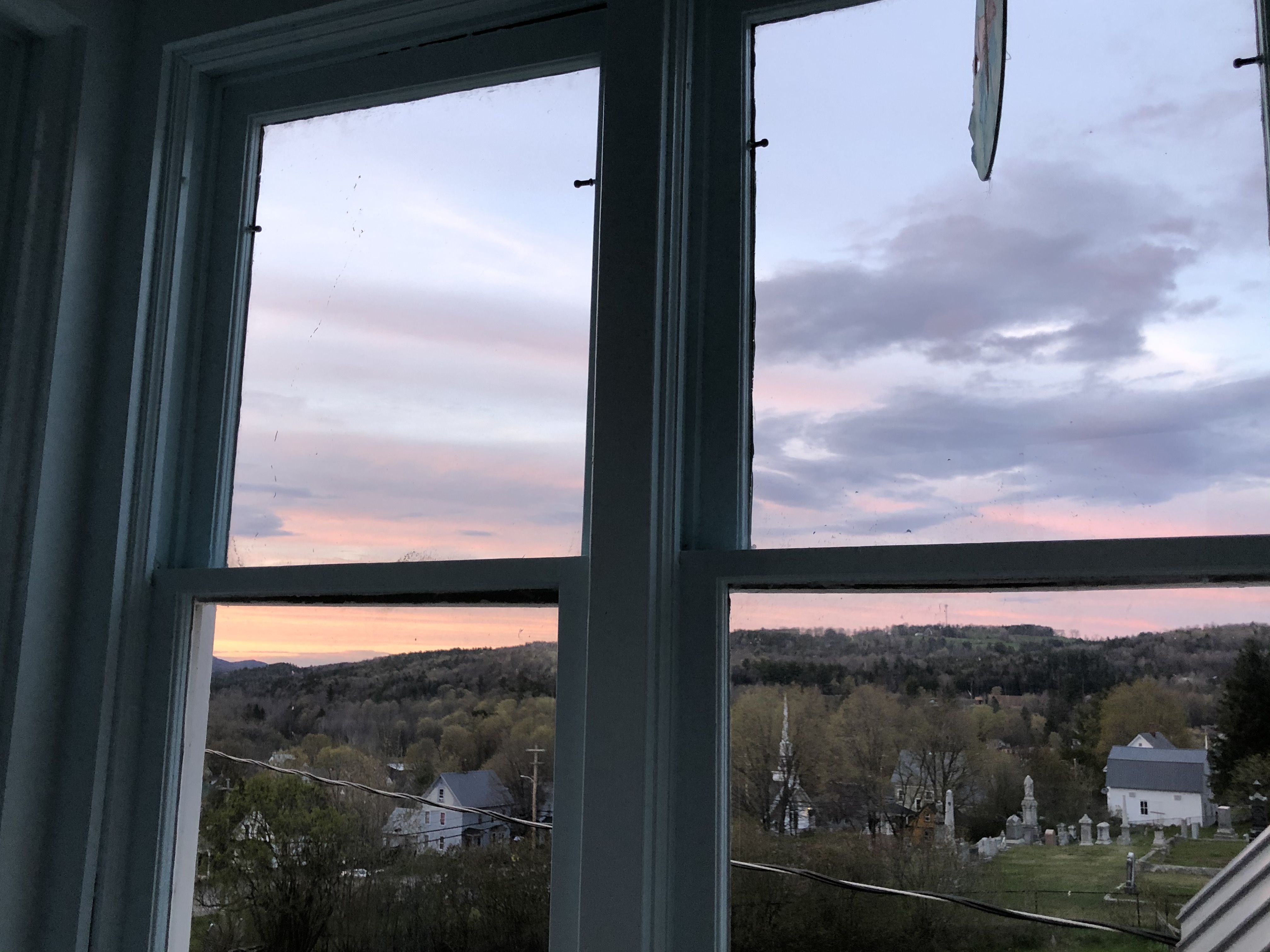
I ask her to pull over on the side of the road. I get out for a moment and walk into the field where I stand looking at the ridge of mountains in the distance, the house on the hillside, and all that sky overhead.

A pickup pulls up beside my daughter, speaks to her, and drives off. I walk back to the car and asked what happened.

She says, He asked if I needed help. I told him it was just my mother.

She puts the car in gear, and we roll forward, picking up speed along the road. She glances at me sideways and says, I didn’t tell him you wanted to see how far along the tree buds are. That would just be weird.

 Destiny has no beeper; destiny always leans trenchcoated out of an alley with some sort of ‘psst’ that you usually can’t even hear because you’re in such a rush to or from something important you’ve tried to engineer.

David Foster Wallace

Twilight Walk

On these warm spring evenings, my daughters and I often walk through the town forest and circle around back to town along Bridgeman Hill Road. The woods are the solace of living in town, sprinkled now with spring beauties and red trilliums and gold trout lilies.

At the high school, we watch a young teen drive a pickup around the parking lot with his father, the truck lurching into gear as the teen finds that sweet spot between clutch and gas. As the dusk drifts down, watching this kid seems almost wildly hopeful as he turns and loops back again around that long parking lot.

This whole walk I’d been trailing my daughters, listening to the evening birdsong in the treetops, for some reason remembering the man who coached basketball for many years at the high school. He’d dug a basement for my former husband and me, many years, when we bought that first eight acres. I’d run into him a few years ago when we were both pumping gas. As the world goes in little towns, we’d each heard small strands of gossip about each other, and we caught up about what we were each doing for work.

Then I turned the key to my car and asked if he would listen to a grinding sound in my car’s engine.

Water pump, he said, and then asked if I needed help fixing it.

I thanked him and said no, I was fine. He went into his day, and I into mine. On my way to work that morning, the water pump failed.

The teen turns on the headlights. Back at my car, my daughter gets in the driver’s seat, ready to drive — not home, but somewhere, anywhere.

I make her wait, though; I don’t get in the car. I stand there for a moment longer, the night sprinkling down, the peepers singing, and that boy making a long slow turn in the parking lot. Around us, the ineffable mystery of the world widens around those two spots of light.

The Me World V. Context

The May my youngest daughter was born, rain fell every day that month. Day after day of deepening sogginess, the earth drinking up that water. She was born on the very last day of May, and in early June, nibs of corn nosed up through the black, plowed fields.

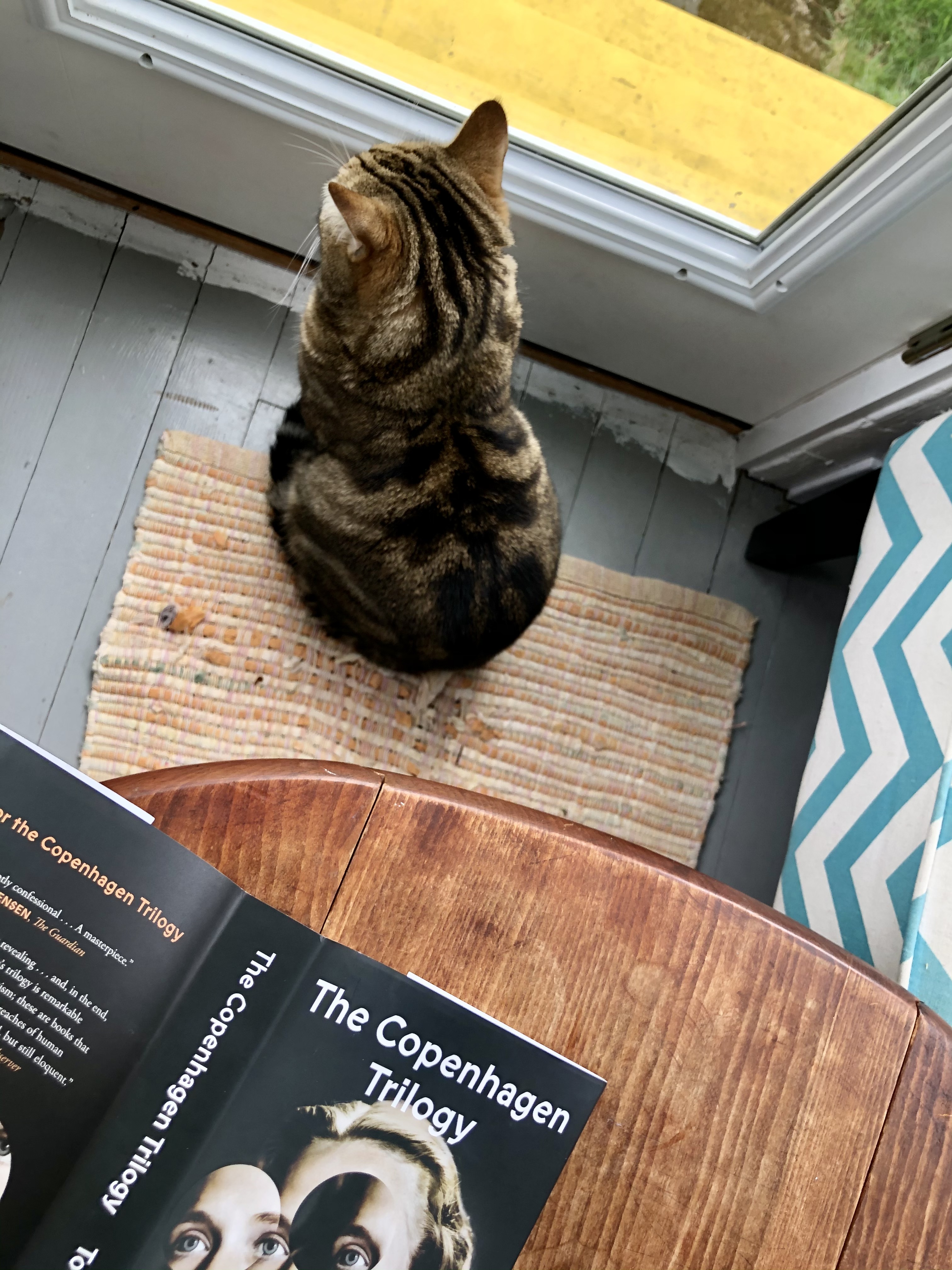
This May, I wake early, long before light, listening to the robins singing sweetly in the tree outside my window, our little cat pressed near the screen, more interested in birds than breakfast in his bowl.

And so our lives unfold, a summer of plans unfurling slowly, tentatively around us. I live in the state with the highest Covid vaccination rate, but around us swirls this debate about vaccinating, particularly among the young adults. Listening, I think of those young sprouts of corn, how each shoot needs the earth for growth, the rain for water, the sun for nourishment. It’s impossible to grow alone; impossible to live alone.

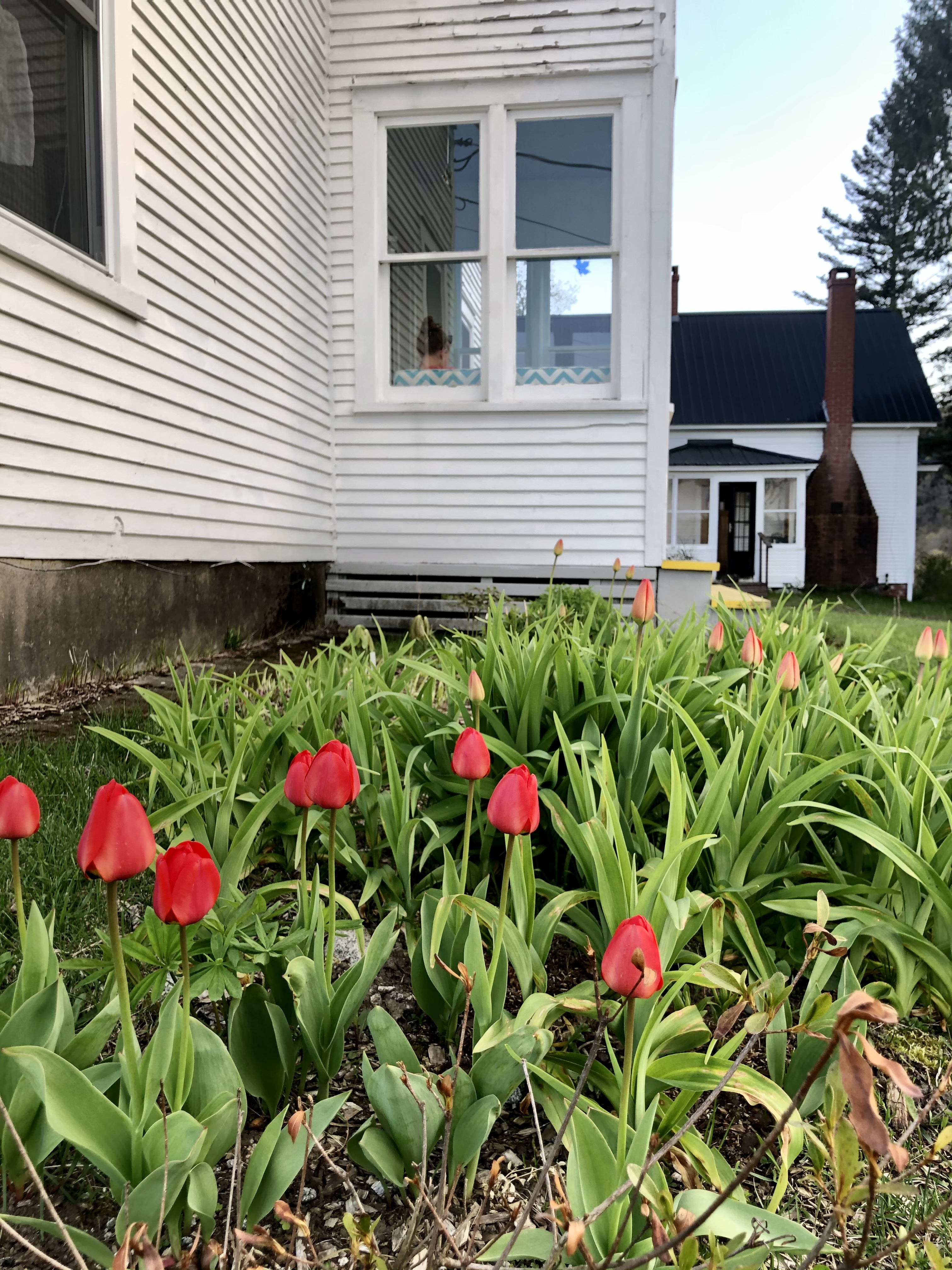
Against all probability our bulbs have blossomed,

opened their white rooms, given their assent.

I pull myself from your breathing to take a closer look.

It happened overnight.

Laura Case, “Morning”