Light Turning.

Walking into town, I pass a house that has been abandoned for the five years I’ve lived here. Last winter, a vehicle skidded off the road and smashed through the front window. Since then, plywood has covered the front.

There’s a few houses like this in that neighborhood, the paint gray, the windows filthy, tiny yards gone over to weeds or dirt. In the pandemic’s craze, people moved back into a few of these, converting abandoned places into homes again. The driver of a fuel truck stood outside this house yesterday with a young couple, the three of them talking seriously, nodding heads. Sheets of foam insulation leaned against the house. On the side wall, someone had ripped off the dirty plastic and exposed a large square window, its top edge red and blue stained glass. Without stopping, I wondered what else was inside the house.

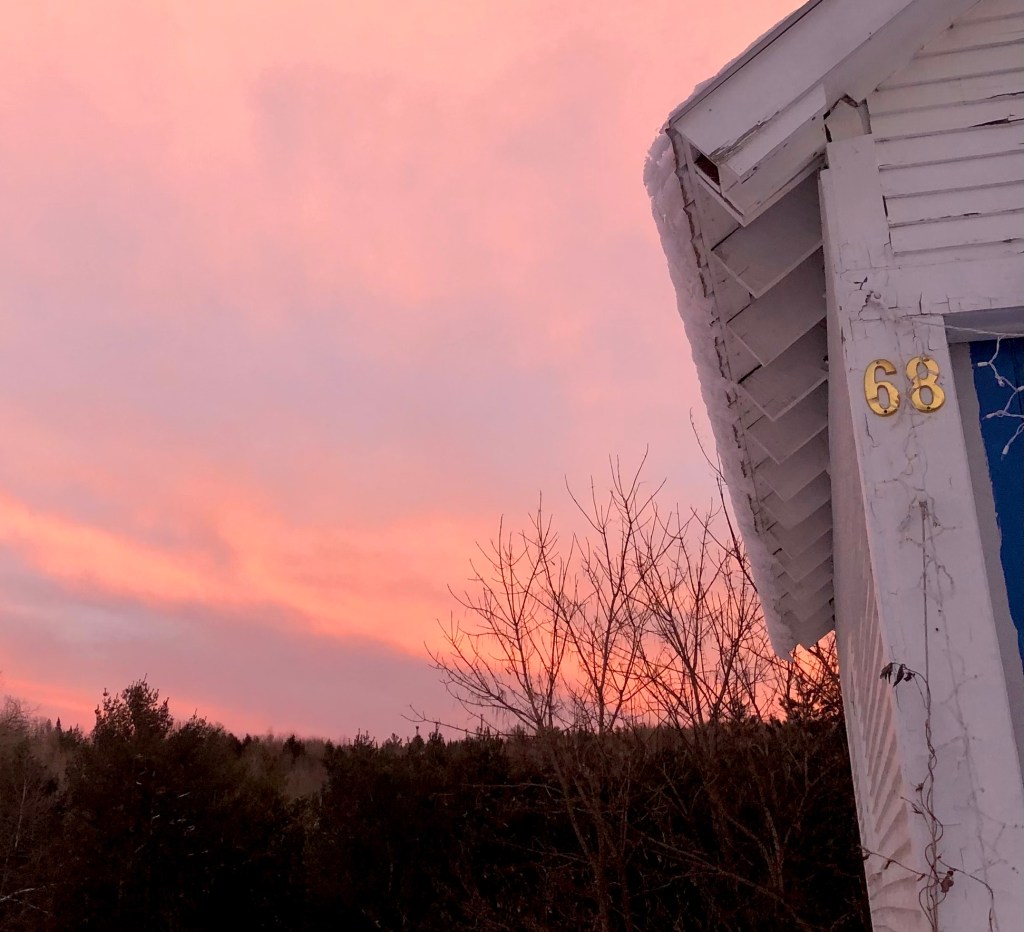
End of January — and suddenly the sunlight returned in full force. Today may be cloudy, tomorrow, too, maybe for days to come, but the earth is tilting. Slow as spring is, we’re leaning that way.

Don’t say my hut has nothing to offer:

come and I will share with you

the cool breeze that fills my window.

— Ryōkan (trans. John Stevens)

Making Things…

Mid-January, the earth is covered with ice and a crunchy snow a few inches deep. The meditative qualities of walking are swallowed up by fear of slipping or the grinding of hard snow beneath boots. People complain. Complaining is a normal winter’s activity, so are ice and snow, and yet — I’ll reiterate for what seems like the hundredth time again — we’ve slipped out of the cog of normalcy.

What I do:

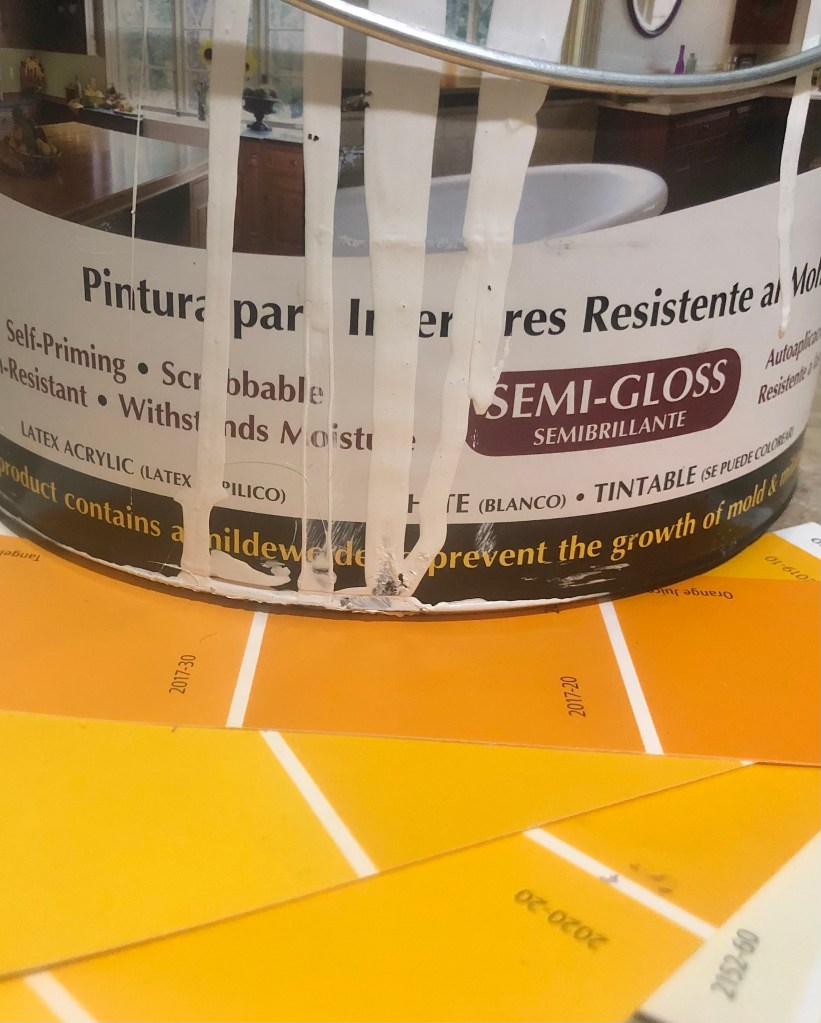
I finish painting the bathroom (one Sunshine wall, the others Vanilla Ice Cream).

I’m diligent at my work.

My daughter and I go out for coffee, struggle through the CSS profile on financial forms, talk and talk and circle around.

I rise early every morning and rewrite my novel, snip, stitch, elaborate, with my imagination and my hands. In the night, I wake and lay more wood on the fire, pieces of my life arising in words: loons and dahlias and betrayal and desire.

On a Jane Alison bender (Meander, Spiral, Explode: Design and Pattern in Narrative), I inter-library-loan Alison’s memoir of how her parents switched partners with another couple, The Sisters Antipodes. Alison writes, “Making things helps make you.”

Sunlight on Sunday, a stiff breeze that jangles the wind chimes.

Pique.

Anyone who knows me knows that winter pulls out my mania for painting. In a fit of what I can only describe as sheer irritation, I bleach mold from the bathroom ceiling and then ask for primer advice at the hardware store.

The store is darn near empty, save for two clerks and a black cat who rolls on its back on the counter and flicks a pearl-tipped tail at me. A clerk walks back with me to the paint section. She and I have been on a first name basis for years. While my gallon of primer is on the shaker, she shares her bathroom ceiling painting experience, and I offer this small problem and ask her to solve it. We walk back slowly to the front counter. She’s been my height for years, but as we walk and talk, I realize she’s slipped down below my height, and my height is definitely (as my brother might claim) substandard.

A man in logger’s chaps pays for discounted Christmas tree lights and a Twix bar and grouses about the rain and the mud, and how can there be a January thaw when we’ve had no winter?

The clerk spreads my paint samples over the counter and asks if I’ve narrowed down any color choices. She lays one finger on the color named Sunshine. “This one,” she suggests.

I gather my primer, stir stick, the lightbulb for over the kitchen stove, and head out. Ahead of me lies an afternoon of careful work, of NPR and stories from around the world, so many places hemorrhaging in ways that far outstrip my tiny mold project. As I’ve always done, I join my head and hands in a creative project. My own imagination won’t heal the world, but surely it won’t harm.

Mapping, Metaphor, Motherhood.

I forget my map on my desk beside my eternal list (write thankyous, double check FAFSA submission, confirm E and J meeting….) and drive over the Canadian border shortly after sunrise. Luminous crimson stripes the clouds. Almost immediately, the land flattens from Vermont’s hard ridges to industrial ag fields, distantly studded with metal silos. Late December, and the terrain is more gray than white. I stop at a gas station and ask a woman who is emptying her car of fast food wrappers for directions. I don’t understand her accent, the slipperiness of French that eluded me all those high school French classes. She wants me to understand, repeating her directions, one hand waving a crumpled bag. I nod thank you, thank you, and turn back to my salt-crusted Subaru, miserable with my lack of agility with language. Aren’t I a writer?

At a crossroads, I have no idea which road to take, and the world opens up abruptly in dizzyingly wideness.

My intention is to drive to Montreal to meet my daughters. I hate driving the dullness of interstate and fear driving into cities, and I’ve made this infinitely worse by losing my map. For years with young children in carseats, I delivered maple syrup around Vermont, navigating by atlas and rivers, the sun and roadsigns, using my tools of snacks and a box of board books. I once pulled over and lifted a handful of pebbles from a roadside so my toddler could dump pebbles from one paper cup to another, satisfying her tired self.

Now: no map, no cell service, in a town whose name (ridiculously) I never learn, I pull a Streetcar Named Desire card ask strangers to point my way out. A teenager shrugs. An old man can’t hear me. Finally, an electrician in a truck gives me directions. We repeat his directions to each other three times, and then I roll out, my heart not full of faith, precisely, but enough warmth of optimism. May this new year bring out the generosity of strangers and of ourselves. Thank you all for your kindness and curiosity for reading.

You should keep on painting no matter how difficult it is, because this is all part of experience, and the more experience you have, the better it is… unless it kills you, and then you know you have gone too far.

— Alice Neel
Lost, Not Lost.

Tuesday afternoon finds me somewhat lost on the way to a soccer game. In a rush, I glance briefly at the map, take a mental note, and head off. My cell phone has given up its ghost, and I know I have a paper atlas in the back of my Subaru, jammed beneath a box of oil, if need be. I drive the way I knit — by feel — and generally that gets me there. In this case, driving by feel gets me to Hazen’s Notch, a twisty dirt road climb. The road has been recently graded; it’s slick with falling rain.

I’m headed to a town where I haven’t been in nearly 25 years. The last I was here, my then-husband and I were following a lead on a vacuum pump for maple sap. We pulled into a two-story house that was recently built. A pregnant woman dialed her husband at the town garage, and he drove up in a moment. That afternoon, I wanted to be pregnant. While our husbands talked about the pump, I asked her about the pregnancy. She wanted to buy a crib with the money from the sap pump.

We paid in cash. The pump remained one of the most reliable pieces of equipment in our sugarhouse. It became my nemesis, too, with the absence of housing around the belt. I feared for my hair and scalp, my fingers. It drank oil like crazy. It worked hard.

This Tuesday, I’m not really lost. I know, enough, where I’m headed, how to read the sky and rivers, the mountains, to get me in the right direction. I pull over near a swamp where maples are in full red already. What do you know, I think to myself, that sight is worth the drive.

Take Joy.

There’s a line in a Raymond Carver that describes a woman as a long tall drink of water. The line reminds me of my oldest daughter — a kind of welcome draught. Myself, I’m more like a splash in the face.

She and her friends are in their early twenties and have lived an amount of life that surprises me at times. At her age, I’d had a whole, full childhood and was drifting through young adulthood, through college and graduate school and what amounted to an awful of driving around the country and sleeping in the back of our Volkswagen Rabbit. I’d sandwiched in a number of jobs, but the economy was sparse in those days. The pre-internet world was slower, less fierce, less competitive. In the collective vocabulary, the words climate change, pandemic, trauma, were never bandied around.

So on these balmy, early autumn weekends, it’s a pleasure to see her strap the kayaks on her car and head off for a pond ringed by mountains. Summer in Vermont is always too short. But this year, in particular, has been especially brief. Maybe it’s where I am in my life, with my youngest about to fly from the proverbial nest. But the stresses of the pandemic — hardly just for me, but collectively — have worn profoundly into our world. A delayed car part on order seems something hardly worth considering. As a personal sanity strategy, these lovely, golden autumn days, I pause outside and listen to the cricketsongs, the ruffle of wind on leaves that aren’t long for this world.

One thing I wish I knew in my twenties is that happiness matters. At that age, I had a whole confused theory about happiness versus pleasure, saving my soul and the planet, writing and sacrifice, and a narrow view of good parenting. Silently, I think to myself, Take joy where you find it. Surely our world needs more laughter. And rowing your narrow boat makes you strong.

…. Last, Streetlight published an essay of mine today. Many thanks!