When my older sister was a student at Williams College, I often rode the Greyhound and visited her. While she was in German or physics class, I walked to the Clark Art Museum. Entrance was free for students, so I could visit over and over. As I read a lot, too, I learned about Monet and his garden, and Renoir and his women.
Although I didn’t realize it at the time, I was learning art is a physical craft. None of the guards cared if I leaned into the paintings and admired brush strokes, bending in to see the raised curved of paint Sisley’s brush had left. I studied how a particular shade of yellow lent a certain light. I became a writer and not a painter, but those hours in the Clark were invaluable to me. I learned to step into light, to realize darkness as moving force, and to see what is there, rather than what I expected to be there.
Yesterday, I visited with my daughters. In a room suffused with natural light, filled with Impressionist beauties, my younger daughter walked to my most beloved painting in the whole museum – Monet’s ‘Geese in the Brook’ – a golden, sunlit beauty. This child, who had been more interested in the possibility of ice cream rather than Pissarros, said that was her favorite.
When I asked her why, she said, Because it’s beautiful. Look at it, mom.
Bingo, I thought to myself. That was worth the trip alone.
I was learning something from the painting of Cézanne that made writing simple true sentences far from enough to make the stories have the dimensions that I was trying to put in them. I was learning very much from him but I was not articulate enough to explain it to anyone. Besides it was a secret.
Ernest Hemingway, A Moveable Feast

Williamstown, MA
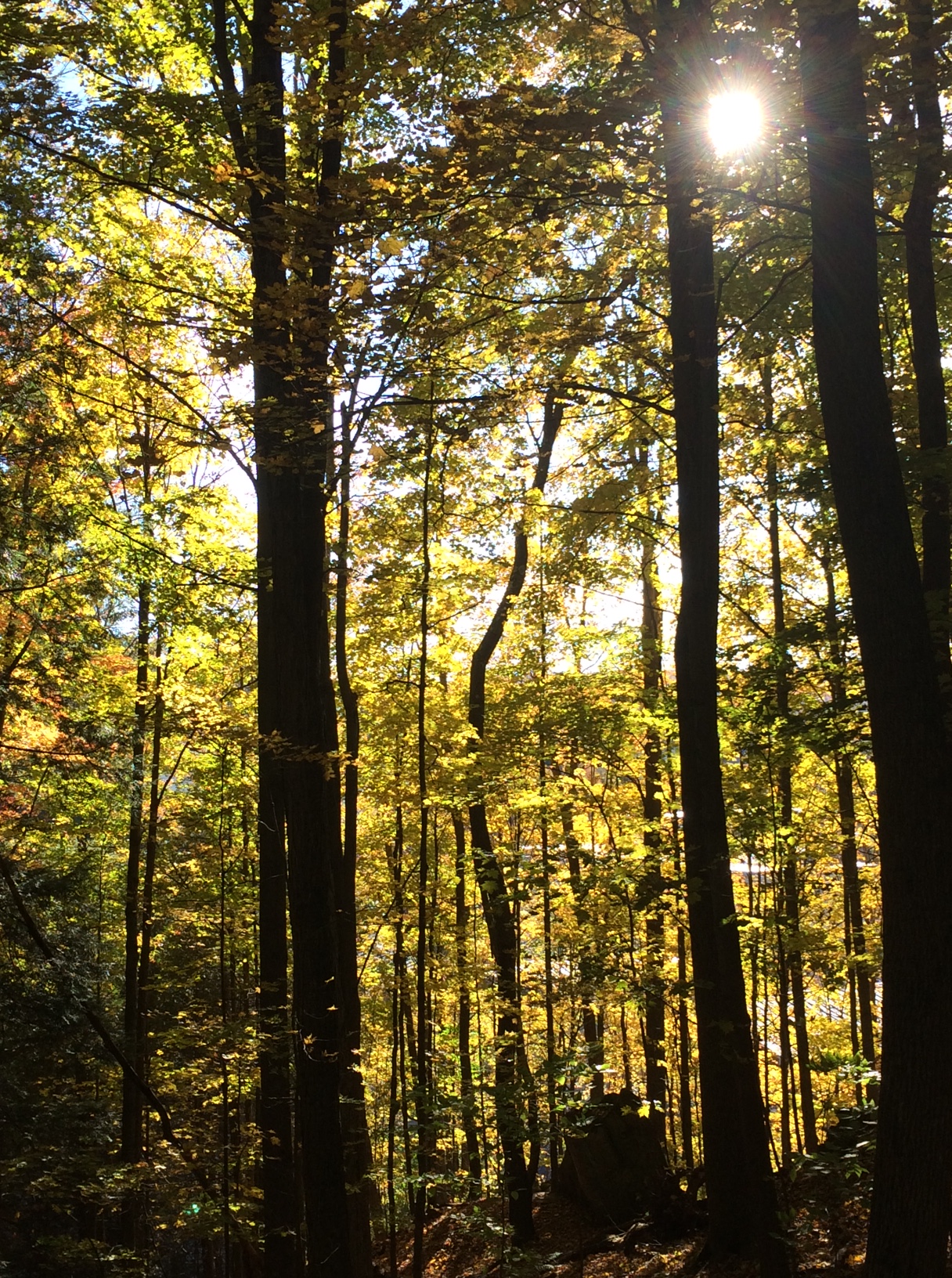
 Stony Soil Vermont