Falling.

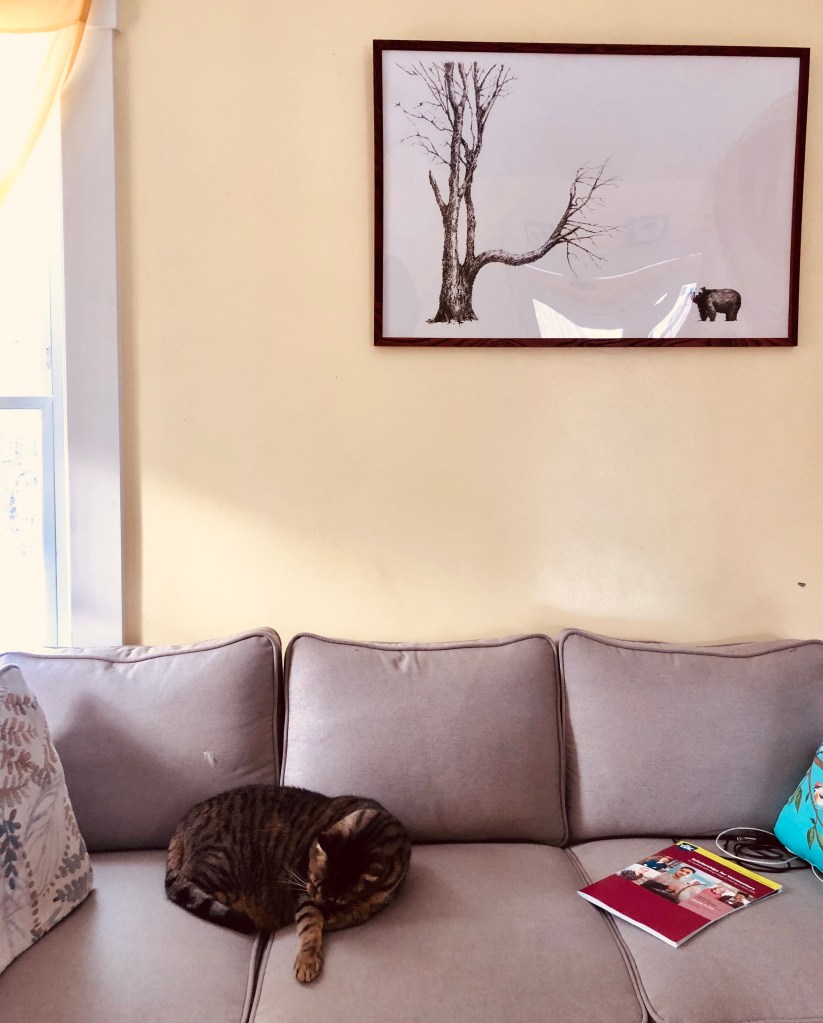
The outside light flicks on early this morning, and my little cat Acer stares wide-eyed at a skunk making its snuffling and curious away around a flowerpot I left on the back step. Well before dawn, the cats are already fed, the kitchen warm, redolent with coffee, and here’s this wild creature, not in the least troubled by the two of us.

The skunk waddles on its way. Shortly afterwards, snow and chunks of ice rush down the house roof and crash on the porch, softened in the rising temperature. My cat runs. I wonder about the porch railing which snapped in prior years, but nothing appears broken. The design is poor — steep roof and wide porch and slender railings — and I let myself wonder just for a moment if this is some kind of hidden cosmic twist, a long-buried plan from when my former husband built this porch. I cut off that sentiment. This far along in life, I’m well-acquainted with the steepness of roofs and the precariousness of ice and snow and dynamic temperature. Gravity is not ruled by human desire.

At the other end of the day, I’m carrying in a few armloads of wood from the barn when another ice chunk falls, shaking the porch where I had tread a moment before. Through the glass door, my teen raises her hands — what’s happening? — Acer at her feet.

The cold’s drilling back in for the night. In the valley below, the village twinkles in the darkness. The wind whirls around the scent of woodsmoke. I step back, finally wary. The roof has cleared.

When you’re young, you are certain of your capacity to imagine a way out of the previous generation’s problems. There is a different way to grow old, paths that don’t involve conforming and selling out….

— Hua Hsu, Stay True

History, Yellow Wallpaper, Gas Station.

On my way home, I stop to fuel my Subaru. A light snow falls, icy around the edges, barely sharp enough to tease my cheeks as I stand looking up. It’s after dark, and the people are coming and going in the convenience store with cups of coffee and bottles of wine and white paper cartons of fried food. The river curves behind the store and the attached garage, silently bending through town, water running beneath the frozen surface.

The evening before, my daughter asked me about The Yellow Wallpaper, the novella she’s reading for class. I remembered the free copy I picked up in high school, dirty and water-stained — a copy I probably snagged from my high school floor. This is the season of freeze and thaw, freeze and thaw, the long slow slog towards spring. In the late afternoons, skiing, the sunlight pushes through the forest. Some days, cold. Some days, warm. So it goes.

Life is a verb, not a noun.

— Charlotte Perkins Gilman

Laughter. Moonbeams.

Ice Fishing, Caspian Lake

A profound cold stills our world for a few days, narrows our lives. All night on Friday, the wind screams and howls. By Saturday afternoon, the wind drops. I ski out to the river. The air is broken glass, so sharp breathing hurts.

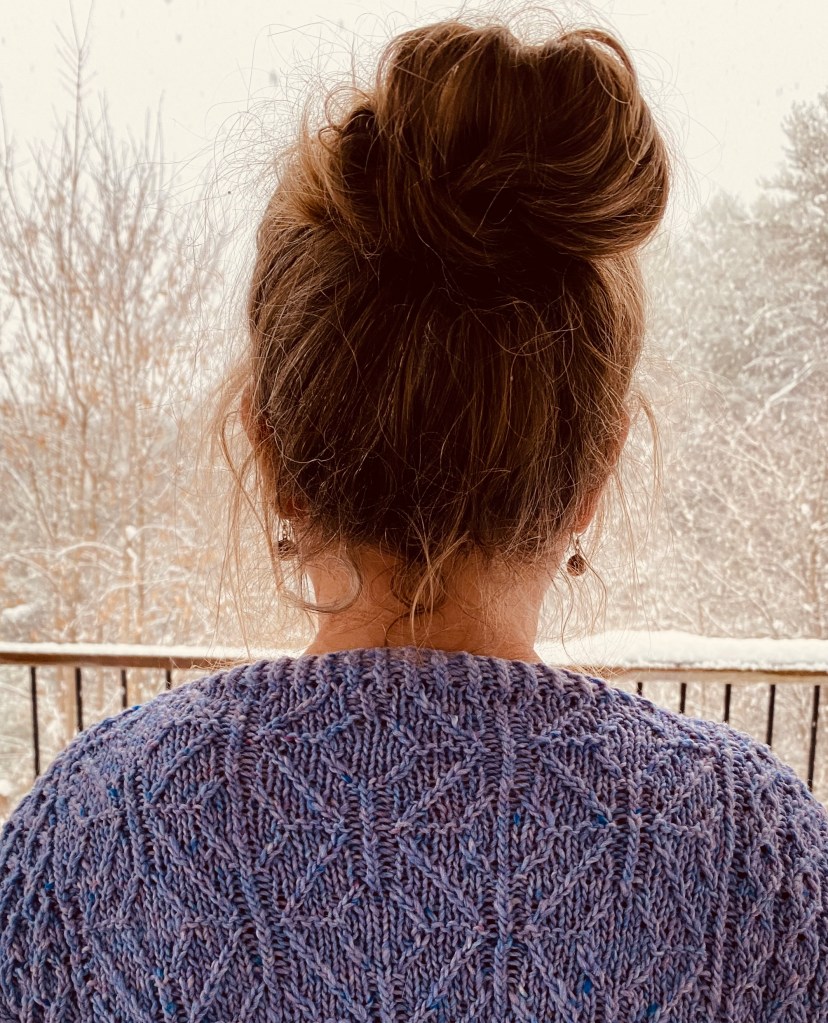
To celebrate my oldest daughter’s birthday, we eat at a little restaurant/bar in Plainfield where I haven’t been in fifteen years. We’re at a back table so cold that the other three keep on their jackets and I note the usefulness of my handknit sweater. This observation impresses no one except myself. My daughter orders a drink with a lemon peel. The food is scrumptious, rich with garlic.

In their zipped-up jackets, side by side, my daughters talk and laugh with their ongoing story that includes frozen pipes, getting lost, a red prom dress, what happens when a car is started at 27 below zero, and the IRS. Outside, a round moon is ringed with yellow luminescence, so brilliant the sky around the moon is blue, surrounded by night’s black. Our boots crunch over ice as we list the moon’s might: tides and weather, childbirth and madness, the beauty of moonbeams.

In writing you work toward a result you won’t see for years, and can’t be sure you’ll ever see. It takes stamina and self-mastery and faith. It demands those things of you, then gives them back with a little extra, a surprise to keep you coming. It toughens you and clears your head. 

— Tobias Wolff

Snow, Yarn, Patterns.

Snow notwithstanding, the temperature is solidly spring for January. My neighbors and I stand at the end of our dead-end road, talking about the escalating price of food and raising kids, the random things that three tired parents share. It’s not cabin fever, not a chafing against the cold, not the dreariness of winter gone on too long. It takes me a little while to figure out what it is, and then I realize it’s nothing more than simple camaraderie.

So here’s the thing about knitting — I resisted knitting for so long because I considered knitting old-lady-ish, an occupation for those who had nothing better to do. Oh, how those sentiments smote me now. Sure, men knit, but knitting is generally the terrain of women. At work the other day, a stranger asked me about a fair isle sweater I had knit. Without thinking, I pulled off my sweater, flipped it inside out, and laid it on my desk. The two of us talked tension, seaming, yarn. Cables. The pleasures of putting your hands to wool.

“No two people knit alike, look alike, think alike; why should their projects be alike? Your sweater should be like your own favorite original recipes — like nobody else’s on earth. 
And a good thing too.” 

— Elizabeth Zimmermann

Light Turning.

Walking into town, I pass a house that has been abandoned for the five years I’ve lived here. Last winter, a vehicle skidded off the road and smashed through the front window. Since then, plywood has covered the front.

There’s a few houses like this in that neighborhood, the paint gray, the windows filthy, tiny yards gone over to weeds or dirt. In the pandemic’s craze, people moved back into a few of these, converting abandoned places into homes again. The driver of a fuel truck stood outside this house yesterday with a young couple, the three of them talking seriously, nodding heads. Sheets of foam insulation leaned against the house. On the side wall, someone had ripped off the dirty plastic and exposed a large square window, its top edge red and blue stained glass. Without stopping, I wondered what else was inside the house.

End of January — and suddenly the sunlight returned in full force. Today may be cloudy, tomorrow, too, maybe for days to come, but the earth is tilting. Slow as spring is, we’re leaning that way.

Don’t say my hut has nothing to offer:

come and I will share with you

the cool breeze that fills my window.

— Ryōkan (trans. John Stevens)

And a Little of This Loveliness…

A few streets down from me, a pregnant woman leans on a shovel in a driveway covered with a few inches of dense, soggy snow. It’s late afternoon, and a light snow swirls down as I walk. A pickup truck stops on the road, and I hear the driver offer to plow. There’s a little back and forth, and then she steps back. He sets down his plow and goes to work.

Every snowfall has its own kind of knowledge. As I walk through the streets and then across the former railroad bed and into the woods, I marvel at how much I know about snow, too. How a scattering of snowflakes can remind me of being 10 years old again, and a fourth grade teacher caught snowflakes on her tongue. Delicious, delicious, she said. Or how the three-foot Valentine’s Day storm snowed us in when my daughters had fevers and I wondered if I would ever return to the world of adults.

In the woods, the snow swallows up all sound for a handful of hours.

In these winter months, I’m reading about Claude Monet and his gardens. Here’s a line from the master: “… people must first of all learn to look at nature, and only then may they see and understand what we are trying to do.