Gifts at the Back Door.

I arrive home in the dark and find one of my red deck chairs at my kitchen door, a white container set on its seat. It’s not late but dark already. On my way home from work, I’d walked along the river and walked further than usual. When I’d returned to my car, darkness had fallen.

I’ve been living in or nearby this village for thirty years. I’ve seen a share of miserable things — from addiction and homicides to petty cattiness — and its goodness, too. How, in times of trouble, folks appear with aid. No questions, often very few words. My god, the grace of this.

Scorched earth is how I consider myself these days, not so many days post-chemo, post-surgery, leering up on a year’s anniversary since I learned I had cancer. See how I write this? Past tense. And yet, transmogrified is a word I used with a friend. How this disease has transmogrified my being.

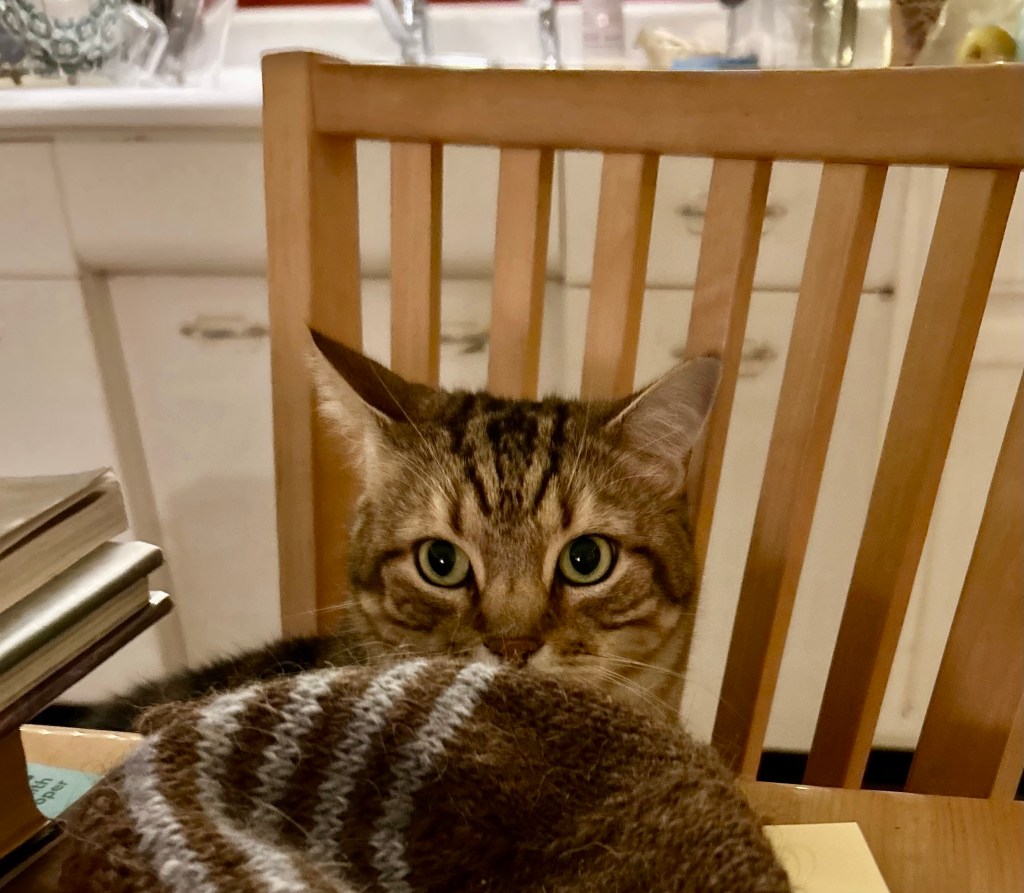
In the dark, I unlock my door, set down my backpack, a pile of library books, a bag of apples. My cats mewl for their cat supper. The container has soup, barley and beef and spinach. The woodstove has gone cold, my jacket drips rain on the floor and my cats’ dense fur, darkness presses against the windows. And yet, serendipitous soup. I take a spoon from the drawer. As for figuring out the rest of my life, or this week, or even this evening — I let that go.

From my library book stash, Sally Mann:

“As for me, I see both beauty and the dark side of the things; the loveliness of cornfields and full sails, but the ruin as the well…. The Japanese have a phrase for this dual perception: mono no aware. It means “beauty tinged with sadness,” for there cannot be any real beauty without the indolic whiff of decay. For me, living is the same thing as dying, and loving is the same thing as losing, and this does not make me a madwoman; I believe it can make me better at living, and better at loving, and, just possibly, better at seeing.”

Crazy-Making.

Yesterday, my oldest and I made that drive again down I-91 that flanks that Connecticut River. My knitting in my lap, I counted exits, St. Johnsbury first exit, then the second, the third that heads east to New Hampshire’s White Mountains, the fourth Barnet, which I took when I stayed at Karmê Chöling. We talked about fall colors and a meatball recipe and family, of course, all the way down to exit 13, the Norwich and Hanover exit, where we stopped for coffee and scones, as if a good luck charm. Coffee and sweets, not a dash to ER. We watched the time, careful not to be late for what I hoped would be a mere routine check-in.

All summer this day has hovered in my mind — what will this day reveal? — but this past week this coming journey was as near to me as something I held in my hand as I went about my days, doing what needs to be done. The day before, talking with friends, the fear of this day erupts and I hear myself on the verge of screeching, nearly crying. All summer, I’ve relished my good life, learning to walk again and eat again, to read on my back porch in that hand-me-down butterfly chair. To marvel that I am not in pain. That I might sleep and reasonably expect I might wake in the morning exactly as I want, in the pre-dawn darkness drink milky coffee and write. That I will witness the unexpected autumn buds on a yellow rose bush open, these final velvety blossoms of the season.

At Dartmouth, we wait again in 3K, in the cancer center. I am no longer one of the pallid-gray-faced chemo patients, hobbling, enduring. How desperately I never want to return here. My oncologist gently reminds me that he’d assured me I’d pull through this winter, even as I was admitted again and again and again, a dozen times. Add to that, more ER visits.

Later, a friend asks about the scan’s sign-off, but the only rules that matter are what the hidden mysteries of my blood and flesh reveal. The markers are that the lymphoma has not returned. I know that the reaper’s scythe heads towards me as that inarguable blade poises over each of us. But not this day for me. Not yet.

Driving home, people crowd the interstate bridges with RESIST signs. As our car sails beneath the metal and steel, we wave. I’d told the oncologist that my wellness plan was four-fold: eat real food, walk, do my work, and try not to go crazy.

He said, This is crazy-making. Just do your best.

There is only one heart in my body, have mercy
on me…

Thank You for letting me live for a little as one of the
sane; thank You for letting me know what this is
like. Thank You for letting me look at your frightening
blue sky without fear, and your terrible world without
terror, and your loveless psychotic and hopelessly
lost
with this love

~ Franz Wright

Crossroads.

I park at a dirt crossroads this weekend beside a former tavern and walk up the hill to the Old West Church. The sunny afternoon speckles through the roadside maples, and I meet others doing what I am, in pairs or singly, and we greet each other, cheerily. At the Old West Church, I hear two terrific poets, but on my walk back to the tavern the line that runs through my head is from a Franz Wright poem, There is but one heart in my body, have mercy/on me, an incantation.

I keep thinking of my dead mother on this radiant Sunday, my mother who pulled her last breath a year and a half ago, hardly a hopscotch jump ago. In my mind, I’m building the architecture of what I’ve tagged as this Cancer Atlas I’m writing, scaffolding this book’s bones. The book is about the here-and-now, about living (at least for now) through a terrible disease, about walking along Vermont’s autumn-gold back roads, about pulling up this summer’s frost-killed pepper plants that produced so bountifully this summer. And my mother? As I work, I think so often of her, this woman both generous and mercurial, the double blade I harbor in my own heart. Gracious, how much she’d enjoy this picturesque walk. She was a woman who loved old churches, was fascinated by adjacent cemeteries, who would have relished the art in the tavern.

At the tavern, I linger in an open doorway, talking with a curator, drinking iced tea from a half-pint jar. My mother would have drunk the wine, feasted on the cured meat and seeded crackers. Dust kicks up in the road. Old friends appear, and we joke about winter’s ferocity. It’s always a crossroads, isn’t it?

“We are created by being destroyed.”
― Franz Wright

This Glorious Autumn Light.

My sister, a caner survivor, once told me that a cancer diagnosis was a great leveler. This was years before my own cancer experience, and, sure, I had an intellectual understanding of this. Lymphoma schooled me in many ways, among these that I live in my body. Such a simple, profound thing. I had never lived in a body that couldn’t walk up the stairs in my own house, not just because of a sprained ankle or a new baby in arms, but because of weakness in my bones and flesh. I had never considered that I might never be able to enter the bedroom whose walls I painted, where I have slept for so many years.

These days, after a summer devoted to learning how to eat and sleep again and to walk those stairs, outside as much as possible in this gloriously sunny, perishingly dry Vermont summer, I no longer embody the near-translucence of cancer-and-chemo patient. Such pleasure I have when people ask why I’ve cut my hair, and I can reply that I didn’t snip, I lost. The hair I’ve lost is now returning in a metaphor that I can’t ignore: softer but with my childhood cowlick.

Disease hasn’t magically transformed me; if anything, my thorns have proliferated. But here’s a thing: the world where I live is descending into spectacular autumn. Sure, some years the fall foliage bursts brighter than other years, but always, always, heartstopping in beauty. Autumn’s a reminder of my mortality, your mortality, the dearness of this fleeting world. A reminder to pause in our gardens, on our house steps, the sidewalk, whatever trail we may be following. Take a moment. Breathe in, out, in….

From Stephen Jay Gould’s essay “The Median Isn’t the Message”:

Of course I agree with the preacher of Ecclesiastes that there is a time to love and a time to die—and when my skein runs out I hope to face the end calmly and in my own way. For most situations, however, I prefer the more martial view that death is the ultimate enemy—and I find nothing reproachable in those who rage mightily against the dying of the light.

Habits of the Heart.

A radiantly sunny September afternoon, I’m at the northern edge of Caspian Lake, an afternoon with the slightest of breezes so the water shimmers and ripples. The summer people have all returned to other places, the local families at work or school, so it’s just me. For the longest time, I stand at the edge of the long dock and watch a bald eagle fly low over the water, then circle back and disappear into the woods.

Where do you find succor?

For years, with little girls, I spent hours with my friends at the public beach on the other side of the lake. Our worlds dispersed now, I haven’t walked there this summer. In no rush on a day that’s already been crammed with people and my to-do list, I take the longer trail back to the road. The usually wet forest is so parched the boardwalk bridges span over dry soil.

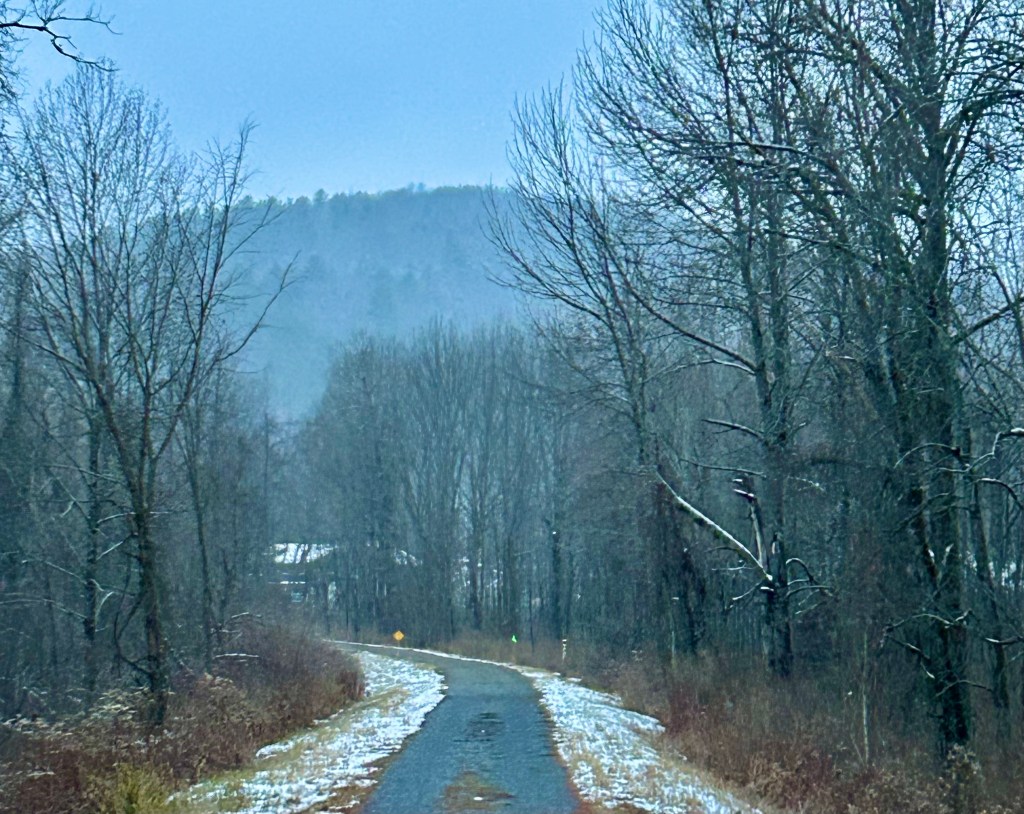
As the afternoon folds down, I take a walk along the river, the path I’ve been following all summer, watching the trout lilies give way to soapwort to the persistent asters. A pickup truck idles across the trail. A woman I knew years ago from a library kids’ group waits for me to pass, then ropes off the trail so she can move her cows from one pasture to another.

On my way home, I stop at the co-op for vinegar and coffee beans and cashews. A stranger says hello in the bulk aisle and reminds me he’d passed me on the trail, he on a bike and me walking in sandals. We talk about the moon and a star named Arcturus. When we part, he says, “See you on the trail — a metaphor for life.” Slow I am these days, as if I’m floating on my back in a warm pond, my eyes open to this flawless blue sky, the undulating water gulping in my ears. Autumn, this heartbeat of beauty, its own true metaphor.

… From this week’s New Yorker:

… what made America great—were “habits of the heart”: the everyday engagement of citizens that sustains institutions by holding leaders to account. Habits fade, but they can also be revived.

Moonrise, More.

Barn door view.

An old friend unexpectedly appears at my door one evening as I’m folding laundry. We sit on my back porch and drink hot honeyed tea and watch the just-beyond-full moon slowly rise. September, the night’s chill creeps in around us. I grab my hat and coat and brew more tea.

All this fall, I’ll be thinking of a year ago, when I was getting sicker and sicker, with no real understanding why until that terrible night in the ER when a scan revealed cancer, so much cancer. Heading towards a year later, I’m admiring the moon sail over the mountain ridge and up through the trees. We keep talking and talking. It’s not so much the words that stitch us together but our chuffing breath that hangs in clouds between us, a howling neighborhood dog, a rustle in the ravine of a wild creature.

After my friend leaves, I wander around the moonlit garden, hands in my coat pockets, the tall amaranth a shadowy forest beside the closed four o’clocks. Frost is not far in the offing.

Inside, a daughter has texted me….. where are you?… Outside, breathing in the moonlight. Still here.

Instructions on Not Giving Up

More than the fuchsia funnels breaking out
of the crabapple tree, more than the neighbor’s
almost obscene display of cherry limbs shoving
their cotton candy-colored blossoms to the slate
sky of Spring rains, it’s the greening of the trees
that really gets to me. When all the shock of white
and taffy, the world’s baubles and trinkets, leave
the pavement strewn with the confetti of aftermath,
the leaves come. Patient, plodding, a green skin
growing over whatever winter did to us, a return
to the strange idea of continuous living despite
the mess of us, the hurt, the empty. Fine then,
I’ll take it, the tree seems to say, a new slick leaf
unfurling like a fist to an open palm, I’ll take it all.

~ Ada Limón