Shape of May

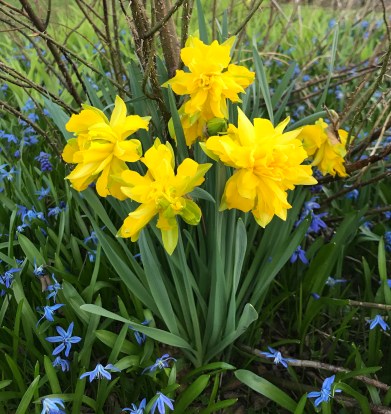
I always imagine Medieval life as so much field around all those storied castles. In May, the Vermont landscape is wide open. The forest aren’t leafed out yet. The bushes are sticks without greenery. The shape of the land is there for the looking.

The comparison ends there, I know. Contemporary Vermont isn’t bound by class or infused with religion. No holy temples are built here, save what each family builds for themselves.

But there’s still all this land, fallow, ready for seed. All this potential, of yet another growing year.

Singing, planting rice,
village songs more lovely
than famous city poems.

— Basho

IMG_5315

Driving, Dancing, Sometime in October

The past few days — as though the deepest part of winter has set in early — I come and go in the dark, leaving early while my daughters are sleeping. When I return, I step out of my car and stand for a moment and gaze up at the inky sky, with that sprawling morass of glittering stars.

To break up the interstate’s monotony, I take Route 2 back to Montpelier from working in Burlington. Blue highway Route 2 follows the Winooski River — native name for wild onion — and cuts through small towns and sprawling farm fields. The corn fields, harvested for the year, are harrowed up, open earth against the mountains shouldering this river valley. Autumn opens up the landscape, sheds the leaves from the trees, and reveals more clearly where we are.

Where we are is the first scattering of snow on the ground yesterday morning. Soup simmering on the stove with what I’ve pulled from the garden — carrots, sage, beans, kale. Driving home, I switch off NPR and empty my mind of the day’s talk at work, of midterms and opioid use, of struggling to use writing to make sense of the world.

In our kitchen, my 19-year-old cooks bacon. I ask how the day’s gone. She says her ears are throbbing. The 13-year-olds had a dance party.

Rock on, I think. I close the curtains and ask if the chickens are shut in for the night.

We climbed stiffly out of the car.
The shut-off engine ticked as it cooled.

And then we noticed the pear tree…
and we each took a pear,
and ate, and were grateful.

— Jane Kenyon, “Coming Home at Twilight in Late Summer”

IMG_3701.jpg

Vermont Landscape of Imaginary Birds

The other day, my younger daughter asked me what I would choose if I could I pick two talents. Talents? I thought, wondering at the unusual use of the word. She told me, What I would choose is to make clouds and to fly. I want to be a bird, she said.

I love this in my child: she didn’t stop where I would have – imagining a bird’s flight. In the book I’m writing, turkey vultures come and go, and I’ve spent a considerable amount of time metaphorically transporting myself into that wide wingspanned flight. But never have I imagined making the clouds, creating the literal landscape of sky around those creatures. In so many ways, I see my child’s life as fuller than mine, not diminished by the pieces I’ve outlined: chores and work and writing and pleasure. For this child, her life is still all one unfolding tapestry of landscape, and her longing to fly is just one woven element of the mystery’s enchantment.

… we’re forced to begin
in the midst of the hardest movement…
At most we’re allowed a few months
of simply listening to the simple line
of a woman’s voice singing a child
against her heart. Everything else is too soon,
too sudden, the wrenching apart, that woman’s heartbeat
heard ever after from a distance,
the loss of that ground-note echoing
whenever we are happy, or in despair.

Adrienne Rich, “Transcendental Etude”

DSCF9650

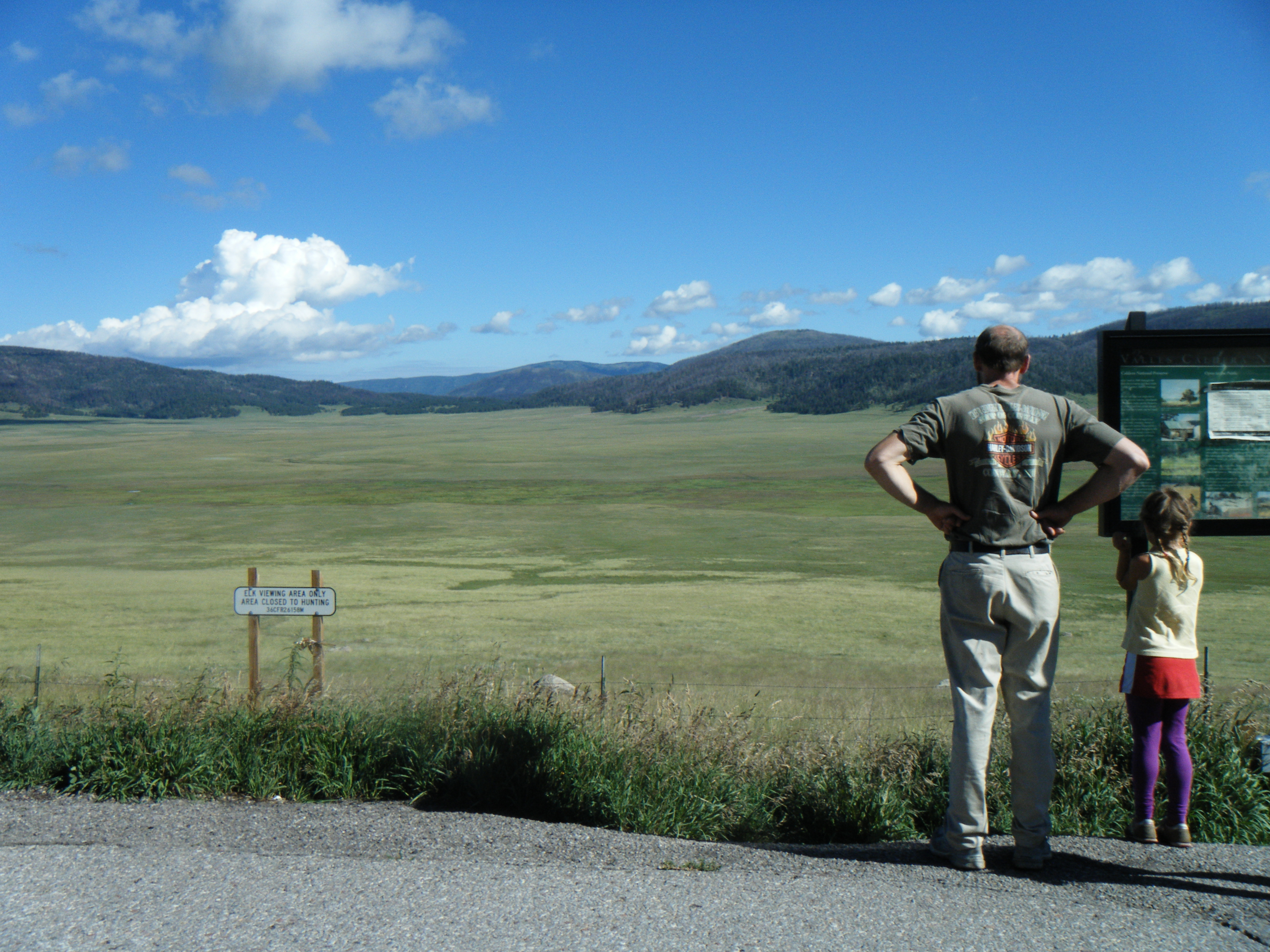
Landscape Not-Vermont….

Our Place in this World

WHEN WE FAIL TO TEACH our children how to inhabit the places where they have been raised—when we don’t teach them the stories, the customs, the practices, the nature of those places—then we also fail to teach them how to be at home anywhere.

But suppose local history, culture, and natural history were at the center of our teaching. Wouldn’t that, you might well ask, just encourage parochialism and xenophobia, and don’t we already have those attributes in more than adequate supply?

I would argue, on the contrary, that parochialism and xenophobia are fed by the suspicion that all the really important things happen somewhere else. One of the magical effects of freeing the imagination to go to work in the place where it finds itself is how this enlarges the world.

– Paul Gruchow, “Discovering the Universe of Home”

By sheer fortuitousness, I stumbled upon Gruchow – particularly keen as I’m writing an essay on Thoreau, sense of place and my own Vermont writing.  If there’s one thing in my (perhaps questionable) parenting I’ve given my daughters it’s place in spades:  here, this clayey piece of land, is where you learned to walk and run; the grass under the apple tree where tea was sipped from miniature, ladybug-painted cups with dolls; the dirt road where you learned to pedal a two-wheeler; our house under the gossamer Milky Way. Right now, our place in this bend of Vermont gleams a myriad of green, heady with the fragrance of mud and multiple blossoms.

IMG_1461-2

The Long Trail, Johnson, Vermont