April Showers Bring….

Sometimes all day, days, rain falls, writes poet Janisse Ray.

Waiting for the school bus this morning at the driveway’s bottom, with the robins and redwing blackbirds silent, and not even a solitary crow winging its way through the mist, the children waited under our one umbrella, surrounded by greasy mud.

This is the season of last year’s debris rising from the thawing earth: split garden hose, broken bits of sap lines, sodden paper from who knows what, piles of lumber never put to use, a shattered red plastic shovel from a childhood friendship long worn out.

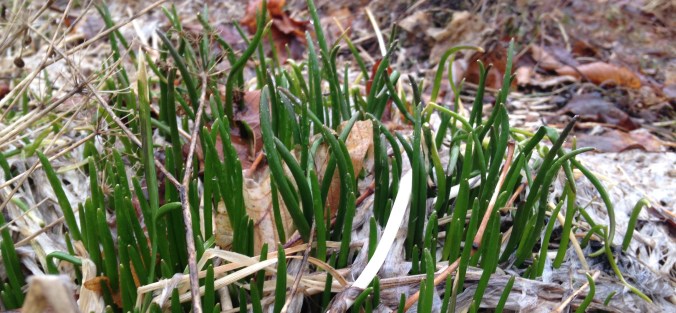
At breakfast, I told the children, Two days from now, the sun will appear, the green emerge, and we’ll find coltsfoot.

My teenage daughter said, Keep hoping, mom.

I am.

…Let it not be said that in passing through this world
you turned your face and left its wounds unattended.
Instead, let it be said that when your friends
cut open your chest to partake of its courage,
a loon was calling.

– Janisse Ray, “Courage,” in A House of Branches

FullSizeRender.jpg

Garden, West Woodbury, Vermont

Sabbath Day

A breezy Sunday, full of intent talk and laughter, seedlings – onions, tomatoes, nasturtiums – sprouting by the day, leftover rainbow cake from a birthday, the neighbor boy who pogo-sticked down the muddy road.

Sunlight splashing in puddles from melting snow, brilliant as chips of broken mica.

… But once I held
a kingfisher
in my hands,
I touched its blue power.
That may be the only time
I ever do….

– Janisse Ray, “Kingfisher,” in  A House of Branches


FullSizeRender

Gold

Besides the colored candy, Halloween was interspersed with gems of loveliness: laughing children, sparkly tulle, some terrific “adult” dark chocolate candies, Chinese lanterns that disappeared into the dark sky. Halloween is not my favorite holiday, with its campy drama, the ghouls and ghosts, the inarguable and irredeemable descent into the darker season.

Later, lying down with my younger daughter before she went to sleep, we talked about the costumes, the walk through village, and how, returning to the library from a friend’s house, the streets were abruptly emptied save for one small turtle boy and his father.  All the other trick-or-treaters had gone home. We walked under the glowing streetlights and pretended it was midnight. It was just a handful of us, and we followed a shortcut path between houses that none of us had traveled before. Passing a thick cedar hedge, I remembered visiting its other side, years ago, and tried to push a peephole through the hedge, knowing a secret garden lay on the other side. The children laughed, teasing me, but in those streets so suddenly emptied, in the foggy night air, just about anything might have seemed possible. Had I been able to tease my hands through that hedge, and had I been able to see in that darkened backyard, why shouldn’t I have found golden coneflower blooming? Wouldn’t that have been lovely?

Some nights when news is bad in the world
we go out and look at the sky,
which is dark even before the work day ends
save for pinpoints of stars and sometimes
an ivory disk sailing across it….

– Janisse Ray, “Waiting in the Dark”

IMG_3321

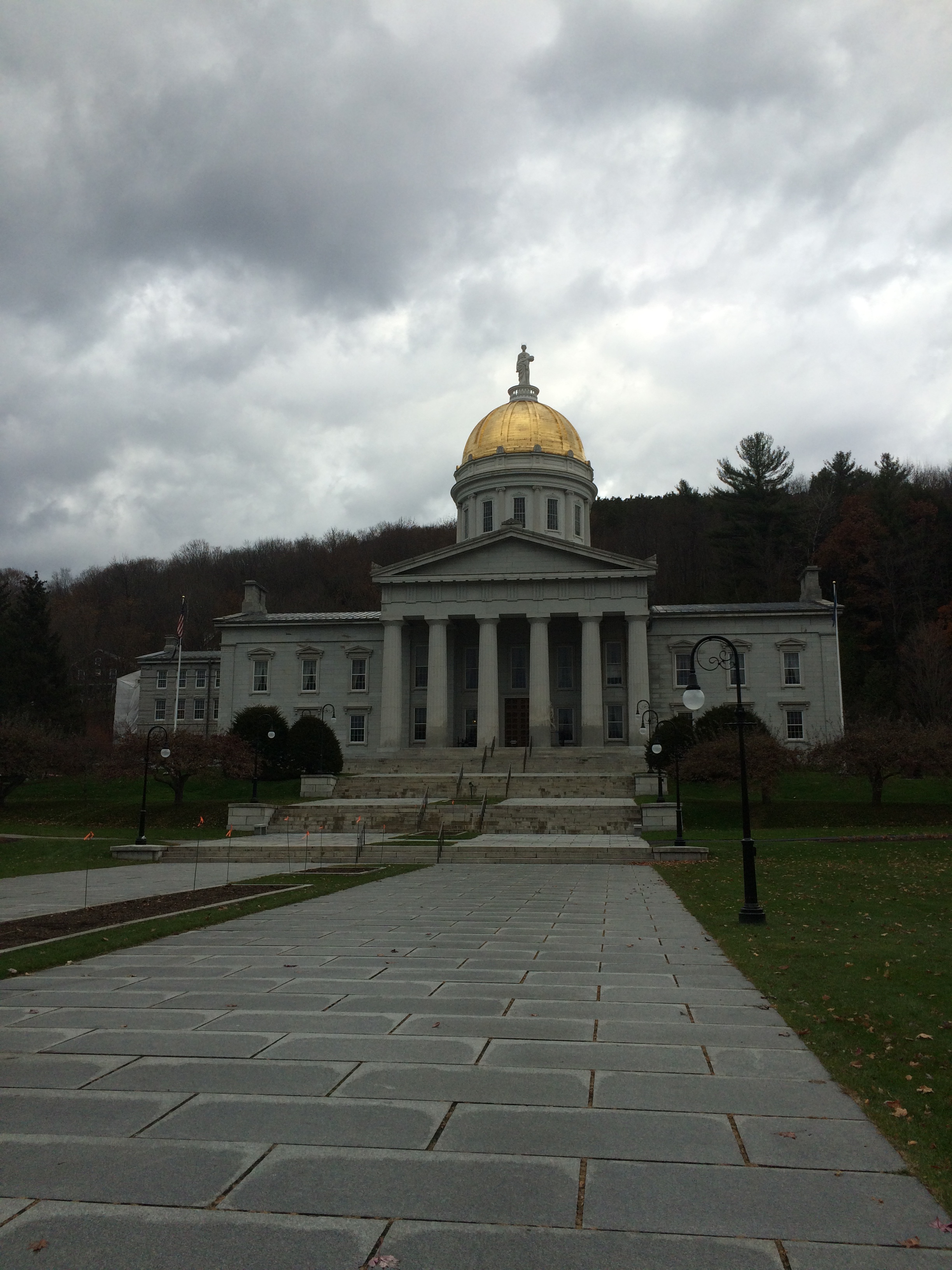
Montpelier, Vermont

Courage

Driving along the interstate the yesterday, I looked up at blue heron winging its oddly graceful way, silently above the rush-hour pavement. This strange bird, who always reminds me of its ancient, prehistoric ancestors, set me thinking of what I’m writing, where turkey vultures circle and ascend, silently, reappearing over and over in this novel, a wordless image of mortality.

On this drive home, the sprawl of Burlington thins gradually, and with relief  I cross over the Morrisville border where the farm fields spread out, and Mt. Elmore appears to my right, my familiar blue companion. I was still thinking of those vultures and that solitary heron when the rain began again, hurling down in handfuls as I alternated through patches of downpour and sunny spots. As I drove out of Morrisville, up the hill towards Elmore, the rainbows appeared, two great arcs, iridescent beyond belief, their tails not tucked neatly behind the mountain, but seemingly almost right before me: they seemed so near I could practically pull over, sprint into the woods, and discover their mythical ends. I parked on a dirt road and jumped out. The rain had already ceased, and only the green still shimmered its glittery glow. The other colors had already faded and paled, wicked away into the clouds.

I stood there watching the rainbows disappear into nothingness. The rain had muddied the road and swept a coolness over the day’s heat. The crickets sang weakly, as if they neared sleep.  The wet soil and tangled weeds along the roadside emitted a briny scent that reminded me of a place in Maine where we had once been happy. I wondered if the fall was edging in there, too, this place where I would never return.

The last miles home, I thought of those things–heron, vulture, rainbows, the Maine ocean and sky. The next morning, I told my younger nephew I had seen a double rainbow, and he asked, A double rainbow? Are you sure?

Yes, I said. I’m sure.

Let it not be said that in passing through this world
you turned your face and left its wounds unattended.
Instead, let it be said that when your friends
cut open your chest to partake of its courage,
a loon was calling.

–– Janisse Ray

IMG_3628

Photo by Molly Blume S.

Watering in the Rain? What?

This cold and rainy Sunday morning, I was in the hoop house watering tomato plants when I saw a wild turkey picking its way across our small field.  The field, recently harrowed and seeded with peas, was mucky from a deluge the night before, so the turkey lifted its feet in the turkey’s funny variation of high-stepping.  With its long neck and tail, it’s a lot of bird.  After a few seeds, the bird, apparently alone, disappeared into the woods with its already lush fern undergrowth.

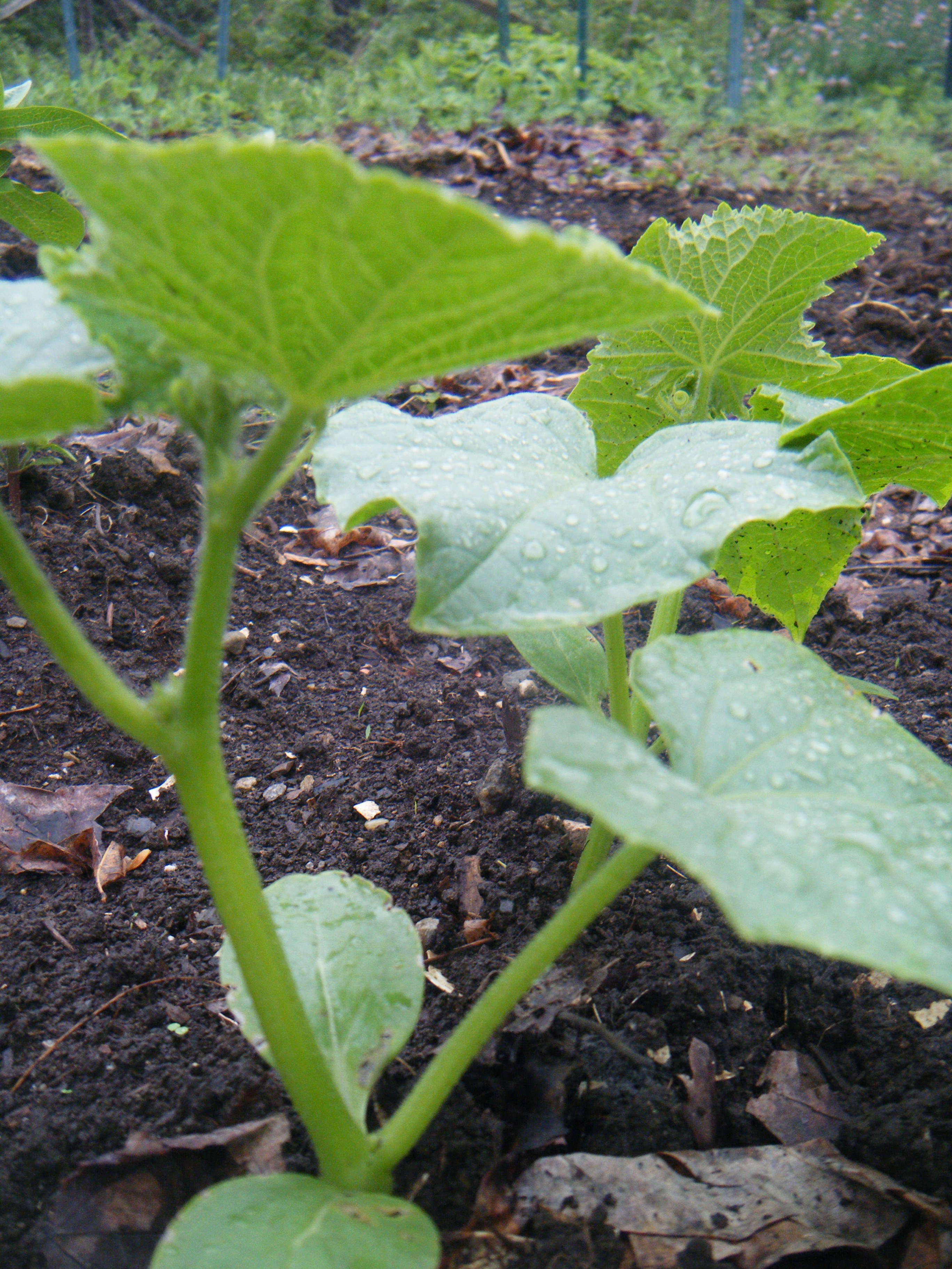
While the turkey was going about its meal gathering, I appeared to be doing an essentially crazy thing — watering in wet weather.  And yet, I’ll continue to do so, for reasons that partly make sense to me.  It’s that “partly make sense” aspect that often seems to jam up human life.  On the one hand, I want the tomatoes, and this is my experience of how most effectively grow tomatoes in my patch of Vermont; on the other hand, watering in the rain is just plain nuts.

While I would never describe myself as a relativist, one of the greatest appeals of literature is the way writing explores that edge, that nether realm between the hard shores of certainty.

My ten-year-old recently determined, with the assistance of a teacher, that she is precisely the right height for her age.  She informed me of this conclusion while brushing her teeth that night, in her practical and pragmatic way of looking at the world:  here I am, exactly where I want to be.  Her sister scoffs at this kind of knowledge — why would you believe numbers? you’ll either grow or not — but my younger child sees a validity in numbers her sister does not.  My older daughter tends to view the world as wildly awry with the vagaries of fate, but to my younger daughter, the world is dictated by precision and certainty, and I could see the succor she justly took from that knowledge.   Her fears that she will be very small (like me) were mitigated by this calculation.  Each of my two children, blood sisters, has a radically different method of mapping and understanding the world.  Neither of these would I at all disparage; they are both genuine ways of understanding, albeit diametrically opposed.

Yet — can I generalize? — by adulthood those shores of certainty are often shaken, if not downright abandoned.  In what way will we know the world?  What will serve as our compass in troubled weather?  I see literature as precisely that compass, a complex and sometimes incomprehensible tool, a map, convoluted at times, to get us out of Tom Sawyer’s cave.

… the evening the kingfisher fell… I held
(it) in my hands,
I touched its blue power.
That may be the only time
I ever do so.

What I held was more precious
than handfuls of money.
If I could have restored it
to wind, I would have.

What to do
with the wild pain?

…Give it back,
all of it, and go home.

“Kingfisher” in A House of Branches, Janisse Ray

DSCF9927