Small Soup Bowls. Quarantine. Icicles.

My brother returns home, and I immediately slip up, ignore a morphine dose, am unable to eat. A lesson in my own laziness or foolishness learned: keep to the path.

For days, he sets small bowls of heated soup on my kitchen table – chicken and dumplings, our childhood favorite of pea soup, lentils with savory carrots. One night, my daughter bakes biscuits, opens a gift jar of raspberry jam (July!), and we revel at a nameless soup from a woman we’ve never met. Potatoes with the skins left on, chicken and maybe tarragon, celery, onion. There is nothing we could imagine adding.

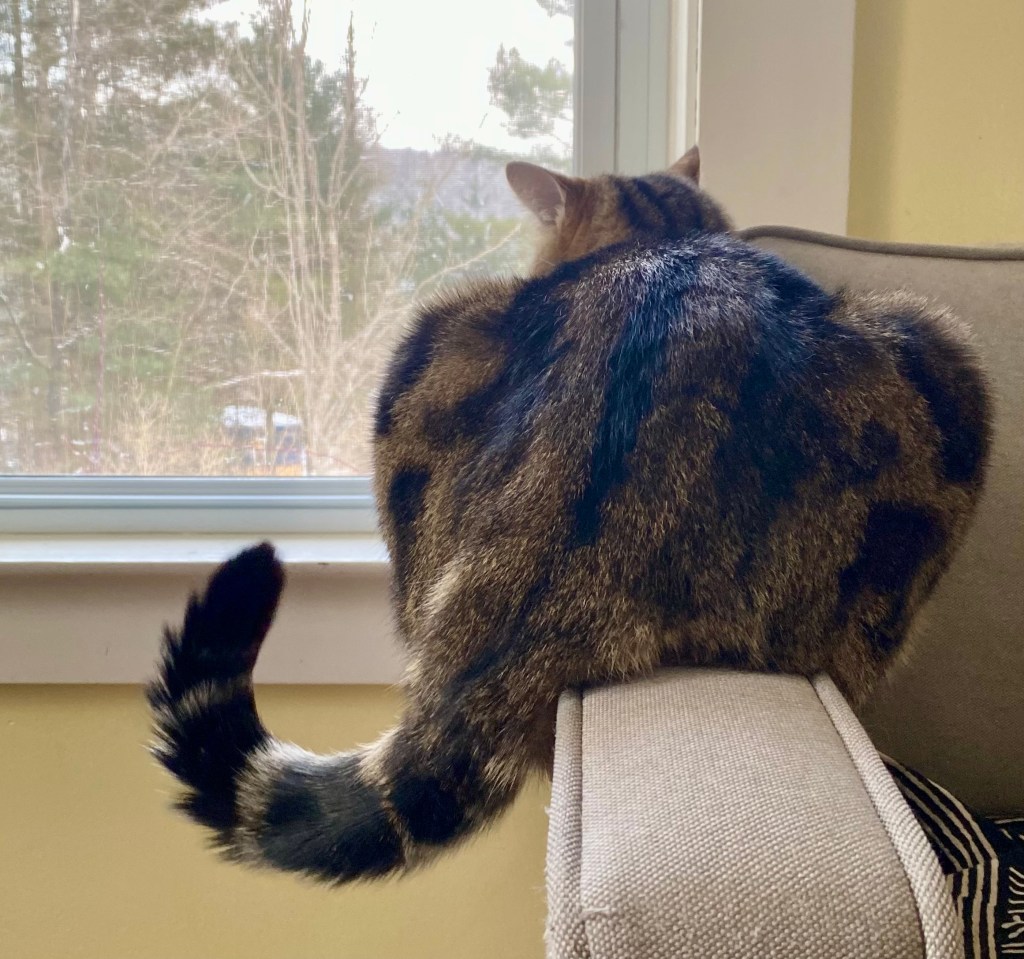
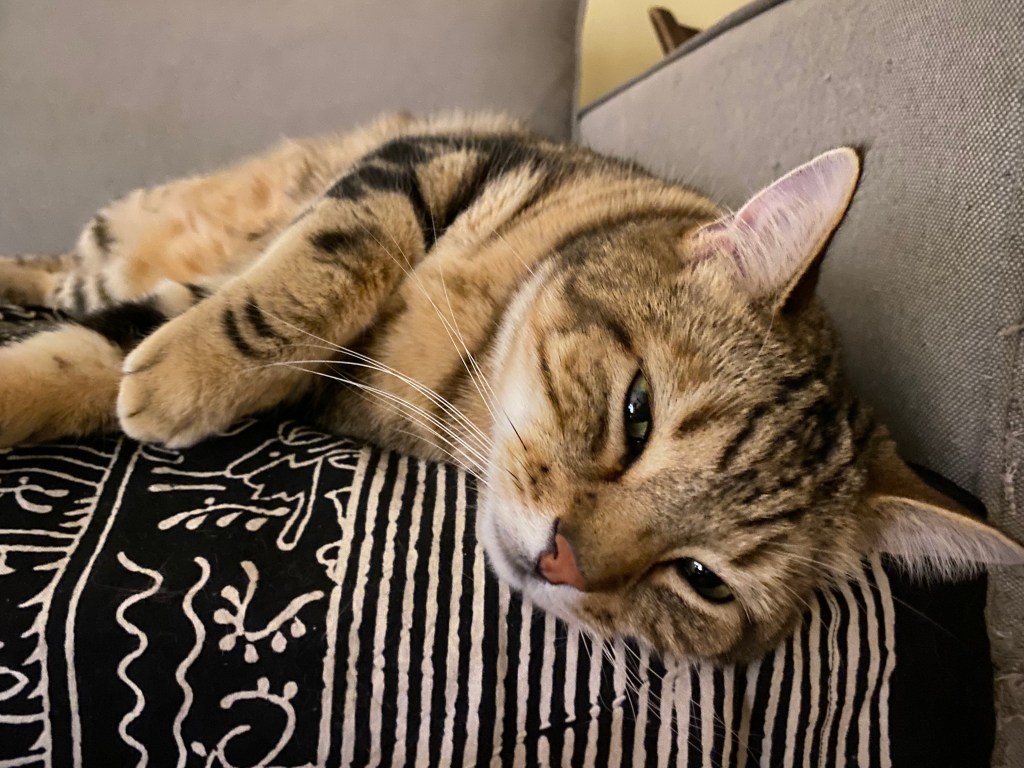
Like these soup bowls, my physical life has narrowed to these warm rooms with cats, hours unfurling patiently as I stop counting days and treatments. Each day unfolds. On Saturday, I sit on the couch and return a friend’s call. Sunday, I return another call, listening to my laughter, their laughter, these friends who have been down their own stony journeys.

Quarantined, I’m connected to the world in ways I didn’t anticipate – emails and calls, books, prayers– a rosy swaddling aura. An acquaintance phones me with her cancer story and describes her year so straightforwardly she buoys me with courage. A friend offers to plow our driveway all winter; perpetually on the skimp, I’ve shoveled for years, but it’s a great gift to my people who are anyways busily feeding my wood stove and picking up morphine and antibiotics and driving me to bloodwork and The Good Doctor — not to mention, working their own jobs and walking their dogs and generally going about their lives.

So much kindness has come my way. The night the sainted nurse sat with me for an hour and a half while the final chemo infusion ebbed, ebbed, into my chest beside my heart, she counseled me to cultivate patience, that I will be able to give again, that the world spins and shifts.

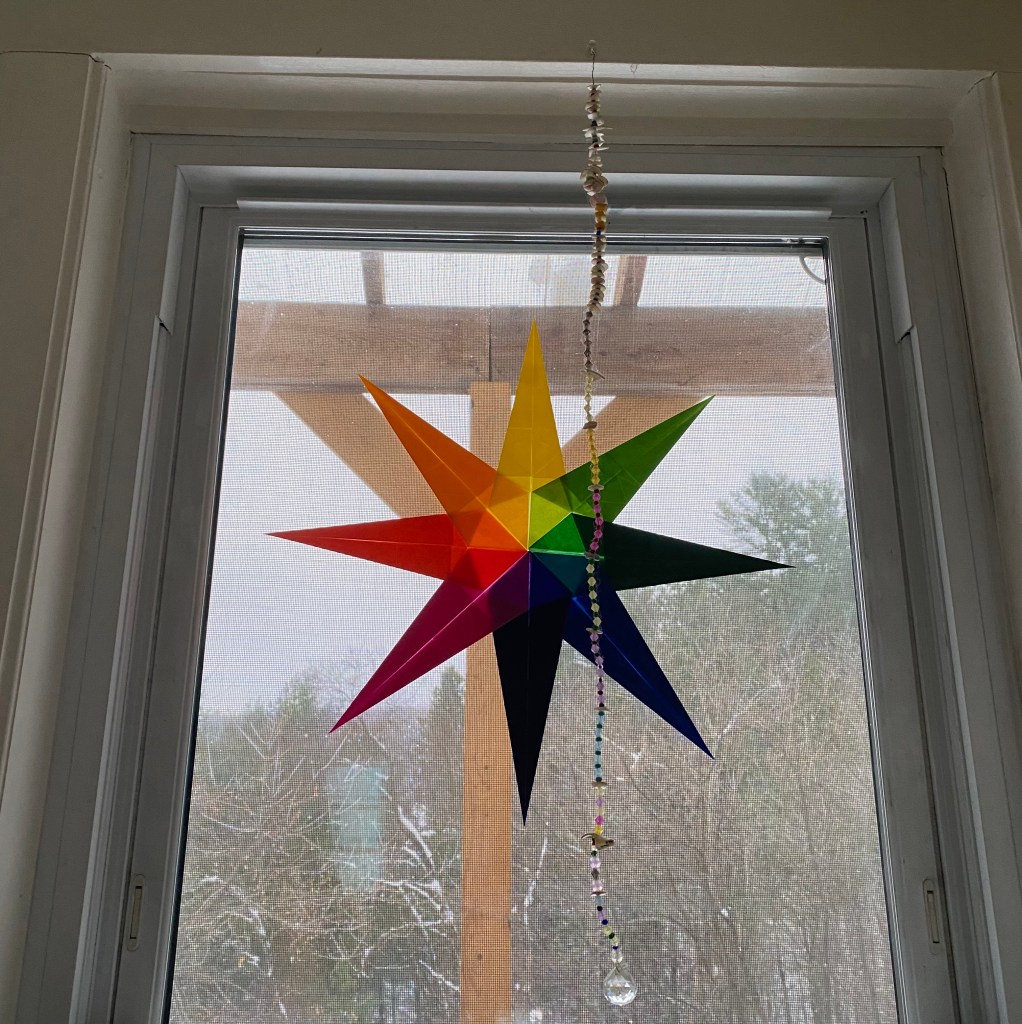
In a wind gust, the robins’ nest falls from our porch beam. Icicles hang from the roof, radiant swords of sunlight.

…. A few lines from Louise Dickinson Rich, courtesy of my sister-in-law:

“All ordinary people like us, everywhere, are trying to find the same things. It makes no difference whether they are New Englanders or Texans or Malayans or Finns. They all want to be left alone to conduct their own private search for a personal peace, a reasonable security, a little love, a chance to attain happiness through achievement.”

Chemo ride…

… took a bitch turn. Dreaded day 5 passed (thank goodness for the amazing anti-nausea meds), but with the last bag of this poison/healing fluid, a fist immediately grabbed my chest and squeezed my breath. My cheeks coursed with blood.Terror, say the word, terror. So much back and forth, oxygen and treatments and more liquids through this purple spaghetti plastic that drip, drip, drips near my heart. I shook fiercely – rigors – the nurses said. I was stuck on the word as my molars hammered, rigors!, where is this hard ride taking me? The fluid was stopped with a promise not to start again until I knew.

In and out of a fog, a dream of a herringbone jacket with a pleated flair my youngest wore as a two-year-old. In the evening, a nurse sits with me. As the drip-drops begin again, she talks, right beside me, watching me, close eye, about this disease, about infection and rest, about what I will need to do and avoid – do not knick your fingers with a knife, no dirt, no cat litter, no flowers, no illness. I ease from tension and realize, yes, yes, I am still breathing, I am still taking in this toxin that quite possibly will save my life. I glance up at the round analog clock on the wall that reminds me and my brother of school days. These are the moments Burlington’s Phoenix Books is hosting the Almanac intro in an online event. In my haze, I imagine the Almanac editors and reading and answering questions, this book filled with farm dirt and blooming flowers, hay chaff and sneezing, insects and sheep, and stories – so many stories – of people working on this northern place on the globe. In my half-dream, exchanging novels to read with this steady stranger, I feel my place in the world opening up, both descending into the long trek of illness and healing and, miraculously, an upward course, too, as this illness strips me down. Your bone marrow, the stranger says, marrow, a word I love and have been content to let lie, bone marrow doing its bone marrow thing. All this is changing, too, from nature, from medicine, from my fierce intent to reclaim my body.

All of you who have traveled or will travel this journey, bone marrow and rigors and fear, how simultaneously far and yet close this feels, all of us.

….. Everyday, a dear friend texts me a poem read in her clear strong voice. Here’s Rilke’s “Let Darkness Be a Bell Tower”

Quiet friend who has come so far,

feel how your breathing makes more space around you.
Let this darkness be a bell tower
and you the bell. As you ring,

what batters you becomes your strength.
Move back and forth into the change.
What is it like, such intensity of pain?
If the drink is bitter, turn yourself to wine.

In this uncontainable night,
be the mystery at the crossroads of your senses,
the meaning discovered there.

And if the world has ceased to hear you,
say to the silent earth: I flow.
To the rushing water, speak: I am.

Sonnets to Orpheus II, 29

The Moon is Cheese.

Photo by Molly S.

My novel Call It Madness, slated for publication in a year and half (a small eternity away?), is arranged by places — or vessels in my mind. An apartment, an unheated farmhouse, the center of a frozen lake. To my way of thinking, places shape who we are.

Friday, wheeled on my back into a procedure room at Dartmouth-Hitchcock, I answered the usual name and date of birth and then a third question: why are you here today? A moment, a pause, and then I answered I was there for a specific biopsy.

Words are magical things, and magic is powerful. In the Dartmouth waiting room, laughing with my brother about memories from our childhood (he cheated at Monopoly, yes, I hit him over the head with a metal rod), the thought kept pulsing through my mind how much I didn’t want to be there (get out! walk out!), for this appointment I had worked so hard to finagle. But saying those words aloud sealed this very first step.

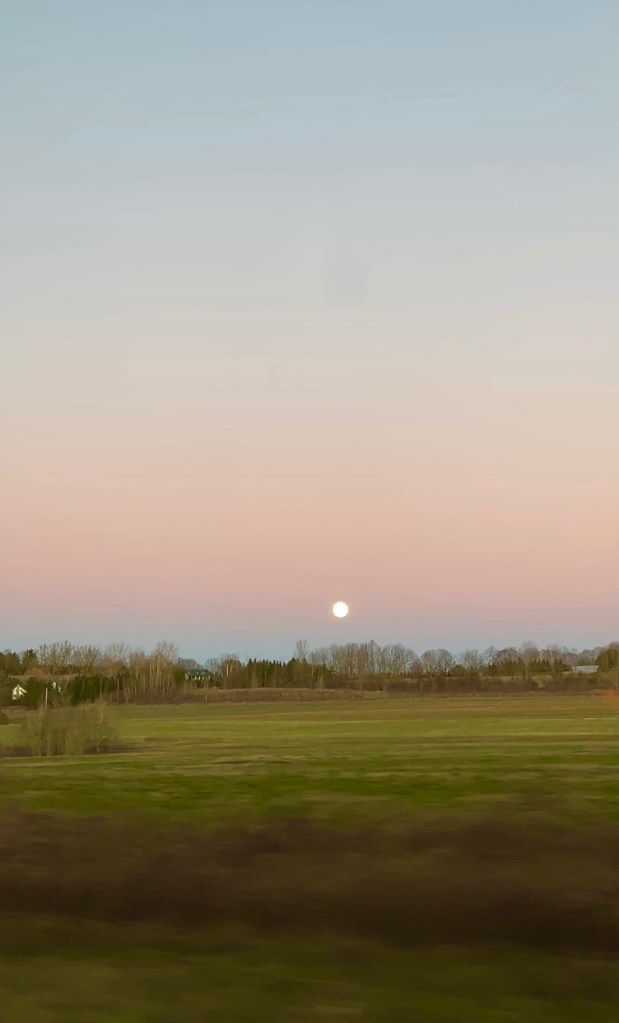
On the long drive home, the full Beaver Moon rose, lit the river and interstate, the ubiquitous Vermont hayfields still green in this lingering late autumn, the sky a blush of pink , reminding us, again, of the sheer luck of millennia of sunsets and the sailing moon, each dearly unique.

Later, later, lying on the couch, my brother and youngest sit opposite me, drinking beer and talking, eating the prized Club crackers that I never buy and a kind neighbor left. My brother disappears into the kitchen and returns.

“Cheese!” my daughter says, sparkling with happiness.

Abrupt turn in the story…

Photo credit Jo Dorr

For the past few months, I’ve wondered if I might want to take a different direction with my blog (head to Substack?, become more politically local?), but this blog will change, unbidden by me.

Monday, my daughter took me to the ER for severe abdominal pains. An elevated white blood cell count made the nurse reappear with bottles he filled with my blood and gave me the heads up that I might not be headed home that night. I was wearing my twenty year old Danskos and a wool sweater I’d knit years ago and have worn to felt. Slivers from the firewood I’d brought in were hooked on the sweater. My younger daughter and the older daughter’s boyfriend appeared. My girls texted my brother. The nurse kept coming and going, talking to me and my daughters.

I lay on my back for hours with very kind people around me, who gave me pain meds and noted a soaring fever. The ER doctor returned with the nurse who leaned against the cabinets. It was the briefest thing, but when the nurse walked in he looked deeply at my daughters and then at the floor. I knew then that I was not going to like what the ER doctor was about to tell me about that CT scan.

So, on election night, hospitalized with scepticemia from the cancer, a traveling nurse told me about the beaches in Alabama where he lives while he tidied up needles and tubes in my arm. We followed that up with a long conversation about housing costs. Home again on this frosty and promising-to-be-sunny morning, I’ve been humbled by the gifts of visitors and food and kindness that have poured into our little family house, which made me see what a shadowy unhappiness had been creeping into my being for these past few months.

With the hospital and my brother, a biopsy at Dartmouth was pushed. Things will change rapidly. In the meantime, I’m doing things like putting my electric bill on autopay and arranging immediate work leave. But more profoundly, this: this week centered me right back to who I am — mother/daughter/sister, friend, writer — and conversely narrowed and widened my lens, hammering home that day by day is where we are.

The other afternoon, my daughter Molly ran in the house and told us to hurry out to see a rainbow. November rainbows in Vermont are rare, indeed — rainbows in late fall of this glossiness and color even more so. I saw this as a harbinger.

Last, I was reminded of one of my favorite Jack Gilbert Poems, “A Brief for the Defense.” A few lines read:

… We must admit there will be music despite everything.
We stand at the prow again of a small ship
anchored late at night in the tiny port
looking over to the sleeping island: the waterfront
is three shuttered cafés and one naked light burning.
To hear the faint sound of oars in the silence as a rowboat
comes slowly out and then goes back is truly worth
all the years of sorrow that are to come.

Cats, Coyotes.

The return trip from my parents’ house in New Mexico to my own Hardwick, Vermont, house was 20 hours. When I stepped off the plane, I was effusively grateful to see my daughters waiting to drive me home, to wrap me again in our own particular kind of family — loving and funny, with the fierce rivers of stories that run between us.

A friend texts me and sweetly offers to make me a meal; these days, about all I’ve done is trudge into work, then lie on couch with my cats, reading Michael Crummy and soaking in Jon Stewart’s election update. When my daughters were babies, I lived in a rarefied kind of atmosphere, of warm milk and scant sleep and intense curiosity: what now? what next? As if bookended, my parents in very old age live in a unique world, too, suffused with New Mexican sunlight, and with a similar uncertainty: what next?

In that middle-of-the-night drive to Albuquerque, circling through the airport parking lot, I spied a coyote. I pulled over, opened the car door, and looked back. Under the amber streetlights, the coyote hurried along, brushy tail bouncing, not so much as glancing over its shoulder at me. Around us, so much cement, then the desert, undulating, spreading up into the hills, disappearing from sight.

The wild creature vanished into the dark.

“A body must bear what can’t be helped.”

— Michael Crummy

Travel in Out-of-Everyday Places.

In the quietest hours of the night, driving by the twinkling line of Santa Fe’s lights in the immense desert, a crimson half moon cupped in the firmament like a bowl full of mystery, I have the strange sense of transmogrifying into a Russian novel. Maybe in part because of the Bulgakov novel from my sister crammed in my backpack with my laptop and half-written notebook, or maybe it’s my family story unfurling simultaneously at lightspeed and also breath by labored breath.

At the Albuquerque airport, the shuttle bus holds just me and the driver who says he’s from the Chicago suburbs. He remarks that I’m shivering and wonders how that can be, as I’ve told him I’m flying back to Vermont. I’m tell him I’m just tired. Perhaps. But the illuminated city and the airport floodlights and mundane directional signs for United and Alaska Air bedazzle my 3 a.m. eyes: there’s so much of the world, so many people and stories braiding and twisting, from the sweet simplicity of a child cradling a beloved doll to an old woman gasping her way to the end of her life.

The driver asks me about the church scene in Vermont. I rattle off about white steeples in every town. Driving incredibly slowly, he launches into his story of knowing that he wanted to be a better man but kept falling into sin, and then a page in the book of his life turned. I can see this is doubtlessly headed to a pamphlet he wants to hand me. Yet, as he speaks, I wonder what that really means: Knock, and Jesus will open the door.

Later, in the terminal, drinking coffee, I sit in a space crowded with strangers, all on their meaningful journeys. My heart swells full with so many things: the robins singing in my parents’ aspen, last night’s dream of wandering through a sugarbush, forest floor sprinkled with spring beauties, the luminous crimson bowl of the moon in the infinite darkness. Nature never builds a door. Maybe those doors and windows we’re forever using as metaphors are illusions.

The driver had forgotten his bag, so the pamphlet was a no go. I take his words and tuck the sliver of his story into my writer’s mind with the hard-boiled egg I’d split down the middle and shared with a young woman yesterday morning. While we ate, she told me about her son’s heart surgery, and the surgeons who saved the boy’s life. With my fingers, I sweep the eggshells into a pile on the plate we’ve shared.