The Goddamn Gray, the Brilliance of Language.

A year ago, my daughter was driving me to the local ER, yet again, under the frigid winter sky. Wordless, I leaned my head against the side window of her Subaru, staring at the faraway pricks of stars vanishing and reappearing among the clouds. In the darkness, I fixated on one thought—the white hospital bed, the clear liquid drugs that would make the pain cease—and held to that, my lifeline. Cancer-and-chemo, in its infinite complexity, is a monotone landscape. In all those months, my existence was the blackness of pain, the temporary light of relief-from-pain, the crimson drug injected into my veins. Occasionally, a cardinal at a feeder, blood oranges, and then I couldn’t eat those, either, and I remained alive on Saltines and water.

I keep thinking of those below zero nights as I drive this night to the opposite end of town. There, with a friend in a place where I’ve never been, we eat drunken noodles and green curry, and then drive again through the darkness and the drifting snow that’s no threat, simply prettiness. At the Vermont Studio Center for the Arts, we settle into the dining hall with the residents. We’re greeted warmly, and the room is scented with the lingering remains of a savory dinner, of coffee and wine and the fragrance of flowers likely from the tables freshly scrubbed. This is a dear place, where I’ve been lucky to stay and work hard, meet friends and share stories about creativity, its hardness and joy.

Rigoberto González reads magnificently, his words, reminding me of when I was a teenager reading James Joyce for the first time, thinking yes, yes, this is what writing can do, push us into a place where we glimpse the world for a moment in all its shimmering and confounding complexity, its immense sorrow, utter fun, or the way a hand plucks a pebble from a river and holds it dripping and glistening to the sunlight.

At home, I stand in the darkness that is sodden with cold, a forerunner of the mighty freeze rushing this way. The crescent moon pushes against the clouds. In those underworld months, the goddamn gray occasionally scattershot with goldfinches exploding from bare branches, my fate might easily have veered another path. A storm and brutal cold loom over this nation submerged beneath political nefariousness.

This terrible disease, this exacting instructor, taught me brutal lessons. Among these, savor these draughts of warmth, recognize heart. Know this value. Do not disparage.

“Every person with a body should be given a guide to dying as soon as they are born.”
― Anne Boyer

Backaches and all.

Snow returns to Vermont; I remember an April 1st years ago when the snow fell so mightily our sugarhouse was hidden. I worried our toddler might get lost in the drifts.

These (early spring) afternoons, I walk around my garden where last autumn’s sunflower stalks still stand. The robins, those cheery birds, cluster. Redwing blackbirds sing joyously.

I’m nearly at my last chemo session – yes, counting down day by day, my simple math calculations and not-so-simple life. Mornings, I pull myself together to work; afternoons, I lie on the couch with my cat and read. The town library orders me interlibrary books. Recently, Blue, an illustrated memoir of St. Bart’s that I read in a few hours, a sojourn into a Caribbean vacation with a sweet family. I will be traveling nowhere outside the country, anytime soon, although I dream…

Where I am now is different terrain. My house has sheltered me (and my family) so warmly and kindly during this winter of disease. Now, I see where our house needs tending – paint on the barn, boards hammered back on the porch where the ice crashed. Every spring and summer, too, I plant more in the gardens, cultivating good living for birds and pollinators, not necessarily the woodchucks who come, unbidden. There will be no wars on my patch of hillside.

The bigger work for me now is healing; how happily I’ll shed medical appointments, the world of sickness, and savor my long walks again. My oncologist told me last fall that someday I’d forget I ever had lymphoma, and I’d forget him, too. Maybe someday if dementia drills into me (many many years from now). I would need to live a long long life if I were to forget this year.

In these winter months of cancer suffering, I’ve longed for many things, but prominent among these desires is to imbue this cancer with meaning. So now, as I’m beginning to contemplate my next steps, the spring and recovery phase, I’m determined to not slip into old habits or careless living. I mean nothing sentimental about this, as if plastering a gratitude sticker on my life will fix up my world.

Which way this will go is yet to be determined. Certainly, planting more perennials.

Stacking wood today

I thought how much I loved this life,

Backaches and all.

~ John Straley

Unsurpassable February.

For days, the forecast has trumpeted news of impending snow this weekend; still, sunlight floods into our kitchen this morning. Sure, it’s a few degrees above zero, nothing to sneeze at, but the icicles gleam, skinny stalactites, proof of this week’s warming. A crimson cardinal perches on the feeder.

We are in deep midwinter, the annual mark of collective cabin fever, of generalized bitching, of snow pile comparisons and, in precise detail, what is now hidden from view. It’s the season for skiing, for chocolate, for mooning over seed catalogs.

In my own cancer world, I mark the merge of days and nights in my own way, writing my thousand words a day (sometimes more, sometimes not at all), as my own shepherd’s crook to right my crooked self. In the afternoons, spent, I read and read, returning to that great pleasure of my youth. Around me, my family shifts and jostles, their own lives crammed full with their living, with jobs and classes and loves or longed-for loves. My daughters call me with stories about a grapefruit drink that I vow to drink this July and August, over smashed ice, my bare feet on the grass or maybe a sandy shore of Lake Champlain. It’s the time of year when we long for rain drops on our cheeks and clotting in our eyelashes. But February rain holds ice and sleet, not the green wash of spring, the scent of soaked earth, the tang of emerging garlic.

Every day, I talk with my old father in New Mexico. He asks, Are you sticking to the plan?

I am, I assure him, holding to the course of what the medical realm prescribes, meds and applesauce and so much water — but the here’s the refreshing, liberating, unbelievable thing: there’s no bones with anyone at all in the cancer world that this is a hard dirty blow. So seize this opportunity, turn your life inside out, remake it anew. Make no excuses. Take.

Driving, again driving in the dark to Dartmouth, the full moon hung over our shoulders the entire journey, a creamy light, brilliant on new snow, unsurpassable.

And here’s a poem from Ginger Andrews I used to read in my shut-in mothering-toddler days….

The Cure

Lying around all day
with some strange new deep blue
weekend funk, I’m not really asleep
when my sister calls
to say she’s just hung up
from talking with Aunt Bertha
who is 89 and ill but managing
to take care of Uncle Frank
who is completely bed ridden.
Aunt Bert says
it’s snowing there in Arkansas,
on Catfish Lane, and she hasn’t been
able to walk out to their mailbox.
She’s been suffering
from a bad case of the mulleygrubs.
The cure for the mulleygrubs,
she tells my sister,
is to get up and bake a cake.
If that doesn’t do it, put on a red dress.

Three things of varying importance…

Because I’m writing from Vermont, first, the weather: cheek-slashing cold, furious wind.

Second, back at Dartmouth these past few days for a consult and an infusion. Checking in, my insurance card was denied. Denied because it’s January and the new year wasn’t set correctly, or denied because some system is broken? I imagine these numerous co-pays, from ninety-cents to $750, piling up in my electronic portal. I’ll kick that to Monday, begin to straighten that out then…

Halfway through my treatments, the Good Doctor gives me the heads up about what’s to come, including the shift from what I’m calling Cancer Land back to the Everyday World. Although I’m sure he hears this repeatedly, I say how otherworldly is this cancer journey. Rarefied isn’t precisely the word I’m looking for, as so much of disease isn’t lofty or grandiose but mundane and sometimes miserable. But the journey is like nothing else I’ve undertaken, laced through at times with impending death, elevating the stakes to the utter center point of what matters. There’s nothing trivial here.

Third (and certainly not last), I’m so grateful for the lovely mail in my P.O. Box – cards and books, seeds and poems, such as this one by Danusha Laméris.

Insha’Allah

I don’t know when it slipped into my speech

that soft word meaning, “if God wills it.”

… How lightly we learn to hold hope,

as if it were an animal that could turn around

and bite your hand. And still we carry it

the way a mother would, carefully,

from one day to the next.

Refusal that the World is Random.

Cancer or not, the everyday world proceeds. I renegotiate the dullard car insurance (why would I pay to insure myself when I’m not driving?). This morning, the cat, seeking the milk jug on the counter, leaps on the kibble container I didn’t properly close. Kibble mounds over the kitchen floor. For the briefest moment, both cats stare, unable to process their astounding luck: a landslide of food.

Among minor domestic changes which involved a ridiculous amount of discussion: we swapped one washing machine for another. I posted the old one (a workhorse from the previous century) for free on the local digital bulletin board. While I was heating up the pot roast my friend dropped off, a young man I’ve known since he before he lost his milk teeth asked if the washing machine was available.

He arrived not long afterwards. We stood in the kitchen, talking about infected wisdom teeth (his, removed) and cancer (mine, in process of removal) and the medical system and capitalism. He asked if I knew what gave me the cancer, what empowered one gene to divide and divide again and again.

I have my theories, my guesses about this answer, nothing hard and set chiseled into stone. But isn’t it often the way that a sudden shift in events is triggered by multiple strands of actions, working seen or unseen? Leaning against the door, rose-cheeked with cold, he posits that nothing happens without a reason, that the universe is never capricious. I set my wooden spoon on the counter.

Here’s a thing: two months — 60 days — into the cancer world, with two rushed ER visits and two dodges of the grave, two chemo sessions, a complete upheaval of my life, my family’s, my colleagues’ — I woke early one recent morning and realized cancer will be with me until I cross into the next realm. But likewise, what I’ve labored hardest and most tenaciously and (often) most joyously will be with me, too. Raising babies into women, writing books, sobriety, cutting off a troubled marriage and recreating my life. But aren’t we all that way? Shouldering along with us the stones of our lives we’ve chosen, and the rain that’s fallen from the heavens and soaked us, too?

Here’s a Vermont Public Radio interview with Vermont Almanac editors Dave Mance and Patrick White, about this unique books and the non-cliché Vermont world.

A few lines from Dave Mance’s preamble to a book packed with plenty more….

…. seek out things that are real and hard…. Gravitate towards things that are beautiful. Lean in to things you cannot understand…. Tell stories where trees are protagonists. Look at the lines on your palm and see that, like wood, your skin has grain.

Snow geese and cancer and macaroni and cheese.

My friend walks into my kitchen. The windows are shrouded in the remains of last night’s darkness. She bends down and looks at my face, reminding me of those enervating conversations in ERs with doctors. After a careful moment, she pronounces, You look good. My house is warm; her sentence warms me more.

In the St. Johnsbury hospital, she drops me at the laboratory door. A receptionist sends me down the hall, in search of elevators. A woman in the waiting room follows rickety me in my winter boots, and repeats the directions. I wander down halls empty of people, interspersed with lit Christmas trees in what seem to me random corners and notches. Someone calls my name. I turn and look, and of course this is my friend, who for a fleeting moment I don’t recognize in her bundled coat, surgical mask.

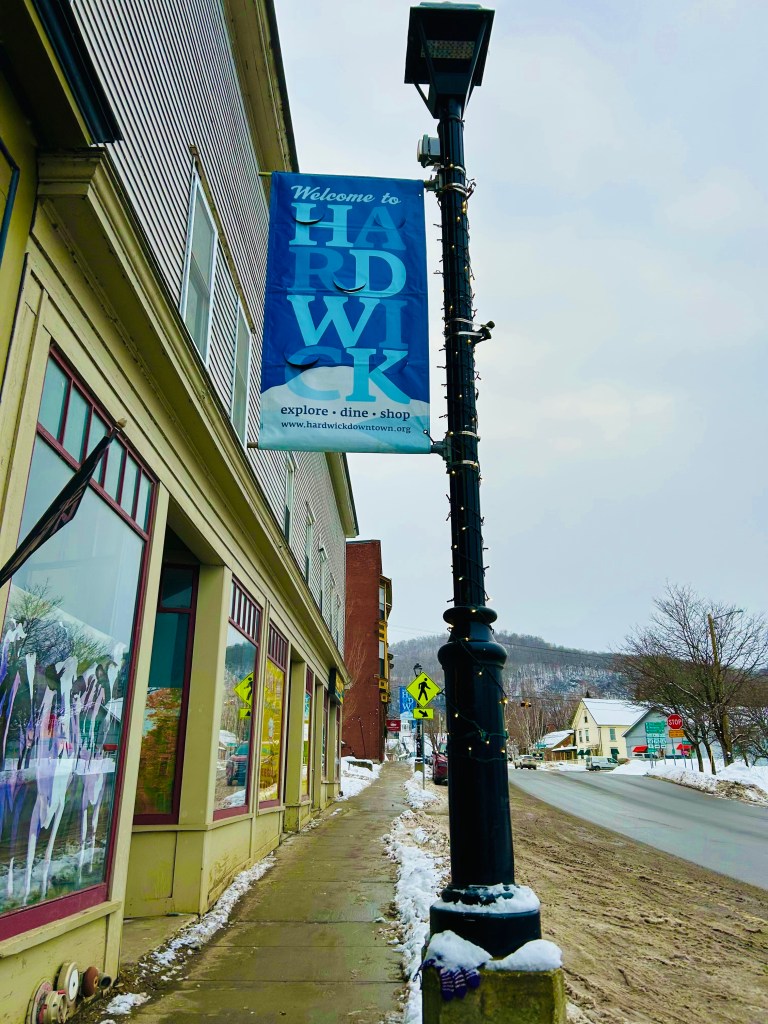
Not far from the Canadian border, St.Johnsbury has a faded charm from its former heyday of logging and Fairbanks scales. This December morning, the day sputters, promising no sunlight, maybe a few rosy strands in the opening daybreak. In my strange fog, I wonder if the light mirrors Siberia. My blood is drawn and spun. Waiting for the verdict, I stare out the window, the layers of coal and washed-thin blue and last night’s pale snow. Beside me, a man introduces himself says he owns a garage and towing business. I pull down my mask and offer my name. My voice is so muted he can hardly hear me, but I ask him to tell me about his plowing so far this winter. While we wait, he obliges me. My hands, he says, will never be clean enough for hospitals.

Siberia, I think, Siberia, as the garage owner pinpoints roads. The daylight notches up a bit. Save for my friend, waiting elsewhere, I know no one here, but this winter landscape of snow and pale mountain, the livelihood of working with hands and backs and people, is familiar to me as my thumb knuckles, the loneliness of lingering over the morning’s last cup of cooling black coffee, pondering some decision that’s wormed itself in the day.

So disease, cancer, that forbidding word, burrows in. The disease is me; the blood is mine; the nurse explains numbers, says hematocrit, hemoglobin. Less than a handful of weeks into this journey, I know my blood courses with immutable facts, ragingly powerful chemistry. The blessing to leave is laid upon me.

Home again from distant Siberia — is it midmorning? afternoon’s mire? — my friend sweeps ashes from my wood stove and nourishes gleaming coals with birchbark and splinters, odd pieces of end wood. This day unfurls, somber and patient, settling into winter’s long haul. I offer a piece of my daughter’s gingerbread. For hours now, we’ve talked about migrating snow geese and cancer and macaroni and cheese. She asks if I would take her on a nighttime walk — I envision the throb of spring peepers, the redolent rotting slop of thawing earth — indeed, a pleasure I might give back, to one of my shepherds holding me steady as I wobble down my back steps.