Just before dusk, I’m running along the rail trail, where train tracks once lay, when a woman steps out of the brushy woods, puts her hand over her chest, and gasps.
I’ve frightened her. She’s dressed in hunter’s orange and holds a rifle pressed against her body.
I stop. There’s no one else around, and I have the sudden terrible feeling that I’m in the wrong place at the wrong time. I’m wearing the ripped blue sweatshirt and knitted cap I always wear.
It’s hunting season, and I should be wearing orange. She looks angrily at me. I nod, edge away, and then keep on with my run. On this run, I’m mostly worried about a skinny dog at the one house I pass — a creature who doubtlessly is harmless. I run through the thick woods between the highway and the Lamoille River, snaking through its bends. It hasn’t escaped me how the wilderness presses right up against the village where I live, in acres upon acres of woods where I hardly ever see anyone.
On my way back, I again meet this woman with a florescent pink mask over her lower face. I’ve seen no one else, save the dog, and I slow to a walk again and apologize for not wearing brighter colors.
Jesus, she says and keeps walking.
Not long after, back in the village, the twilight drifts down like a gray snowstorm. My daughter’s school is closing again, perhaps opening in December, but maybe not. All around us, the pandemic continues to upend lives, through loss of in-person schooling, jobs and childcare, and the widening gulfs of isolation.
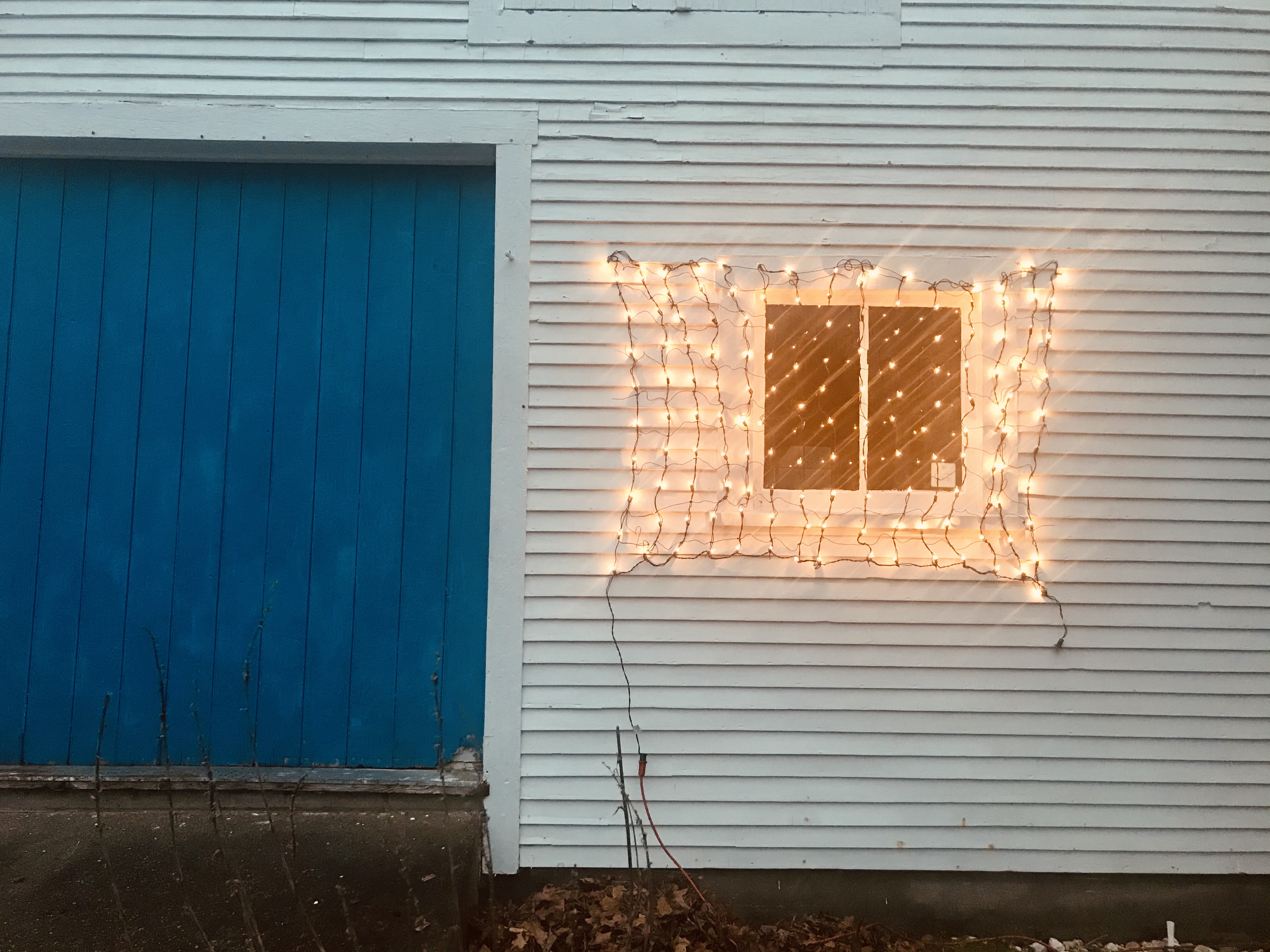
Walking back through town, I admire the holiday lights turning on as the darkness filters down — lights of all colors and blown-up snowmen and reindeer. The day has been unseasonably warm for November. Take this in, I think. And next time, bring a mask and wear orange, too.
“Writing often reveals us to ourselves, lets us name what’s important to us and what has been silent or silenced inside us.”
― Gregory Orr
 Stony Soil Vermont