Knock it down, revise your life.

March, northern Vermont, the long dragged-out amorphousness where winter drags its slushy sulkiness into sodden spring. I long for a few hours of blistering sun. This season was the weather my mother despised most, all those New Hampshire years of my childhood. One afternoon, she pulled over on a back road and instructed my siblings and me to run through a farmer’s soaked pasture, patchily emerged from a winter of snow, and head for the woods at the far end. We did not know who owned the field and argued. Go, she insisted, go. You kids need to run. So we ran.

My novel, Call It Madness, which will be out in at the end of June, in a month when I intend to swim, is about the unvarnished craziness of family, of fiercely knotted threads of desire and thwarted passion, how the stories that shape and mold our lives are buried generationally. The novel is not about my mother, but it’s for my mother, the woman now dead nearly two years. She was mercurial, passionate about love and destruction. In the long-beyond-time stretch of recent cancer treatments, those endless months on the couch, I often thought of her; she was the only family member who had endured the triple violence of cancer-and-chemotherapy-and-surgery, sheer survival tenuous as a snowdrop. My mother surprised me until the very end of her life, the whole range of the unexpected, from sorrow to contentment. As her youngest daughter, how little I knew her, and yet I carry her with me, in my own might and fallibility.

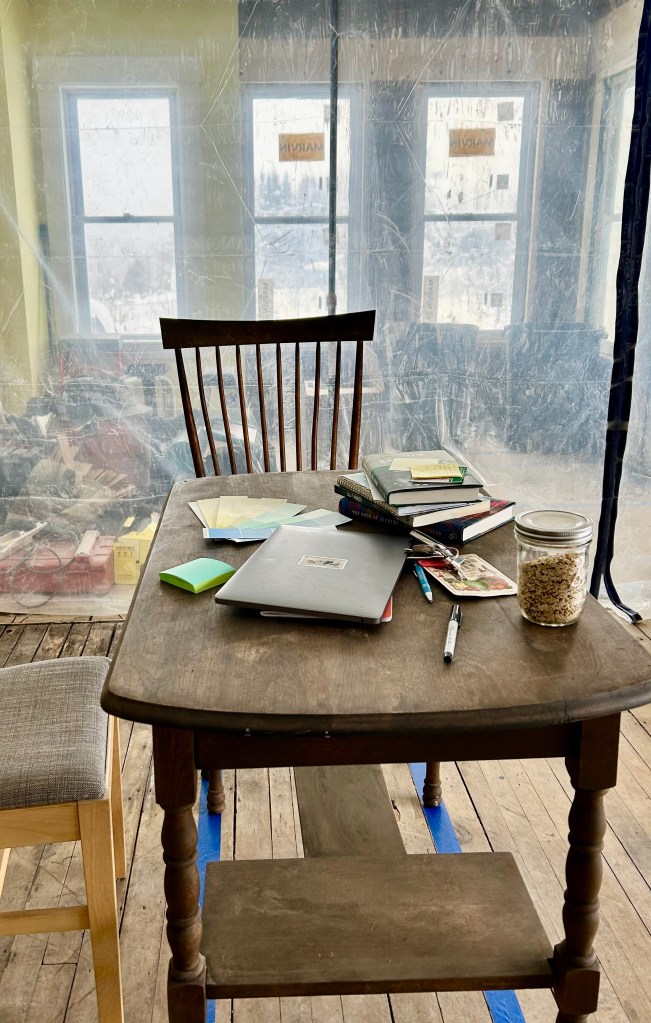
In these months of remission, I’ve learned from yoga that inquiry is a force, a variation of that impossible Socratic dictum, know thyself. Healing, I plot a venture into transforming my kitchen, my home’s heart, and hire a carpenter to take down a wall, open an exterior wall with windows. Am I crazy, I wonder. At the edges at least of madness, recklessly heady with survival, with the raw knowledge of mortality clenched in one fist.

When the vinyl flooring is ripped up, the carpenter and I ponder the hardwood boards, stained and blackened and scraped. The lives of previous occupants rises like mist, mesmerizing, unknowable. What remains are their scars. My cat and I sit on the dusty floor and share a bowl of arugula. Wet snow slides from the roof in the flowerbeds. I planted the gold compass flowers. Who planted the pink roses I’ll never know.

Back out of all this now too much for us,
Back in a time made simple by loss
Of detail, burned, dissolved, and broken off
Like graveyard marble sculpture in the weather,
There is a house that is no more a house…

Here are your waters and your watering place.
Drink and be whole again beyond confusion. — Robert Frost, “Directive”
Seven years ago…

Seven years ago, my daughters and I moved from a rural hillside down to a village, about five miles away. I’d closed midweek, with plans to rally help for a Sunday move. The evening that I closed, two friends who had followed the jagged path of my divorce loaded up my car and their cars, and we carried in the first load of my family’s belongings.

It was heavenly June, warm without undue heat. I had no furniture. A friend had brought dinner, and we sat on the back deck, eating and talking. I wondered, which way would my story go? Last night, I remembered this first meal here, when a neighbor stopped by with cake and rhubarb sauce: how complicated life is and, sometimes, how very simple.

Now, in this beginning to a lush summer, I water my seedlings in these early mornings, listening to the birds and spring crickets, the drenching dew over my bare toes. The spinach is already wilting. The tithonia drooped dramatically, beginning for extra water. The blueberries have hard knots nestled among their leaves.

So much of life seems impossible — birth a baby, endure a divorce, survive a death, write a book, write another, pack up a house and move (bring the beloved tricycle, too) — and yet we do these things. We all do these things.

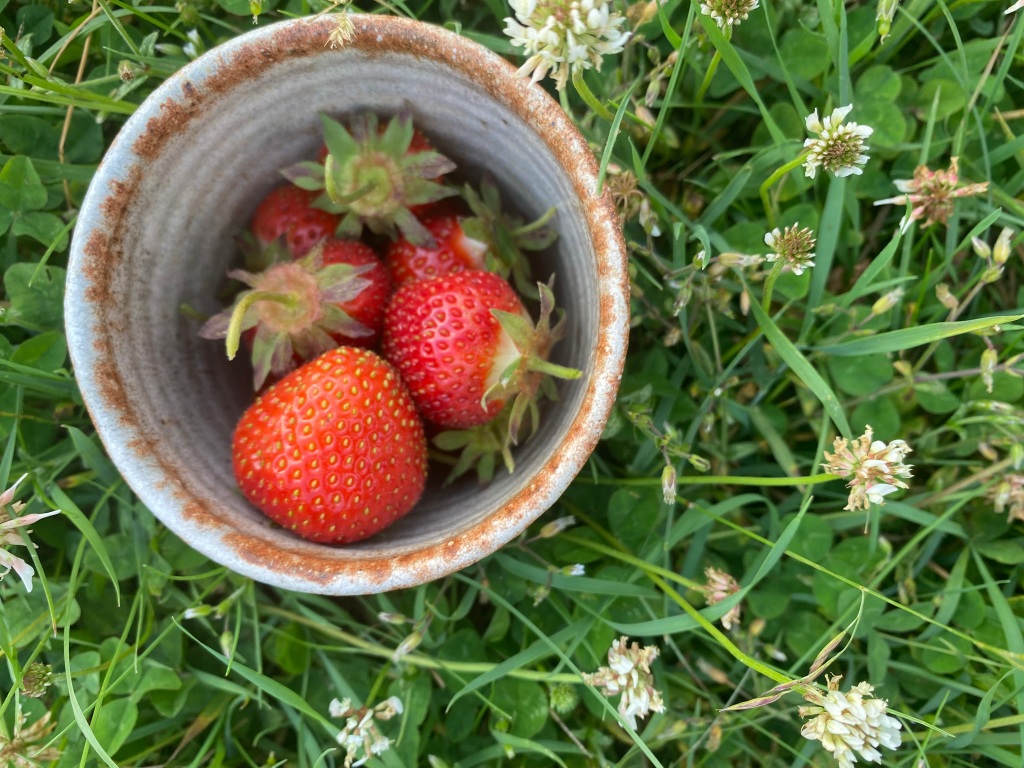
Seven years ago, would I have seen myself watering the sprouting green beans and listening to a woman on my neighbors’ porch sing the blues, the sky streaked with turquoise and crimson? I gathered a bowl of strawberries from plants I’ve let run rampart all through my garden beds. Messy, weedy. My youngest was given these plants when she weeded as an odd job in middle school. This year, the plants have given us so much sweetness.

Record temps are moving into Vermont, the world shifting rapidly. Around the globe and in my town, people are on the move. Which way will this story go? For a moment, I gather berries in the dewy morning. So much more day to come. But a steady start, my soles on the damp soil.

Writing.

I’m working on my laptop in Hardwick’s Front Seat Coffee when a man who I wanted to sell my house to, a few years back, comes up to me. In those days, he and his wife had a few young kids. The house was creative and cool, but in fairly lousy physical shape, and I believed he had the skills to right the rotten places. Life unspun in a different way, a pandemic set in, and that was that.

He’s now read my book about addiction. When we hug, he smells of woodsmoke. These days, he’s boiling sap outside, making syrup for his family.

When my youngest tells me she doesn’t know why anyone would ever write a book, I tell her there’s no reason at all, perhaps, except that it seems impossible NOT to write the book. Maybe all creativity is this way — that we’re driven to do things that otherwise no rational human would. Thank goodness for the madness of art, really.

After we talk about writing and addiction, he tells me he and his wife bought a house I once knew quite well, and we marvel at the interconnection in our little world. I may see him next week, or not for four years. And then our conversation will undoubtedly begin again.

Old Photos

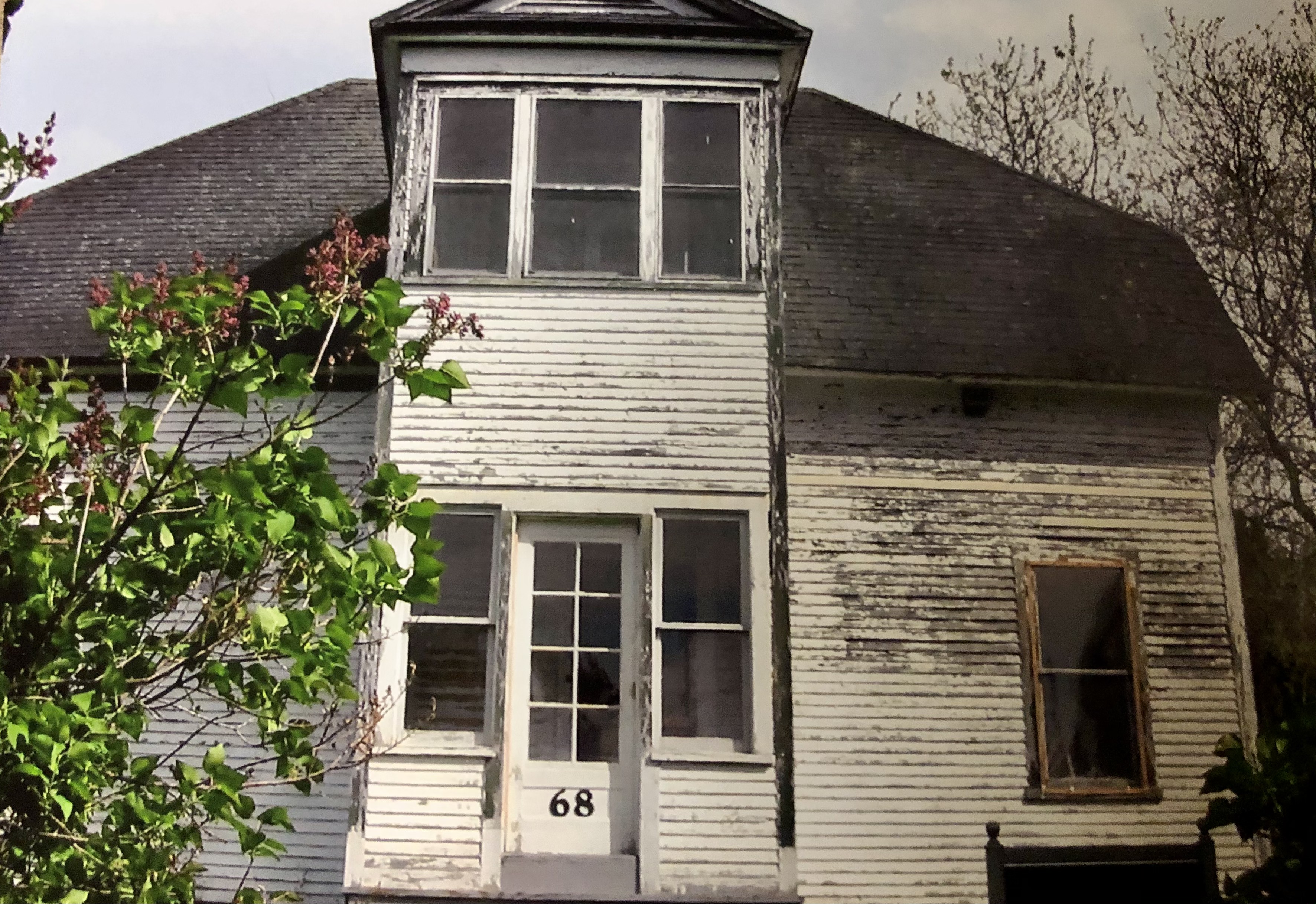
The couple who last owned our home mail us old photos. When they bought the house, the 100-year-old dwelling was in ragged shape. My daughters and I spend some time looking at how the house has changed, and how it hasn’t.

I bought the house in good shape, and now we’re wearing into it, scraping and chipping at its shininess with our use. In the spring, we’ll open all the windows and polish our house again. In the summer, I’ll paint, as paint perpetually falls off in New England.

Once, I had thought to sell and move when my youngest graduated from high school. Now, like everything else in our collective lives, the future is uncertain. Shelter in place — a phrase I once believed would never apply to our Vermont life — directs the shape of our lives.

In the afternoon, I ski through the woods on the nearby trails. Just as I click on my bindings, I remember last night’s dream of a snowy owl… and then I wonder, truth or reality? I stand there alone, in the cold and under the overcast sky, wondering. For just a moment, I’m not sure. Maybe I really did see that elusive owl. Then I push off into the woods, silent but for the sound of skis over snow.