Holy Language.

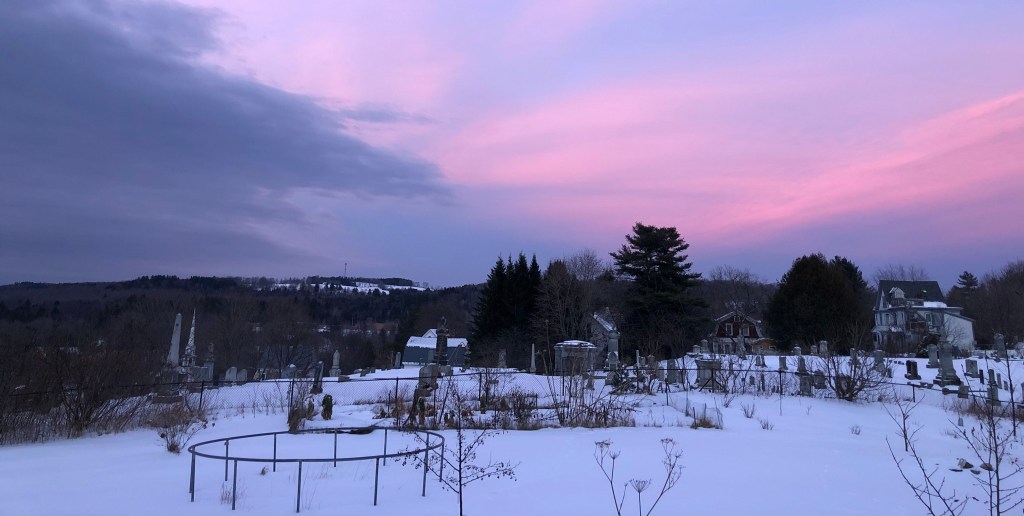
Montpelier, Vermont

On a rainy day last week, I parked on a Montpelier side street and walked into town to attend an opioid summit as a writer.

The last time I had been in the conference space in the Plaza Hotel was nearly precisely two years ago, when I attended a conference as a journalist, charged by my editor to “make connections,” and spent most of it drinking coffee and eating sugar cookies and talking with a para-educator at my daughter’s high school about his experiences. Like darn near everyone else in Vermont, he has a side gig for income, and runs a seasonal bakery.

I sat at a table with people I admire who I’ve met through writing. For those few hours, I had the nearly heady experience of meeting new people; I had remember that deep pleasure. Years ago, I traveled on a train from Charlottesville, VA, to Chicago, and sat beside a man from West Virginia. We talked off and on for those hours. It’s been so long since I had that experience of just listening and talking with people.

For a few hours, I listened to stories about addiction and struggle, about suffering and redemption, about profound loss and grief. Listening, my heart grew full. Our stories and words, the act of telling and listening, of sharing the hard and the beautiful things in our lives, bound us together. The summit began and ended with singing. I’ve never been one for group activities, for open sharing, but at that moment, I utterly understood; I got it. The melody of our language and experiences pulled us together, acknowledging both the beautiful and the terrible about human life, and made our world shine brighter.

…. Grateful to have a terrific piece about Unstitched run in the Brattleboro Reformer and the Manchester Journal by Gena Mangiaratti. And The Rumpus included my essay about the backstory of Unstitched in their Voices On Addiction column this month.
Book Rec.

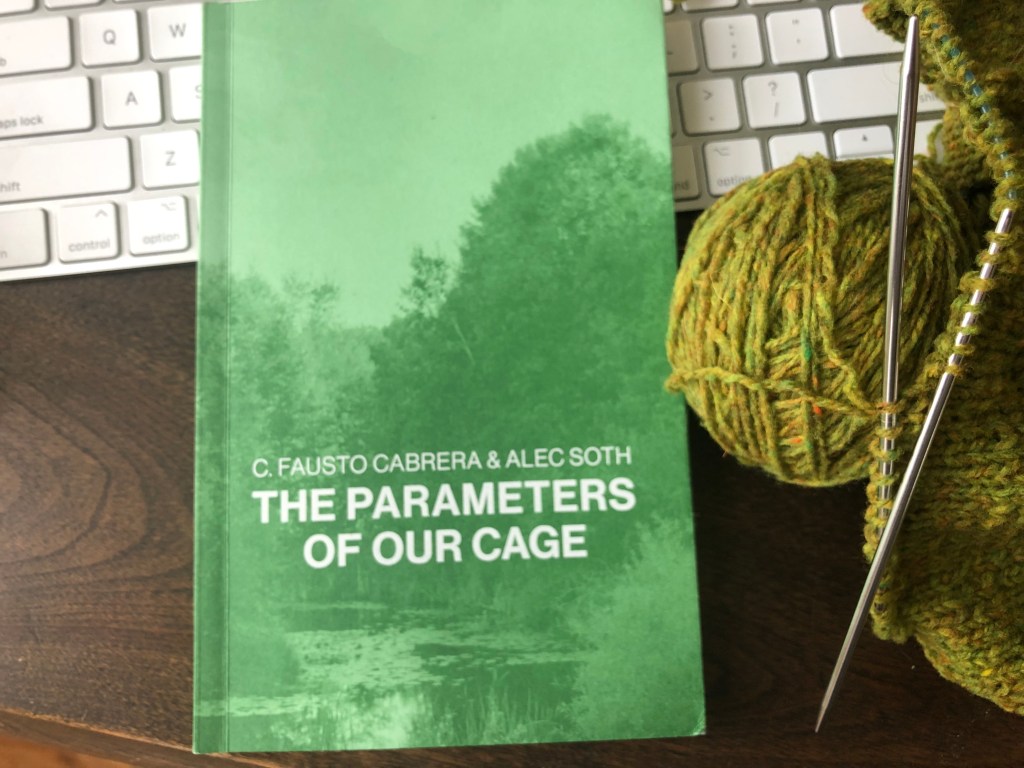
By chance, I start reading a book of letters exchanged between a photographer and a prisoner, an exchange in 2020 that opens a view into these two men, into our country, and into art. I devour the book. The book’s title is The Parameters of Our Cage, and I keep thinking about the cages culture constructs and we construct in our own lives. It’s a question I’ve returned to, over and over in my life. So much of my life’s hours have been devoted, in one way or another, to writing. As the pandemic has created higher walls and sturdier cages, writing, art, human imagination, are increasingly powerful. Utterly necessary.

I wake to a perfect zero degrees this morning. Our house is thankfully warm and pleasant, but the cold is ever present. There’s immense snow south of here, but again the storm has sheered off to sea.

The most profound art is generated out of the depths of a personal place, then becomes an entity in its own right thus developing a different layer of function that requires a social aspect or nature.

C. Fausto Cabrera

Ordinary Mystery.

The moon shines brilliantly tonight as I walk down the street to the co-op for cheese and cauliflower. Lady Moon: round as a dime and luminescent like no earthly thing.

In the best of times, January can rage like a shrieking stranger, a visitor who’s arrived with too many needs.

This year, time has slowed to incomprehensible. We wake; we do our things. Work and email. I paint a room. I endeavor to write another book. I keep Unstitched moving along.

The ordinary happens: snow falls. All day and into the night. When I wake in the morning, there’s inches and inches of fresh, sparkling snow. It’s not a blizzard, not feet upon feet. I have little trouble finding my Subaru in the morning. But the snow sugars our world for this day in utter beauty.

The rest of everything is still there — the pandemic, the crumbling American Empire, the chaos of human relationships in my house and all around — but walking home, the cold is so sharp that the snow squeaks beneath my boots. For a moment, I’m a child again, mystified that fluffy snow can yield a squeak. But there you go. A mystery incarnate.

Here’s an interesting essay emailed in by a reader about growing saffron in Vermont — yes, saffron & Vermont.

Order. Gratitude. And Other Things.

Sunrise, Hardwick, Vermont

January — the time of year when ash from the wood stove has settled into the crannies of our house — beneath the couches and along the woodwork. I listen to The Daily about FBI files released about the insurrection a year ago and take a soapy rag to my house.

I tell my daughters I’ll paint the walls of the upstairs hall spring grass green and stencil dandelions around the doors. What are you doing? they ask.

Some people are drawn to chaos. I crave order, a schedule, neatly pencilled lists to guide me through my days. To write, I travel to hard places, and I want to return to order. All around us now, chaos streams in, as the pandemic turns our world inside out. In the midst of this, I rearrange my woodpile. In the evening, while my daughter writes a school paper, I take the compost out to the bin. A light snow falls, sparkling in the light through our house windows. There’s no one out, and I keep walking. I head down the road and stand on the sidewalk. These neighbors have fully decked out their crab apple trees with twinkling colored lights. In my younger years, I would have scoffed at the use of electricity, much as I once hated paper plates.

Now, in the dazzling bits of snowflakes, I stand there for the longest time, thinking of nothing at all, just taking it in.

On a different note, Dr. Mark Levine, Vermont State Health Commissioner, read and blurbed Unstitched. I am among the many, many Vermonters who look to Dr. Levine as a beacon of calm, rationality, hope, and decency, as he’s guided our state through two years of a pandemic. In the mist of this, he took the time to read my book and called it a “tour de force.” Endless thanks, Dr. Levine.

Unstitched “…is both a page-turner and a primer in understanding the many complex dimensions of the opioid crisis in a rural state, where the reader accompanies the author in her own recovery and process of discovery. Ultimately, it is impossible for any of us to be totally disconnected from the impact opioid use disorder has on our communities, and it is through reading Stanciu’s skillful, compassionate and thoughtful rendering of personal stories that we can all gain valuable insight, diminish harmful stigma, and foster true healing.” — Dr. Mark Levine, Vermont State Health Commissioner

Poem for America.

I was pruning the rose bushes along our house, pressed up against the clapboards, when I had the strangest feeling that I had stepped into a snapshot collage of my life: thorn, blood, house, half-hidden, wet moss under my knees, a cat bird screeching in the lilacs. This morning, I’m wearing a bulky sweater. Oh, Vermont July, how I love you.

Every year, my daughters and I end up in some lengthy discussion about the Fourth of July. This year, as if jointly agreeing to avoid words, we ate ice cream and lit sparklers after dark. The fireflies blinked, in their own particular journeys.

Here’s a poem in its entirety from Tony Hoagland’s Twenty Poems That Could Save America:

Even if the geraniums are artificial

Just the same,

In the rear of the Italian café

Under the nimbus of electric light

They are red; no less red

For how they were made. Above

The mirror and the napkins

In the little white pots . . .

. . . In the semi-clean café

Where they have good

Lasagna . . . The red is a wonderful joy

Really, and so are the people

Who like and ignore it. In this place

They also have good bread.”

“The Geraniums” by Genevieve Taggard

Hardwick, Vermont

The Giving Closet

In the town building where I work, there’s a room upstairs called The Giving Closet, jammed with the town’s cast-offs and free for the taking. Clothing, dishes, puzzles, books (from self-help to Isabelle Wilkinson’s brand-new Caste that I snapped up.

The space is infinitely fascinating — who gives, who gives what, and who takes. The wealthy who donate boxes of never-worn clothes. A widow who wept when she dropped off her husband’s suits. Those who leave handmade quilts or winter boots, to empty their house, but also hope that someone else might use these things. One woman handed over a pair of child’s boots, saying, But there’s so much use left in these…

The takers (mostly women) form an unending stream. In an unintentional way, The Giving Closet bucks capitalism. Need a coffee pot? A packet of seeds? A child’s snowsuit? This is the place.

It’s a place without policies, cobbled together, that moves along the uniquely local story of humanity — a solid plan.