True Compass

Yesterday, my 15-year-old drove on the interstate for the first time. Fittingly, this route was one of our favorites — a hardly used stretch across northern Vermont and New Hampshire.

Coming home, we took the long way around St. Johnsbury, where one interstate joins in with another.

At a particular but unremarkable place, just as we crested a hill, I remember driving this same highway in our old blue Volvo, my then-husband in the passenger seat, our girls in the back, talking and doing some kid craft project. My then-husband and I were listening to an NPR report about Teddy Kennedy and the late senator’s true compass.

So many years have passed since then. Our youngest is now driving, utterly confident, her sister and I offering advice — be wary of semis, know that blind spot. As I’m chauffeured by her, I think how my daughters will be tested in their lives in ways neither of their parents have, their own forming compasses pushed and challenged. So often, I feel I endlessly run my mouth with advice — don’t trust any other driver, suspect impairment and incompetence — but I know my girls always make their choices, create their own lives, enact their own unique dramas.

Mostly, I’m just so damn glad to be here, still part of their lives, ragged and worn out, the worrying mama….

True compass, I ponder as we drive home. This piece I keep to myself.

Evening Out — Of Sorts

A friend and I stand in the high school parking lot, watching our daughters finish soccer practice on the field. At least, I say as the girls walk towards us, laughing and talking, they’ve had one practice.

That’s where we are — maybe our world will fold up again tomorrow, but at least the girls had an afternoon together, running on the field on this sunny August day.

At dinner, I quickly realize the soccer team is angry about a school board position, and my daughter glares at me. I have a seat on the board; I listen to her complaint, and think, Let her be mad at the board.

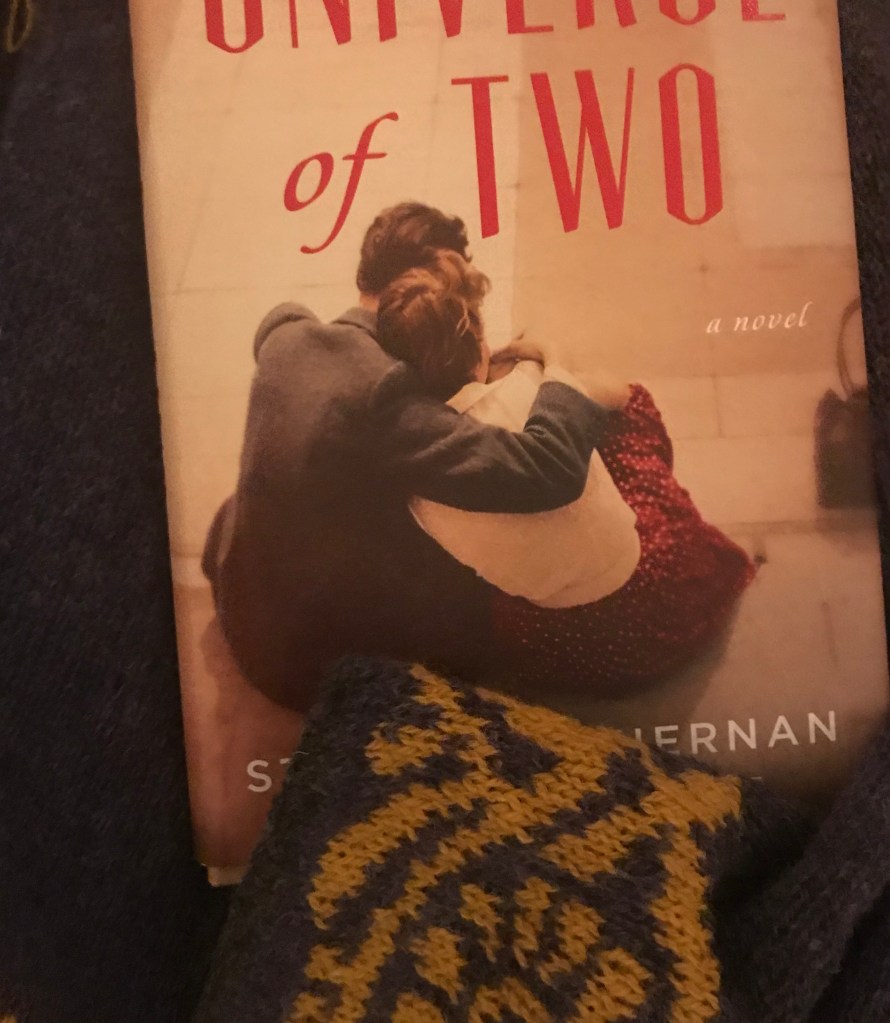
I almost don’t head down the hill to Atkins Field, for the first reading I’ve attended in months, in a beautiful post-and-beam gazebo. A strong breeze blows up, threatening rain. There’s just over a dozen of us, bundled in jackets and blankets folks have pulled from their cars, sitting in lawn chairs. I’m regretting coming, when the author begins speaking. I’ve heard this author before — Stephen Kiernan — and loved his stories. Before coming, I knew nothing about his book, but as he begins speaking, I realize the book is about Los Alamos — a place I know. I put away my knitting, huddle into my chair, and listen.

The dusk comes down. Across the way, I see a single turkey vulture flying across dark clouds, its rising wing glossy with sunset as it struggles to fly into the wind.

At the very end, Kiernan reads the opening page of his book. Kiernan reads particularly well. Listening, for just a moment, I sense all these things coming together — the craziness of attending a reading spread out with masks, unable to whisper and giggle, the ever-present pandemic, but also the setting of Kiernan’s book — WWII — and how ordinary people have endured through terrible times, and we will, too. The chilly wind reminds us of autumn’s imminence, but for these moments, the beauty and power of Kiernan’s writing pulls us together.

And when I arrive home, my daughter is waiting for me on the porch, happy again to see me.

“I met Charlie Fish in the Chicago in the fall of 1943. First, I dismissed him, then I liked him, then I ruined him, then I saved him.”

— Stephen Kiernan, Universe of Two

August

Sunday morning finds us walking in the rain on Nature Conservancy property — a place I’ve visited for over two decades now. We meet another couple walking a small pug. Other than that, no one other than cows.

We walk along old farm roads, flanked by towering maples, looking for wild raspberries. The rain warms into a humid mist.

Immense maple, white quartz, rusting barbed wire fences, myriad shades of green. Here’s where we are, and nowhere else.

At home, the garden has grown half-wild, the cosmos taller than my head. That evening, eating sausage and onions and peppers, we sit outside, talking. Even for the teenager, everything drops away — maybe school? maybe soccer practice? — as the warm August evening slowly pushes in.

A crescent moon lights the sky over our house. My oldest yawns. There’s nothing else but this moment.

The oak tree:
not interested
in cherry blossoms.

— Basho

Random Evening

After dinner, I suggest walking to the post office with the mail that needs to go out.

My 15-year-olds says hopefully, Drive?

I’d rather not. I rather walk by the food pantry and admire their stunning flower garden before this season’s blossoms fade, but I say sure. For a few more months, she can’t drive without me.

There’s hardly anyone out this evening, as she drives to the post office, then up to the high school where she parks, and we laugh, and we walk around the building. The school’s been closed for months now. Weeds from the front flowerbed spread across the cement walkway.

There’s no one around. A heron wings across the sky.

At the parking lot’s exit, she brakes and asks me, Which way?

You’re driving, I answer.

She turns away from home.

As she drives, I think of that old cliché, that having small children brings you into the hear-and-now. Same for the pandemic, I suppose. She circles through town and stops at the community gardens, where I get out and admire the raised beds.

Each of these days is a kind of bouquet — filled with work and exhaustion, with garden picking and wood stacking, with my daughter’s wondering, Will soccer really begin this Monday?, with our little family, sometimes getting along, sometimes out of sorts, but always pulling together in one way or another.

As she drives, I think of history and all the hard, hard times people have endured. The future lies before us, a great unknown, and yet, each day, this daughter edges one day closer to her own womanhood.

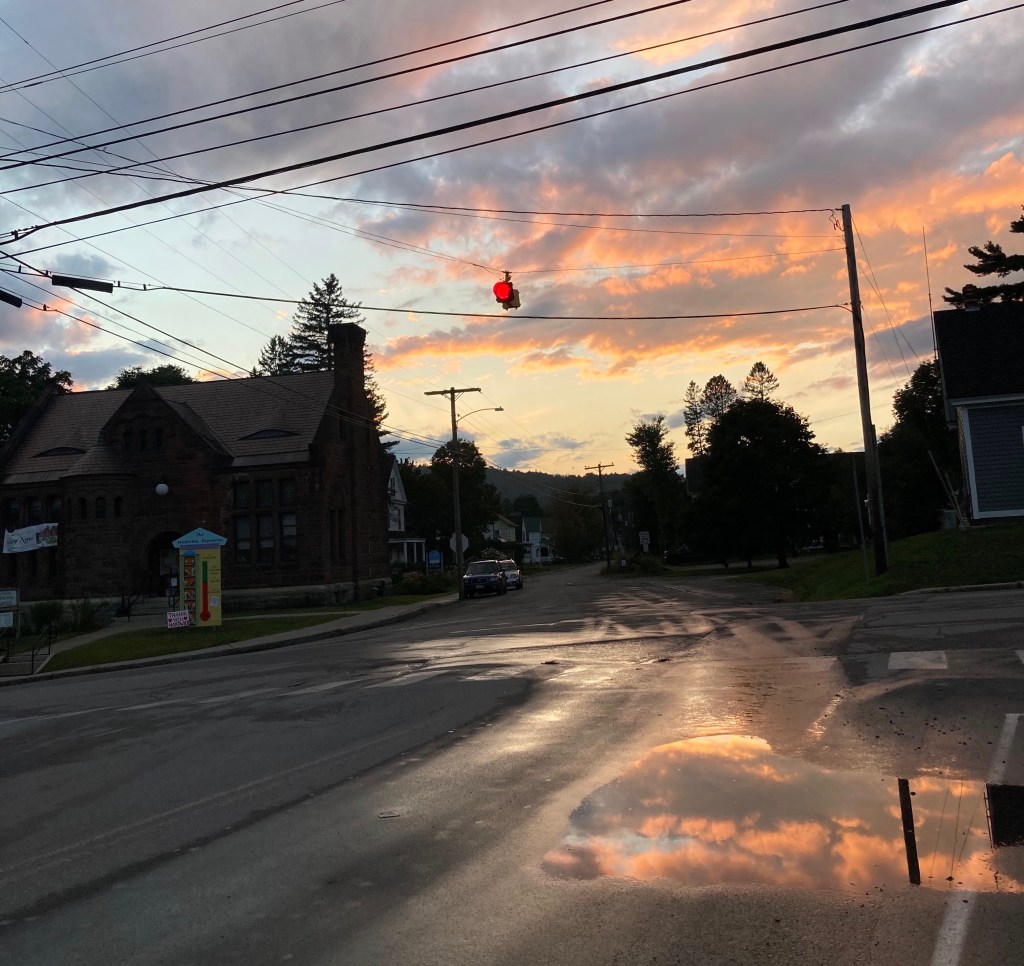
She pulled over to the side of the road, parks, and get out. Look at the sky, she says. She snaps a photo, making a memory of these days.

Photo by Gabriela S.