February Yields To March

The snow lies so deeply around our house I might be wrong about that slender path, first through the transplanted hydrangeas from Susan and then along the milkweed behind the garden. Down the hill, through the wild tangle of pine and boxelder, I see a single porch light every night. Come spring, I imagine, I’ll walk in my boots through the melting snow, stand at the edge of the forest, and see whose light that is.

The light stays longer in the sky, but it’s a cold light,
it brings no relief from winter….

(The earth) says begin again, you begin again.

— Louise Gluck, from “March”

IMG_4814

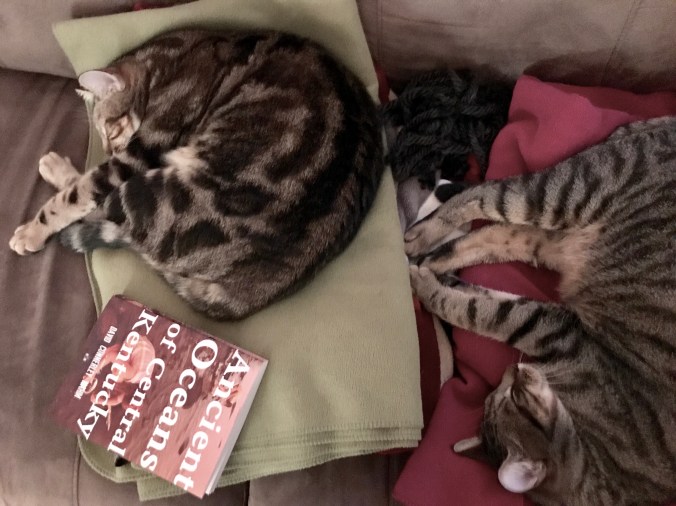
The cats — models of serenity.

Wander with Laughing Teens

The girls put effort into dressing for a walk through the sugar woods — hair up and all in black, save for a borrowed pair of colorful leggings. In capitulation to winter (which remains), I exchange my holey and holy jeans for a better pair and pull on a raggedy sweater.

We’ve stretched into Sunday and into winter school break, with waffles in the shape of maple leaves and needlepoint projects the girls have pulled out of drawers. I’ve finished my taxes and offered what was apparently an incredibly dull overview of federal monies — who profits, who doesn’t. It’s no loss — the girls shake off the warmth of our kitchen and greet the wet woods and sprinkling rain with joy.

The woods are misty and ghostly, crisscrossed with animal tracks. The maples bend overhead, whispering their secret language. The 13-year-olds jump on each other’s backs like puppies, giggling, and empty snow from their boots.

After reading Donald Antrim’s harrowing essay in the recent New Yorker, I picked his memoir, too.

People are fond of saying that the truth will make you free. But what happens if the truth is not one simple, brutal thing?

— Donald Antrim, The Afterlife: a memoir

IMG_4779

Hardwick Town Forest, tapped in for sugaring


Some Novels I Might Have Sadly Missed

In a box of books my sister shipped to me years ago, I found a copy of Arthur Nersesian’s The Fuck-Up. In those pre-internet days, I didn’t realize this little gritty novel had garnered its own classic cult following. When I recommended the book to someone else who was reading Crime and Punishment, he laughed and said that would have been a good title for Dostoyevsky’s book, too.

From the fifty-cent bin in a library book sale, I pick up Joshua Mohr’s Some Things That Meant The World To Me. My 19-year-old lifts the book from the kitchen tale and mentions the cover is from “Wheel of Fortune,” which makes me ask how she’s so intimate with that game show.

My daughter reminds me she works in a nursing home.

She asks about the ink splatters on the cover below the “Wheel of Fortune” lettering — the half of the cover that made sense to me. Rorschach test I tell her, and offer a brief explanation.

I’d probably fail that test, she says, not perturbed in the least.

She bundles up, heading out for a ski. 11 below zero.

We’re all writing about the same things, we’re all trying to evoke emotion. How are you going to find a new image, a new way to say it that your audience hasn’t experienced before? If a character comes in and just blurts out, “I’m sad,” it’s a pretty bad way for a story to start. But, if I describe a woman in Dolores Park at three-o-clock in the morning, drinking tequila out of the bottle while sitting there hunched up, and suddenly the sprinklers come on. She doesn’t even move. She just continues to drink tequila. The reader comes out of that scene understanding she’s sad by putting the pieces together.

Joshua Mohr

img_1015 2

Photo by Molly S.

Got Wool?

When I was 19, my mother gave me a heavy wool, intricately cabled sweater she had spent years knitting and I was certain I would never wear. I was living with my then-boyfriend in the coldest place I ever lived —  and anyone who knows me knows that means something. The beautiful old farmhouse was at the end of dirt road in southern Vermont. In one half of the house lived a single mother and her young daughter (I cringe now to think of what abysmal neighbors we were to her), and my friends and I housesat the other half.

The house was heated by a wood furnace. It was December, and the wood supply we had been left was nearly depleted. I certainly knew nothing about heating with wood. I was greener than the wood we burned.

I wore that sweater for the entire month I stayed there. I slept in it. I wore the sweater so hard and for so many years that only pieces of it remained when I moved from my last house.

What taught me to love scratchy wool? Cold Vermont.

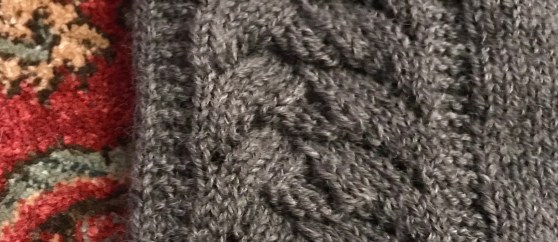
5 below zero this morning….. Could be much colder. ‘Tis the knitting season.

Use It Up. Wear It Out. Make It Do. Or Do Without.

— Calvin Coolidge


IMG_4438.jpg

A Sweeter Version of Macbeth’s Day to Day

On our back deck yesterday, my 19-year-old and I talk about the crickets, how their songs are lengthening and yet quieting at the same time, their strength slowly leaking away with summer.

The sunflowers are high in our garden.

This summer has been one of the daughters coming and going, and myself mostly staying put. The younger daughter’s suitcase is packed again, as she happily heads to Maine with friends. The older daughter has been working mixed-up nursing home shifts — most recently the graveyard hours. Her bags are packed, too, as she anticipates returning to college.

We’re busy, sure, but not that busy. In the midst of all this, we cook dinner together when we’re all home, and in these long dusky evenings, we go for walks.

Last night, we were in the town’s community gardens, taking photographs in the pink-leaved echinacea. I remembered that very first year I was a mother, and I kept trying to grab some stability — Oh, this is what being a mother is like. This is how our life will go. But my baby kept changing. She slept, or she didn’t sleep. She crawled, and then she ran. She babbled. Sometimes, she cried fiercely. She was radiant and fierce and deeply loving — a babyhood version of who she is as a young woman.

But she grew and changed all the time, which is — and I really don’t know why this came as such a shock to me — the essence of this earthly life. But the deep down elements of our lives haven’t altered: her eyes are the same curious, merry upside-down crescent moons I first saw on the night she was born.

All this, I suppose, means that I intend to swim in the nearby pond as long as possible. The water is warm yet, and the banks are brilliant with goldenrod.

I had to learn that I was a better mother and wife when I was working than when I was not.

— Madeline L’Engle, Walking On Water

IMG_6927.jpg

Photo by Molly S.

Opening Up

On a muggy afternoon, my daughters and I swim in a cold New Hampshire mountain stream with my brother’s girlfriend. She suggests going to the ocean the following day. I see my younger daughter’s eyes — the quiet girl — gleam with love of ocean.

While I drive that familiar way back over the mountains back to Vermont and back to work, the girls and my brother and his girlfriend head the opposite way, east, to the sea. Later that evening, I read Louise Erdrich while the cats sprawl on the windowsill, watching a pouring rainstorm. In my garden, the sunflowers stretch far above my head, not yet blooming, their golden faces not yet opened up to the world.

The Erdrich book is her memoir of early motherhood. Watching the rain with the cats, I imagine my 13-year-old when she was three, picking colorful bouquets of zinnias in my garden for her two best friends.

At 13, wearing sunglasses and jean shorts, she’s so often savvier than I give her credit for, happily stepping into a wider world.

… with each celebration of maturity there is the pang of loss. This is our human problem… how to let go while holding tight, how to simultaneously cherish the closeness and intricacy of the bond while at the same time letting out the raveling string, the red yarn that ties our hearts.

— Louise Erdrich, The Blue Jay’s Dance

IMG_3007

Maine/Photo by Molly S.