Empty House

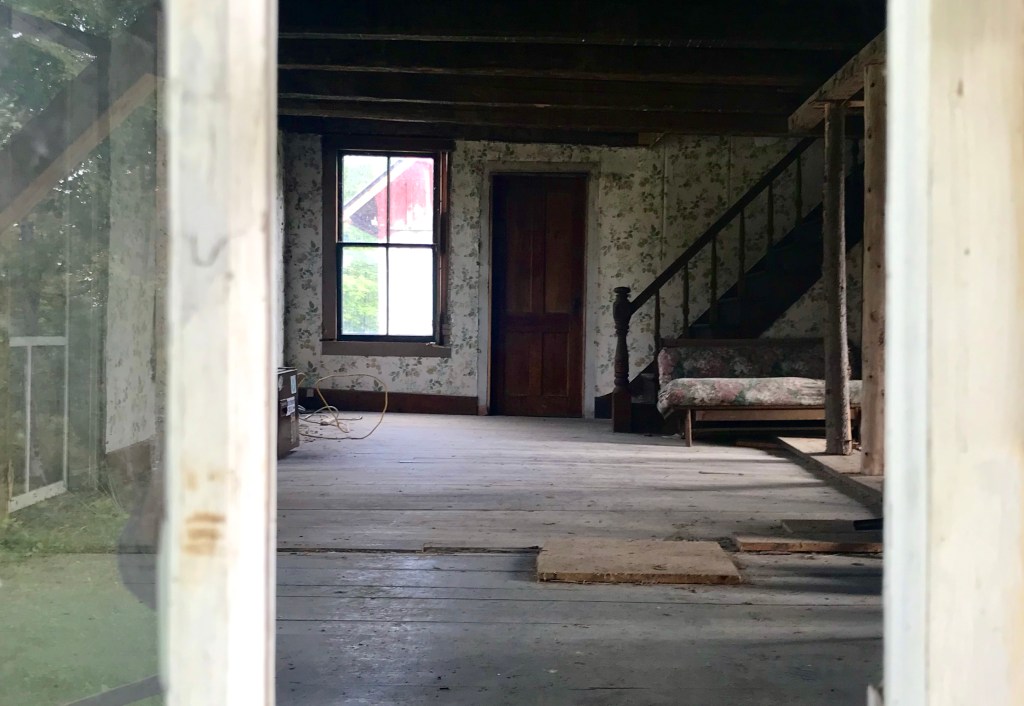
The afternoon’s end finds me on a remote road, looking at an abandoned house. No one’s lived here in a long time, save for intermittent squatters.

It’s the first day of school for my high school sophomore. Although I’m at this property for work, I keep thinking of my daughter.

Behind this house are two immense white pines. I stand there, listening to the breeze rising off Lake Eligo, imagining what it was like a hundred years ago to farm here. What will it be like a hundred years from now? The question looms impossibly.

I bend down and peer through a missing pane of glass in the door.

In Yaa Gyasi’s Transcendent Kingdom, I read a line from Thoreau: “Not till we are lost, in other words not till we have lost the world, do we begin to find ourselves, and realize where we are and the infinite extent of our relations.”

In so many ways, that sums up my experience. But that lostness I know now, is hardly a brief experience. The thing about the pandemic is that it’s exposed all the weaknesses in our society, and in ourselves, too. In my own world, I see acutely how pandemic has highlighted the near impossibility of single parenting, as I find myself these days unmoored, the thinness of my life exposed.

These days, in my work, I’m able to listen to people’s stories about how they’re experiencing the pandemic. These stories are often so much about loss — particularly about families separated — and worry about an uncertain future. Surely, I think, if there’s a time stories connect us, it’s now.

So on this first day of school, with the sweet scent of Vermont’s fall, with so much uncertain, I walk around this abandoned house, thinking of how time flows on. Near the step, I find a tiny plastic pig. Using the hem of my shirt, I rub dirt from the creature, then leave the toy on the broken step, hoping a child will chance upon it.
In the Journey

In these warm September days, the little boys who live across the street dig in their dirt driveway, holding up their tractors for me to admire, their faces covered with dirt. The older boy, who’s heading into whatever might be kindergarten this year, wears his Spiderman suit everyday.

Our two houses are at the end of the one-way road. The two brothers, this summer, have begun dismantling the road’s pavement, picking up the broken asphalt pieces and building a tower in their driveway. I look at the tower with immense pleasure. Sure, the world may be falling down around us, but here’s two little boys, recreating the world.

I can’t help but wonder if someday these boys will remember the Covid time as the summer of digging, like I remember the summer of my brother’s fourth year as the time he dug a bear trap — and then fell into it.

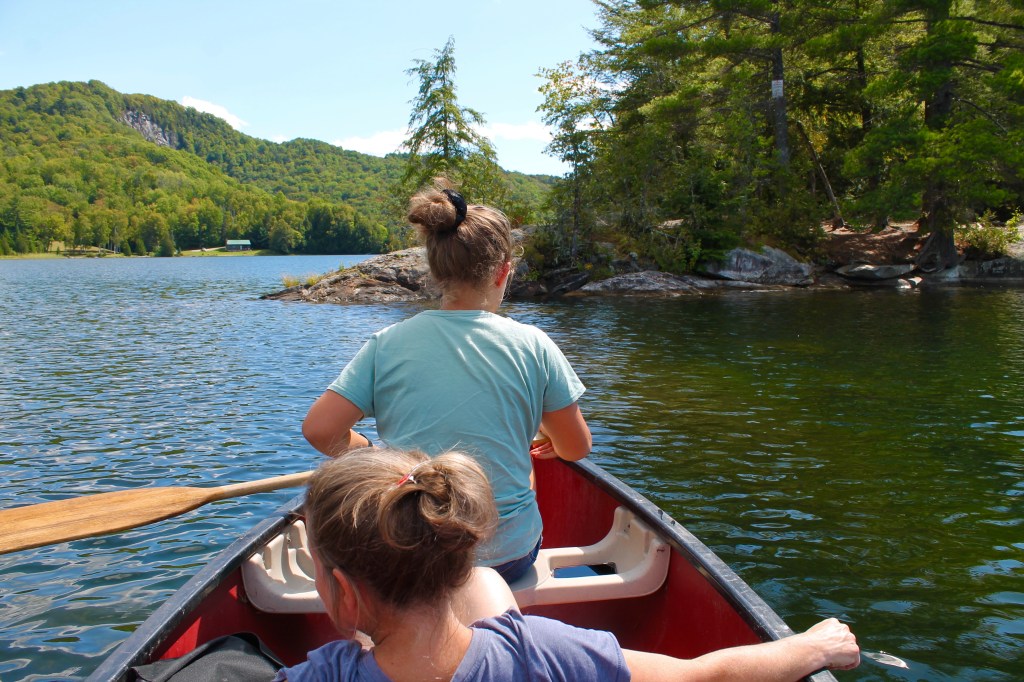
On our end, with my daughters, we canoed out to an island of hemlock trees, a beautiful place, silent but for the water lapping the shores and a loon calling across the pond. The girls packed sandwiches and apples and a bag of potato chips. We ate everything and then rowed across the pond. Why not? This is where we are. What’s the rush to go anywhere?

On the eve of school (possibly) reopening, I keep thinking of Maria Montessori’s wisdom….

Preventing war is the work of politicians, establishing peace is the work of educationists.
― Maria Montessori

Nichols Pond, Woodbury, Vermont
Photo by Molly S.

Shape of the Day

I drop my daughter at the high school for soccer practice. There’s maybe 12 high school girls on the field, the music cranked up, kicking balls and laughing. There’s no coach, no boys’ team, no open locker rooms, quite possibly not even a game this year. Just these girls, sunlight, grass, soccer goals.

I’m utterly grateful for this hour and a half, in a way I’ve rarely been grateful before. Just these moments of youth and aliveness.

Who knows what will happen next week when school is scheduled to open, or not. This coming fall? A greater, scarier unknown.

But this afternoon. Here. Now.

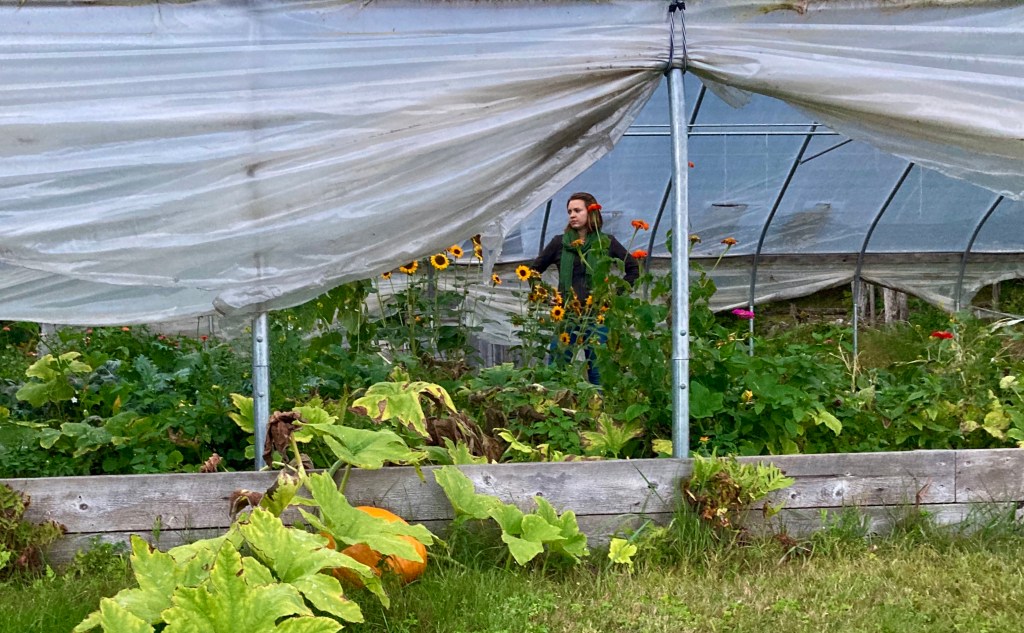
So, this Saturday, waking from a dream of Vermont’s enormous Lake Champlain, with its stony shores, the cats and I work through these dark hours as the sun slowly rises, and decide to declare this day the day of sunflowers, apples, tomatoes, and pie.

“We need acts of restoration, not only for polluted waters and degraded lands, but also for our relationship to the world.” 


― Robin Wall Kimmerer