Crushed Leaves

A colleague tells me her brother contracted Covid in January. A professional chef, he opened an oven and wondered what was wrong with the meatloaf — it had no smell. He survived after an intense illness.

So this week, I know I’m alive as Vermont autumn is all scent. The after school kids ask me to step into their fort. I lean over the wall built of leaf and vine and breathe in, and I’m eight-years-old again, with my siblings and the neighbor kids, building houses of fallen leaves.

Wood smoke and skunk and the soil I’ve turned over in the garden.

As the daylight shrinks noticeably and we turn more and more indoors, inevitably I look for sources of strength — geese flying low over our back porch, their wings rushing, the rising cream-colored moon, our neighbors’ laughing boys — and my youngest daughter on the cusp of young adulthood, sharing bits of her world in snippets, puzzling over this great big world.

Oh, good gigantic smile o’ the brown old earth,

      This autumn morning!

— Robert Browning

Calais, Vermont

Friday Poem

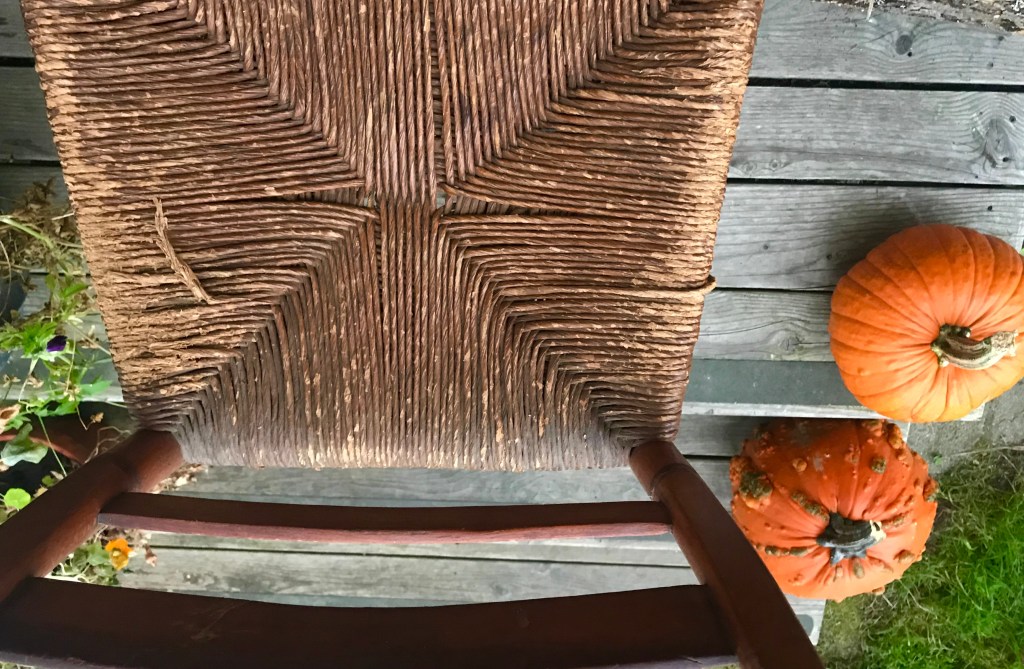
I picked up two chairs in a free pile along a backroad yesterday.

No! my daughters said.

In the evening, playing Yahtzee, our cat Acer begins to gnaw on the chair’s loose strands, which makes the girls laugh hysterically.

Something for everyone in the free pile. That’s where we are in the pandemic world.

I pull out the gray hairs,

And under my pillow,

There is a cricket.

— Basho

Butterflies and Crickets

On a balmy afternoon, I’m on Nature Conservancy Property in Greensboro, Vermont — Barr Hill — the first place my daughters hiked. Nearby lies the glassy blue gem of Lake Caspian.

On my short drive there, I’d been listening to the governor’s twice weekly press conference. By now, like so many people in the state, I’m familiar with Scott’s voice, his cabinet members, and the press. Scott allows the press to ask question after question; these sessions have an interesting kind of intimacy, a we’re going to get through this kind of attitude.

On my way along Barr Hill, I pass rusting old farm equipment in fields where cows are grazing. Here, the past is both near and hidden.

In a field, I paused and admired the view of the mountains and the line of lake. The sky these days is slightly overcast with smoke from the west coast wildfires. Around me, butterflies flew over the blooming goldenrod, and crickets leaped in the dusty path around my feet.

I had such a sense of living in an historic time — the Covid pandemic — and yet I just soaked up that all that sunlight, those tiny flickering wings.

Season Change

My daughter and her friend were been hired for the afternoon to harvest pumpkins.

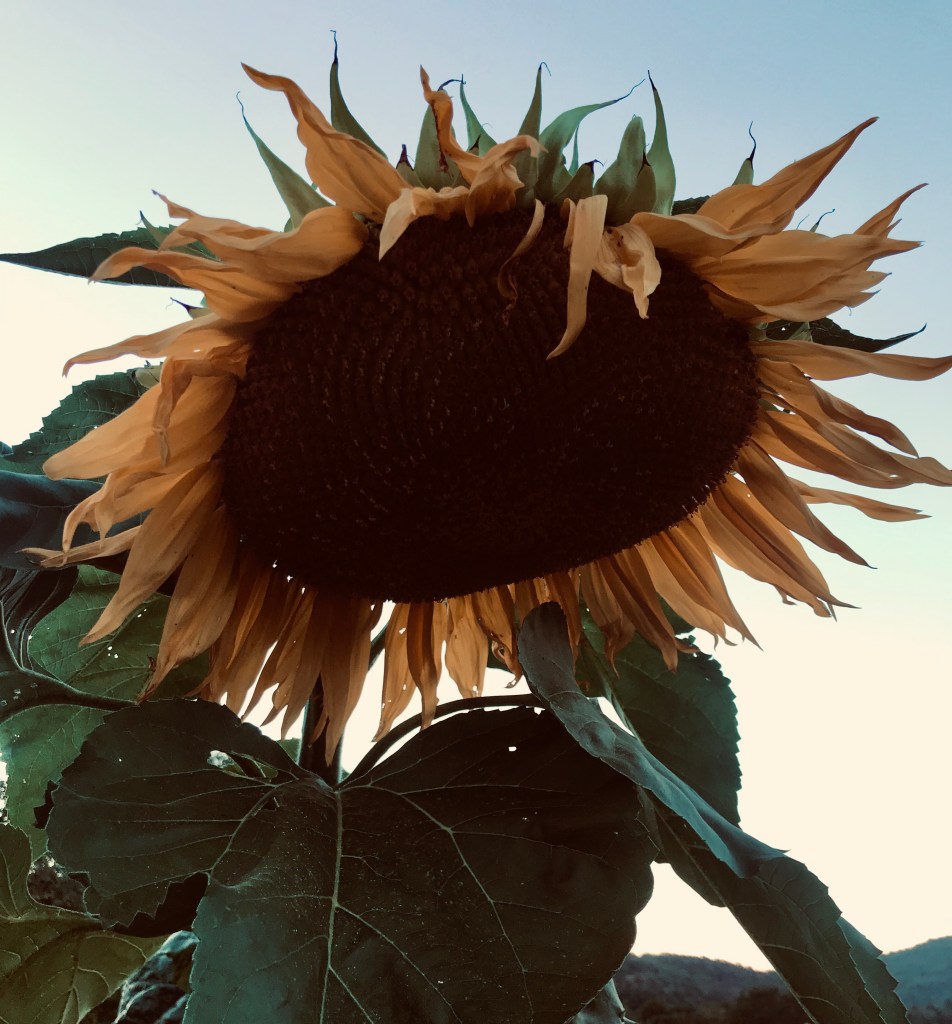
That afternoon, picking up the girls at the farm, I stood talking for awhile with the couple, whom I’ve known since my oldest daughter was a toddler. They showed me the sunflowers they had managed to save from the frost by covering. The flowers, I could see, were not long for living.

Bundled in sweaters and sweatshirts, we stood talking in the late afternoon sunlight. The couple was appreciative of my daughter and her friend — how the girls’ hard work boosted the boys’ output. I laughed, watching the girls walk towards me, out of the field, holding gloves in their hands, talking with each other.

I remembered those long-ago summer and fall days, when I had worn this child on my back while I sold maple syrup and homemade ice cream. Her little fingers reached over my shoulder, looking for snacks.

The couple’s son drove up on a tractor, a father now himself. As I drove back to our warm house, baking lasagne and apple crisp, I kept thinking of how that couple would give my youngest a tiny pumpkin every year at the farmers’ market. She would carry that orange squash in her two hands, like treasure.

Butterscotch Lifesavers

In the evening, as dusk settles in, my daughter and I walk downtown to the corner store.

I’m looking for Lifesavers, a rare treat in our house. She asked if I would mind buying her Lifesavers on my way home from work. I’d forgotten her request in my hurry home.

At the corner store, we realize she’s forgotten her mask, so I go in alone and stand there, pondering the three Lifesaver options that store offers. What the heck, I think, aren’t there like a thousand flavors of Lifesavers?

Outside, I find her leaning against the store’s cement block wall, talking on her phone to her uncle, who’s called to find out how school’s going and what’s up in the realm of pandemic adolescence. She’s talking and smiling, glad to hear from him, spilling her happiness with her math class and driver’s ed, the two bright spots in what otherwise appears to a whole lot of chaos.

These days, my head feels jammed with a snarly chaos, with a stream of work and winter prep, a marathon-length school board meeting, and our first frost. As my daughter talks, I wander along the river, its bank piled with old tires. Oak trees spread over the water, their leaves still summer green. What a story, I think, this will be one day, for these kids who grew up in the pandemic’s shadow.

I slide the packs of Lifesavers into her jacket pocket, my small offering.

Jack Frost? Not Yet

At breakfast, my daughter mentioned a frost warning.

What? I thought. Already?

At the post office later that day, I chatted with an acquaintance who was at the counter buying stamps, his tiny dog tucked under his arm. He said, Why is frost always such a shock every year?

Indeed.

My girl and I picked the remainder of the tomatoes and peppers, covered what seemed like it should be covered. At the end, I tossed an old sheet over a patch of my zinnias. Really? she asked. You’re covering flowers?

But they’ve given me such pleasure, I said, even autumn-ragged as they are now.

The frost passed us over. A few more days of summer here.

The autumn grass

Wilts at once.

Playing with it.