The Word Domestic, Depths.

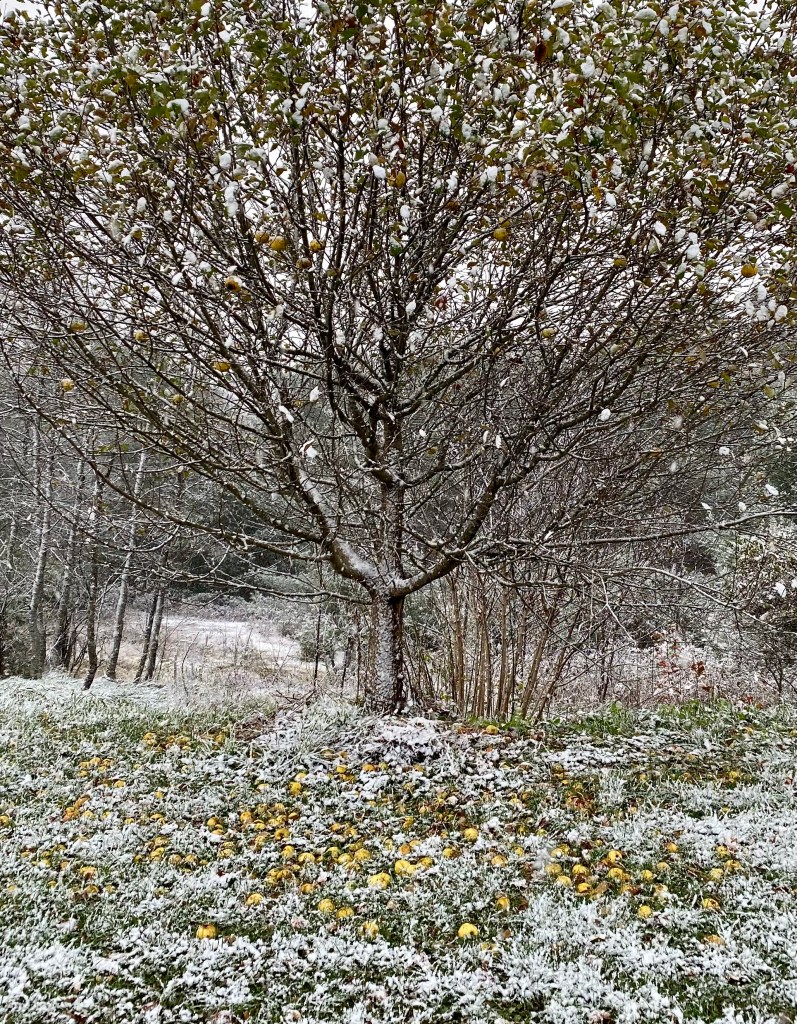
Snowglobe snow falls in the late afternoon. November light: clear and sharp. Not much warmth here, not any season for sleeping rough and roofless, but sparkling as if our world has expanded. In an inexplicable way, the light seems washed full of hope.

The summer folks have fled elsewhere, to Florida condos or back to city jobs. The gardeners and landscapers have put away their rakes and trowels. Around the lake where I walk at midday, only the builders persist in their bulky jackets and gloves. There’s so few of us in town that me wandering by is the chance to stop and remark about stick season. At the lake’s pebbled edge, I dip in my fingers. Before long, ice will rim the bank.

Stick season and the wood stove’s warmth make my cats deliriously joyful. Rumaan Alam (such an amazing novelist!) writes in his intro to Helen Garner’s The Children’s Bach:

Let’s agree to abandon forever the idea that the depiction of family life is the province of women artists, and therefore insubstantial. Let’s refuse to hear a sneer in the term domestic.

Talking Past Dark.

A friend comes to visits, heads to my picnic table, and we commence talking. Hours later, a dewy dusk has descended. I’m shivering, my sweater cuffs pulled all the way over my hands. Inside, my cats are grousing for a fire in the wood stove.

I remember my friend’s oldest son sitting on my couch, about an eon ago. The boy was so small his legs didn’t reach the end of the couch. Now, he’s thinking of heading into a PhD program.

I haven’t seen this friend in months, since before I traveled to Europe and decided I was born on a continent that mismatches me. Yet, we start talking as though I was a young mother again, walking along the dirt road with a toddler, my hair unbrushed for days.

It’s a cliche of course, how the world changes and how it remains the same, that one long Heraclitus river — always the stream, never the same.

The foxes didn’t return to den behind my house this year. A few stray lilacs bloomed in late September. The harvest moon sails up in the sky. All our hours of talking and we solve absolutely nothing, not a single problem, except this, perhaps: a fattening of our friendship, this woman who assured me I would survive my divorce, that my life would continue. The sun heads down, and we keep on talking.

Mid-October.

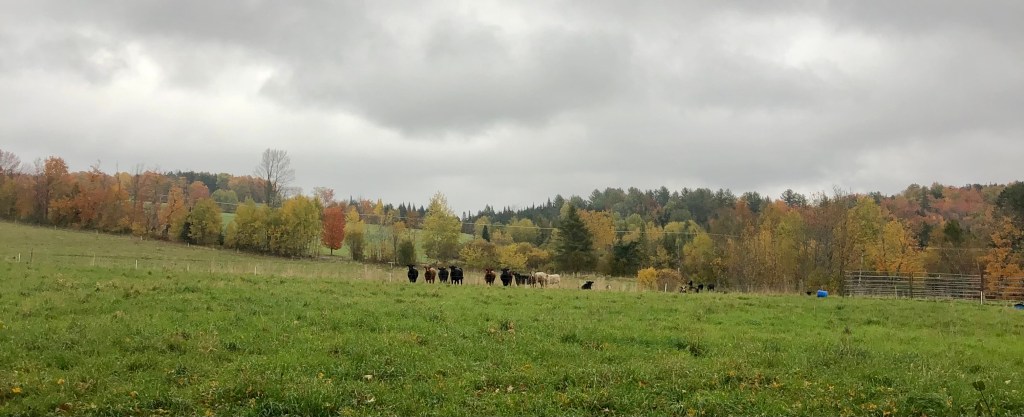
In the night, a wild wind throws rain through my bedroom window. It’s before midnight. At twilight, the maples shimmered with a rosy-golden light, but our world has shifted. The wind’s tempestuous, shaking the storm against my house, driving away that autumn dreaminess.

The cats and I are awake. I lie on the couch, reading Ducks. Our little world has seen a proliferation of cats recently — a gray one the neighbors’ boys named Follower, a glossy black, a white-and-brown tabby, a tortoiseshell. The light on the back porch kicks on when the cats, one by one, appear, sodden, and then race off again. A raccoon sniffs my sandals I’ve left out beneath the overhang. My two cats stare through the window, mesmerized.

All night long, all day long, leaves fall. The butternut tree I planted a five years ago is skinny trunk and branch. Magnificently golden, the neighbors’ maples shed their leaves into a giant carpet. Their little boys rake and burrow. As their top branches reveal their starkness, the height of these trees soars above our houses.

October, and midday the light is tinged with sootiness as the sun bends away from my place on the earth. Whether it’s the pandemic or where I am in life, the old patterns I knew for years have splintered, fractured. To my list I write long before dawn, I add: cover the garden with leaves.

The water wheel spins
holding up the milky way,
and then spills it out.

– Kawasaki Tenkō

Here we are…

Above pretty much sums up where we are now. 23 years into this parenting gig, it’s now me and the teen, and if a housecat has moved into a box on the kitchen table for the winter? Well, so be it. And the other cat refuses to drink water except on the kitchen sink? Well, so be that, too.

As a young mother, I read a literal library of parenting advice and made a trillion mistakes. I take my (diminished) reading time much more seriously these days. I continue to make mistakes. And I’ve decided the cats are fine companions, even on the table.

In so many versions of my previous life, this wouldn’t fly. Now, listening to Biden talk about his proclaimed End of the Pandemic, I wonder, What’s all that about? Who gets to decide what, anyway, and why believe anyone else when your experience doesn’t jive?

Rain comes down in buckets. A friend gives us a bucket of apple drops. I cook bacon in the oven and buy the best loaf of bread I can find for our dinner. Our tomato and basil plants are still churning out their delectables. Sure, winter is in the near offing. Much more than winter, too. Our cat is the happiest creature I’ve ever loved. We offer him drops of milk on our fingertips, licks of butter from a smooth silver knife, tender kisses on his head.

As the cat
climbed over
the top of

the jamcloset
first the right
forefoot

carefully
then the hind
stepped down
into the pit of
the empty
flowerpot

— William Carlos Williams

Wildflowers. String.

Five Aprils ago, I was looking for a house for my daughters and me. In a nearby town, on a weekday afternoon, I climbed over a chainlink fence separating an empty house from a town cemetery. The fence spikes ripped the back of my leggings. I was on my way to the library where I was working, and I wore those torn leggings for the remainder of the day. I still have those leggings. I wear them when I paint, and they’re now stained with patches of lemon yellow.

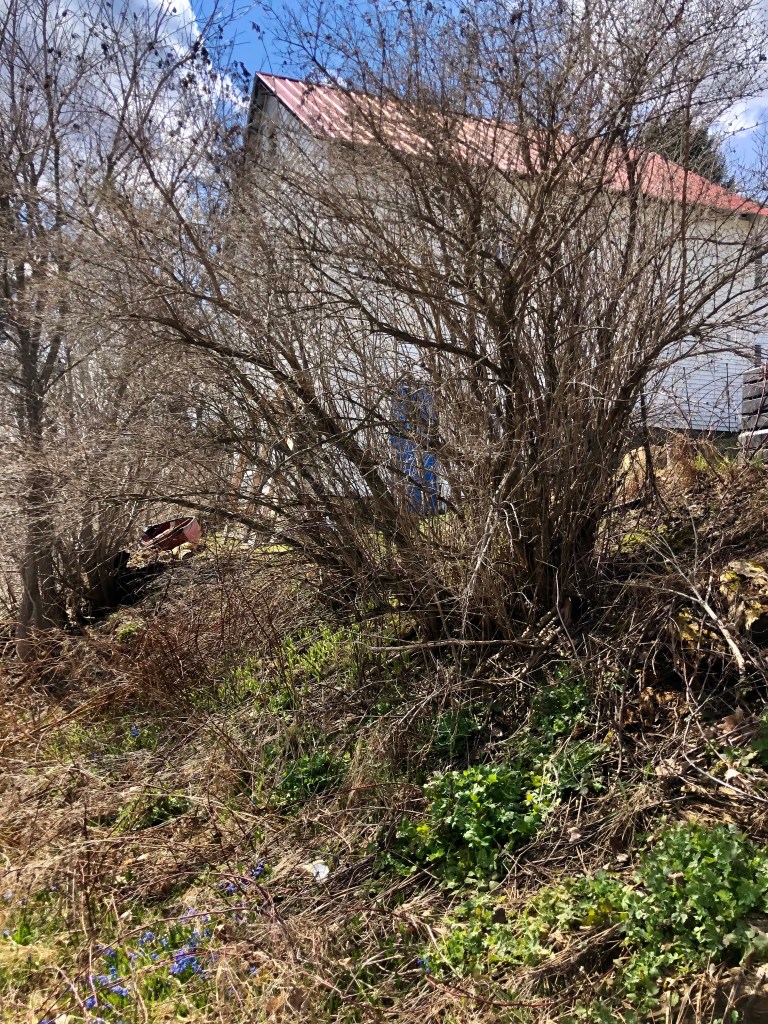
When I walked behind the house, I discovered tiny blue quill — spring flowers I didn’t know. The house was surrounded by those flowers and the promise of profuse lilacs in June.

I bought the house in 2017, although it wasn’t until the pandemic nailed down that the house began to feel truly ours. We are not a rowdy family of nine. We are a family of three and now two housecats.

The thing about spring is — turn around and it’s there, quietly, blooming in some unexpected way.

Look at the silver lining, they say.

But what if, instead,

I pluck it off

and use that tensile strand to bind

myself to those things I do not 

want to lose sight of.

“Notions” by Paula Gordon Lepp

Squall. Blindness.

Hardwick, Vermont

Right before the pandemic shut down the world two years ago, I drove with my youngest daughter to the New Hampshire village when I had spent ten years of my childhood. My family no longer lives there. An old high school flame had contacted me around that time, and I was half-thinking I might look him up some day. My daughter and I parked at the end of the street where I had walked with my siblings countless times, and then past the house where we lived and into the library when I had spent so many hours, dreaming of my life to come.

In a strange, almost sepia-toned kind of way, I felt I had been able to step into that past and see again the sweetness of it — something that seems so often lost in memory.

There’s that famous line from Tom Wolfe that you can’t ever go home again, but these days I’m wondering if that’s because you can’t ever really leave your home. I read that novel in high school, in that beloved library, a great big novel that I devoured with such enthusiasm.

Twenty-five years ago, a young woman driving a Subaru Justy ran into my VW Rabbit in a sudden snow squall, just like the one above. I wasn’t wearing a seatbelt, and somehow miraculously survived wholly intact. The young woman sat in her car, crying, in the middle of the highway, and I stood outside her car, begging her to get out. “I’ve killed you,” she wept. I kept insisting I was fine. I was wearing a blue sweater my mother had knit me, and I spread my arms out wide. “I’m alive.”

Her insurance company gave me three thousand dollars, which my husband and I used to start a sugaring business. Much later, I sold pieces of that business and bought a house in the village. I’m still carrying that squall and that woman with me. I never saw her again. I hope she’s well.