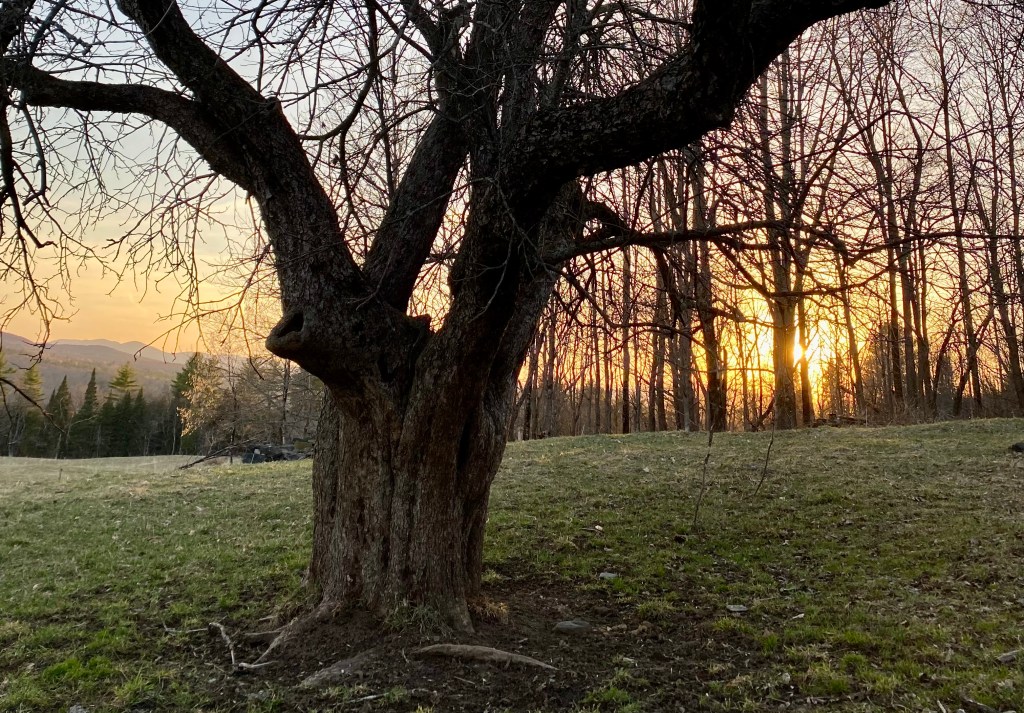
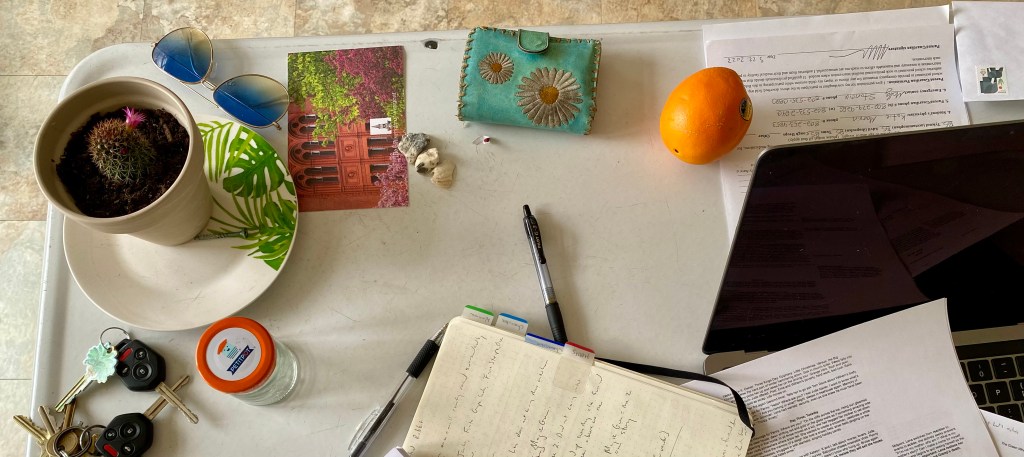
Born in 1933…

William Maxwell writes in his riveting short novel So Long, See you Tomorrow: “The reason life is so strange is that so often people have no choice.”

This strange world, indeed. My daughter drives us up Vermont’s long loneliness of I-91, the interstate running above the river. Villages are tucked into the blue and snow-sprinkled mountains, these tiny clusters dominated by spires of white clapboard churches. This has been a week of in-and-out of ERs and hospital rooms, of resurgence in energy and a low so low I’m unable to bother to speak. Now, the ride home, the passing through of this winter country, where the new snow (so pure white) piles high on tree branches. This northern land in midwinter is territory I know with a familiarity akin to the veins on the backs of my hands. A haven of cold, often slow-going, a muted palette of pale blue, sooty gray, evergreen nearly black.

We talk until we’re spun out from chatter. I lean my head against the cold Subaru window. In the last room where I stayed, my companion was a woman born in 1933. 1933 marked the end of Prohibition, the year stenciled on the green-glass-bottled Rolling Rock beer we drank in college. 1933, the year of Roosevelt’s New Deal. The woman’s voice was clear as a spring stream, often studded with small wry jokes. When she saw me, her face glowed in a smile. Of all the things I’ve learned from this week and scribbled into my notebook, this woman’s radiant smile and easy language sticks with me. A few times, I wandered her way, hoping to have some of her joy rub my way.

Pre-Election, Pause.

In the late afternoon, I walk down to the post office and empty my box of election flyers, adding to the recycling boxes in the lobby. The lobby’s a shabby space, with a metal Christmas tree strung with pink lights for Breast Cancer Awareness month and a box on a counter for respectful flag disposal. A few summers ago, the postmaster planted a garden in the strip of soil outside the squat brick building. In a weird kind of way, this seems like a micro collage of this country. That midmorning, when I arrived at the town clerk’s office, she’d received FBI warnings about election security, so many concerns about the grid going down.

The season’s first snow layers in among the remains of frost-killed summer. The light now is late fall — unfiltered by leaves, without the warmth of summer, but clear, penetrating. One of the autumn’s beauties are lingering twilights, the slow unfolding of the day into night.

Recovering, bit by bit, from a summer mold toxicity, I walk home the longer way, through the neighborhoods where kids have decorated houses with orange lights and ghosts on broomsticks. I pass the Legion and the gun store, and then walk along the river for a bit. I stop to talk with a dog walker about the declination of light. Do people do this in other parts of the world? Surely they must. We muse about the summer and fall — like a rare gift this season has been, suffused with growth and sunlight, as if in defiance of the human world.

And a relevant line from Ben Shattuck’s The History of Sound: “History is personal, even when it isn’t.”

“The real, long history of this place…”

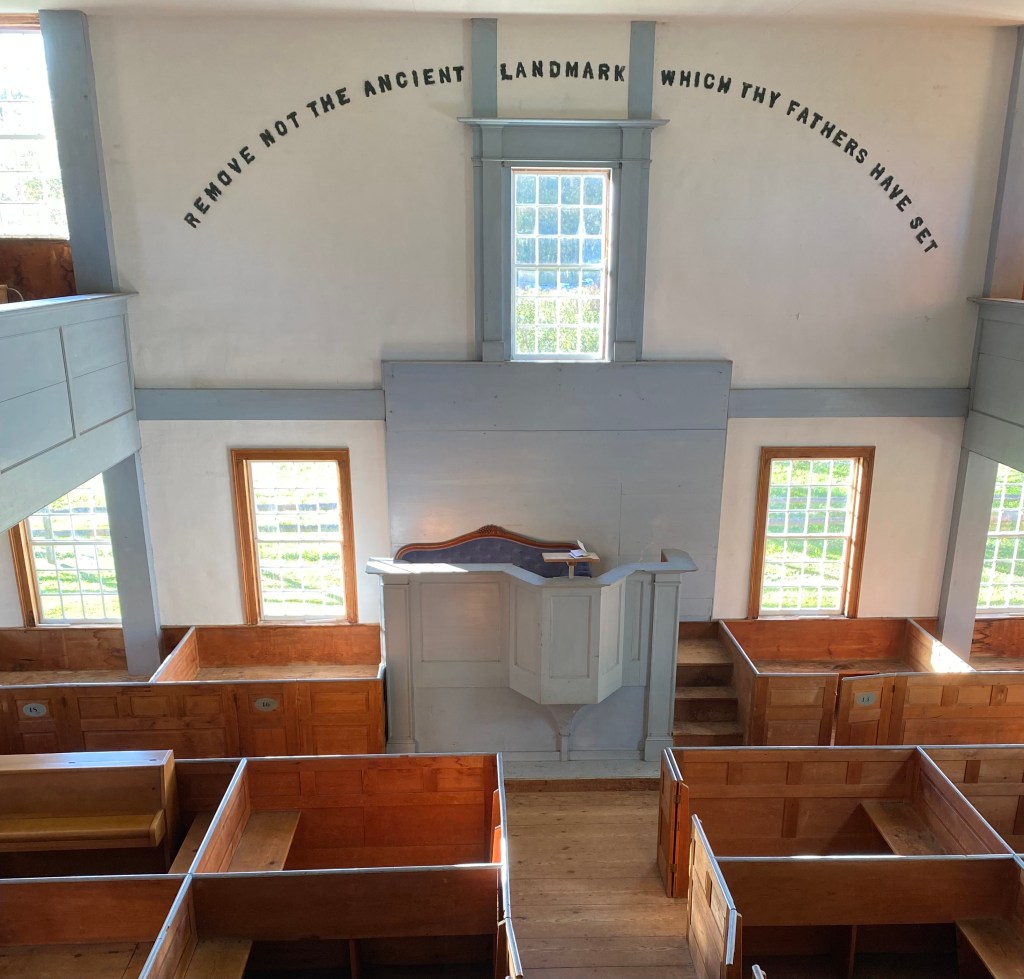
Old West Church, Calais, Vermont, 1823…. The fieldstone foundation was laid 200 years ago. I’ve been tossed a lucky bone, and I’m reading here this afternoon. Recently, I swung by with a friend to check out the acoustics and ended up sitting and watching the sunlight shift through the space. The structure remains in the 19th century with no electricity.

In an interesting way, it seems fitting to do these things in the autumn when the light in our northern realm is shifting so rapidly. On each side, the days shorten. What began in April as a sprinkling on the forest floor of hepatica and trillium and spring beauties has flourished all summer in such a lush and lovely summer. Strangers remark, “What a summer of growth!” as if to make up for these past few years of soddenness, of rain and wildfire smoke from faraway (but apparently not that faraway) places.

At the transfer station, I pull up with my hatchback crammed with that metal lidded can of cat food cans, my bins of used paper and things I no longer want in my house. I’ve been coming here for decades now. On this peach of a September afternoon, the owner and I stand outside his office, our faces up to the sunlight and a circling hawk. I mention that I’d take a month more of these days, but I don’t want to be greedy. He looks at me and says, Let’s just be greedy and want that, anyway.

Autumn is the long weeks of the growing season’s finale, the landscape gold and crimson. But within the landscape are the tiny places where we walk and live: my garden’s pink glads, the neighbor’s blooming roses, the gold flush of the butternut tree I planted as a bare root stick, seven years ago, and the girls laughed at me. The tree stretches far above our heads now, and my girls marvel. Have faith, I remind them; beauty thrives from where we least expect it….

From Carolyn Kuebler’s gorgeous essay about Vermont:

The real, long history of this place goes even further
back, to the beginning of this landform as we know it, about twelve
thousand years ago when the glaciers drew back from the land and
various species, including humans, eventually moved in.

The Past, Rising, Falling.

The news here is that the peepers have returned. In the evening, I walk past the two ballfields where the little kids and then the big kids are playing baseball, and up the hill where pavement turns to dirt. Right at the edge of town, there’s a neighborhood where people are living rough. Along the roadside, I spy empty milk cartons and a clear plastic bag jammed with Christmas bows. There’s a swathe of hemlock and cedar, and then the fields and maples begin.

A few days before, I was writing in the local coffee shop when a woman I once knew fairly well stopped in. She sat down with her latte, and we talked for a little bit about the nursery school we once started and where our kids are now.

Then she turned the conversation and acknowledged that something lay between us. I closed my laptop and slid it in my backpack. We spoke about a fire, a burned construction site, a rekindling of the fire, and losses to both our families. It’s early morning yet. We’re in a corner by the window. The baristas are laughing at the counter, and no one can overhead our words. Quickly, we pair up our memories, and it’s shocking how our memories sync of that time. Until we diverge. We pause at the mention of the third family. I have about a 100 questions I want to ask. My shock appears mirrored in her eyes. She’s forgotten all about her coffee.

How do you ever understand the past? We’ve both divorced, moved houses and towns, raised children, created new working lives. And yet there it is, running like a subterranean stream, the past.

Her acquaintance walks in, and she stands up. I slip my notebook in my backpack, say goodbye, have a nice day to the barista, and walk down the sidewalk to the post office.

Might.

Two years ago, my youngest and I quarantined for whatever the period was then, five days perhaps. I painted the inside window trim on the front and upstairs glassed-in front porches the loveliest pale blue. My daughter recovered quickly, almost instantaneously; I tested negative, over and over, kept painting and listening to the Derek Chauvin trial for the murder of George Floyd, hours and hours and hours.

Soon after, I was vaccinated at the high school on a cold April day. It was snowing lightly, as it was today. I knew some of the volunteers who had come out of retirement to aid the state in vaccinating. Afterwards, I sat in the gym as we had been asked to wait. I sat near a man who I had worked with before the pandemic, before I changed jobs, too. We talked about work and kids and how our lives had changed, and we kept talking even after each of us had been told we could leave. I had plenty to do — oh, how there’s always plenty to do — but I lingered. Each one of us had our story that day that seemed filled with such quiet, such orderliness, so much hope.

My daughter was learning to drive that spring. She drove to spring soccer practice, and we sat in the car before one practice, listening to the Chauvin trial verdict. The geese had returned to the open river. While she played, I stood outside the closed town library. The bulletin board was empty of notices of events, as if time had dwindled to nothingness.

Spring: a mighty season. The earth will do what it will.

“Spring Snow”

Rain of remembering;
late snow turning to rain.
Then in the cold house,
alone in bed,
the soft stutter on the roof,
random phrases; your voice,
only your voice. How can
it be that voice that touched
me everywhere?
And what you said,
if only I could hear it again
in its intensity.
Essence distilled
in the moment of waking,
the delicate mold and odors
of the breaking apart of winter,
in the soft snow that comes
between the past and the chill
distillation, the whisper of air
split between the perfume
of melting crystals; the clasp
and letting go.

— Ruth Stone

Stone House.

All night, wind howls around our house. I give up the charade of sleeping and pull out my library book. I’m in the final pages of Meredith Hall‘s memoir about growing up in New Hampshire, Without a Map, and I’m in no rush to end her story, close the cover, and return the book.

At my feet, my little cat lies awake, thinking cat thoughts, in a cat circadian rhythm of his own. The Ides of March howl in fiercely. All day, the wet snowstorm has swirled around us. My wet boots lie beneath the wood stove. Our house banked in by white and the ash bucket melting dirtily into the path where I’ve left to cool, its embers to burn out and die.

Somewhere in those hours before dawn, I shake flat the wood stove’s embers with the ash shovel and lay one, two, more pieces of wood on the flickering coals. In the dark house, the little cat follows me downstairs, curious about breakfast but not insistent.

I think of what I’ve read that day, about a stone house built nearby in the 1800s from a single boulder. A curious endeavor. Take this stone, cut it into pieces, and make a home. In the darkness, the wind rakes over our house, hurls over my snow-submerged garden plot, and whirls over the town cemetery.

“The past lies beneath the surface, intransigent truth. Remembered or not, what we say and do remains, always.” 

— Meredith Hall