Birthday Blessings

This afternoon, I stepped out of my library with a child to look at the sky. He was glad he had returned a stack of library books, a kind of clearing of his child conscience. In my clogs, I leaned against the building, a squall fattening in this valley, tucked up against Woodbury Mountain. What a winter this has been. Snowbanks dominate Hardwick like a pop-up mountain range.

Later, a friend and I leafed through a Vermont guide to wildflowers. Remember spring beauties? Remember trilliums?

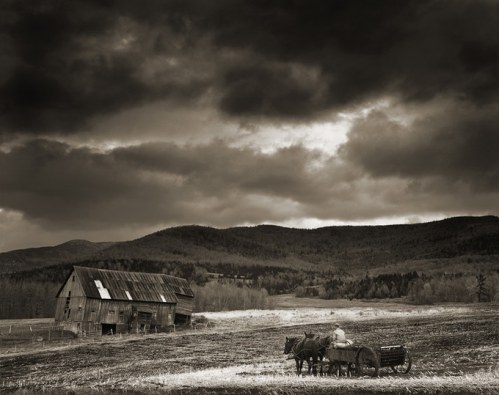
Early March is my father’s birthday and, two days later, my mother’s. In their  80s now — old but not very old, not even close to very old — my parents who lived through WWII, the Vietnam War, Nixon’s resignation, and the eternity of the Reagan-Bush regime, through having careers and raising children, teaching and writing books and caring for the infirm and the dying, through decades of friends, through all the everydayness of living — and now through the particularly heartless regime of Trump — here’s Hayden Carruth’s birthday poem for love of a woman and love of living.

“Birthday Cake”

by Hayden Carruth

For breakfast I have eaten the last of your birthday cake that you
had left uneaten for five days
and would have left five more before throwing it away.
It is early March now. The winter of illness
is ending. Across the valley
patches of remaining snow make patterns among the hill farms,
among fields and knolls and woodlots,
like forms in a painting, as sure and significant as forms
in a painting. The cake was stale.
But I like stale cake, I even prefer it, which you don’t
understand, as I don’t understand how you can open
a new box of cereal when the old one is still unfinished.
So many differences. You a woman, I a man,
you still young at forty-two and I growing old at seventy.
Yet how much we love one another.
It seems a miracle. Not mystical, nothing occult,
just the ordinary improbability that occurs
over and over, the stupendousness
of life. Out on the highway on the pavement wet
with snow-melt, cars go whistling past.
And our poetry, yours short-lined and sounding
beautifully vulgar and bluesy
in your woman’s bitterness, and mine almost
anything, unpredictable, though people say
too ready a harkening back
to the useless expressiveness and ardor of another
era. But how lovely it was, that time
in my restless memory.
This is the season of mud and thrash, broken limbs and crushed briers
from the winter storms, wetness and rust,
the season of differences, articulable differences that signify
deeper and inarticulable and almost paleolithic
perplexities in our lives, and still
we love one another. We love this house
and this hillside by the highway in upstate New York.
I am too old to write love songs now. I no longer
assert that I love you, but that you love me,
confident in my amazement. The spring
will come soon. We will have more birthdays
with cakes and wine. This valley
will be full of flowers and birds.
IMG_4848.jpg

Reprieve

At the hardware store in town, the woman ringing up my chicken feed asks if I’m going out partying for New Year’s Eve.

Are you kidding me? I blurt out. Then I apologize and ask about her plans. I like these hardware store folks, with their humor, their can-do willingness to solve my piddling problems — a clogged bathtub drain, a stuck lamp switch.

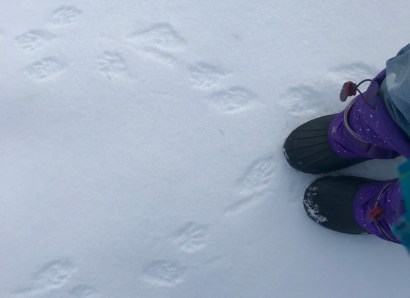
The cold’s broken for December’s last day. Before dusk, I follow the raccoon tracks from my compost down the snow-crusty hillside, wondering where this creature lives.

Another of my daughter’s homemade calendars folded up and put away, the day-to-day record of our lives — work schedules and friends and dentist appointments — the stuff of our lives.

For this year? Stay solvent. Paint the kitchen gold, my bedroom turquoise. Swim in the Atlantic with my kids. Follow wild tracks and fill the creative well.

Why speak of the use
of poetry? Poetry
is what uses us.

— Hayden Carruth


IMG_4331

August First

August 1st dawns quietly — the songbirds winding down, the dew slipping in silently overnight — save for the cats who mew in hunger.

Yet another summer day, a small kind of miracle that will disappear, a day promising to be packed with work and obligations, with laundry hung on the line, and a very long list on a scrap of paper beside me.

But it’s August. Just a few blocks from where I sometimes work in Burlington is a fine bakery named after an even finer poem by Hayden Carruth.

August First

Late night on the porch, thinking
of old poems. Another day’s
work, another evening’s,
done…..

IMG_2898.jpg

Hardwick Reservoir, Vermont


Diving In

This in-between holiday week, our unstated goal has been to swim twice a day — in the midday hard heat and in the dusky evening, when the surface of the water holds warmth and our feet trail into the cooler eddies beneath.

We’re drinking our fill of milkweed blossoms, the reflection of clouds in rippling ponds, ice cream cones — as if this stockpiling might carry into the white and gray palette of Vermont’s winter.

I wonder what became of
purity. The world is a
complex fatigue….
(The geranium flowers) are clusters of richness
held against the night in quiet
exultation, five on each branch,
upraised. I bought it myself
and gave it to my young wife
years ago, in a plastic cup
with a 19cent seedling
from the supermarket, now
so thick, leathery-stemmed,
and bountiful with blossom.

— Hayden Carruth, “August First”

IMG_2454.jpg

Hardwick, Vermont

Still Chilly….

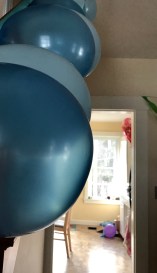
The week after my birthday, my daughters throw me a surprise party — I walk into the house where the girls had made cupcakes and hung streamers and balloons and think, how nice, the girls have been busy this afternoon — and then my office door opens and person after person appears, like that classic skit of clowns unfolding from a tiny car — a skit so dated my daughters likely don’t know it.

Afterwards, my older daughter revealed the plan had been weeks in the making, and I must have known, because I know everything. Apparently, not.

My brother’s here, too: perhaps the greatest surprise. While he grills sausage, we laughingly make our usual pact — no ER or law enforcement this visit. Most of these people I have known now for years; many moved us from our old house. One guest laments the tape on the ceiling holding up the streamers, and I shrug it off. While I love this house and don’t particularly like painting ceilings, we live here now, and I hope to have birthday after birthday in these rooms.

That night, we set off the remaining Roman candles from my daughter’s high school graduation party — yes, we packed and brought those fireworks, too.

Sometimes we don’t say anything. Sometimes
we sit on the deck and stare at the masses of
goldenrod where the garden used to be
and watch the color change form day to day…

— From Hayden Carruth’s “Silence”

IMG_1563.jpg


Treasures of the Least Likely Kind

Rough-cut diamonds rain on Jupiter: we learn this at a planetarium presentation in St. Johnsbury.

Afterwards, my daughter and our friends walk out of the Fairbanks Museum — one of my favorite places with its collection of local and exotic: freshly picked flowers in season and an ancient clay vessel for wine, Egyptian mummies and Civil War paraphanelia.

And, a fantastic collection of Richard W. Brown’s photographs temporarily on-display, the real reason we had driven to St. Johnsbury that day.

When my younger daughter was three, we had the head rebuilt of a Volvo station wagon we had bought from someone who likely botched the original job and passed the vehicle to us. A mechanic far out on a back road in St. Johnsbury did the work. My three-year-old and I on a beautiful summer day drove along twisting back roads I had never traveled, and ended up at an enormous windowless garage with a single green door at one end. I knocked; no one answered.

Holding my daughter’s tiny hand in mine, I entered and walked through what seemed to be an Alice-in-Wonderland mechanic’s world of room after room of greasy engine parts. I found the mechanic, a man in his sixties, his face and hands permanently hued with that same black used engine oil, in the labyrinth. The inside to my Volvo’s heart he had wrapped in a cloth. He opened the cloth and showed me the shining silver.

I lifted my tiny daughter, in her yellow and red-flowered sundress, a hand-me-down from her sister. He showed my child the work he had done. He and I spoke for a bit, while I wrote a check. As I turned to leave, he noticed my daughter was staring at a tiny plastic horse on a cluttered desk and told me to take the toy for her. He said the horse had been there for a long time and must have been waiting for her.

In a borrowed car, I followed the dirt roads down to the river, then turned left, toward  home. My little daughter sat in the backseat, that horse clenched in one fist, staring through the window at the landscape passing by. In the back was that rebuilt piece of our car, wrapped in clean cloths.

That Volvo has long since passed out of my and daughters’ lives, in the endless way of consuming minerals and money cars claim. My daughter wore that dress for years, until it was far above her round knees. The horse is likely still in our possession, in a treasure box of childhood mementos. And the mechanic? We never saw him again. But I still hold the kindness of a stranger who paused on that July day to wonder what interested a small, unspeaking child.


Scrambled eggs and whiskey
in the false-dawn light. Chicago,
a sweet town, bleak, God knows,
but sweet. Sometimes….

From Hayden’s Carruth’s Scrambled Eggs and Whiskey

39ec7c5d890ce6aca0c29faaef453547_original.jpg

Richard W. Brown