Listening

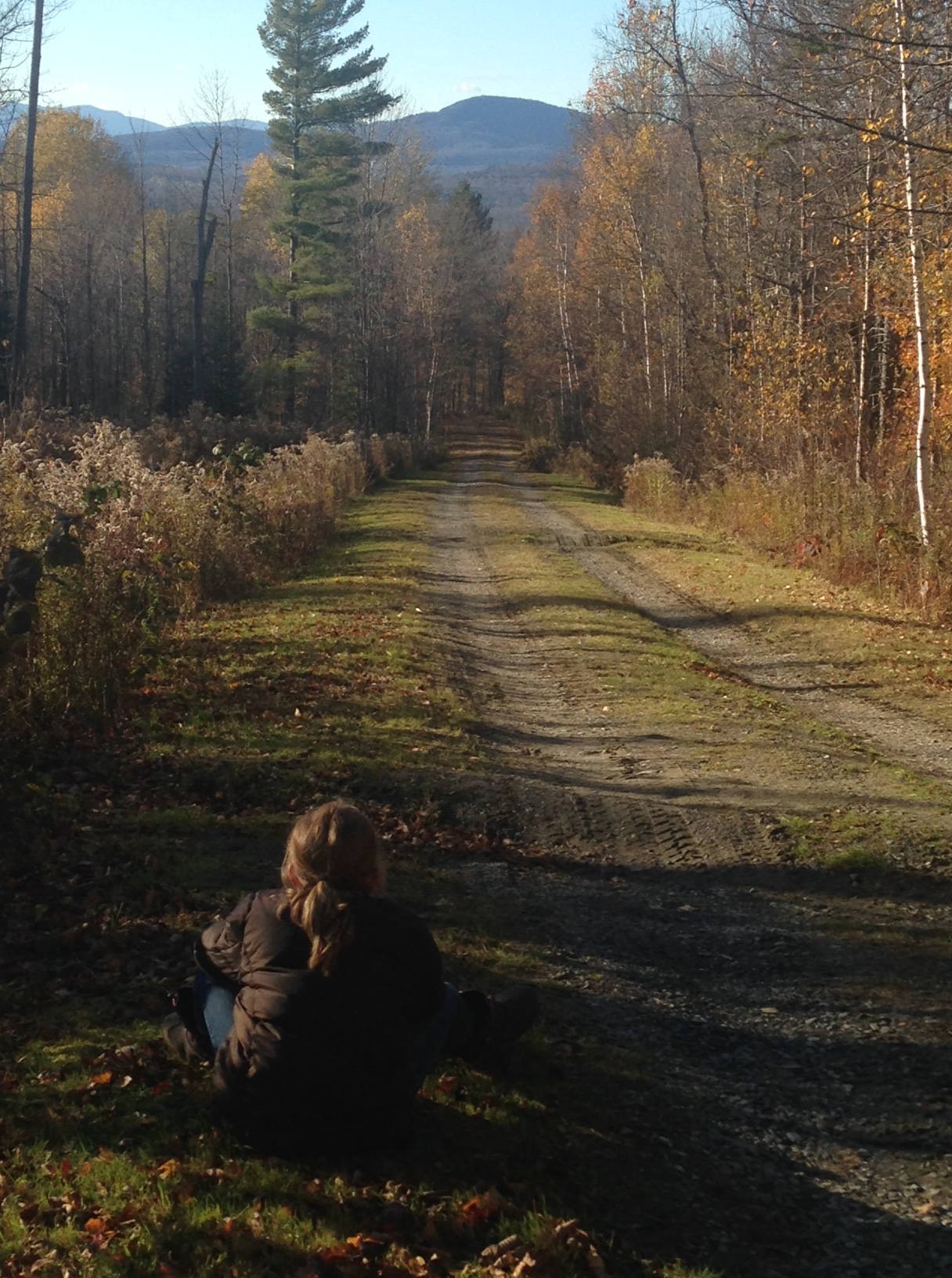
Last evening, walking along our dirt road with my daughter, she chattered about our shadows in the lingering daylight, how the sun had merged us into one person, and we appeared to be one being with four legs and a curious kind of goose neck she had made from her hands.

While we were standing there, I suddenly realized I had been listening to the robins singing in a nearby maple tree, without any particular consciousness – and yet on some level I must have been listening keenly. Just recently returned, a whole flock of red-chested couples are nesting in the maples around the garden.

When we first moved to this house, we had two bird-stalking cats and the field was wooded then: the songbirds are not prolific as they are now. But, as all things go, our terrain has changed, and one benefit is this spring melody. How funny is the human mind: winter and cold has now fled our immediate memory, and it’s spring and seeds and the garlic pushing up through a mulch of rotting leaves.

We don’t have to live great lives, we just have to understand and survive the ones we’ve got.

– Andre Dubus

FullSizeRender


Maize v. Corn

When I was ten, my family and I camped one summer all the way from New Hampshire to Wyoming to Mexico. One of the places we visited was Mesa Verde, in Colorado. In the visitors’ center, we saw an ancient urn found in a cave (as I remember), filled with corn seed. The archeologists planted some of the precious seed; the kernels germinated. The seedlings grew and thrived.

A few summers ago, I returned to Mesa Verde as a grown woman with my family, and that urn was still there, in that same visitors’ center. For a few days, we stayed with friends, who took us to one of the many once-upon-a-time villages, which had been excavated and filled back in, and now seemed traversed mainly by wildlife. We walked among the remains of walls and abode houses, theorizing where these families might have planted crops, how they harbored water, what kind of lives they might have lived.

Water and maize: clearly the narrative of life for these people: material and undoubtedly spiritual, too. As I begin planting seeds again this season, I can’t help but think of that ancient clay vessel, so reverently crafted and painted, its dear contents preserved. And, 21st woman that I am, I can’t help but remark what a far distance those precious seeds have travelled to the industrial giant of King Corn.

This is the yin and yang of the earth, an energetic feedback. What happens below relates directly to what is happening on the surface and in the atmosphere and vice versa. Tectonics does not end at the ground beneath your feet. It is a dynamic system from the earth’s interior all the way into the sky and back.

–– Craig Childs

FullSizeRender

Potato Digging at the Schoolhouse

At a meeting tonight about the future of my daughter’s little elementary school, a parent spoke about the importance of the schoolhouse, built a hundred years ago, by the town of Woodbury, Vermont. Until I went to a tiny college (also in Vermont), I never attended school in a building that had not only beauty in spades but also soul. The Woodbury schoolhouse has both.

This afternoon, a little thirdgrader showed me the dirt on her clothes from working in the garden. The children had been digging potatoes, and she showed me with her hands the size of the largest potatoes. Sometimes, she told me, my fingers got stuck around the potatoes and they were hard to pull out. She laughed, and I could see a sprinkling of dirt over her cheeks.

Too much of our world now is placeless – grab your i-phone and laptop and head out for new territory, but where we live and work matters; it matters who builds our homes and schools; it matters who opens the door to your child’s schoolhouse each morning. And on a sunny and windy October afternoon, it matters that someone shows a child to bury her hands to the wrists in black soil and extract an apple of the earth.

For the meaning of life differs from man to man, from day to day and from hour to hour. What matters, therefore, is not the meaning of life in general but rather the specific meaning of a person’s life at a given moment.

–– Viktor Frankl

IMG_0160

Garlic Planting/Rough Draft

I planted the garlic this afternoon, late in the season, a few weeks beyond my more orderly neighbors. Sleet fell this morning when I walked around the property with the logger who delivered firewood. He and his nephew had bought a sugarbush, and we shop talked sugaring. By afternoon, the sleet had wandered off, but the remaining light is meager as November presses in. Working alone, I remembered how long it took to plant garlic with my one-year-old. She dropped each clove into the hole I dug, even then diligent, careful to set ragged roots down.

Despite the bleakness settling in, garlic is hands-down my favorite crop to plant. My cloves this year, from last year’s harvest, are some of the fattest and savoriest I’ve ever grown. Deep in this rich black earth they’ll hibernate all winter, covered with compost and a matted quilt of dry maple leaves. Next spring, the question goes around, How’s your garlic looking?

The garlic is like the second novel I’m writing, where the seeds of the rough draft have been silently sleeping, and now this book is rising and stretching. Grow, I think, in what way will you grow? I’ve carefully sown and fertilized these seeds, and now is the time to dig in with my hands and scrape off that matted mulch and let the green begin to rise and see where it might grow.

 Our bodies are garbage heaps: we collect experience, and from the decomposition of the thrown-out eggshells, spinach leaves, coffee grinds, and old steak bones out of our minds, come nitrogen, heat, and very fertile soil. Out of this fertile soil bloom our poems and stories. But this does not come all at once. It takes time. Continue to turn over and over the organic details of your life until some of them fall through the garbage of discursive thoughts to the solid ground of black soil.

–– Natalie Goldberg

IMG_0118

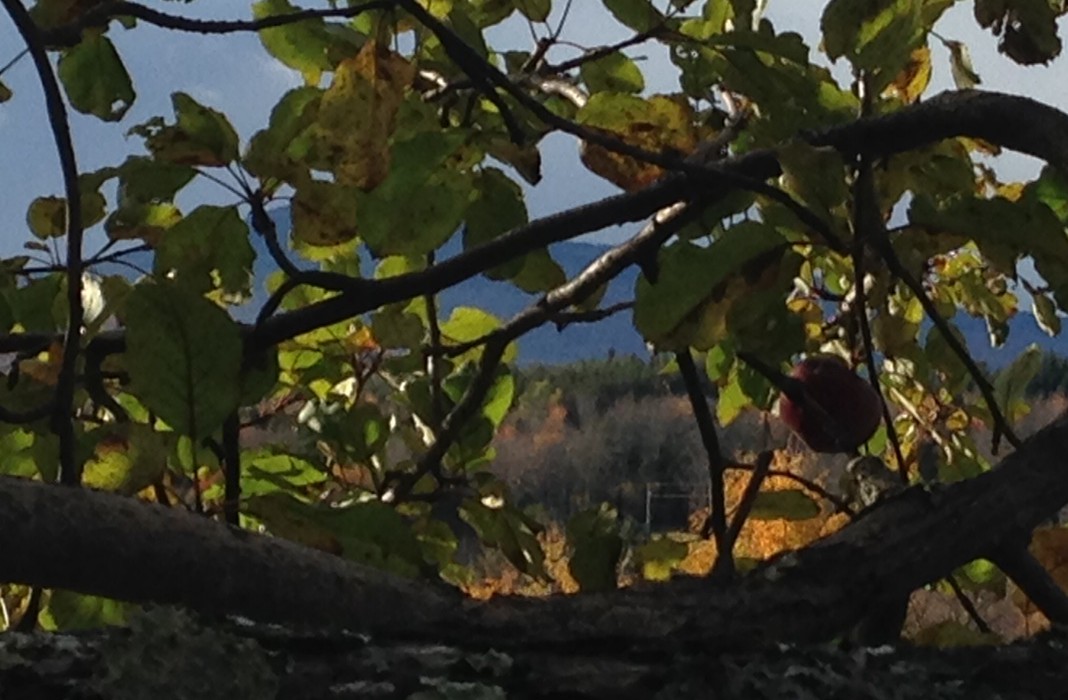
Apple Tree & Elmore Mountain, West Woodbury, Vermont

Use What’s At Hand

We are no longer in the gardening season, no longer in the season of growth and warm days, of the earth turning green. October heralds the season of decay, of stillness and quiet, broken not by songbirds but the geese winging their way south. Weeding once, with someone else, he suggested laying the handfuls of weeds over the living ones, as a smothering mulch. Use what’s at hand.

That phrase comes back to me, in this season of pulling up a garden, ending one thing, and entering this other season. It’s a way of looking at the world where one thing morphs into another, where this as plague becomes that as assistance. It’s a way of looking at compost as life, at your weakness as truly your strength.

I thought I knew about all that (loss) when my first wife, Jackie, died of cancer… It isn’t just that I don’t believe in love; I’m not sure I believe in anything. But, looking at these radiant canvasses (of Vermeer)–unreachable yet familiar–reminds me. The rapturous inner life of each woman and the infinitesimally detailed and self-contained life of the street are each imagined as an undiscovered heaven on earth…

–– Michael White, Travels in Vermeer

IMG_8954

Photo by Molly S.

How Things Grow

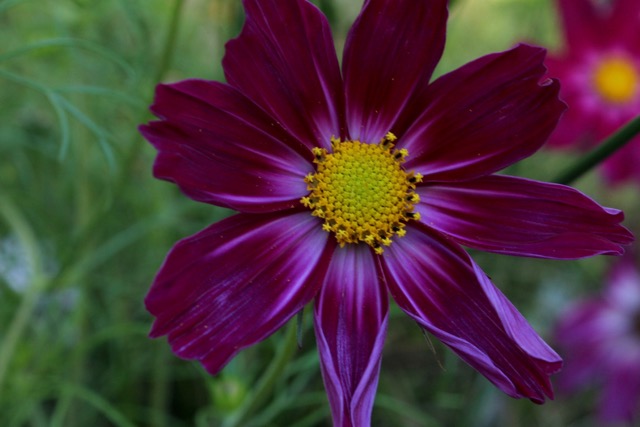
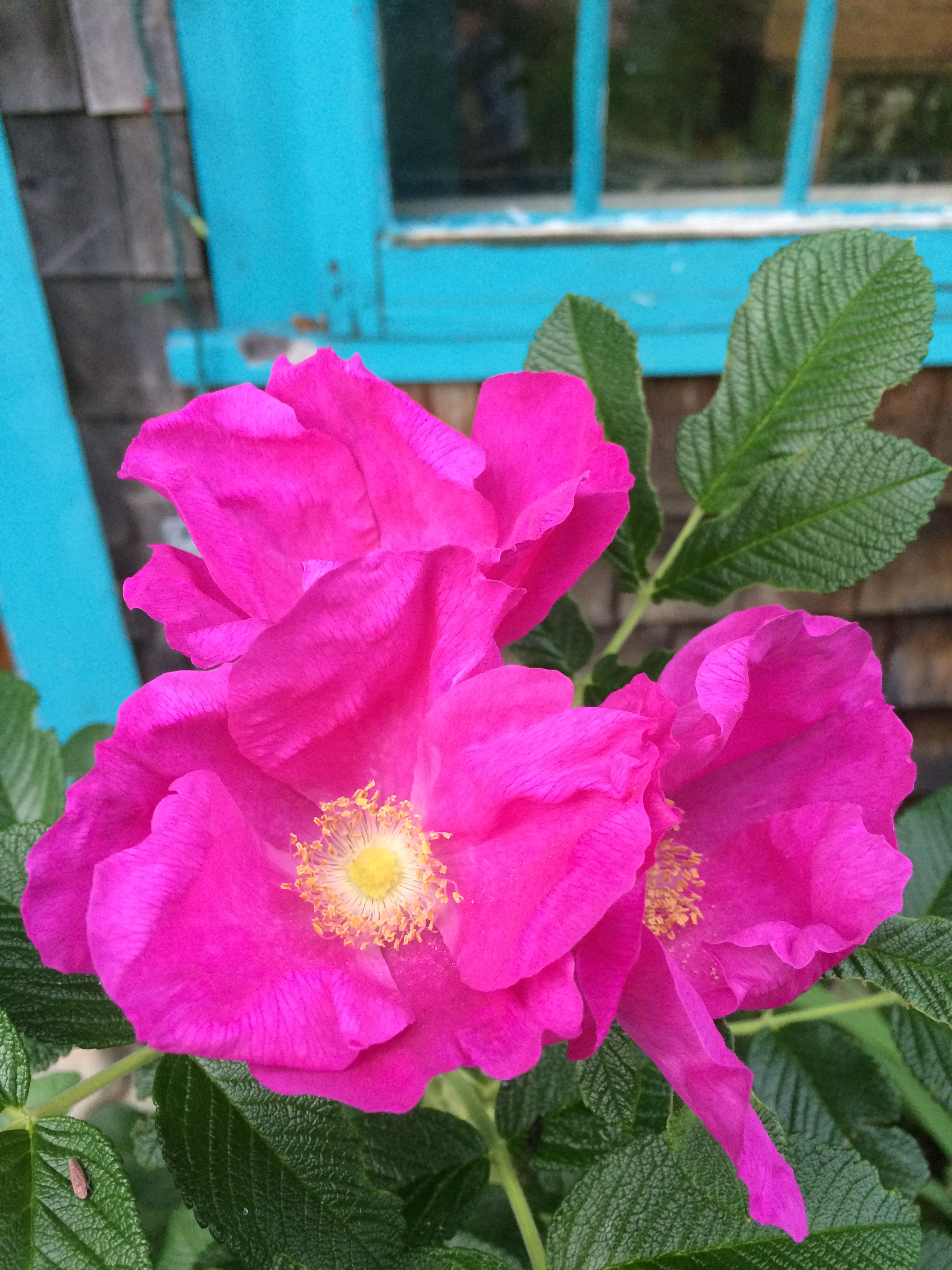
Early this spring, I planted a rosebush beside the back door, in some attempt to transform a little bit of our cedar-shingled house into a Red Rose imbued cottage. Gardening brilliance was wholly lacking. The rose bush has thrived, blossoming profusely, and yet again. In this poor Vermont soil–out of stone and sand and clay–deep glossy green emerges, rose hips fatten, tender petals perfume the air. In and out I go, sometimes all day, and this fragrance rises up to greet me.

He sendeth sun, he sendeth shower,
Alike they’re needful for the flower:
And joys and tears alike are sent
To give the soul fit nourishment.

–– Sarah Flower Adams

IMG_2461