Wandering, Mid-August

Three boys loop in circles on their bikes, eating popsicles and talking. Walking by, I note one boy rides an old banana-seat bike, not unlike my brother’s when he was a kid.

Monday evening, the neighborhood I walk through is unusually busy with people — a woman yanking yellowing pea vines from her garden, a young man powerwashing his deck, two women deep in conversation walking tiny dogs.

I pause at a woodshed where friends have built a tiny house to raffle for the local library addition project. The raffle’s this weekend, and we speculate about who might win. Kids, we hope. Not simply a cute toolshed.

We’ve hit mid-August when the cricket songs have shifted to a longer, slower sizzle, that gradual unwinding of their energy until the singing simply dwindles away in the fall. August is the season of gardens gone rogue — this year my enthusiastic nasturtiums have nearly eclipsed my peppers. The mornings are dim now; the mist moves back into the valley for the cool night hours.

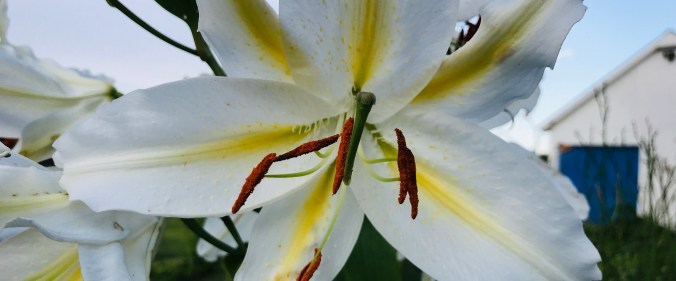
In the rose bed, whose flowers have long fallen, a single trumpet lily blossoms, and I wonder whose hands planted this beauty? Walking by, its fragrance pulls not only the pollinators but myself.

Here’s a line from a fascinating book I found in Maine — Don Kulick’s A Death in the Rainforest: How a Language and a Way of Life Came to an End in Papua New Guinea.

A language dies by contracting, by having its layers of complexity peeled off like an onion skin, getting smaller and smaller until there is finally nothing left.
IMG_6286

Same, Same

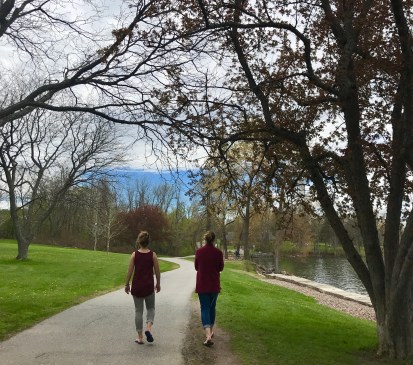
The weeds lining the pathway beginning my evening walk are shoulder-high now, wet last night after the afternoon and evening downpour. We chatter this year about ticks, ticks, and Lyme disease, and at soccer games, the parents wonder when did we become afraid to sit on the grass?

Nonetheless, I push through the wet grass while the kids are home, playing Yahtzee or laughing about something or someone, possibly me. Midsummer, gloriously hot, weedy, chaotic. When I dig out the Japanese beetles burrowed into the pink roses, the flowers yield their heavenly fragrance. That’s summer in Vermont — both hungry pest and the ineffable delicacy of roses.

There are other birds too, visitors we hear only
in the summertime, but it’s the screened door slamming
that is the definition of summer for me.

— David Budbill, “The Sound of Summer”

IMG_4323

Photo by Molly S.


How Does Your Garden Grow?

June is the season of opened earth in Vermont. Black soil, sandy loam, gray clay.

My daughters keep to the edges of my somewhat maniacal gardening — their interests along the photography and mowing aspects.

What grows and thrives and why? How can these bits of velvet petals emerge from stony soil, gnawed by earthworms and grubs? The scent of lilacs from gray branch, rain water, glacial till?

Perhaps this is the most curious aspect of spring — the mystery of growth — and perhaps why I’m content to let my daughters consciously (and unconsciously) busy themselves at their own lives, their hands not yet sunk in the soil, not yet at the place in their lives of nurture, weed, tend, their leaves and branches still spreading.

Try to plant
As for a child.
A little wild cherry tree.

— Basho

IMG_5540

Spring Nourishment

The two pear trees beside our house had failure to thrive when we moved in — more stick than tree. These trees are some of my silent, longer-term projects, feeding them manure and attention. Substitute veggies and sausage for manure, and that’s my approach to parenting. While I’m planting leeks, barefoot and happy in the garden, the 14-year-olds are baking mini cupcakes, then loading the Toyota with a kayak and the pizza-shaped floatie, dreaming of the not-so-distant future when they’ll be at the wheel of the car, fulfilling the rural Vermont kid’s dream of unfettered freedom with a tank of gas and the open road.

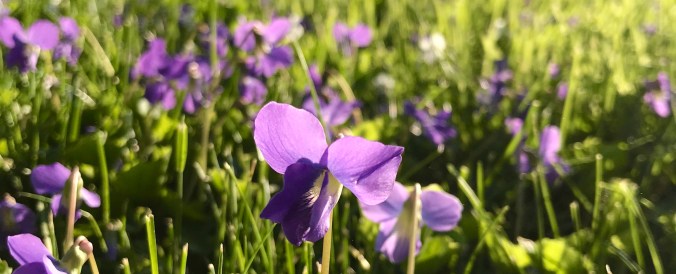
In the meantime, while they’re nourishing themselves with kid-plans and laughter, I’m entranced by the violets on the lawn, wondering if the gifted peonies will bloom this year…

Sadness at twilight . . .
villain! I have
let my hand
Cut that peony

— Buson

IMG_5504.jpg

The Black Line Within a Tulip

While the big fad out there is to number things and experiences — the 10 best things to do with your whining toddler — and important stuff like that, one of my minor goals for the summer is to just soak up experiences as a kind of antidote to the ravages of last winter. By that, I mean the subzero days and nights of blowing snow.

In our house, we’re not going to count the days of summer, either. Why put a number on that?

Saturday morning, the younger sister sees the first of the red tulips we planted last fall has opened. She runs back in the house and demands her sister come out, and look down, into the flower. With the day ahead of us, come hell or high water, we stand there, the three of us, for a long moment, gazing down.

IMG_5453.jpg

Shape of May

I always imagine Medieval life as so much field around all those storied castles. In May, the Vermont landscape is wide open. The forest aren’t leafed out yet. The bushes are sticks without greenery. The shape of the land is there for the looking.

The comparison ends there, I know. Contemporary Vermont isn’t bound by class or infused with religion. No holy temples are built here, save what each family builds for themselves.

But there’s still all this land, fallow, ready for seed. All this potential, of yet another growing year.

Singing, planting rice,
village songs more lovely
than famous city poems.

— Basho

IMG_5315