Refusal that the World is Random.

Cancer or not, the everyday world proceeds. I renegotiate the dullard car insurance (why would I pay to insure myself when I’m not driving?). This morning, the cat, seeking the milk jug on the counter, leaps on the kibble container I didn’t properly close. Kibble mounds over the kitchen floor. For the briefest moment, both cats stare, unable to process their astounding luck: a landslide of food.

Among minor domestic changes which involved a ridiculous amount of discussion: we swapped one washing machine for another. I posted the old one (a workhorse from the previous century) for free on the local digital bulletin board. While I was heating up the pot roast my friend dropped off, a young man I’ve known since he before he lost his milk teeth asked if the washing machine was available.

He arrived not long afterwards. We stood in the kitchen, talking about infected wisdom teeth (his, removed) and cancer (mine, in process of removal) and the medical system and capitalism. He asked if I knew what gave me the cancer, what empowered one gene to divide and divide again and again.

I have my theories, my guesses about this answer, nothing hard and set chiseled into stone. But isn’t it often the way that a sudden shift in events is triggered by multiple strands of actions, working seen or unseen? Leaning against the door, rose-cheeked with cold, he posits that nothing happens without a reason, that the universe is never capricious. I set my wooden spoon on the counter.

Here’s a thing: two months — 60 days — into the cancer world, with two rushed ER visits and two dodges of the grave, two chemo sessions, a complete upheaval of my life, my family’s, my colleagues’ — I woke early one recent morning and realized cancer will be with me until I cross into the next realm. But likewise, what I’ve labored hardest and most tenaciously and (often) most joyously will be with me, too. Raising babies into women, writing books, sobriety, cutting off a troubled marriage and recreating my life. But aren’t we all that way? Shouldering along with us the stones of our lives we’ve chosen, and the rain that’s fallen from the heavens and soaked us, too?

Here’s a Vermont Public Radio interview with Vermont Almanac editors Dave Mance and Patrick White, about this unique books and the non-cliché Vermont world.

A few lines from Dave Mance’s preamble to a book packed with plenty more….

…. seek out things that are real and hard…. Gravitate towards things that are beautiful. Lean in to things you cannot understand…. Tell stories where trees are protagonists. Look at the lines on your palm and see that, like wood, your skin has grain.

Seven years ago…

Seven years ago, my daughters and I moved from a rural hillside down to a village, about five miles away. I’d closed midweek, with plans to rally help for a Sunday move. The evening that I closed, two friends who had followed the jagged path of my divorce loaded up my car and their cars, and we carried in the first load of my family’s belongings.

It was heavenly June, warm without undue heat. I had no furniture. A friend had brought dinner, and we sat on the back deck, eating and talking. I wondered, which way would my story go? Last night, I remembered this first meal here, when a neighbor stopped by with cake and rhubarb sauce: how complicated life is and, sometimes, how very simple.

Now, in this beginning to a lush summer, I water my seedlings in these early mornings, listening to the birds and spring crickets, the drenching dew over my bare toes. The spinach is already wilting. The tithonia drooped dramatically, beginning for extra water. The blueberries have hard knots nestled among their leaves.

So much of life seems impossible — birth a baby, endure a divorce, survive a death, write a book, write another, pack up a house and move (bring the beloved tricycle, too) — and yet we do these things. We all do these things.

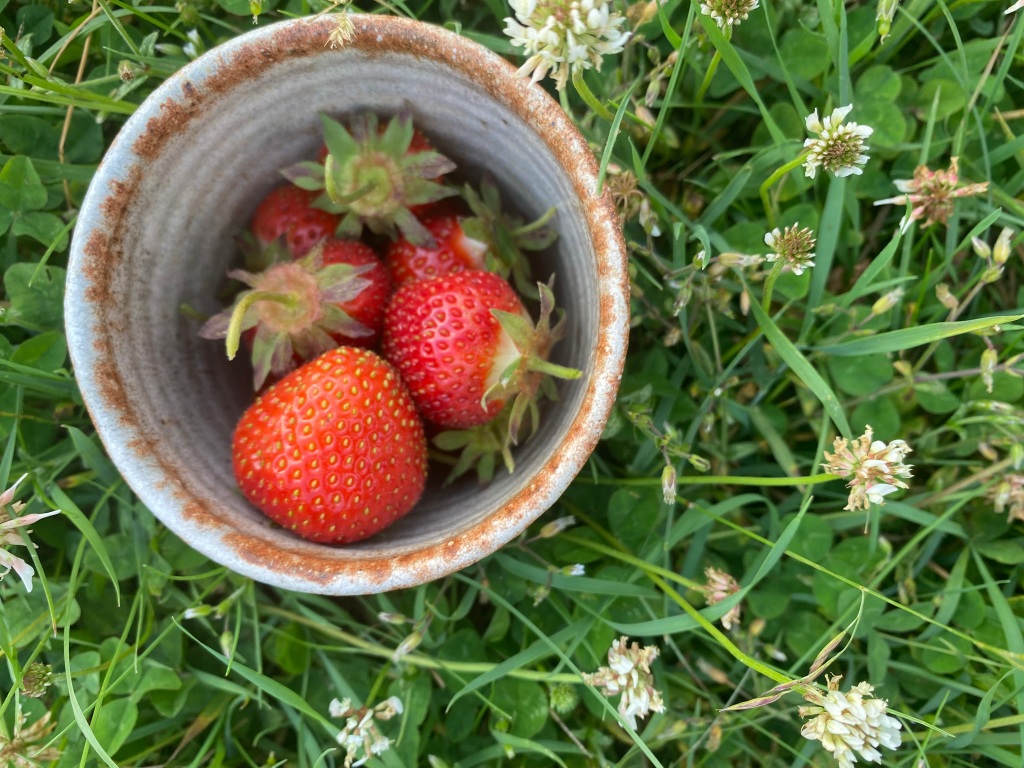
Seven years ago, would I have seen myself watering the sprouting green beans and listening to a woman on my neighbors’ porch sing the blues, the sky streaked with turquoise and crimson? I gathered a bowl of strawberries from plants I’ve let run rampart all through my garden beds. Messy, weedy. My youngest was given these plants when she weeded as an odd job in middle school. This year, the plants have given us so much sweetness.

Record temps are moving into Vermont, the world shifting rapidly. Around the globe and in my town, people are on the move. Which way will this story go? For a moment, I gather berries in the dewy morning. So much more day to come. But a steady start, my soles on the damp soil.

Birthday Cake.

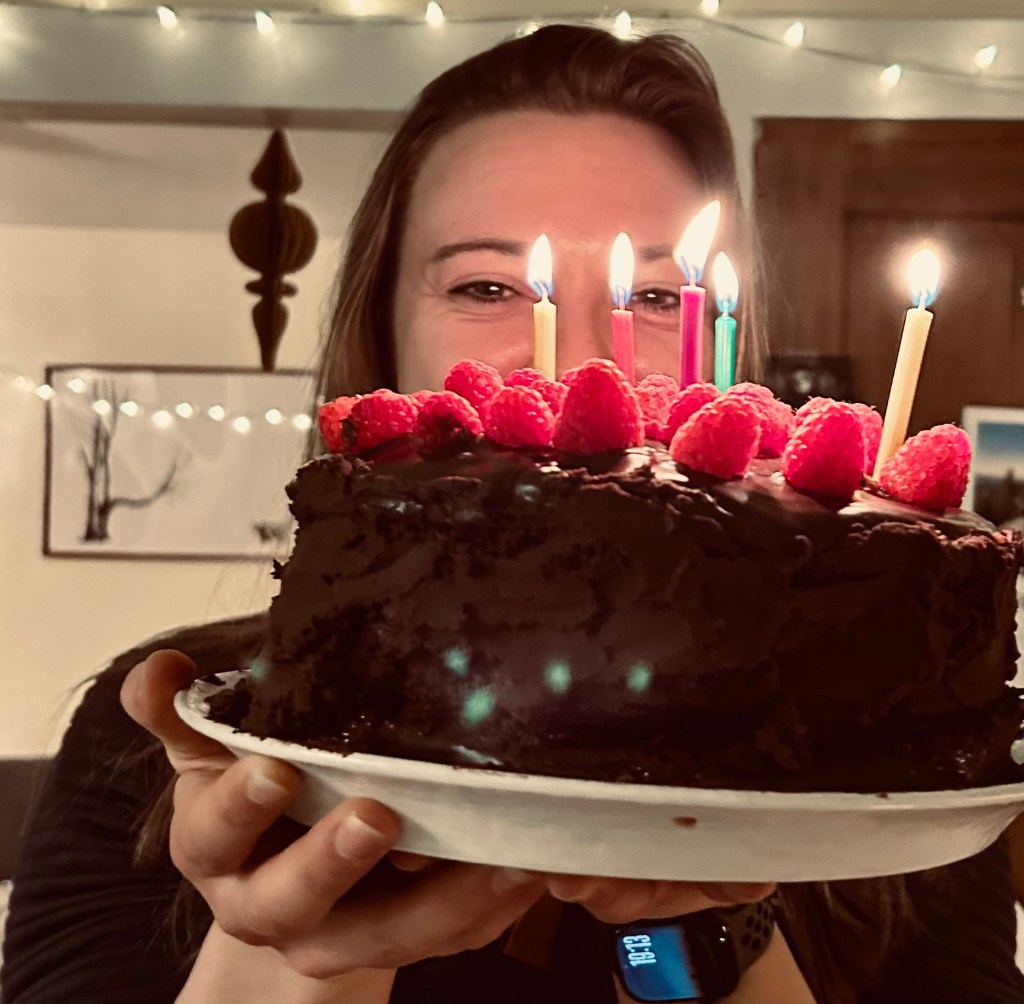
March 7 is my father’s 87th birthday. My daughter, the oldest grandchild, visited my parents a few days ago and asked what to do for my parents’ birthdays. Cake and flowers. And be sure to eat the whole cake.

At town meeting, on the fly, I had to add a few numbers, tally a total. Writing with my pencil, the 100 or so audience members looking at me, I thought of those childhood evenings when I handed my dad an algebra or calculus problem and asked for help. He always made me sharpen my pencil, align the numbers so the problem made sense, and exhibit some respect for mathematics, please. These three things have stuck with me my entire life.

Every year on my father’s birthday, I think of this Hayden Carruth poem. My father — a man who taught his kids about Arkhipov Day and Ancient Greek philosophy, and spent so many nights in the desert, playing cards with his kids at a picnic table lit by a battery lamp….

Birthday Cake

For breakfast I have eaten the last of your birthday cake that you
had left uneaten for five days
and would have left five more before throwing it away.
It is early March now. The winter of illness
is ending. Across the valley
patches of remaining snow make patterns among the hill farms,
among fields and knolls and woodlots,
like forms in a painting, as sure and significant as forms
in a painting. The cake was stale.
But I like stale cake, I even prefer it, which you don’t
understand, as I don’t understand how you can open
a new box of cereal when the old one is still unfinished.
So many differences. You a woman, I a man,
you still young at forty-two and I growing old at seventy.
Yet how much we love one another.
It seems a miracle. Not mystical, nothing occult,
just the ordinary improbability that occurs
over and over, the stupendousness
of life. Out on the highway on the pavement wet
with snow-melt, cars go whistling past. 
And our poetry, yours short-lined and sounding
beautifully vulgar and bluesy
in your woman’s bitterness, and mine almost 
anything, unpredictable, though people say
too ready a harkening back
to the useless expressiveness and ardor of another
era. But how lovely it was, that time
in my restless memory.
This is the season of mud and thrash, broken limbs and crushed briers
from the winter storms, wetness and rust,
the season of differences, articulable differences that signify
deeper and inarticulable and almost paleolithic
perplexities in our lives, and still
we love one another. We love this house
and this hillside by the highway in upstate New York.
I am too old to write love songs now. I no longer
assert that I love you, but that you love me,
confident in my amazement. The spring
will come soon. We will have more birthdays
with cakes and wine. This valley
will be full of flowers and birds.

August Day

Awake before dawn, I lie thinking of my friend’s 49th birthday today, remembering that October afternoon we swam in Lake Caspian with our five- and six-year-olds — swimming outdoors in Vermont in October! The leaves around the lake flamed gold and orange. That night, I realized I was pregnant with my second child.

Lying there, I remembered the March morning you didn’t appear for coffee, and I suddenly realized your stepfather had passed. That foggy day we drove for hours, searching for a house for my daughters and me when my marriage had shattered, and the fall we canned sticky quart after quart of peaches and tomatoes? The steady drop-off of eggs this pandemic that has fed my family for so many meals?

Someday — the world willing — we’ll look back at 2020 and, even then, cringe. And yet, your birthday for me has always marked the high holiness of Vermont summer — fatly rich with sunflowers and vegetables gardens escaping their fences. The dew is cold on my bare feet, but the day promises that heat you love so well.

Considering the ways in which so many of us waste our time, what would be wrong with a world in which everybody were writing poems?… By writing poetry, even those poems that fail and fail miserably, we honor and affirm life. We say ‘We loved the earth but could not stay.’

— Ted Kooser

IMG_8060

Van Gogh

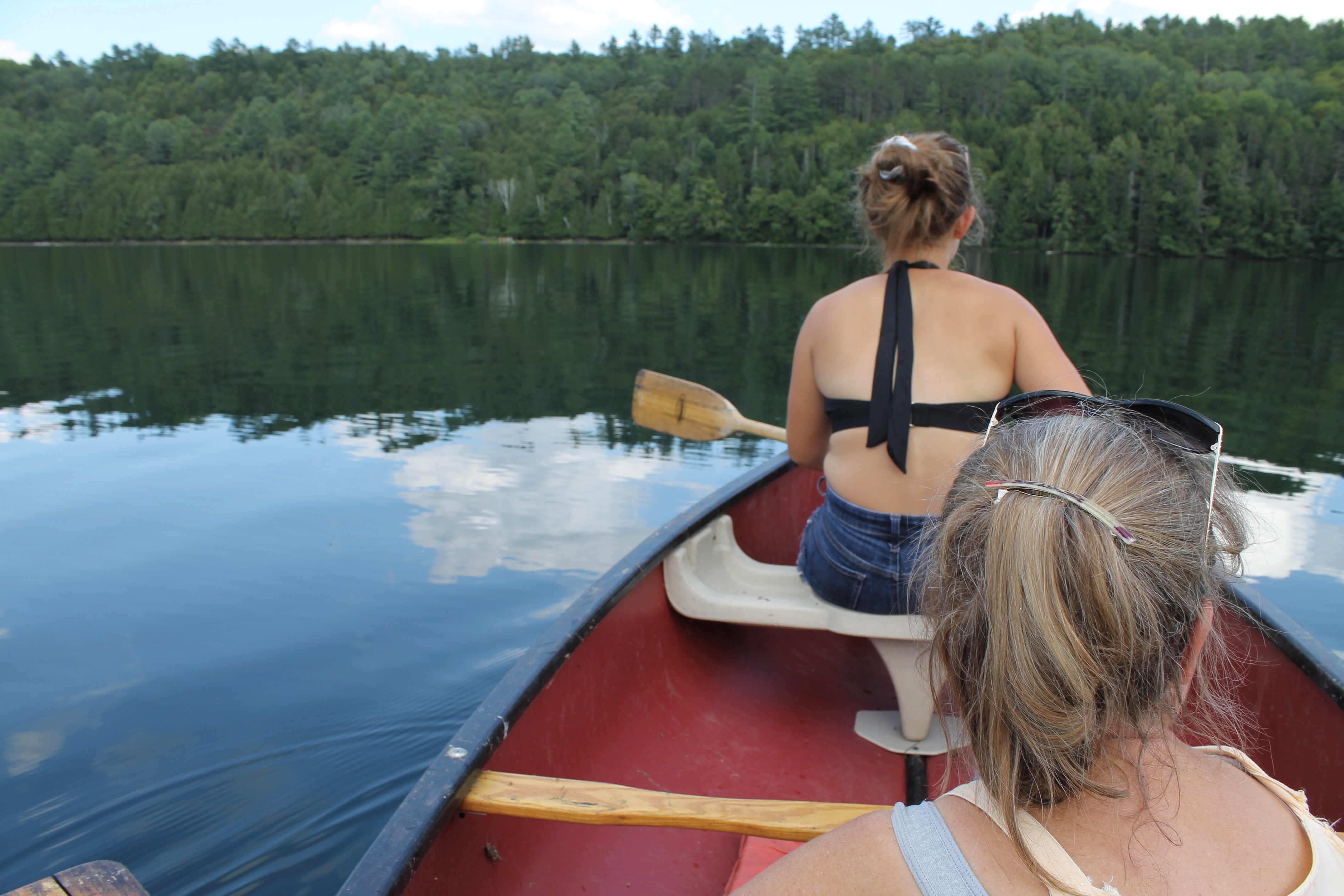
Late Saturday afternoon in the heat, the girls load up the canoe while I’m lying on the porch reading. I’m so tired I’m near to sleeping, but the girls have packed up dinner. On there way there, my 15-year-old, driving, says, Uh-oh, as the canoe slides ever so slowly to the left on the roof of my car.

Again, so near to sleeping in the heat, I say, You could ease the car over to the side of the road. She does. Her sister does some magic (or enough magic) with the straps, and then we’re on our way again.

Fortunately, we’re not going far.

On #10 Pond in Calais, we paddle out, listening to the loons. In the center, we pause and eat dinner. Eventually, the youngest says, Those loons are surrounding us — mama, daddy, teens. For the longest time, we simply sit there, listening. Then the oldest dips in a paddle and breaks the pond’s glassy surface.

It is good to love many things, for therein lies the true strength, and whosoever loves much performs much, and can accomplish much, and what is done in love is well done.

— Van Gogh

For lovers of Van Gogh — and who isn’t? — here’s a fascinating NYT piece about his presumed final painting. I recommend the free book.

IMG_8864

Photo by Molly S./Calais, VT

Crickets

My daughter’s friend spends the afternoon on our back porch. When I come home from work, the girls are still chatting and doing crafts. The sunlight dapples through the box elders. Around us, tomatoes ripen.

We are ensconced in porch life, our half-covered deck redolent with drying garlic, the nasturtiums dangling their delicate, impossibly beautiful blossoms from hanging baskets. In the mornings, we read Henry IV, Part One aloud with my parents in Santa Fe, my sister and nephews in Virginia, circling back to Falstaff’s words — “A plague of sighing and grief! It blows a man up like a bladder.” Beside me, my 15-year-old rubs a finger over the scraps on her knees from blackberry brambles.

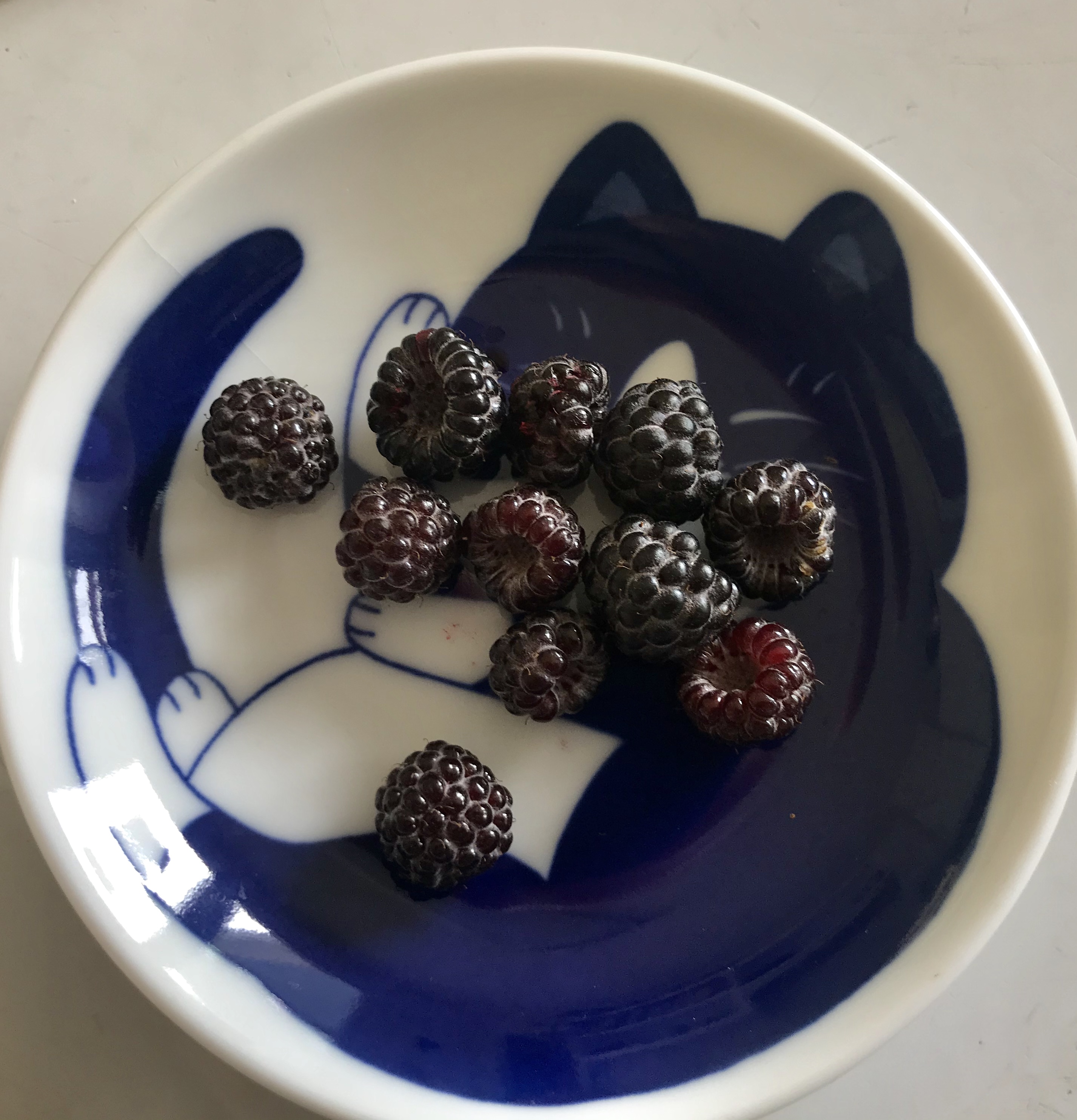
August is the sunshine month in Vermont, the season of wild berries, of warm lakes, of flowers in excess, of lying on the grass as the stars come out, of a great long pause before autumn sets in and winter grinds her teeth.

Our deck, our house, and garden might as well be the whole world, with the turkey vultures silently circling overhead, the wood thrush singing sweetly in the ravine. Before dinner, I toss a withering bouquet of giant zinnias in the compost and cut a fresh handful for our dinner table. August is our rainbow month. I know my daughter’s desire for school, for soccer, for this future none of us seem able to imagine — but long may August last, please.

The crickets felt it was their duty to warn everybody that summertime cannot last for ever. Even on the most beautiful days in the whole year – the days when summer is changing into autumn – the crickets spread the rumour of sadness and change.

— E.B. White

IMG_8152