“…living according to the rhythms of others…”

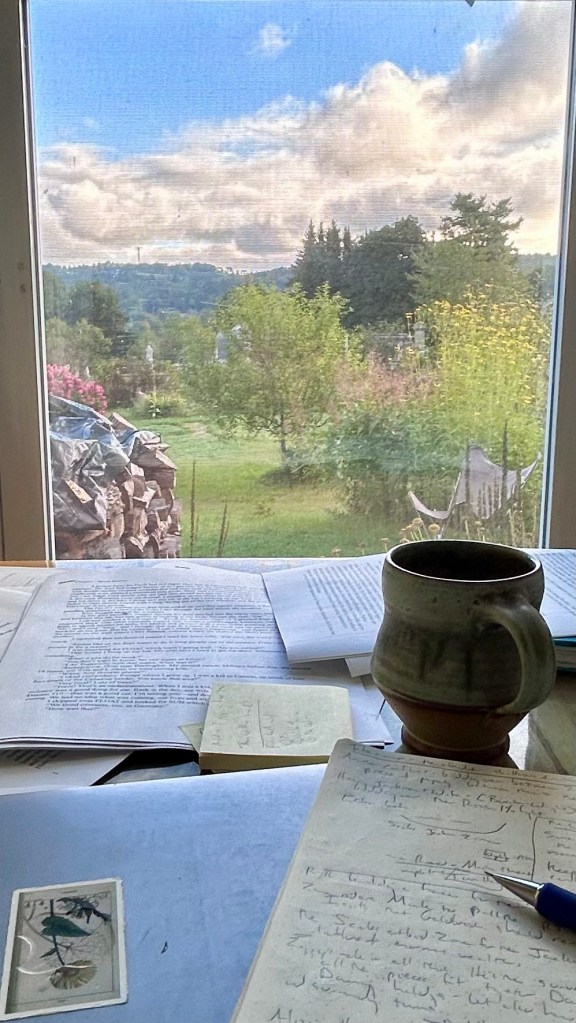
My ex and I were remarkably unsuited for each other in many ways; in particular was his ability to live without plans. I—in what’s surely irritating, too—lean into rhythms and patterns. This long holiday weekend, I wake hours before dawn, busily tearing apart a manuscript draft and rearranging, stitching, adding, cutting, cutting, cutting…

These early autumn days are sunny, with real heat yet. Afternoons, I park at the rail trail, stretch, and run. In the parking lot, there’s always that SUV with a youngster who’s on a different economic path, and an assortment of Subarus and Volvos with bike racks. These runs are short, a few miles perhaps. Sometimes, I make the four-mile loop. Ending, I often leave the path for the pasture along the river, the Joe Pye weed and purple asters and goldenrod dense. The pollinators eat hungrily.

An orderly life depends on a tenor of privilege, a gift I didn’t have in those years of in-the-thick mothering. Tillie Olsen in Tell Me a Riddle wrote about “living according to the rhythms of others”—a line I’ve considered for years. Nearly all my life I’ve lived in the sway of family, gleaning writing time where I could. Now, just a few years into the children-are-adults phase of my life, my companions are sweet fat housecats but also the unremitting remains of cancer and treatment: the mighty beast of fatigue. I lean into it and push; the fatigue pushes back. As in any family, you make your agreements. You learn to get on.

Late afternoon, we build a fire and linger. Long past dark, we huddle around the flames, the cold nipping in. I tilt my head back. Overhead, stars appear between patches of clouds. From the trees, apples have already fallen into the long grass, sweetly rotting from the day’s heat. I’ve left the kitchen light glowing over the table spread with pages and my scrawled notes. Tomorrow’s labor.

Blackberry Eating

I love to go out in late September
among the fat, overripe, icy, black blackberries
to eat blackberries for breakfast,
the stalks very prickly, a penalty
they earn for knowing the black art
of blackberry-making; and as I stand among them
lifting the stalks to my mouth, the ripest berries
fall almost unbidden to my tongue,
as words sometimes do, certain peculiar words
like strengths or squinched,
many-lettered, one-syllabled lumps,
which I squeeze, squinch open, and splurge well
in the silent, startled, icy, black language
of blackberry-eating in late September.

— Galway Kinnell

Gathering Kindling

My daughters and I watch New York Times clips of Dr. Ford, my 13-year-old’s eyes wide, her hand paused over her algebra homework at the kitchen table. My 19-year-old and I talk and talk, and then she replays Kavanaugh’s testimony. The 13-year-old says, in wonder, Someone is lying. She ponders this, then says, Why would someone lie?

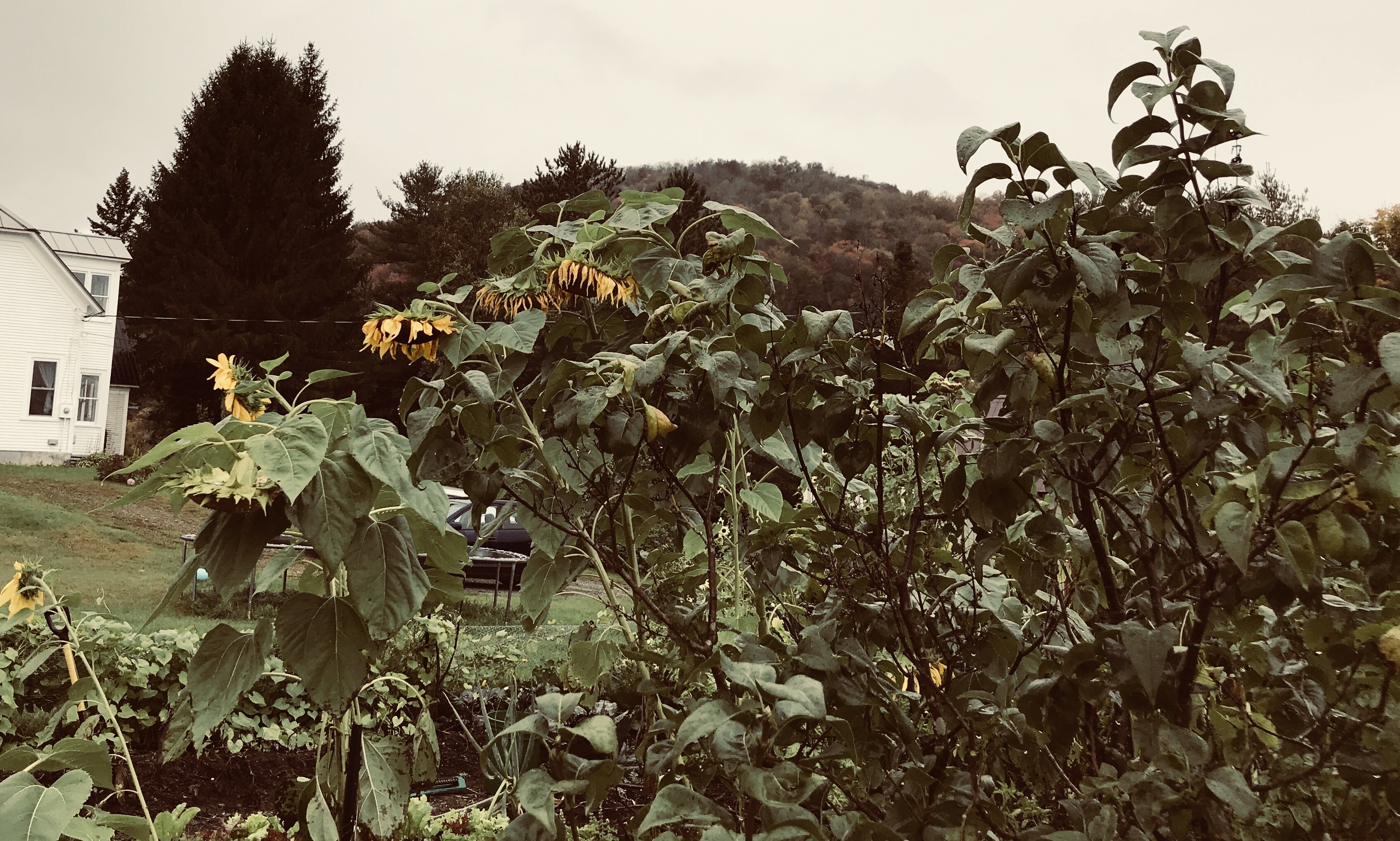
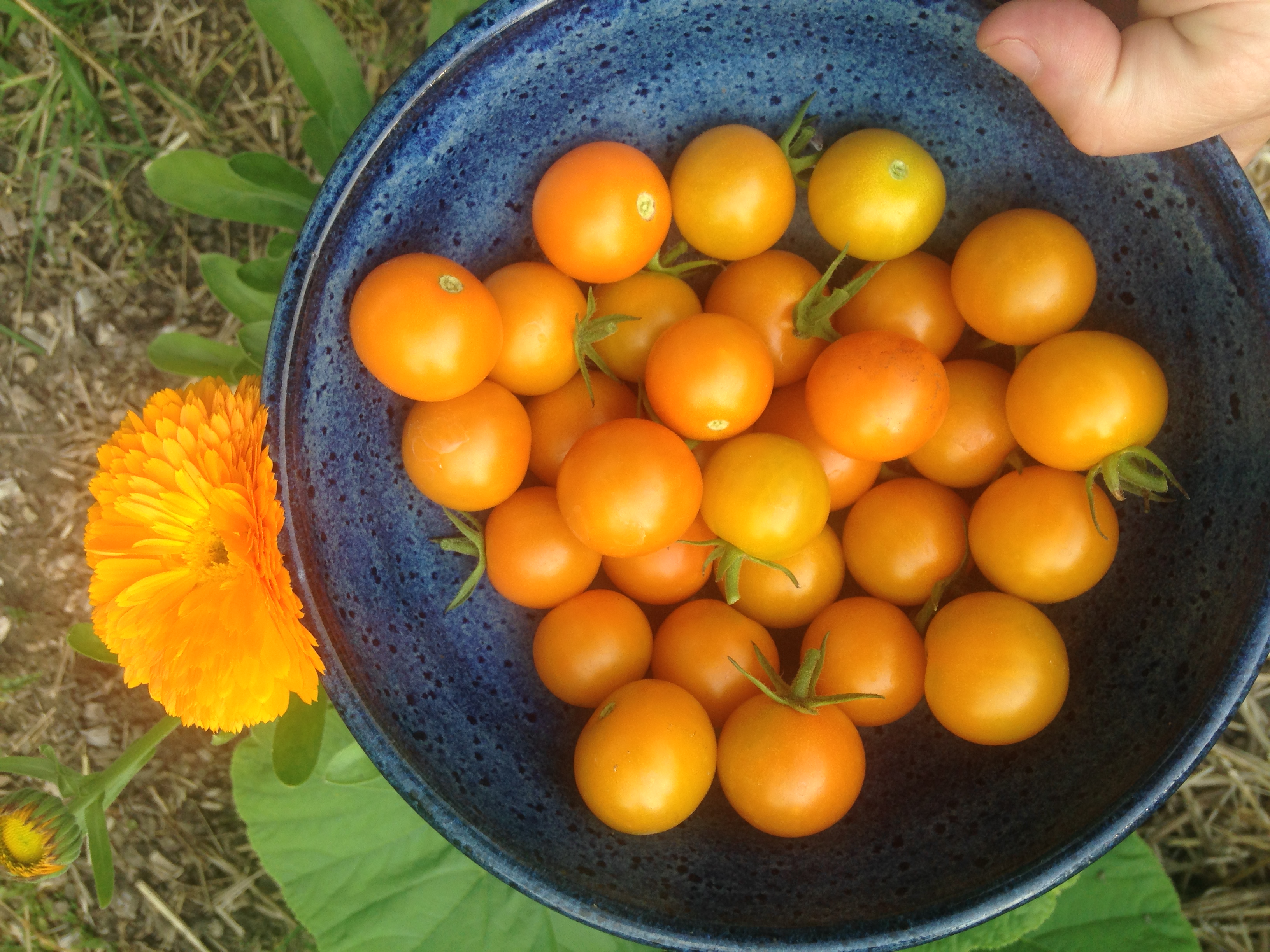
Tomato vine by cauliflower plant, I empty the garden, exposing black earth, finishing the final coat of white paint on a few patches of clapboards, eyeing the porch windows and gauging when I’ll plastic those for the winter’s duration.

In the dark this morning, my daughter and I talk briefly in her room, rain beating on the roof. Cold October rain illuminates foliage colors, tugs out the very best. I mention I’m going to paint the dining room a sunflower color this weekend, the window trim Santa Fe blue. Cool beans, she says.

What concerns me even more, though, is the loss of those values the (communal) fire precipitates and reinforces… How will the affirmation by others of one’s own necessity in the world be validated? What will be the opportunities for profound courtesy and for ceremony, of which there is such a dearth in the modern world?

We can lose the communal hearth and survive, but survival without the values of the hearth… seems a brutish prospect, a retreat into intolerance.

From Barry Lopez in Hearth: A Global Conversation on Community, Identity, and Place

IMG_3523.jpg

Barre, VT, Courthouse

A retired Barre police officer sat beside me while I was waiting outside a courtroom in the Washington County Criminal Court, and he mentioned he thought he knew my former husband. He suggested that clearly I didn’t know my former husband all that well, and he told me some wrongdoings he knew my former spouse had committed. I protested that the man he referred to wasn’t my former husband.

The officer persisted. Listening, I began to wonder how much I knew about anyone, really, in the end. In my bag, I had a copy of Janet Malcolm’s biography of Sylvia Path, The Silent Woman, which I had read with enormous interest many years ago, right before I was married. In this book, Ted Hughes is quoted as writing, “I hope each of us owns the facts of her or his own life.”

I knew when I entered that courtroom, again, as I had before, that I would need to relinquish some of the darkest facts of my life. Just the facts, ma’am, and yet the facts seem so much. The reality is, of course, none of us own the facts of our lives. We’re hardly discrete entities, spreading into each others’ lives messily as we do.

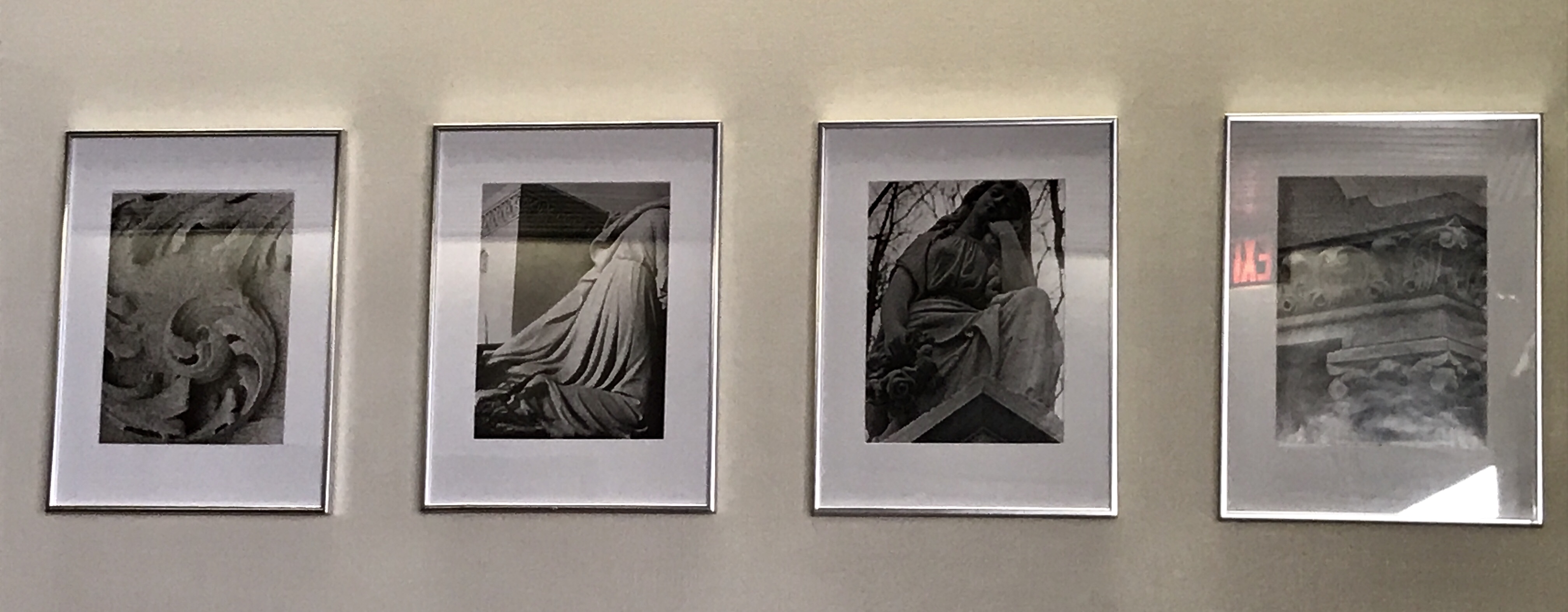
Just the facts. Granite photos, the trio of a judicial panel, bailiff, what must be an endless of stream of adults coming and going through the security at the door. Outside, robins sang in the maples behind the courthouse. I’d been there so frequently, I knew the way out of the one-way streets.

IMG_1406.jpg

Icy Reminiscences

This February reminds me, yet again, of how rapidly our world changes: nearly 70º degrees yesterday, with my daughter reading on the back porch and eating a turkey sandwich, to this nearly colorless day, where the younger daughter and I slide over the ice around our house, tacking to the neighbors’ bare patch of ground beneath her pines.

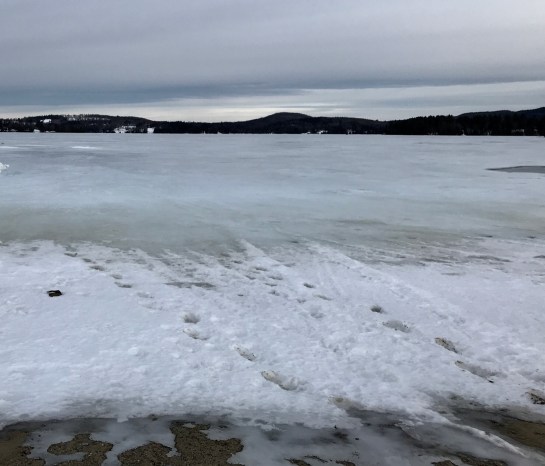
Early today, I drove to Greensboro, pausing in my few spare moments to walk on the frozen beach at Caspian Lake, a soul-spot for my girls and me.

Scene of innumerable sand castles, swimming lessons, watermelon slices, of cold, wonderfully clear water, and the legendary wind that rushes black thunderheads across the water.

Sure, some of days parenting young children I’ll let go from my memory without a tinge of sadness, but I’d keep every one of those beach days. Every last one.

I think one of the primary goals of a feminist landscape architecture would be to work toward a public landscape in which we can roam the streets at midnight, in which every square is available for Virginia Woolf to make up her novels.

— Rebecca Solnit

IMG_1186.jpg

Greensboro, Vermont

Whose Baby Are You?

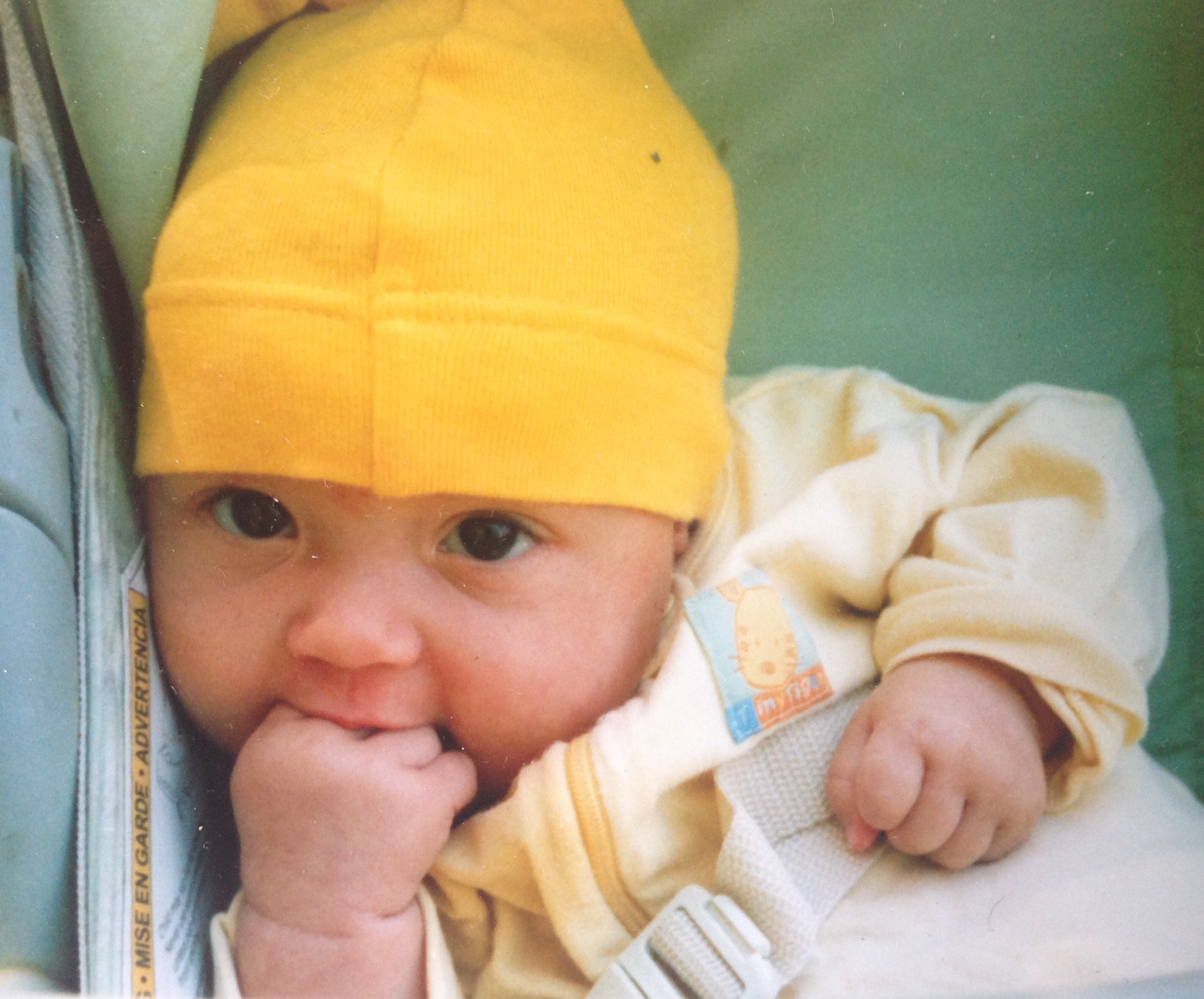
Searching through my younger daughter’s baby pictures the other day, gathering a handful of images for her sixth-grade graduation ceremony, I sometimes wondered, is this her? Or her sister? Once upon a time, I couldn’t believe parents might confuse their children’s baby photos; now I join those ranks of beleaguered – and, admit it, lame –parents.

In her face now, I see her woman’s visage emerging: my brown eyes, her father’s thin shape. As a writer, I’m trained to note specifics, like the way she regularly trims her own bangs these days. But details are only bits of her story, keyholes for my curious eyes.

These early wet May days, wildflowers bloom profusely – trilliums, bellflowers, spring beauties, Dutchman’s breeches – each day seemingly a new variation, every stalk and petal one tiny voice in the overall chorus of spring. The symphony rages mightily. So, too, with my daughter, in this spring.

I find myself listening to the symphony-in-the-creation of her.

In writing, you can always change the ending or delete a chapter that isn’t working. Life is uncooperative, impartial, incontestable.

Ariel Levy, The Rules Do Not Apply

FullSizeRender


Mother’s Work

Maybe I’m just incredibly narrowly read, but it seems far too infrequent that I read a male writer exclaiming, “Thank god. The kids played Monopoly all afternoon and left me alone at my desk. For two whole hours.” Perhaps what I need isn’t so much a room of mine own (which I now have, after many years) but a nanny of my own.

Rain is rumored, but long in arriving. We’re now settled into a summer routine of kids swimming at the lake while I spread out my laptop and a bag of work on a stained towel. By the dinner, it’s been a full day of work sandwiched with swimming and snacks. This is the high point of the summer – the crickets at full throttle, the lakes endless, the garden escaping its fence and long past the dire point of must-weeding. What will grow, will indeed grow. Blackberry tart rears its maplely head this evening.

Here’s a brief bit of beach reading from Mary Norris’s Between You and Me, one more womanly skill among many mothering others:

Used well, the semicolon makes a powerful impression; misused, it betrays your ignorance.

IMG_2068