After an absence, return.

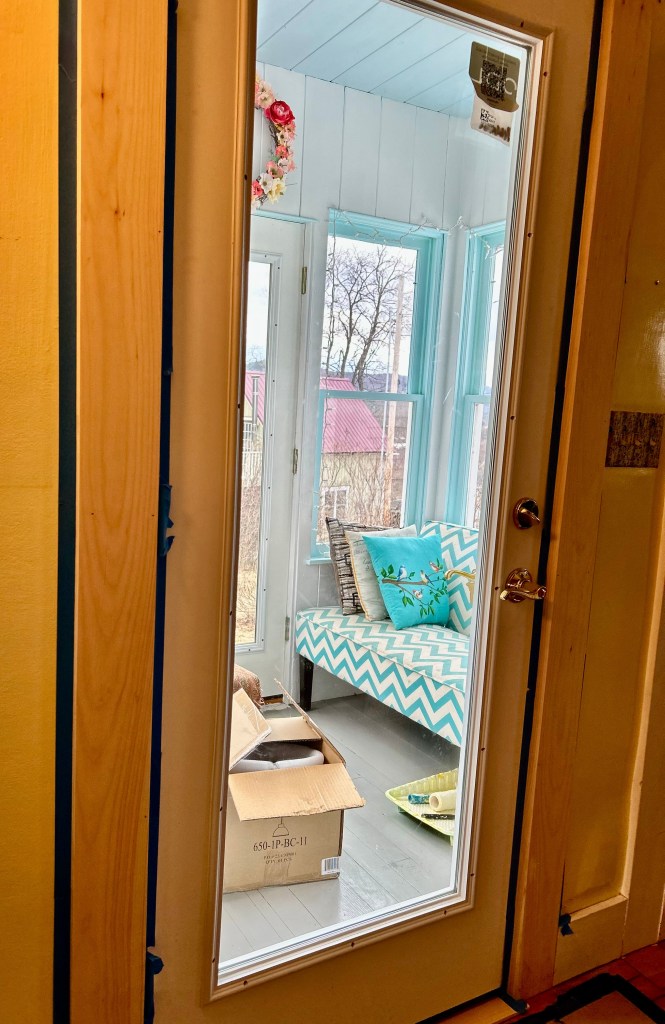
Photo by Molly S.

A long while away from this space after a day last week that began easily enough in our kitchen with my daughter and transpired into another Dartmouth ER visit and a prolonged stay. Days and nights chopped into mosaic pieces. MDs and RNs, the revolving cast of the Dartmouth surgical team, my daughters, pain meds, ice chips, me sitting up and begging for a patch-up to get me to my next chemo appointment… Get me out of this chronic patient repeat.

Now, five of the six chemo treatments completed, I am in the final haul. While my in-box filled up (thank you for your patience), and I was moved from room to room by kind people, I kept thinking of this cancer in a narrative arc. I had hit the section of story where the impossible commences. Before, things looked grim. But now, as protagonist in my own story, the arc swerves sharply, the longed-for light-at-the-end of the tunnel snuffs out, the path is hidden.

I’m not a writer for naught, for make-believe or play. I’m a writer because I know our lives tread meaningful albeit sometimes horribly hard paths. Lean in, I counseled myself, my shoulders far skinnier now but just as fierce. Use math. Get to the fifth infusion. Get to the sixth. Count down the finite days to the end of this treatment, which is, thankfully, eradicating the cancer. In the mosaic: my two daughters, the plastic IV tubing, the doctors in their masks, the ER nurse who stayed long past his shift in the middle of the night, holding my hand and assuring me that, yes, indeed, I would endure.

This is my story, but also the human story, in all our infinite variations of human desire, choice, the immutability of fate.

Sunny morning in our kitchen, birdsong, the fierce thrust towards spring.

Roaming

Hard up for reading material, I get my 15-year-old to drive to Craftsbury, where I raid the free book pile on the porch.

In this village, we see no one, not a single human soul, only two geese flying overhead. It’s late Saturday afternoon, and she keeps driving on the dirt roads, heading by the Outdoor Center where I worked many years ago, and then by the summer camp where she spent happy summer weeks.

The road crests by the old farmhouse where our friends lived for years, and where we spent so many happy hours. She slows, and we look carefully. The house has been freshly painted and glows a pale yellow on that green hillside.

In one of those strange twists of fate, my former husband and I had also considered buying this house before our friends — who were not yet our friends — did. At that time, the farmhouse hadn’t been inhabited for a few years. A couple with two children had lived there, divorced, and the house had been snarled in the divorce.

In one bedroom, in place of a headboard, pillows had been stapled to the wall. I remember thinking, Who would ever think that’s a good idea?

I ask her to pull over on the side of the road. I get out for a moment and walk into the field where I stand looking at the ridge of mountains in the distance, the house on the hillside, and all that sky overhead.

A pickup pulls up beside my daughter, speaks to her, and drives off. I walk back to the car and asked what happened.

She says, He asked if I needed help. I told him it was just my mother.

She puts the car in gear, and we roll forward, picking up speed along the road. She glances at me sideways and says, I didn’t tell him you wanted to see how far along the tree buds are. That would just be weird.

 Destiny has no beeper; destiny always leans trenchcoated out of an alley with some sort of ‘psst’ that you usually can’t even hear because you’re in such a rush to or from something important you’ve tried to engineer.

David Foster Wallace