Sunday.

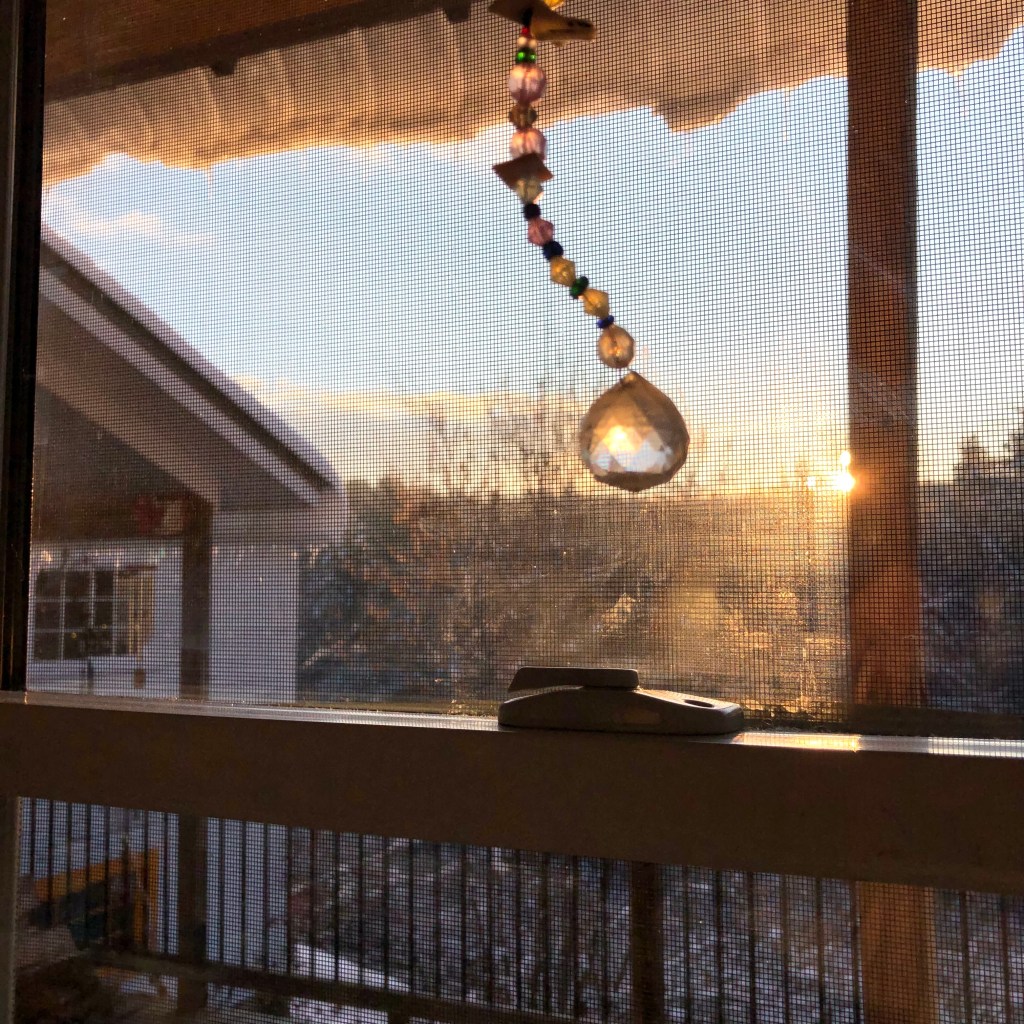
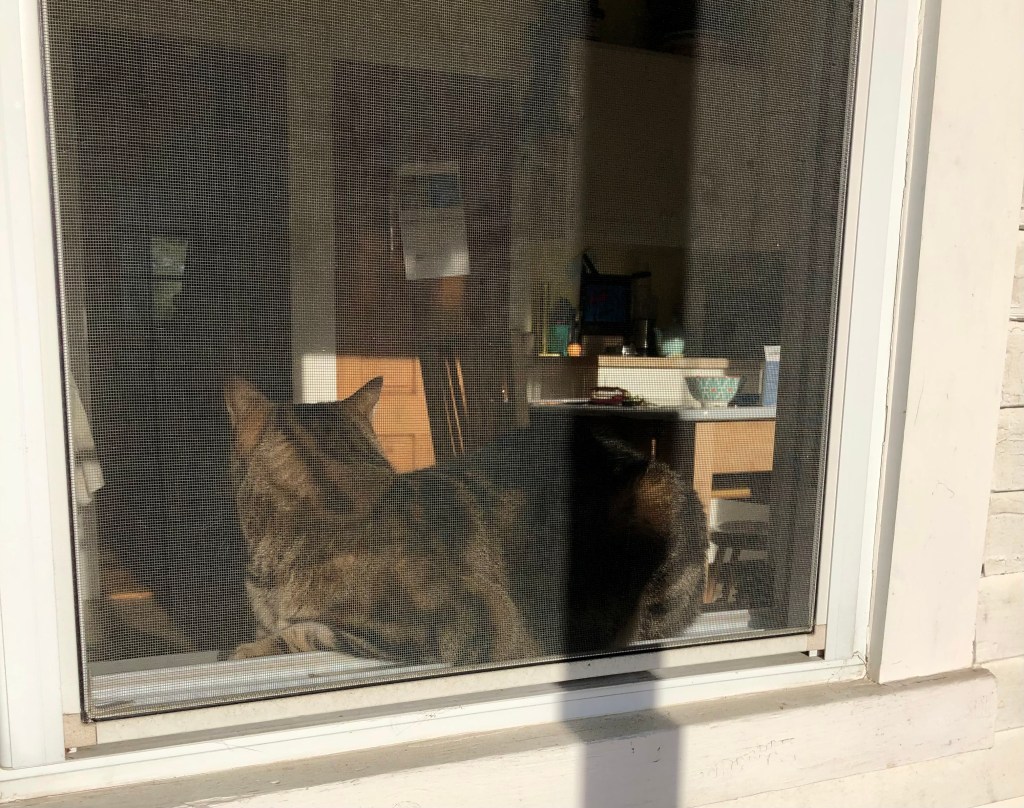
My father emails me a Chris Hedges’ article, “Death of an Oracle,” about the recent death of poet Gerald Stern. I toss a few slivers of bark on my stove’s embers and listen while my cat stares out the window at two cardinals in the twiggy mock orange. The birds are brilliant crimson in the merciless November gray.

I’ve just submitted a 100-word story of Thankfulness to the zillion and more that the New York Times will receive this week. Mine is precisely 100 words, drenched with gratitude and, honestly, rage. My little cat flicks his tail at me, as if asking if I, too, see that pretty bird my cat would like to hunt. Indeed, I do. The birds are wise enough to understand the merits of glass and peck away at the grass, unperturbed. Sunday morning, and my list lies on the table. A long week looms ahead. As I listen, however, a kind of peace settles around me, and not simply because of the warming fire. I’m reminded that I never sought a life of blandness.

My cat yawns and naps. The cardinals disappear. I brew another pot of espresso. My brother’s coming for Thanksgiving, bringing steak and endless conversations about the utterly mundane, like Wordle, the downright silly, and gritty existential pondering about the afterlife. November is looking up.

If the Buddhist’s job is to be detached, I think that the artist’s job is to be both detached and attached.

— Gerald Stern

Darkness.

My daughter comes in the house tonight and says, “The world smells of rain.”

I put the enchiladas in the oven and walk out in a warm drizzle. The darkness already lies impenetrably. By a scant light from the neighbors’ house, I head into the woods behind our house and then walk by feel and memory, knowing where the blackberry canes meet the white pines. There’s months ahead of the darkness to come; I need to step into it again, know it fully not as foe.

As I head through the back side streets into the village, I think of this deep darkness like drinking. How I feared for so long even the scent of liquor. Now, sober for so many years, I’ve been to countless bars with my brother the brewery owner, hung out with him in good times and terrible, and what’s in his glass or his hand seems nothing to me. Then, this: just recently, a horrific thing happened to someone I know slightly, an occurrence he did not cause and tried, in fact, very hard to prevent. When I learned of what happened, I sensed the tsunami of suffering that would wash through this man’s life. The utter enigma and apparent injustice of the world.

At home, that evening, I leaned against our house’s clapboards, let the cold breeze tug my hair into my eyelashes. I was alone that night, and I remembered, again, what I sought for so many years in the darkness of drinking, my own private little story in such a multifaceted universe. Crucible, I thought. I am a crucible.

Returning to our house tonight savory with dinner, bright with the little lights my daughter hung up in the kitchen, I flung open my bedroom window and let the warm rain blow in. The million mysteries and more of this world.

…. And last, I’ve been graciously invited to the Rockingham Free Public Library, Rockingham, Vermont, this Tuesday, November 15, 6 p.m. Come if you’re in town.

Time Out of Mind.

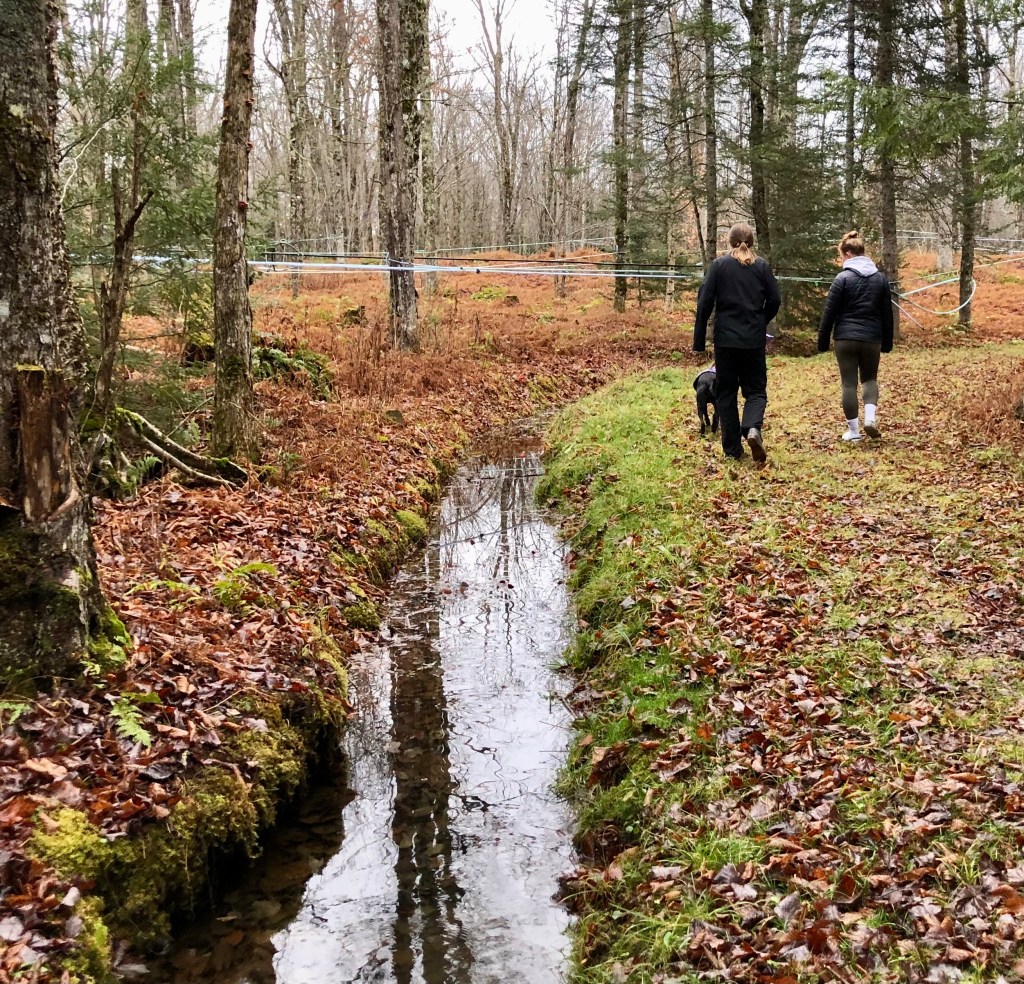
On the town forest trails, I spy two deer. Across the fallen leaves, now brown and dry, we eye each other. If I hadn’t seen a flicker of white tail, I would have kept running. But I have seen them, and so I determine to wait. I’m in shorts and a t-shirt; it’s so freakishly warm for November that people seem to be in a tizzy of utter delight tinged with dawning horror that this climate change thing, it’s really moving along. Nonetheless, these days are sweet.

The deer nearer me turns her? his? head just over one shoulder, checking in perhaps with the companion. Then they turn together and run. At the top of the hill, white tails bouncing, the creatures stop and look back at me, perhaps in nothing but curiosity. They vanish into the woods.

This is a November when I let the fire extinguish in the woodstove, hang the laundry outside, open the windows and make my cats happy. I chop apples into halves and quarters and eighths and throw the pieces into muffin batter, as if the world can measured and understood by rudimentary math, by counting two eggs and a quarter-cup of milk. In the afternoon, I abandon my thoughtful list of chores and lie in the weeds behind our house, reading Maggie O’Farrell, journeying imaginatively back in time to a Duchess’s life. It’s the same question that’s mesmerized me for years: how much of our lives do we determine and how much is dumb fate?

In the sunlight, I sleep and then wake breathing the complex scents of warm, humusy soil and spicy green leaves, and around all the dry crumbles of what this year’s frost has already bitten. In the cemetery behind my house, a man and a boy fly red kites, the long tails fluttering like ribbons.

Chasing Dreams.

With our household size decreased, so is our garbage. On a sunny Friday afternoon, I swing by the transfer station with two bins of recycling and a bag of trash. The roving raccoon who appears regularly outside my kitchen door, pre-dawn, apparently found a way into my barn and enjoyed the trash far more than I did.

At the transfer station, I interrupt a woman who’s eating her lunch salad. I apologize, and then I stand at the open window as we kick around a weather conversation for bit — flowers blooming in my garden and all. She tells me she’s headed to Florida next week — not for the winter, but to drive down her convertible and store it at her father’s house. Where he lives, he’s eight hours from New Orleans, eight hours from Nashville, eight hours from just about anywhere worth going. The trash business slows in the winter (something I’d never considered), and she’s looking forward to doing some traveling this winter.

I’m no fan (who is?) of consumption and trash, but the transfer station has a particular allure to me: so many stories here. When I moved from our last house, I negotiated with the transfer station owner about swapping used tires for metal, and what could he offer for two old pickups in the woods? We each held up our end of the bargain we struck.

A flock of juncos settled around my house this afternoon. While I folded up the laundry I had hung on the back porch, I imagined my acquaintance driving south, roof cranked down and the breeze in her hair, speeding towards her dreams.

On some nights, I still believe that a car with the gas needle on empty can run about fifty more miles if you have the right music very loud on the radio.

— Hunter S. Thompson

Stitch, Stitch.

As the days shorten, I appraise my woodpile. Borrow knitting needles. Read outside in my coat, the sun on my face. Our cats sprawl before the wood stove, savoring radiant feline bliss.

My brother comes to visit for my daughter’s final soccer game. Nine years of games and uniform washing, and I still don’t understand fully the rules of the game. Vs of geese cross the sky. As we idle afterwards, talking, a flock of starlings sweeps low over our heads and disappears around the school.

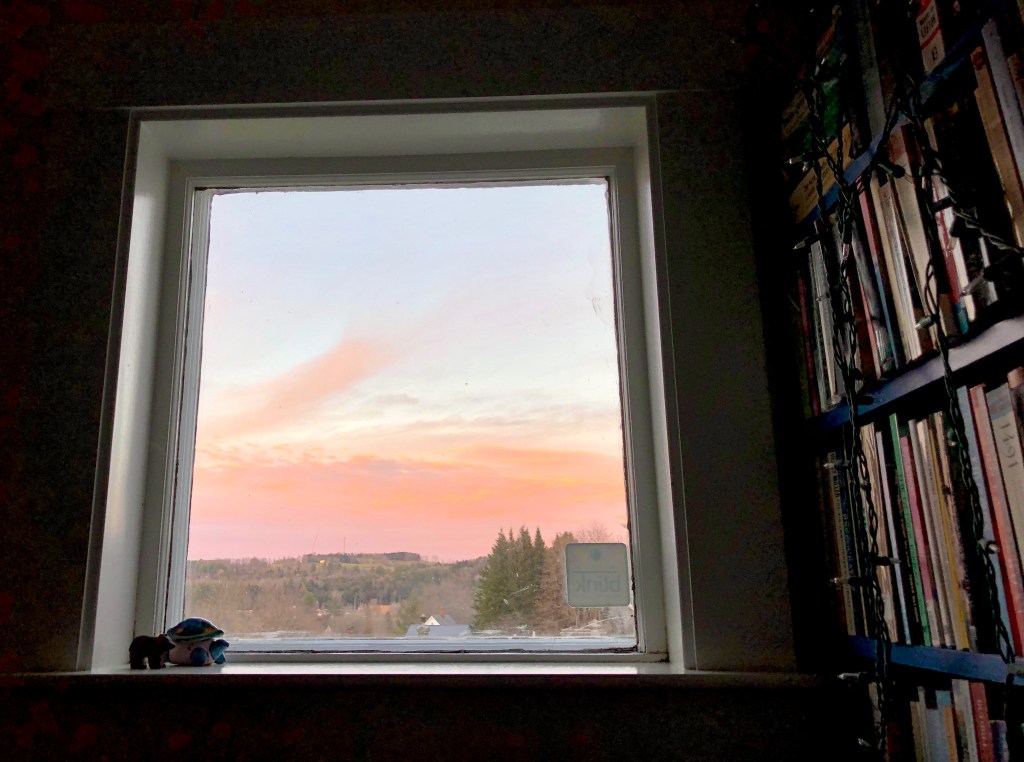
Back at our house, I gather my things from the car — my jacket, her gifts of balloons and chocolates, the signs her sister made. Photographs. Near sunset, the sky is a luminescent pink that will endure for a few minutes, no more. Their coach, son of glassblowers, made each of the senior girls a glass. In our kitchen, we admire my daughter’s beautiful gift. I wonder how she will fill it.

“Great things are not done by impulse, but by a series of small things brought together.” 

― Vincent Van Gogh

Peony Roots.

Nearing the end of soccer season, my daughter’s high school community suffers a second tragic death in just a few years. In this little rural school, the news seems almost unbelievable, except it’s not.

The loss is not my own personal grief, and so I keep on, of course. On a Tuesday, I leave work early and drive to a game in a northern town where I’ve never been. All morning, a cold rain had fallen. The school is in a town where a Blue Seal Feed plant dominates the shabby downtown. I appear with my knitting needles and a ball of yarn. I’ve forgotten a chair, and another mother takes pity on me and walks back through the mud to her car to retrieve an extra. I end up at the end of the row of spectators. A black cat with white paws wanders by and jumps into my lap. Beside me is a high school boy whose name I never asked who christens the cat Mittens and tells me about his cat named Turkey who was born on Thanksgiving. He speaks slowly and calmly about ordinary things like the railroad workers driving along the tracks in their trucks at the end of the workday. Cigarette smoke streams through their opened windows.

I drive home alone, missing my friend who is no longer my friend because of some certainly unforgivable thing that passed between us. Nonetheless, I miss her as I drive through the long autumn twilight. In this unfamiliar territory, I pass through farm fields where tractors are silhouetted against the sunset, through fields harrowed up black or still emerald green from the year’s final hay cutting. Mist floats over still ponds. The forests are a mixture of gold and russet, gray where branches emerge. Shot through with the day’s final sunlight, the landscape might be an 18th century oil painting.

The darkness catches up with me. At home, the cats will be hungry, the fire in the wood stove gone down to embers. I pass through a village where I haven’t been in twenty years. I had visited with a young woman both baked cakes for a living and built bridges.

As I drive through the forests and over mountains a few other vehicles pass my way — a milk truck, scattered cars. This American Life tells me stories as I live through my own American Life. Both times when Covid entered my house I felt the thinness of my life. Beneath a red-neon GAS sign, I stop for gas. My jeans are mud-splattered. Despite the drive and my car’s heat, I’m shivering although the air here, away from the sodden field and the river, feels almost balmy against my face.

I screw on the gas cap and step away from the pumps where it’s only my car, anyway, with the cardboard box of peony roots someone salvaged from their garden and passed along to me. The evening star gleams over Elmore Mountain. For some inexplicable reason, I remember stepping out into the New Mexico night the last time I visited with my brother, relishing the night’s splendor. We talked about those numberless nights camping as children, sometimes humid, sometimes frosty, in good times and bad. The night is an ancient, ubiquitous realm. Red and white lights of traffic glide along the road. I get back in my car and place my hands over the heater’s blowing vents.