Stitch, Stitch.

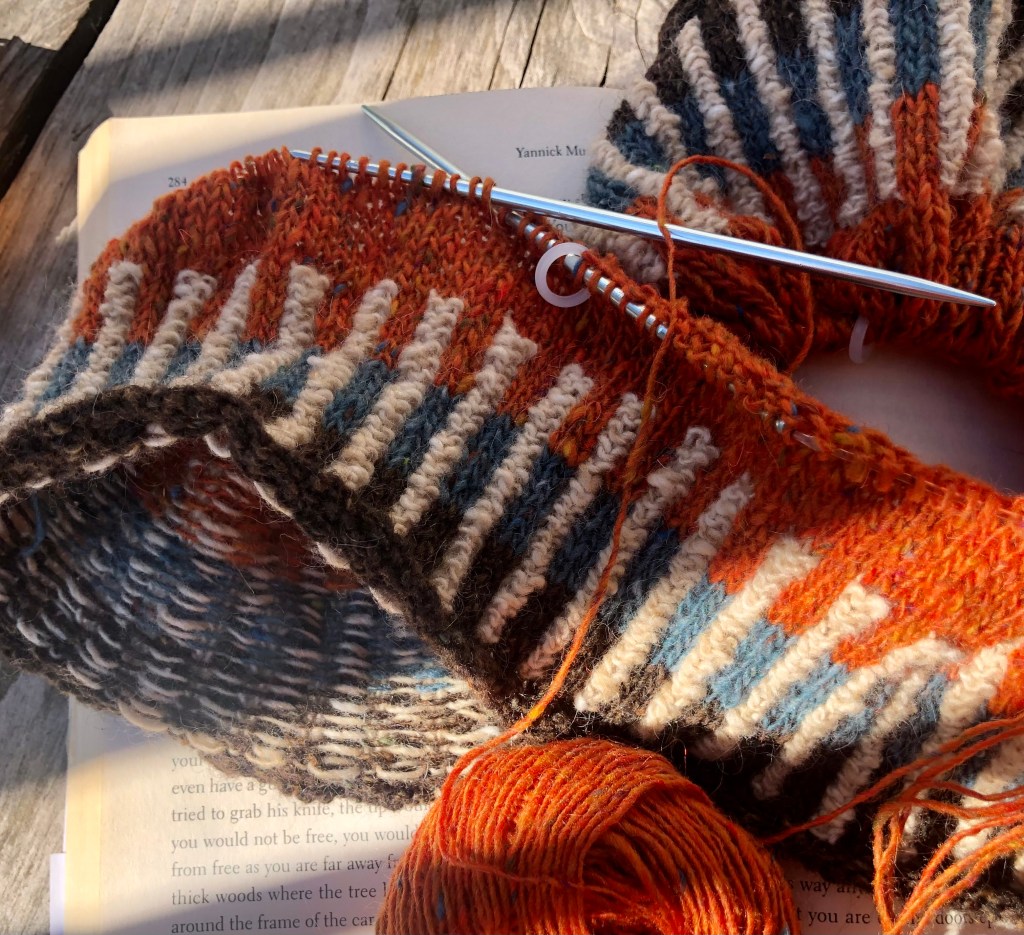
As the days shorten, I appraise my woodpile. Borrow knitting needles. Read outside in my coat, the sun on my face. Our cats sprawl before the wood stove, savoring radiant feline bliss.

My brother comes to visit for my daughter’s final soccer game. Nine years of games and uniform washing, and I still don’t understand fully the rules of the game. Vs of geese cross the sky. As we idle afterwards, talking, a flock of starlings sweeps low over our heads and disappears around the school.

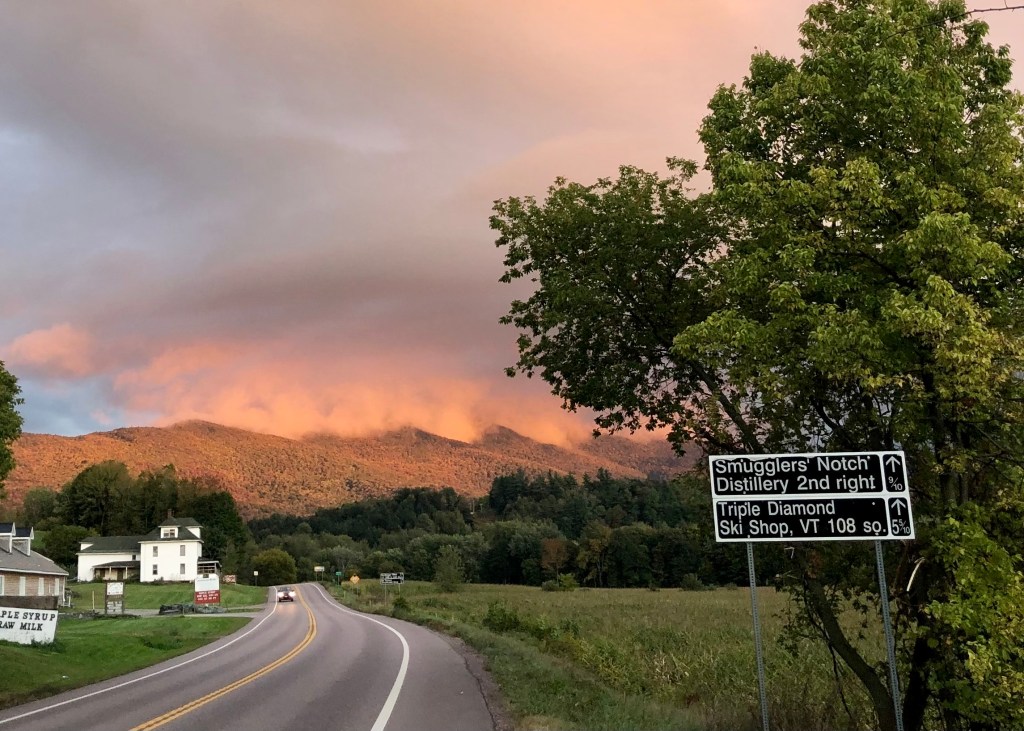
Back at our house, I gather my things from the car — my jacket, her gifts of balloons and chocolates, the signs her sister made. Photographs. Near sunset, the sky is a luminescent pink that will endure for a few minutes, no more. Their coach, son of glassblowers, made each of the senior girls a glass. In our kitchen, we admire my daughter’s beautiful gift. I wonder how she will fill it.

“Great things are not done by impulse, but by a series of small things brought together.” 

― Vincent Van Gogh

Peony Roots.

Nearing the end of soccer season, my daughter’s high school community suffers a second tragic death in just a few years. In this little rural school, the news seems almost unbelievable, except it’s not.

The loss is not my own personal grief, and so I keep on, of course. On a Tuesday, I leave work early and drive to a game in a northern town where I’ve never been. All morning, a cold rain had fallen. The school is in a town where a Blue Seal Feed plant dominates the shabby downtown. I appear with my knitting needles and a ball of yarn. I’ve forgotten a chair, and another mother takes pity on me and walks back through the mud to her car to retrieve an extra. I end up at the end of the row of spectators. A black cat with white paws wanders by and jumps into my lap. Beside me is a high school boy whose name I never asked who christens the cat Mittens and tells me about his cat named Turkey who was born on Thanksgiving. He speaks slowly and calmly about ordinary things like the railroad workers driving along the tracks in their trucks at the end of the workday. Cigarette smoke streams through their opened windows.

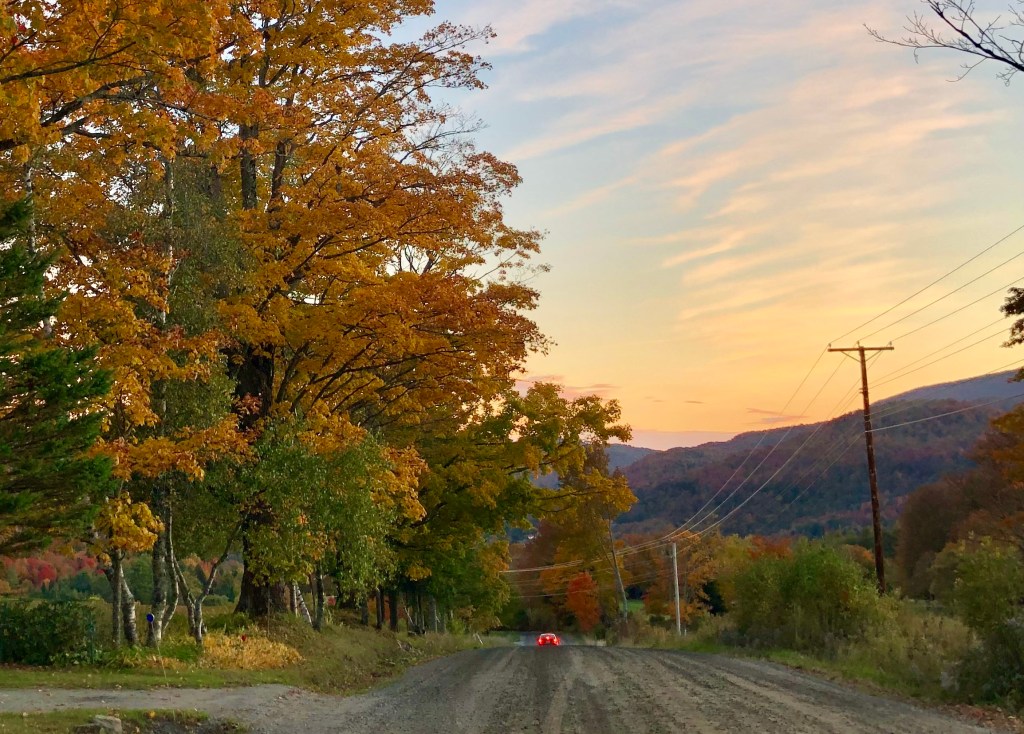
I drive home alone, missing my friend who is no longer my friend because of some certainly unforgivable thing that passed between us. Nonetheless, I miss her as I drive through the long autumn twilight. In this unfamiliar territory, I pass through farm fields where tractors are silhouetted against the sunset, through fields harrowed up black or still emerald green from the year’s final hay cutting. Mist floats over still ponds. The forests are a mixture of gold and russet, gray where branches emerge. Shot through with the day’s final sunlight, the landscape might be an 18th century oil painting.

The darkness catches up with me. At home, the cats will be hungry, the fire in the wood stove gone down to embers. I pass through a village where I haven’t been in twenty years. I had visited with a young woman both baked cakes for a living and built bridges.

As I drive through the forests and over mountains a few other vehicles pass my way — a milk truck, scattered cars. This American Life tells me stories as I live through my own American Life. Both times when Covid entered my house I felt the thinness of my life. Beneath a red-neon GAS sign, I stop for gas. My jeans are mud-splattered. Despite the drive and my car’s heat, I’m shivering although the air here, away from the sodden field and the river, feels almost balmy against my face.

I screw on the gas cap and step away from the pumps where it’s only my car, anyway, with the cardboard box of peony roots someone salvaged from their garden and passed along to me. The evening star gleams over Elmore Mountain. For some inexplicable reason, I remember stepping out into the New Mexico night the last time I visited with my brother, relishing the night’s splendor. We talked about those numberless nights camping as children, sometimes humid, sometimes frosty, in good times and bad. The night is an ancient, ubiquitous realm. Red and white lights of traffic glide along the road. I get back in my car and place my hands over the heater’s blowing vents.
Green Apples.

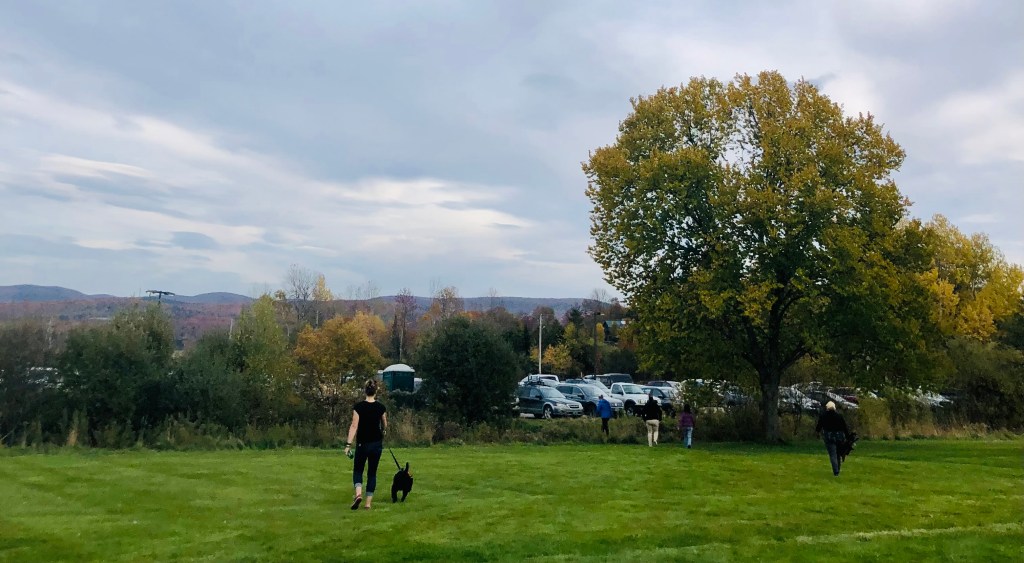
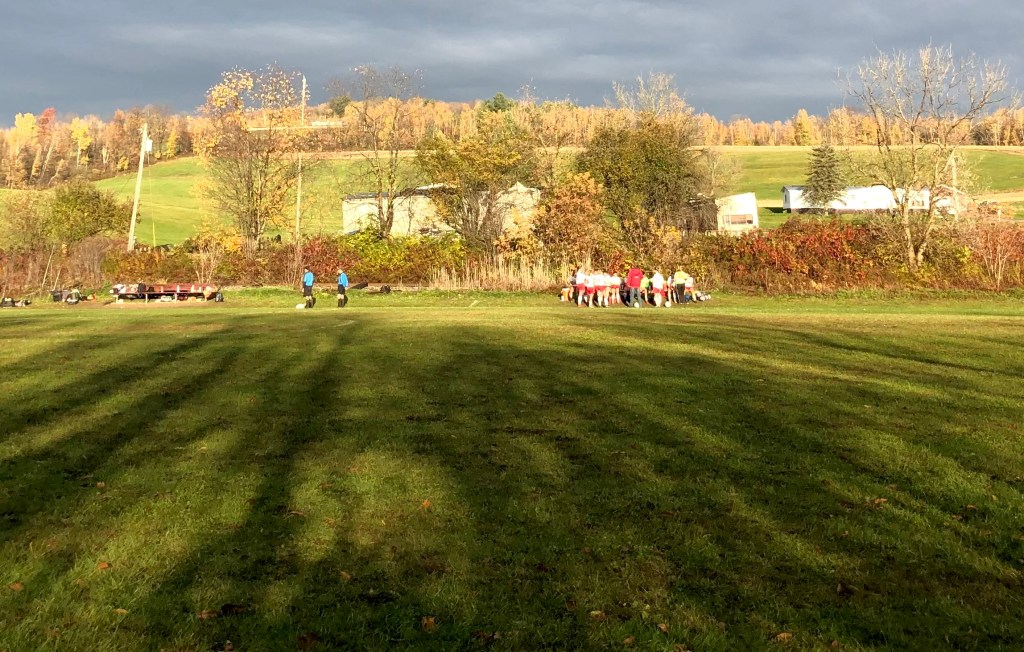
I flee work early with my daughter and her dog, to watch my younger daughter play soccer. Mid-October, and in my world everyone clamors to be outside as much as possible.

In the parking lot, a rusty white Toyota pickup sports a peeling bumpersticker with Joseph Campbell’s advice: Follow your bliss.

In my young woman days, I wholeheartedly championed this, easy-peasy, of course, I thought. Then I entered what seemed like a labyrinthian period of my life where the notion of bliss seemed facile and sometimes outright stupid. On this sunny afternoon, I chat with parents and strangers on the grass about little things — who’s started their furnace already and the merits of sprinkling cinnamon on hot oatmeal and is that the new superintendent with the coach?

As the sun heads down, the spectators pull on jackets. The wiser among us brought blankets. I find my hat in my car and loan my daughter my jacket. My youngest is a senior. Next year I won’t be here, clustered among the parents and grandparents, and so each game seems a bead on a counting game. On the way home, we stop at the general store for curried dumplings.

All afternoon I kept thinking of Ruth Stone’s achingly lovely poem “Green Apples.”

In August we carried the old horsehair mattress
To the back porch
And slept with our children in a row.
The wind came up the mountain into the orchard
Telling me something:
Saying something urgent.
I was happy.
The green apples fell on the sloping roof
And rattled down.
The wind was shaking me all night long;
Shaking me in my sleep
Like a definition of love,
Saying, this is the moment,
Here, now.

October Afternoon.

On my way back to Hardwick, I’m stopped in road construction on the County Road. While I wait for the steamroller, I glance at the passenger seat and notice my knitting has slipped from my bag. The project is a simple hat, and the yarn slid from the needles. To save my work, I lift the unfinished hat and slide the stitches back on the needles.

Just before my car hood, the woman in bright yellow holding a STOP sign leans against the pole. I turn off my Subaru engine, thinking of where I’ve come from and the high school soccer game where I’m headed. How quickly cold shadows edge in when the sun slips behind the mountains at this time of year. The mountains around the road dazzle with crimson and gold, but gray is visible in patches, too. Stick season marches in inexorably.

I’m at the town line somewhere between Montpelier and Calais. A few years ago, I sold our arch — the long firebox and pans used for making syrup — to a man who said he’d pick it up in a few months. His address was in this area. I promptly cashed his sizable check. He didn’t return. More than a few months later, I had sold the house, too, and my daughters and I were moving. I wrote list after list with things like pack canning jars and Salvation Army drop-off and get rid of Toyota transmission in shed. On those endlessly reworked lists, I added arch must be moved. While tracking down the buyer, I discovered an unspeakably sad thing had happened to his family a number of years before he wrote me that check.

I found him. He arrived with a friend and loaded the arch on a trailer. He and his friend were older than me, in a different phase of their lives than I was. They spoke kindly to my daughters.

For just a fleeting moment, still waiting for that steamroller to move, I remember that arch precisely. Stainless steel, black metal, the scrape of a shovel on firebrick.

The woman with the STOP sign appears at my open window. I expect her to chide me for daydreaming. Instead, she points to a nearby pond where a flock of geese have landed. The sun hits the sugar maples around the water. There’s so much in that moment — the clamoring and splashing birds, the stunning leaves, that crystalline memory, the sunlight and green yarn in my lap. The woman tells me, “Head on when you’re ready.”

Autumn, Moon, Small Town.

While my daughter washes the dinner dishes, I head out for coffee. That morning, I finished the last of the grounds. I pull on a sweater and cut through the back woods to the cemetery. A gibbous waxing moon hangs like a splash of cream over the cemetery and keeps me company as I cut through the elementary kids’ ballfield.

As I walk down a side street, I see the co-op below, lit in the falling twilight. Last year, the co-op moved from its tiny Main Street store — packed literally to the ceiling with stuff — to a much larger boxy grocery store around the corner. A number of years ago, the co-op quit selling bottled water after a staff member complied compelling reasons to quit. Instead, the co-op offered cups of free water. Now, the co-op sells local veggies and cheese and meat and wine and so on — and Cocoa Puffs.

As a long-term co-op shopper, I’ll simply note that people don’t know how to use this larger parking lot. For whatever reason, we keep tangling up ourselves, backing out into Route 15, nearly colliding.

In the parking lot, I stand for a moment, admiring the moon and the scent of autumn. All day, the sun has shone brilliantly, unseasonably hot, and rain will be pushing in Friday. The man who lives in the apartment across the street opens the co-op door and gestures for me to walk in ahead of him. We stand talking for a few moments about that drop-of-cream moon and how the scent of fallen leaves reminds us of childhood.

October 1.

I spend the better part of Saturday stacking wood, beginning bundled in a sweatshirt and hat, and quickly stripping to a tank top and shorts. A black cat wanders by and appraises my work which, admittedly, is uneven but certainly sufficient. I breathe in fresh sap, wet earth, dusty bark crumbles.

The month of September — all thirty days — disappeared in a few heartbeats. I’m still pulling in frost-choked parts of my garden, the dead lily stalks, putting away the clay fairy house in the rock garden my daughter made so many years ago.

Friday, I’m at a summit all day that brought together people, who, in one way or another, are enmeshed in healing from addiction. Here’s the thing: a few years ago, I never would have attended a summit like this, let alone speak to a large group. For years, I said nothing about my own struggles with addiction. But publishing Unstitched acknowledged in a very public way my own miserable struggles with drinking. Because I had written the book, I had to answer questions publicly about this, and I needed a surprising amount of time to acknowledge this, to really accept what this meant. But I heard — and I kept hearing — from people I both knew and complete strangers — about their struggles, or a friend or family member’s struggles.

The Rumi line I quote in Unstitched is “the wound is the place where light enters.” When I returned Friday evening, my daughter asked me why I go to these sad things. And it’s true; there’s such grief that’s shared. But now I understand that there’s my own grief — still much of it in a private place in my heart — but grief is our human commonality, too. The wound is what renders the light possible.

When I step out, three hot air balloons are rising.

Nearby the expo where the summit is held is a hair salon named The Rusty Clipper where I dropped off maple syrup wedding favors about twenty years ago. The father of the bride gave me a check. When the bride opened a box, she told me I had given her the wrong bottle — hearts instead of leaves, or leaves instead of hearts. I gave the check back to the father. I put the boxes back in my car. I buckled in my three-year-old and drove home. At home, I redid all the favors and drove back the next day. When I got the check again.

I stand there under the hot air balloons and wonder about that bride whose name I’ve long since forgotten. Then I follow the crescent moon home over the mountains as the light gives way to twilight.