Easy Snow

Driving the neighbor girl home tonight, in the dark descended already at five, the headlights illuminated the pristine snow at the roadside; in the first real snowfall of the season, winter has returned with all its familiarity. The truth is, this season is profoundly beautiful, the nights deeply dark, the stars purer than any possible manufactured light.

Winter tugs out the humanness of us, too. In the descending cold, the hearth has genuine meaning: practicality bound into pleasure. In the backseat, the children laughed, the car steamy with the scent of my wet wool sweater, the snow around us gently falling, the merest whispers of winter’s roar yet off in the distance.

I write this by lamplight
holed up for the winter
there it is on the page

– Yosa Buson

FullSizeRender.jpg

Woodbury, Vermont

Blackberries in All Their Heavenly Glory

I naturally think of the world in terms of metaphors, and blackberry season is a thread that’s wound all through my adult life. Twenty years ago, we moved into our house – essentially a hunting camp then – on a clay-soil Vermont hillside with little else of human life around. On a woods road behind the house, I discovered a blackberry thicket. I see my younger self, picking alone in those brambles, wearing an old red t-shirt and darted at by hummingbirds, afraid of the bears who had clearly enjoyed their share of the wild harvest.

My daughters and I easily picked a quart last evening of exceptionally sweet and juicy berries. Some years, the berries are seedy and hard; some years, the vines are nearly absent of fruit; others, like this one, go on and on for weeks, delicious, wild, there for the gathering.

One year, I pulled a long thorn from my young daughter’s sandal. Her tiny heel released a single drop of crimson blood. Through all these seasons, here’s been the berries, various as our own family dynamics – generous or bitter, depending on the season – but invariably returning. Isn’t that metaphor enough?

Here’s a Galway Kinnell one-liner:

I love to go out in late September among the fat, overripe, icy, black blackberries to eat blackberries for breakfast, the stalks very prickly, a penalty they earn for knowing the black art of blackberry-making; and as I stand among them lifting the stalks to my mouth, the ripest berries fall almost unbidden to my tongue, as words sometimes do, certain peculiar words like strengths or squinched, many-lettered, one-syllabled lumps, which I squeeze, squinch open, and splurge well in the silent, startled, icy, black language of blackberry – eating in late September.

FullSizeRender.jpg

Photo by Molly S.

New Growth

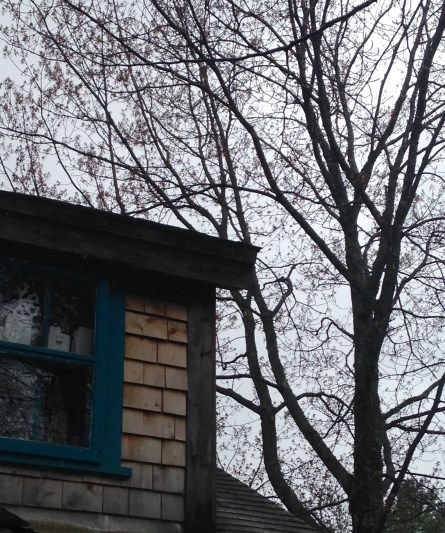
The maple tree before my house was seeded in this ragged lawn before I lived here, and it has grown steadily over these years. This beauty is likely much older than I’ve ever given her credit for. And yet here again, this May, her gnarled, lichen-covered branches are sprouting green again, with the tenderest of leaves.

I love that mystery; I love that rebirth; I love that change. One of my most favorite endings in a novel is Akhil Sharma’s Family Life, at once simple and exquisite, while throwing the reader back into the depths of the novel, the infinitely deep, living sea.

That was when I knew I had a problem.

– Akhil Sharma

FullSizeRender.jpg


The Middle Ages, Vermont 2016

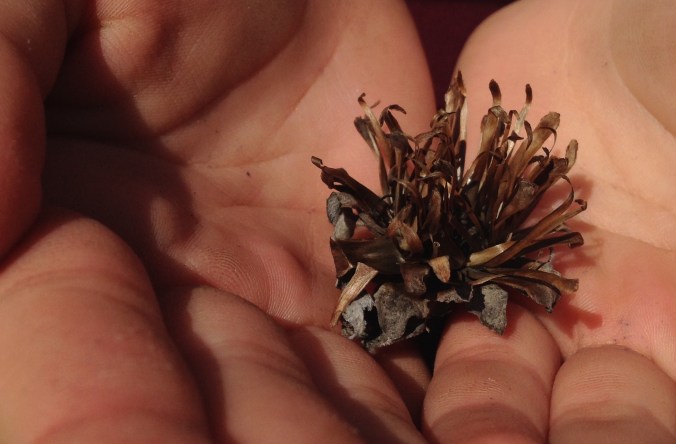
One way I’ve (unintentionally) annoyed my daughters is my insistence that, every now and  then, I’m inhabiting the Middle Ages. This afternoon, in a stretch of breezy sun, at that optimum seventy degrees, I dug my fingers into the warming garden beds and unearthed worms, threadlike strings of root, lifting handfuls of johnny-ups for a friend.

Somehow, in my fictive Middle Age world, there’s only sunlight and soil, the constellations overhead undiluted by manmade light. This world lacks the drone and pollution of the internal combustion engine, contrails, the unending pressure to earn a living, get the kids one place or another, be accountable to the world out there. I have this vision of a world in perpetual growth, the earth still solidly at the center of the universe, the sun orbiting my serf’s homey patch of soil.

Conveniently, the Pope remains distant, the Children’s Crusade hasn’t happened yet, the Black Plague and smallpox are on hiatus. The thatch over my head is rat-free, famine hasn’t reared its head, and – of course – family life is just fine.

It’s a nice reverie, though, when I remain for these hours in my hands-on-the-land dreamlike stance, gathering tangy greens for dinner, my cheeks sun-kissed.

 But you may be surprised to hear that the Middle Ages were like a starry night. Let me explain. Have you ever heard people talking about the Dark Ages? This is the name given to the period which followed the collapse of the Roman empire when very few people could read or write and hardly anyone knew what was going on in the world.

– E.H. Gombrich, A Little History of the World
FullSizeRender.jpg

Woodbury, Vermont

Koyaanisqatsi: Unbalanced Life

Not long ago, one of my daughter’s friends remarked that everyone desires the warm feeling of home. And yet, why is it so darned hard to keep the home in balance? The stuff of literature is family, never wholly at ease, always shifting and turning, brimming with hunger and unmet desire…. the stuff of life: this material I write about; this very matter I live.

This winter, even a mouse came to die beneath my wood stove, spreading out its little furry body, relinquishing fear of us in its desire to expire on the hearth. The snow is all gone but the hard ugly leavings of dirtied lumps. Vermont in March should be heavy winter, sun bright over fresh snow, and we should be skiing in t-shirts, sunburning. The wind has been blowing every night, bringing neither spring nor storm. It’s off, all of it, this winter that never was.

Long after dinner tonight, the girls and I sat at the table, talking, myself knitting, pulling together through language. They tell me, this happened today, and we did that, while I’m thinking of those sunny faces of coltsfoot, the deep yellow blossoms that push up through the rockiest and poorest of soils. When will they return? I rely on language and story, yes, to bind us together, and my other old stand-by – resilience – thinking…

Surely some revelation is at hand…

– Yeats

FullSizeRender.jpg

March, Vermont