Beyond words.

A few days of streaming sunlight. I wander around outside, over the crusty remains of snow, the thawing grass. The garden yet lies covered. A junco picks at seed scattered beneath the feeder. This far along in the chemo, staring at the end, I’m hard used up, muscles withered, fat trimmed near to my bones. But here, here, alive.

My life – physically, mentally, economically, spiritually – has been crumpled up by disease. Now, ahead, lies the unfolding, the remapping. A friend visiting with her three-year-old, with daffodils and chocolate, points out what I’ve recently reckoned with: that my fierce independence, my raving insistence to live my life, on my own terms and never shaped to the pattern of any man (as Tillie Olsen wrote), has long been my lifeline, the way through lean times, betrayal, uncertainty. But cancer, that mighty devil, flipped that in my face and revealed it as my hollow weakness, too.

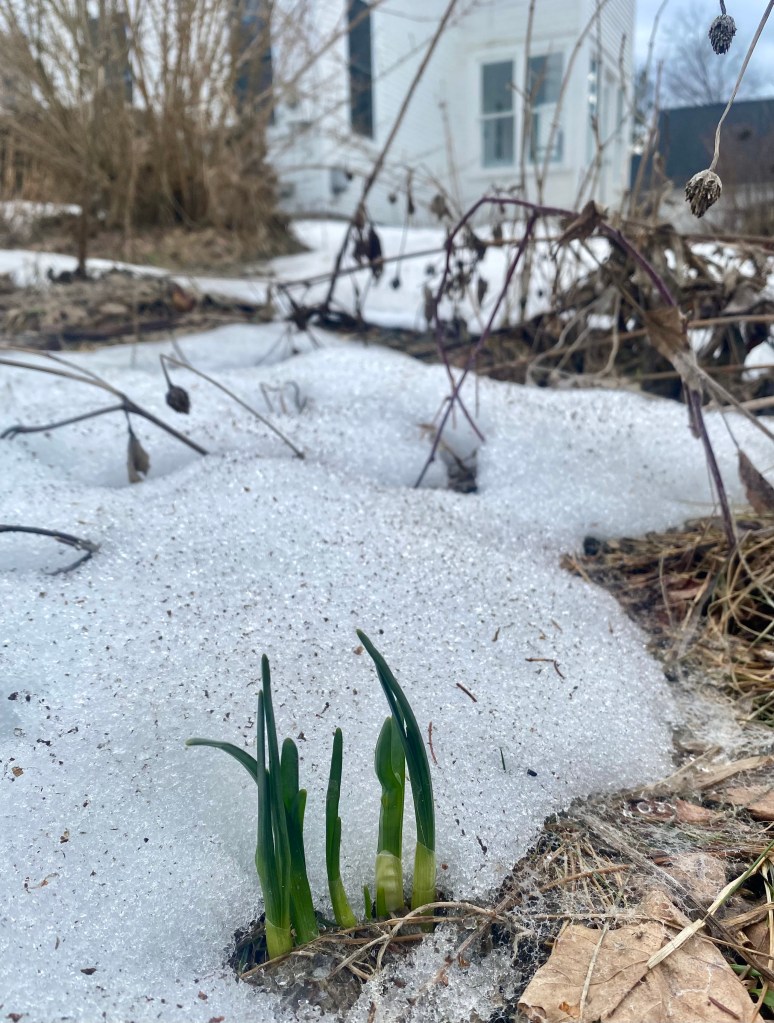
Day by day here, determined to remain free from the hospital, to finish to the final drop this course of so-called treatment, glean back what I can salvage. Four months ago, I didn’t think I would live to see this season’s Chionodoxa blue flowers. This afternoon, my daughter and I remarked that the walnut tree I planted seven years ago as a mere twig has plump buds on its lengthy branches. Buds, blossoms, leaves. Beyond words.

“Why do you want to shut out of your life any uneasiness, any misery, any depression, since after all you don’t know what work these conditions are doing inside you? Why do you want to persecute yourself with the question of where all this is coming from and where it is going? Since you know, after all, that you are in the midst of transitions and you wished for nothing so much as to change. If there is anything unhealthy in your reactions, just bear in mind that sickness is the means by which an organism frees itself from what is alien; so one must simply help it to be sick, to have its whole sickness and to break out with it, since that is the way it gets better.” ~ Rilke

Sticks and Girl

My daughter picks at dirt on the cuff on her jeans, troubled by this, which interests me. She’s a remarkably easy and even-tempered girl, and I sometimes wonder at her own and distinctive understanding of the world’s order.

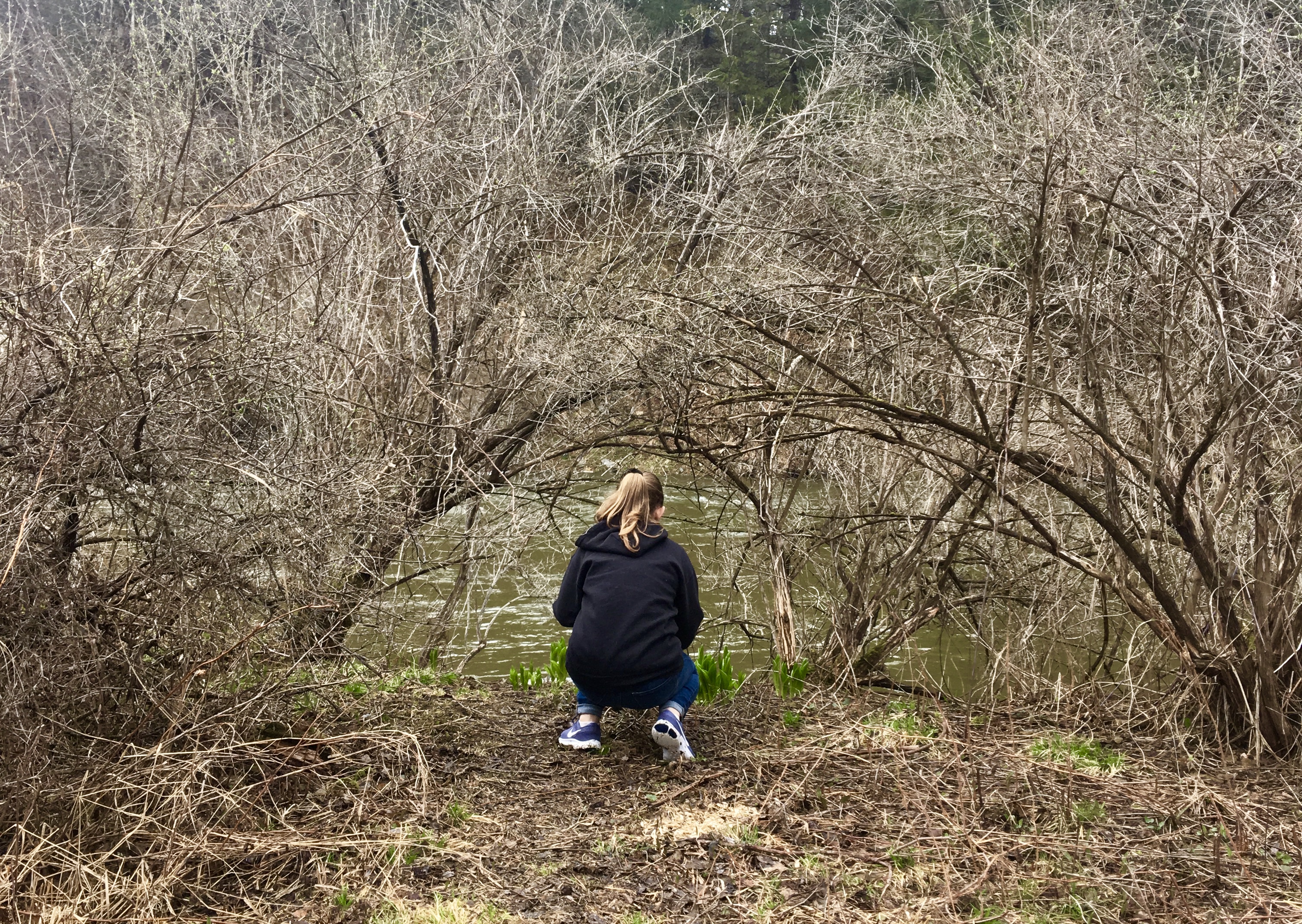
In my bare root order, I have a handful of what seem to be sticks with filigreed root balls. Walking behind our garden in the damp April evening, she asks me if I’ll still live here when these sticks become trees.

I’m planting for the property, I answer. That answer suffices for her. She stands with me, as we envision stick widening into trunk, twig fattening into branch.

IMG_1022.jpg

Crisis of Faith

Exiting the interstate at midnight last night in rainy St. Johnsbury, it’s just me in my little silver car, the strange combination of lonely hearts’ radio and tinny country music, and that profound country Vermont darkness. That stretch of interstate rims the outer edge of utter nowhere.

Year ago, returning from a trip to my sister and her husband and their hospital-bound infant, my brother and I had trouble finding his snow-covered truck in the New Hampshire airport parking lot. Maybe it was midnight already, maybe not, but we certainly passed it, driving north on the interstate, where we stopped at a gas station and bought (and drank) terrible coffee. We were so tired we laughed until we were too tired to laugh, and then too tired to talk. Finally, at his house, his wife sat on the stairs and offered us take-out Indian food. I lay on the kitchen floor. Possibly, I even slept there, in a pile of boots and cat food bowls.

The next day, my friend and her 4-year-old drove over the White Mountains in a snowstorm to bring me home to my family — and my four-year-old. At the top of the Crawford pass, I got out of the pickup and brushed snow from the windshield and stood for a moment in all that white, not sure entirely where the unplowed road lay.

But I got back in. Her son waited patiently in his carseat between us. She kept driving. What else could we do? We couldn’t stay there. And, that, perhaps, is all I ever needed to learn about faith.

Miraculously, the snow lessened as we neared the Connecticut River, heading home.

IMG_5254

Bearing Up

I’m nearly sure to lose our household bet of what date the garden will be freed of snow — our variation of “ice out” on the lakes. I’ve picked Monday, April 15, both tax day and the anniversary of Lincoln’s death.

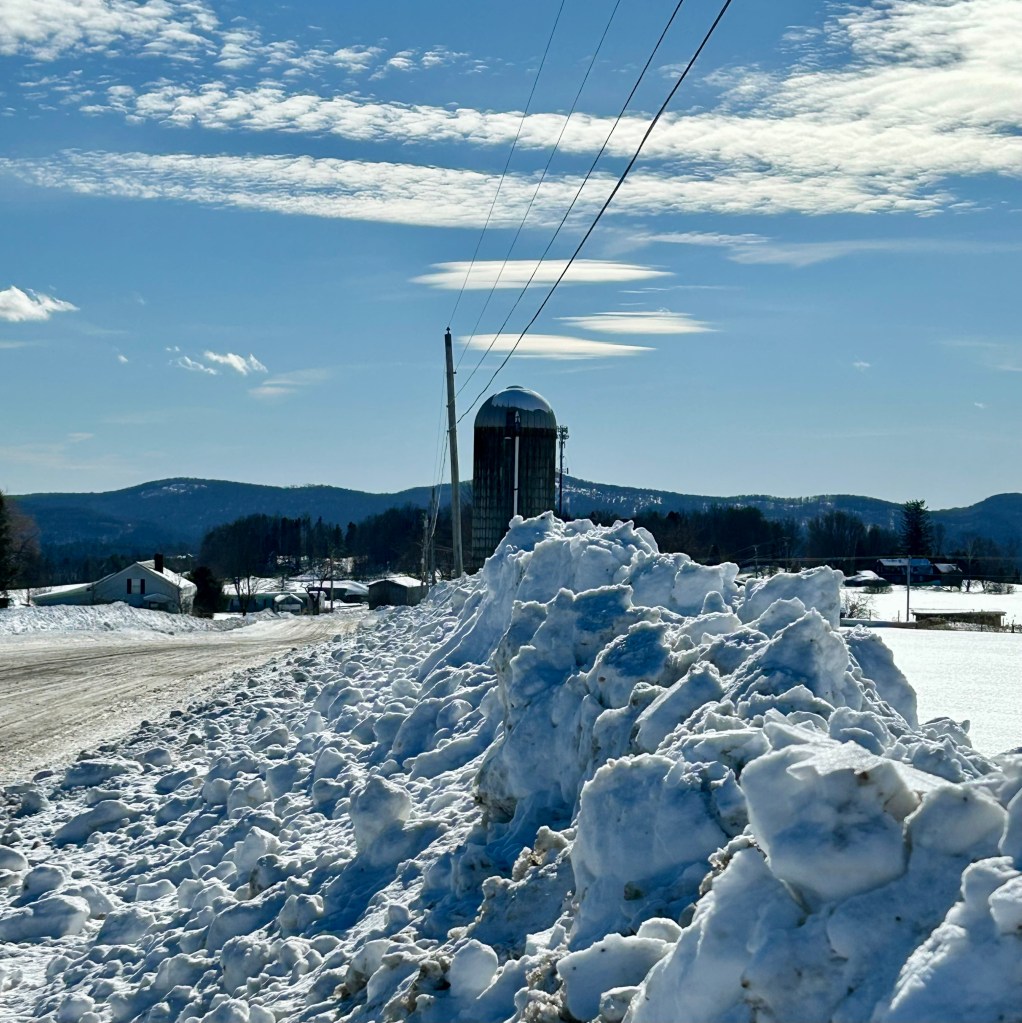
April’s the season of running water in Vermont, the carrying off of snow to Lake Champlain. Nature’s licked us — once again proving the futility of competition, industrial revolution notwithstanding.

On our evening walk up a nearby dirt road, snowmelt reveals a winter’s worth of Bud light cans. We see three deer, maple trees stitching together the sky and the great hayfields brown and drying in the spring breezes. Spring, going about its business.

I’m going out to clean the pasture spring;
I’ll only stop to rake the leaves away
(And wait to watch the water clear, I may):
I sha’n’t be gone long.—You come too.
IMG_5137.jpg

14 Years Ago… On a Hot Day…

Nearly 14 years ago, my friend and I drove to Burlington to shop for a baby carseat. I was pregnant; she was pregnant. In the backseat, our two  6-year-olds chattered and ate snacks. Somewhere in the midst of our errands in Burlington, we discovered it was Ben & Jerry’s Free Cone Day.

What’s 14 years in the scope of human history? A nearly nothing. But for us, two baby girls, one death, five jobs, one book, a rabbit, two cats, one divorce, and a whole lot of living later — 14 might as well be a trip around the moon and back.

No free cones on this trip. We returned with four boxes of Narcan, oodles of info, and even more talk….

Why love what you will lose?
There is nothing else to love.

— Louise Glück

IMG_5096.jpg

A Little Faith

I left a conference in Montpelier yesterday with incredibly nice people, held in unheated rooms (boiler was kaput), and with so much lingo I actually sighed at one point. How would this ever make things even marginally better in Vermont classrooms?

A water main had broken in Montpelier. Streets were closed. Police cars flashed lights.  My favorite coffee shop was locked, lights off.

Light snow fell, just the loveliest, lightest snow. In the public library, I worked furiously on a chair in a corner. When school was out, kids began sneaking around the stacks, giggling. Finally, giving the kids some attention, I realized they were in a complicated game, playing hide and seek, trying very hard not to giggle. I listened to them for a while, the kids in their snowy jackets, wearing backpacks, and then I turned back to my work.

“People expect everything very quickly, but God doesn’t work that way.” She lets go of my hand and drops down to the floor, this squat little woman in a blue housedress and ragged terry-cloth slippers, splays her fingers, and pats the carpet.

“My faith,” she says, “is from here….”

— Sue Halpern, Migrations to Solitude: the quest for privacy in a crowded world

img_4552

The back, un-touristy side of Vermont’s capital