Recently, my younger daughter told me the word humble saved Wilbur’s life. Shouldn’t I know the ins and outs of Charlotte’s Web by now? While I’m no kiddie lit devotee, this is one of my most favorite books, ever. But this single word, humble, saving a pig’s life? What a neat way to envision the book. Sure, Wilbur was humble, and, true, Charlotte knew this, but she used what she had at hand, a scrap of paper and an adjective with potential. What a writer!
Someone once advised me to use what’s at hand. That’s keen advice, for living and writing. Take what’s at hand: a sparrow in a current bush on a broken branch, or a hole worn in the elbow of a favorite sweater. What’s the potential? A woman with a hole in her broken heart, revealed as her fingertips fray that unraveling yarn and tear at a callous on her skin.
Humble might have saved Wilbur’s life, but the word was spun into his world by the writer.
By the end of the eleventh century… the previous silver standard, founded on men’s violent and sporadic activities as Vikings, had been replaced by the homespun standard, based on women’s peaceful and steady work as weavers.
–– Nancy Marie Brown, The Far Traveler: Voyages of a Viking Woman
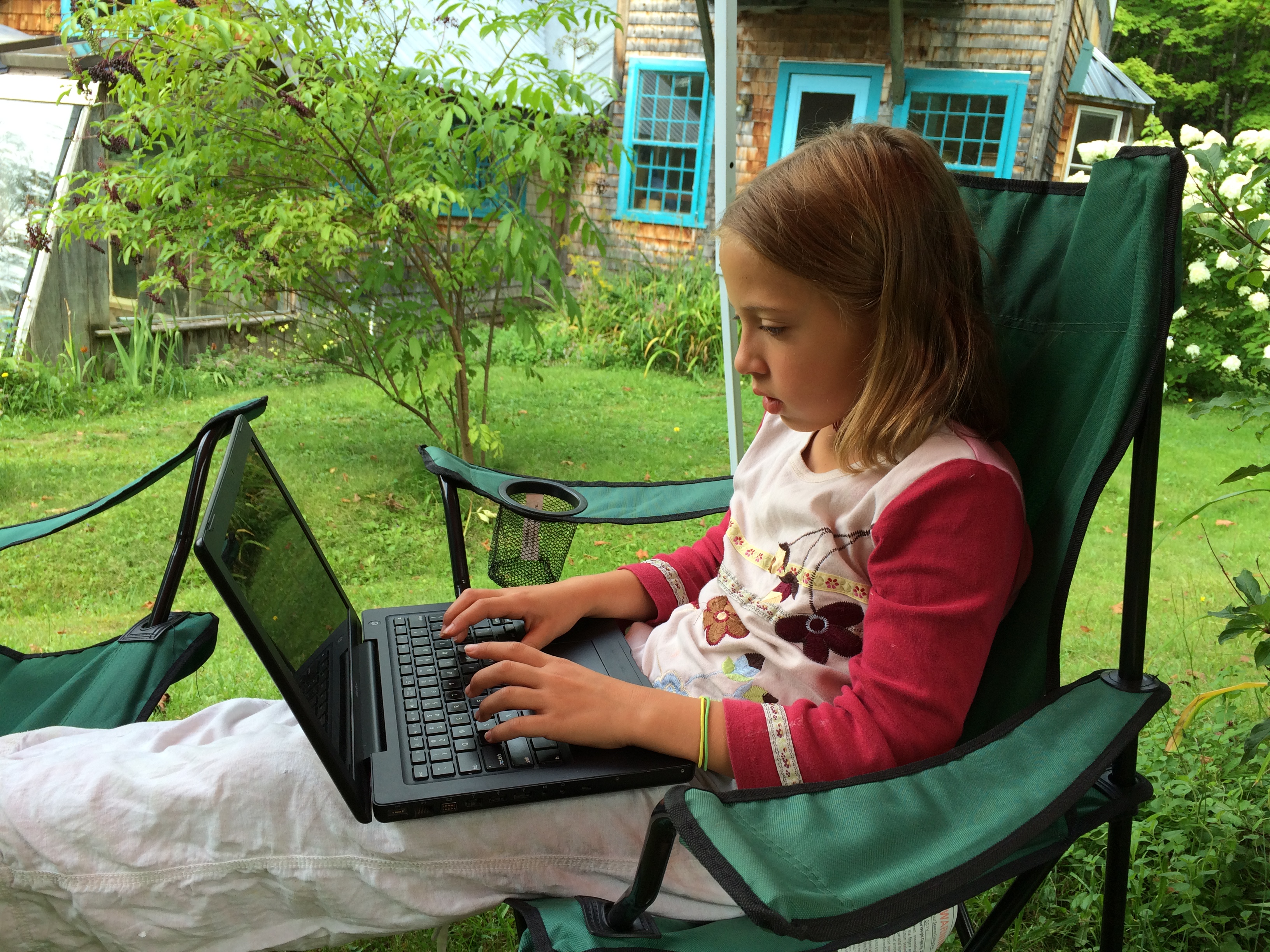
Young Woman at Work/Photo by Molly S.
 Stony Soil Vermont