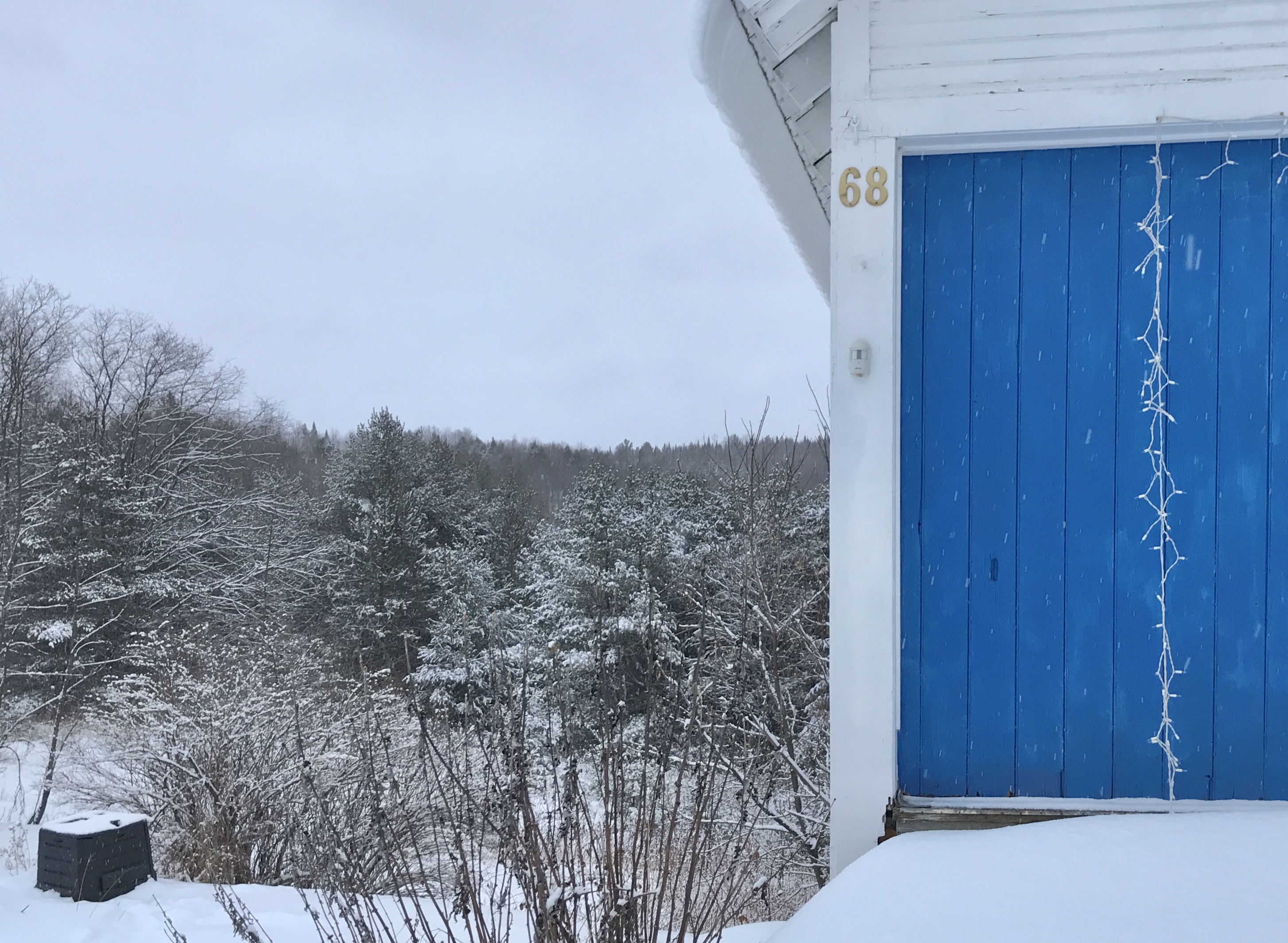
Chaos, Roses, Life.

Friday morning, I’m washing the breakfast dishes when warm liquid runs over my bare toes. For the briefest moment, I think I’m standing in the edge of a warm ocean, and then I realize my kitchen sink drain has broken apart. Gallons of dishwater flow over the floor. 

I’ve cobbled the drain together before, but this time, I’ll actually need to fix it.

My daughter picks up a worried cat and assures him that, indeed, the drain will be fixed.

Midday, when I’ve finished work at my desk, I drive to the hardware store with a section of PVC. I’ve forgotten a mask; those cloths are at home, drying on the clothesline. I sigh, irritated. I have a six other things I want to do, besides drive around. 

But the thing is, I see a huge sign outside the store: masks are no longer required for the fully vaccinated. For the first time in however long, I walk into a store without a mask.

This has been a week of chaos. We all have these days or weeks, or maybe even decades. Who doesn’t? We’re humans, who live in a material world that’s constantly shifting (even if only incrementally) from well-put-together to chaos. The flip side, I suppose, is that sometimes we manage to arrange chaos back to order.

As in my kitchen sink: after dinner, I wash the dishes, and no flood alarms the cats.

By evening, I haven’t bought to tickets from Vermont to New Mexico to visit my parents, as I’m unable to surmount the chaos of the airline world. I haven’t eradicated my fears about my 16-year-old, driving around, heading into the adult world in what’s practically a heartbeat. The woodchucks are still doggedly determined to rise up around my gardening realm.

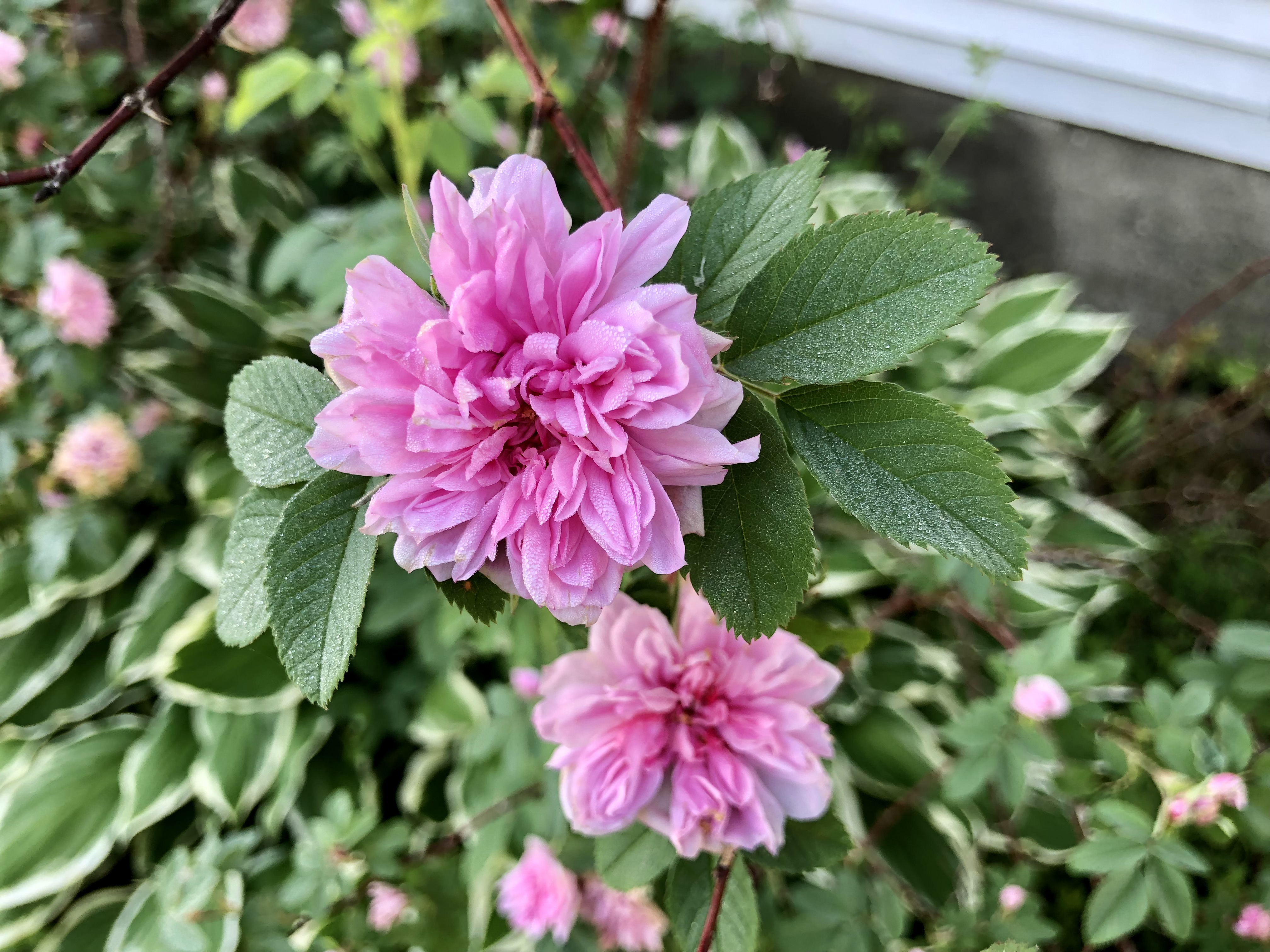
From the tangle of rosebushes someone planted long ago, I clip a single blossom. A thorn pricks my thumb, and a thin line of blood wells up. I touch the blossom to my blood and wipe my thumb clean.
Twilight Walk

On these warm spring evenings, my daughters and I often walk through the town forest and circle around back to town along Bridgeman Hill Road. The woods are the solace of living in town, sprinkled now with spring beauties and red trilliums and gold trout lilies.

At the high school, we watch a young teen drive a pickup around the parking lot with his father, the truck lurching into gear as the teen finds that sweet spot between clutch and gas. As the dusk drifts down, watching this kid seems almost wildly hopeful as he turns and loops back again around that long parking lot.

This whole walk I’d been trailing my daughters, listening to the evening birdsong in the treetops, for some reason remembering the man who coached basketball for many years at the high school. He’d dug a basement for my former husband and me, many years, when we bought that first eight acres. I’d run into him a few years ago when we were both pumping gas. As the world goes in little towns, we’d each heard small strands of gossip about each other, and we caught up about what we were each doing for work.

Then I turned the key to my car and asked if he would listen to a grinding sound in my car’s engine.

Water pump, he said, and then asked if I needed help fixing it.

I thanked him and said no, I was fine. He went into his day, and I into mine. On my way to work that morning, the water pump failed.

The teen turns on the headlights. Back at my car, my daughter gets in the driver’s seat, ready to drive — not home, but somewhere, anywhere.

I make her wait, though; I don’t get in the car. I stand there for a moment longer, the night sprinkling down, the peepers singing, and that boy making a long slow turn in the parking lot. Around us, the ineffable mystery of the world widens around those two spots of light.

Falling Ice

In the night, ice slides off our back roof and breaks our porch railing. I discover this in the morning while I’m carrying out the stove ashes, cautiously looking for one of the neighborhood skunks.

The broken railing doesn’t even register as an annoyance. While I’m making coffee, I think this over. Just a few years ago, I would have brooded on the broken wood, resentful of the expense of money and time to repair this piece of our house. Now, I think merely, That can be repaired.

There’s a lesson here, I think, on this mundane Thursday morning. Of all the broken things in my life — inevitably, in all our lives — a snapped piece of wood hardly matters. For years, I saw the accumulation of disrepair, from a loose coat peg to a leaking roof, as sure evidence that my family life was unfolding. A year into the pandemic, a broken railing is evidence of warming nights. Repair, and move on.

From Leland Kinsey’s poem “Winter Stay in a Peat Bog”

Stories

My favorite opening line from a Ray Carver short story reads, “I’ve seen some things.” Winter weary, in mid-February: I’ve heard some things.

A colleague shares a nearly-unbelievable story of her marriage breakup, and I think, madness, madness. The story is so unreal, it’s plausible to me. Kierkegaard wrote, “Life can only be understood backwards; but it must be lived forwards.”

Every morning, every evening, the light lingers just a little longer, reminds us that spring is buried deep but not impossibly buried, that forwards is always the thrust of life.  Smartphones and the internet notwithstanding, the human story in many ways repeats its endless variations of the same simple story, over and over. We’re sentient beings on a changing planet. Snow trickles into tulips. Spring light inevitably emerges.

IMG_6235

Stories From the Past and Present

At just a little over zero degrees — the sun shining beautifully — my daughter and I went ice skating at the town’s rink. Set behind the elementary school, in an out-of-the-way field where burdock grow in the summer, the rink is the vision of one woman, coupled with 2″x6″s and a plastic liner and a lot of help.

I slipped off my mittens to pour a cup of hot chocolate. My hands nearly froze.

Small town life is generally cozy. We see each other’s kids grow up. By and large, we look out for each other. But every now and then, the underside, the other, deeper side of small town life appears. That same day, two different people appeared in my life from a long-ago part of my life. One was a woman. She and I exchanged stories. The other was a man who stole from me and my daughters.

My daughter with her red cheeks and I were on our way home. A friend leaned close to me and asked who was the stranger. I whispered to her, and then we left.

Long ago, I crossed out of any Pollyanna view of New England village life and into the realm of Sherwood Anderson and Ray Carver. I’m nearly finished Ensouling Language — a book that unexpectedly arrived in my post office box. I’d never heard of the author, Stephen Harrod Buhner, although the book from its opening lines writes in my familiar world, particularly of Lorca’s duende, of traveling in the wilderness, of baptism with dark waters.

As a woman writer, particularly, I often find myself pushing back against this cultural insistence to “make nice” and pretty things up. We live in an enchanting world, but the world’s waters are often dark, too, populated by saints and by thieves.

My daughter and I took our skates home, hung them up, and ate dinner.

A thousand thanks and more for this book.

Love is nice… but writing is too hard for love alone. Love is crucial for many reasons but it is not enough to get through [writing] the book. And whether you call it hate, or rage, or anger, or irritation, it is all some form of the same thing. You must have this hate, this rage to be a writer for this is one of the hardest professions on the planet and without rage you will never survive it. You will always run out of steam about page 60.

IMG_9189

Photo by Molly S.

Quiet Day

Pea soup with scraps of leftover ham bubbled on our stove all day — a weekday more like a Sunday. Walking through town, I met no one.

At the end of the holiday school break, I head out before dinner to empty the compost pail in the bin. Amazingly, the afternoon is light yet, not dim as the afternoons were not long before the holiday. I stand there for a moment, watching wet snowflakes twirl down, the snow and I heedless of any time.

A radiance rises from the snow-covered town cemetery just behind my garden, bright despite the granite stones.

More so than other years, this holiday my daughters and I seemed to have rounded that bend from the divorce. Maybe it’s nothing more than the distance of time and physical space. Maybe it’s simply that time doesn’t cure, but it does scab over. Oddly this season, I kept thinking of Mary Oliver’s line about her box of darkness, and how that, too, was a gift. Maybe that’s part of this whole holiday season, too: that light does, inevitably, come of darkness, always.

Happy wishes for another decade of living: 2020.

Snow was falling,
so much like stars
filling the dark trees
that one could easily imagine
its reason for being was nothing more
than prettiness.

— Mary Oliver

IMG_7025.jpg