What’s in the News, What’s Not.

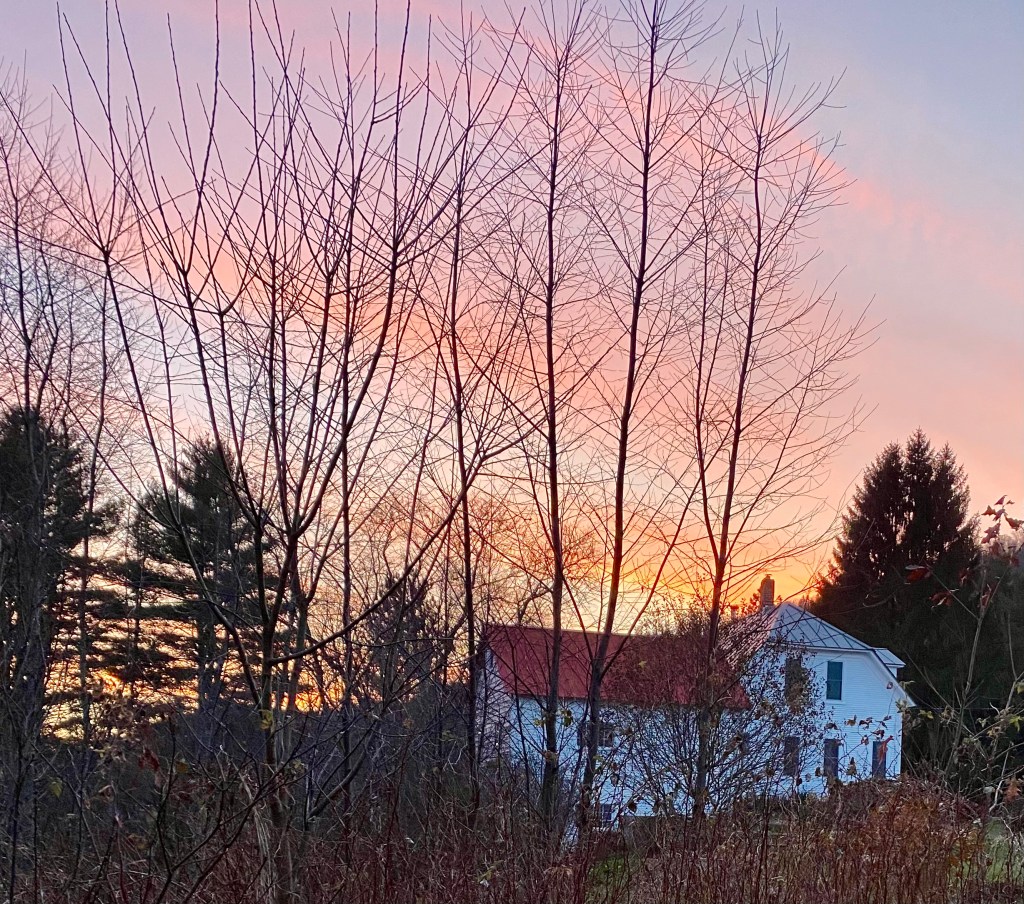
No fooling here — no glossing over — in the past month there’s been two homicide/suicides, neither a domestic, all gunshot wounds, (that’s a total of four souls), right around where I live, then an early morning drug raid a few minutes’ walk from my house. I live in a middle class town, shabby around the edges, a little more spiffed up on some streets. In the evenings, I sometimes walk by the house my daughter’s friend bought. In the dark, he’s often on the roof, hammering or sometimes lying on his back, staring up at the stars. We talk for a bit, and I urge him, be careful.

I write this not out of salaciousness, but more to mark where I am, what’s happening in my state. Malcolm Gladwell wrote that planes never crash because of one reason. Likewise, there’s not one word, one single reason, one sole cause for any of this. These deaths and this raid isn’t my story, but it’s a piece of my story as our lives are all interconnected, the net that holds us together only as reliable as the weakest knots. Yet, as a whole — as a town, a state, a country, as the human story — we keep on.

On this balmy November afternoon, the elementary school kids run on the grass in their t-shirts. Magical insects hover — what my daughters called blue-glass bugs. Later, I stand talking with a friend in the grocery store. I’ve run out of the house, sockless in my Danskos, to replenish the coffee I finished that morning. I met this woman when I was writing Unstitched, so whenever I run into her, we keep talking and talking. What a joy it is to see her glowing and alive, this woman who had a life harder than anyone should ever endure. When I come out, darkness has fallen. The crescent moon hangs over the town, luminous.

Saturday, Snow, River.

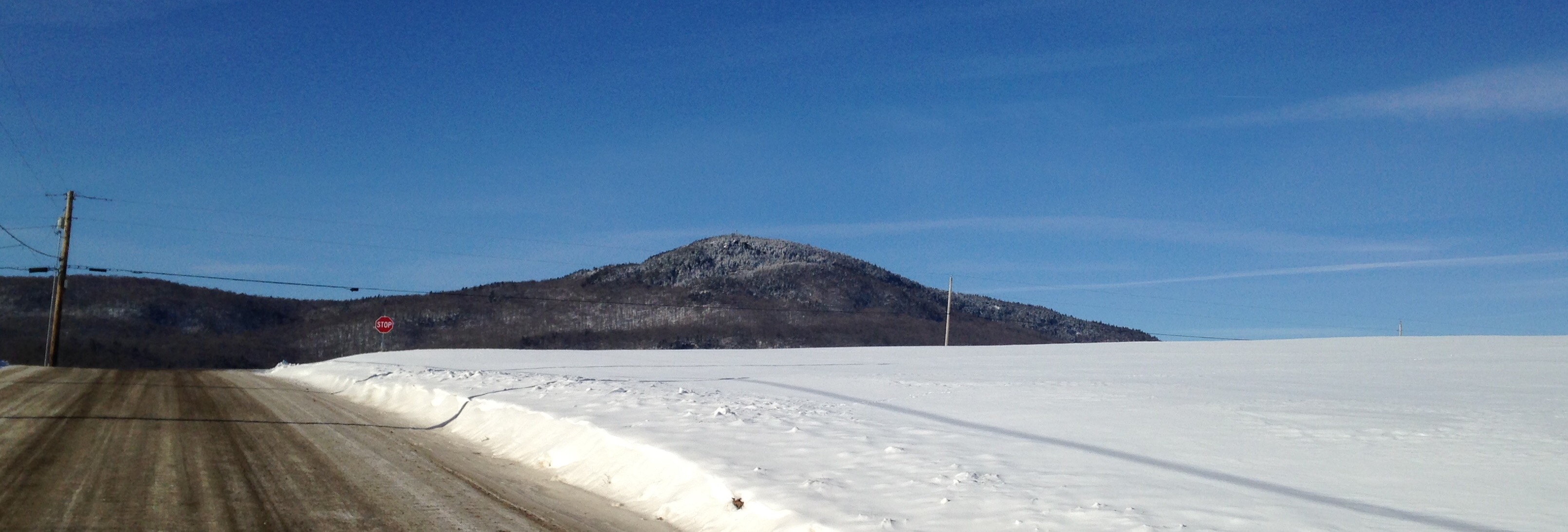
A snow-globe snow flakes down all afternoon. In a meeting, I sit near the window and look over the river. Plenty of listening. Plenty of talking. Ice clings in chunks to the shoreline, but the current runs swiftly. This March day is just at that brink where snow piles on last year’s dead grass, melts on the pavement.

As sometimes happens in this group, the conversation winds around to the world’s wider themes — the pandemic and literacy, disparity of wealth — very big picture things — how the world is broken in places and how these pieces may or may not fit together. There’s plenty of coffee, and sandwiches, too, that someone has brought from somewhere, and I keep drinking the coffee and studying those currents, how the water crashes up over rocks and flows on again, heading that long way to Lake Champlain and north through rivers heading towards the North Atlantic. Someone beside me remarks that he’s not convinced our world can be put back together.

In the very big picture, however, things are always going together, breaking apart, heading together again. I keep watching that dark river and the foamy curls of waves. The coffee is lukewarm and lousy at best. Nonetheless, I keep drinking it and drinking it. We keep talking and listening.

“That’s religion in America, under constant revision.” 

Jeff Sharlet

Vermont Democracy

Outside the town clerk’s office, a little after 8 last night, I’m talking with an another adult while the kids jump around in what feels like balminess at 14 above zero when I suddenly shout out, Look at the moon!

Ringed by a rainbow, the luminous half-moon hangs over the town clerk’s building — a former one-room schoolhouse.

Our friends head home one way, my daughter and I the other.

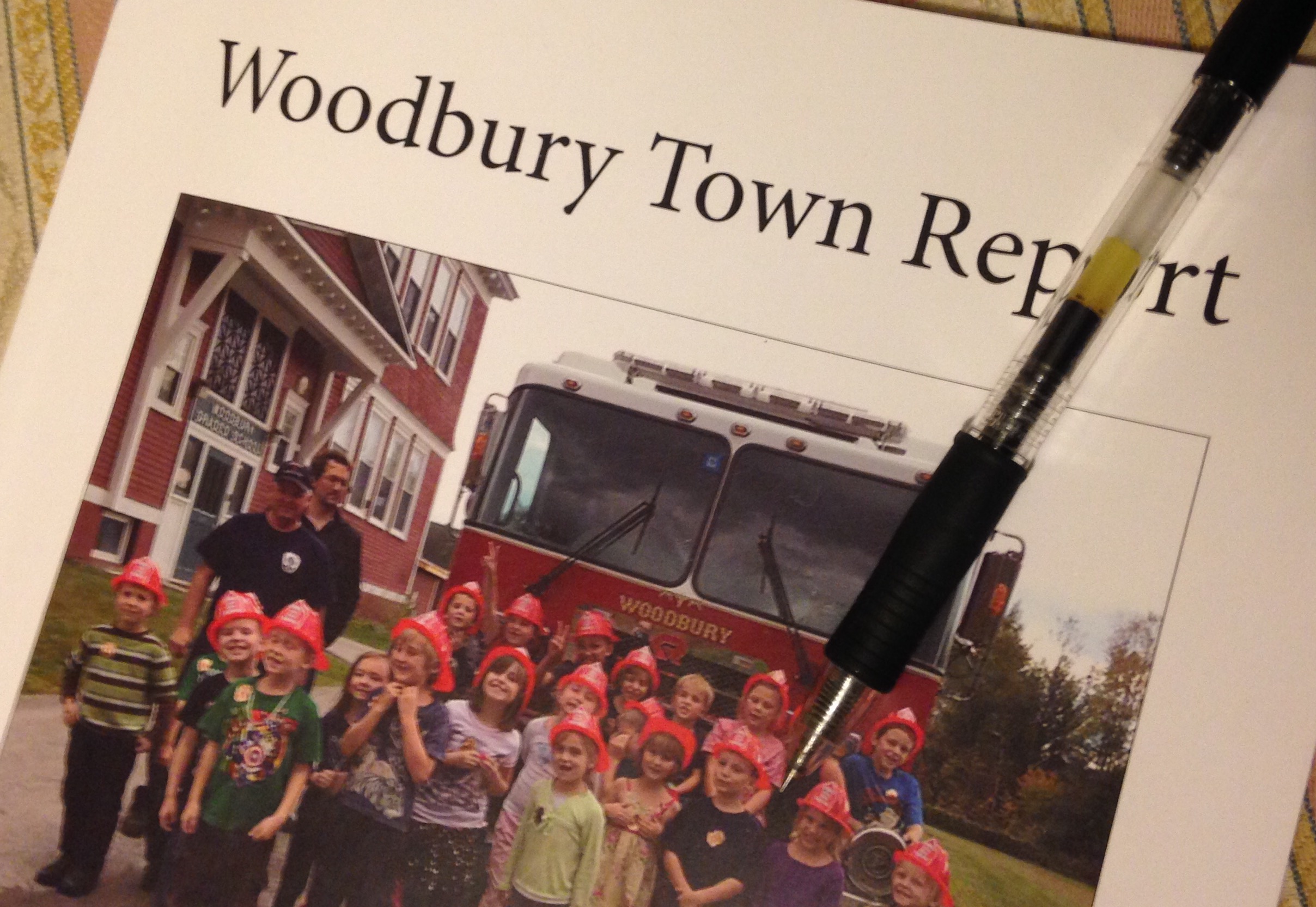
Woodbury, Vermont, with its population less than a 1,000 souls, has a 3-person selectboard. I’m there as the town librarian. Most of the school board is there. Members of the public. The worry is to how to retain the tiny elementary school the state seems intent to close.

The kids are not in the meeting. They’re hanging out at the clerk’s main desk, reading graphic novels, and raiding the clerk’s candy jar. They’re giggling about kid stuff that’s important to kids.

I want the kids know this version of democracy — a group of people wearing fleece and hand-knit sweaters, jammed into a tiny room, our knees bumping, some of us liking each other and some maybe not at all, but all of talking, thinking things through — what’s the wisest course of action? how do we tend the common good?

It’s the first snowfall —
When it melts again we’ll see
Dewdrops on the grass.

— Buson

img_4443

Yes.

When I moved to Vermont, Madeleine Kunin was governor — a particular point of pride for the state. Many years later, as a young mother, I took my small daughter to hear Kunin read at the packed Galaxy Bookshop in Hardwick.

Afterward, standing outside on the sidewalk, a female acquaintance remarked unhappily that Kunin emphasized the need for child care and greater economic opportunities for women. I’ve often wondered what my acquaintance wanted instead — this woman whose own family economics were provided by her husband’s salary. Putting bread on our children’s table is neither masculine nor feminine, but the power to determine some tenor of the shape of our lives.

Last night, I heard Kunin, at age 85, speak again — how surprisingly funny and how gracious. At the end, an audience member asked the expected question: what do you think of the world now? Kunin stepped back from the podium and raised her hands, meeting this question with just a fraction of silence, before she answered. Be engaged. Listen. Converse. Be persistent.

At the end, she amended her answer: Make trouble.

Poor privilege white men. Their stranglehold on power is slowly being loosened.

— Madeleine Kunin

IMG_1043

Photo by Molly S.

Town Meeting Day

Vermont Town Meeting Day, upstairs in the elementary school gymnasium, with the kids running riot downstairs in the darkest reaches of the basement, daring themselves to enter the unlit corner around the boiler.

By discussion and voice vote, the town’s yearly business was transacted today. Here’s what we discussed: fire truck lease payments, the school budget, derelict buildings, whether to pave the upper part of the Cabot Road. At times tedious, riveting, and funny, town meeting has an odd quality of mimicking life and is one of the perks of living in a Vermont town. Where else can you stand up and make an impassioned to plea to keep your small school and have neighbors clap? Where else can you also hear about cement culverts and drainage and which garbage bins in the cemetery need emptying? The people are generally civil, the coffee and homemade lunch unlimited, and you can bring your knitting. 

Let us never forget that government is ourselves and not an alien power over us. The ultimate rulers of our democracy are not a President and senators and congressmen and government officials, but the voters of this country.

– F.D. Roosevelt


FullSizeRender

Trump in VT!?

Last night when I came home (late again) from a school board meeting, my older daughter was devouring coverage of Donald Trump in Burlington. She showed me a clip where he claimed it was ten below outside. “It’s twenty-five and practically t-shirt weather!” she laughed.

Even if it was ten below, one thing I’m fairly sure of is that no Trump protestor who lost his coat via Trump’s nefarious thugs would freeze. It’s not the Vermont way.

Our school board meetings aren’t all that different from a Trump protest. Sure, we have laptops and paper rather than markers and signs, but there’s a lot to be said for a democracy of unpaid citizens, united in a common cause. Vermont’s a small enough state for democracy in all its ragged ruggedness to rear its wild head. Plus, we’re good with the cold.

Let us never forget that government is ourselves and not an alien power over us. The ultimate rulers of our democracy are not a President and senators and congressmen and government officials, but the voters of this country.

–– F. D. Roosevelt

FullSizeRender

Elmore, Vermont