Laughter…. Levity….

Now that we’ve reached the time of year in Vermont when it’s dark pretty much all the time, in a variation of that Platonic cave, the game season has fully opened in our house. We began this years ago, in an attempt to stave off the mad-as-hatters element of northern winters. After a few rounds of Battleship, the kids relented and played an art history trivial pursuit card game. (Up front, I’d like to acknowledge I stacked the deck against myself, and I lost).

About halfway through, my older daughter read a card with the word bar cue. I asked her to repeat the word, and then I asked if the word had an O in the middle and maybe a Q.

Baroque? I asked.

She admitted it might be baroque, and then asked who he was.

I write this only because she laughed so hard, so truly cheerful about whether this might be bar cue or baroque, or maybe even barbecue. Whatever, she laughed, genuinely nonplussed. This is not her way of knowing the world. But what is her innate gift is a profound sense of balance and color and proportion. She spends hours drawing, her creativity flowing from a well whose depths are pure and lovely, hardly yet tested. How humorously this daughter reminds me that my own hard vision of who this baroque fellow may or may have been could use some not so serious jostling at times…

To say that it is impossible to communicate is false; one always can. To refuse to communicate is a failing; we are biologically and socially predisposed to communication…

— Primo Levi, The Drowned and the Saved

IMG_0285

SHIMMERING LIGHTS

Gabriela is a ten-year-old guest blogger.

One afternoon me and my mom went to get lights at the store. So we just got some normal ones. Well, that’s what my mom thought. So we got some snowflake ones, too. So we go home do some stuff. The next day my mom goes to work and and leaves me and my sister a list of chores to do. One of the things we have to do is put up the lights. So we plug them in to make sure they work, and I say, “why doesn’t that one work? wait that one just flickered.” My sister said, “I don’t know, let’s put them up to see them a little better.” So we wind them around the beams and plug them in and look at them. Some of them are blinking I say. My sister says, “yeah that really bugs me. Let’s look at the package” so we look at the package and it says shimmering. My sister says, “Mom probably didn’t read the package.” I say, “I have to agree.” So when my mom came home from work, she said “I kind of like it.” I agreed with her. So we kept the lights because everyone liked them.
IMG_0295

Photo by Gabriela Jean

Stellar Fifth Grader

My teenager often ponders her career path these days. She wants a salary (likely because neither of her parents, being self-employed, ever managed that little detail). She wants to love what she does.

My younger daughter listed the various what-I-want-to-be desires she’s cycled through: a pop star, a race car driver, a jeweler in Boston. Then she thought for a moment and said, I’m happy doing what I’m doing now. I’m a really good fifth grader.

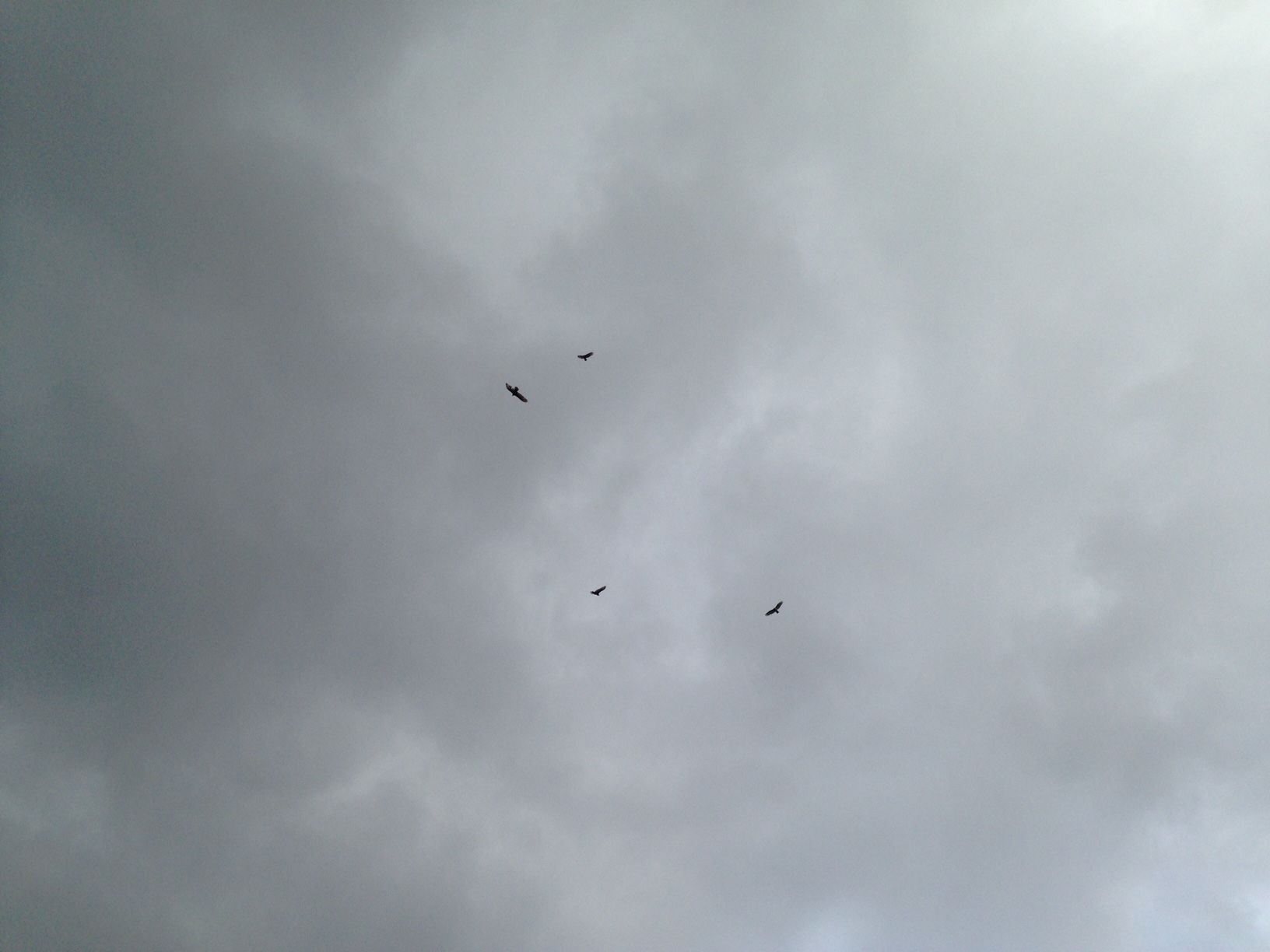
I interrupted their conversation to pull over on the road’s shoulder at the mini-storage, and we stood on a strip of frost-bitten grass staring up at a confluence of turkey vultures, circling around and around in the air currents.

Back in the car, my older daughter in her pragmatic way told her sister, Do fifth grade while you’re there, and then worry about the rest of your life.

If these rescuers (of Jews in WWII) had anything in common… it was self-knowledge. When you know yourself there is little to say. This is worth brooding upon as we consider how we, who know ourselves so poorly and have so much to say about ourselves, will respond to challenges to come.

— Timothy Snyder, Black Earth

IMG_0105

Hardwick, Vermont

Sunflowers, My Daughters, Their Stories

I remember when I first heard the phrase “he’s one of the old ones” regarding a small child, as though some souls could harbor more depth, or a greater history, than others. Surely that’s mistaken, that our judgement is clouded by our own misperceptions.

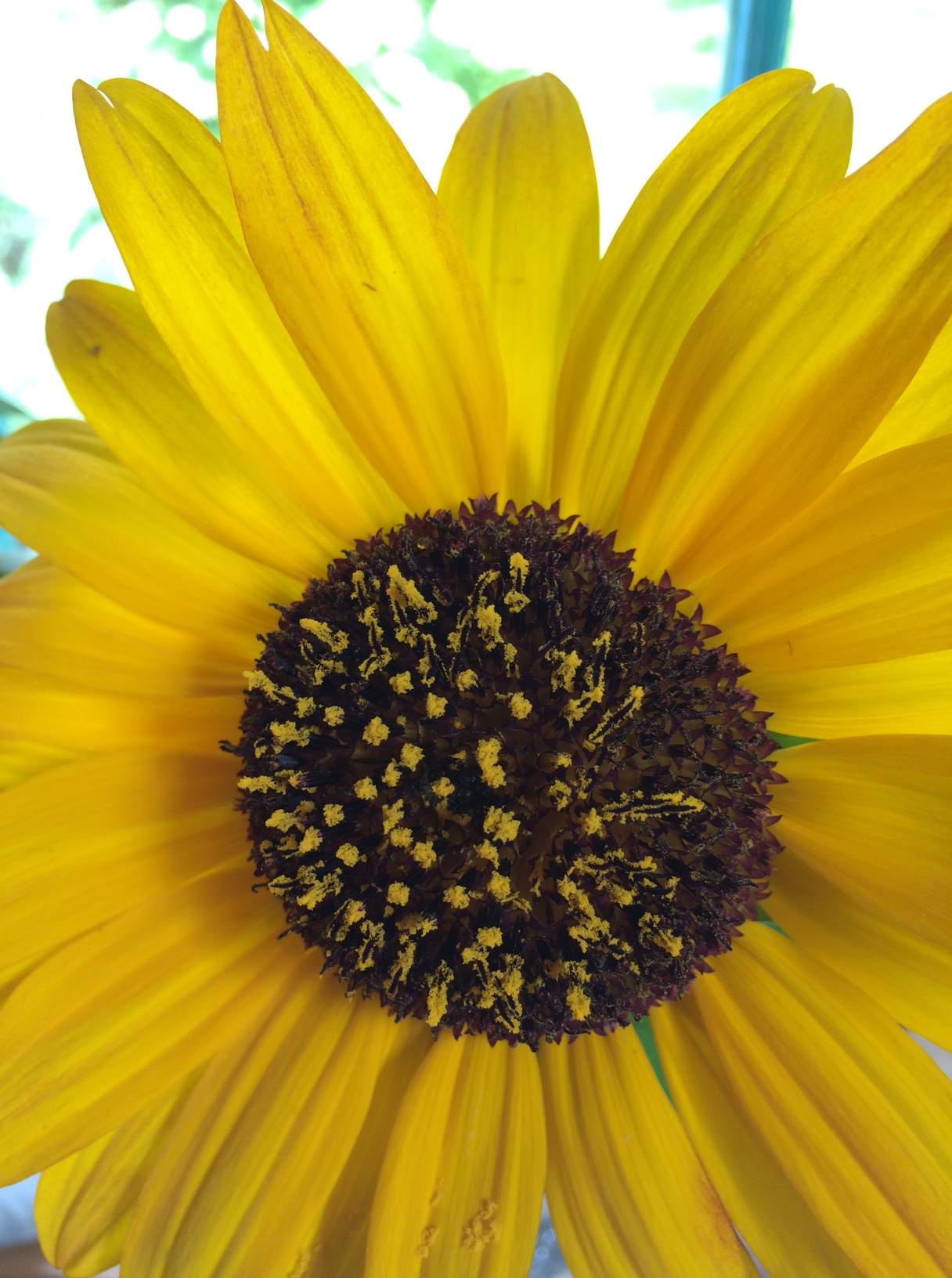
With my own children this evening, I sat at the kitchen table while my older daughter ate a late dinner as she recounted her babysitting saga. She told us about teaching the little children to write their names. Laughing and talking about the various strands of our separate days, I marveled at how my girls look at their own unique worlds, laying all the manifold pieces of their lives – wonderful and mysterious and outrightly sad, too – in ways and patterns I hadn’t considered, not at all cliched but fresh and newly alive, as they create their own female stories.

The Sunflowers
by Mary Oliver

Come with me
into the field of sunflowers….

each of them, though it stands
in a crowd of many,
like a separate universe,
is lonely, the long work
of turning their lives
into a celebration
is not easy. Come

and let us talk with those modest faces,
the simple garments of leaves,
the coarse roots in the earth
so uprightly burning.

IMG_2678

Photo by Molly S.

Early Fall Mornings, Before High School

Early mornings, it’s dark now, the rain hammering on the lid of the LP gas tank outside the bedroom window. My older daughter slumps at the kitchen table and complains about the dark, the cold elbowing in, summer now fully escorted out the door.

As gently as I can, I tell her, It’s nothing personal.

I took that nothing personal line from her, the very line I’m turning back as mirror on her. After one angry tirade at me, she said very genuinely, It’s nothing personal, mom. I’m just telling you. Don’t be upset.

And so, with a real feeling of lightness, I said to her, That’s just the way the world is.

And our day went well.

To have to carry your own corn far–
who likes it?
To follow the black bear through the thicket–
who likes it?
To hunt without profit, to return weary without anything–
who likes it?
You have to carry your own corn far.
You have to follow the black bear.
You have to hunt to no profit…

“Song of Speaks-Fluently,” in Tony Hoagland, Twenty Poems That Could Save America

IMG_0027

Lady Moon

Small town post office chatter today centered around last night’s eclipse and the remarkably balmy weather. In the quiet night, I had woken my younger daughter from a sound sleep and taken her upstairs to the balcony in my room, where, half asleep yet, she rubbed her eyes and tipped her face up to the heavens. Years from now, I wonder if her memory of this night and the shadow over the rusty moon will be woven in with those strings of her broken dreaming. In the dark that smelled of cut grass and leaves beginning to rot, we stood under the eternally deep sky, the moon so clear her light spilled over our faces. I held my daughter’s warm hand in mine.

…Yet, nothing in nature changes, from that day to this,
(the moon) is still the mother of us all.
I can see the drifting offshore lights,
black posts where the pelicans brood.

And the light that used to shine
at night in my father’s study
now shines as late in mine.

–– Louis Simpson

_MG_2624

This incredibly fantastic photo was taken by Diane Grenkow of Mackville, Vermont, a 19th century mill village.

The Silence Means Something, Too

A few days ago, I inserted Lucille Clifton’s “The Lost Baby Poem.” In graduate school, a professor passed around copies of this poem at the beginning of one workshop. We all sat there, silently, and then a friend of mine began to cry, tears streaming down her face, soundlessly.

My professor cleared his throat and said sadly, Nothing said about this poem is enough said.

My house of females has a lot of talking, but sometimes I remind my daughters that silence can be just as mighty, the absence of words as powerful – for good or ill – as speaking or writing. That sometimes enough is really enough.

To underestimate the appeal of art is to underestimate not only poetry but also human nature. Our hunger for myth, story, and design is very deep…. If we are not in love with poems, the problem may be that we are not teaching the right poems. Yet ignorance of and wariness about art gets passed on virally, from teacher to student. After a few generations of such exile, poetry will come to be viewed as a stuffy neighborhood of large houses with locked doors, where no one wants to spend any time.

–– Tony Hoagland

FullSizeRender

Woodbury, Vermont