Seeking the Something New.

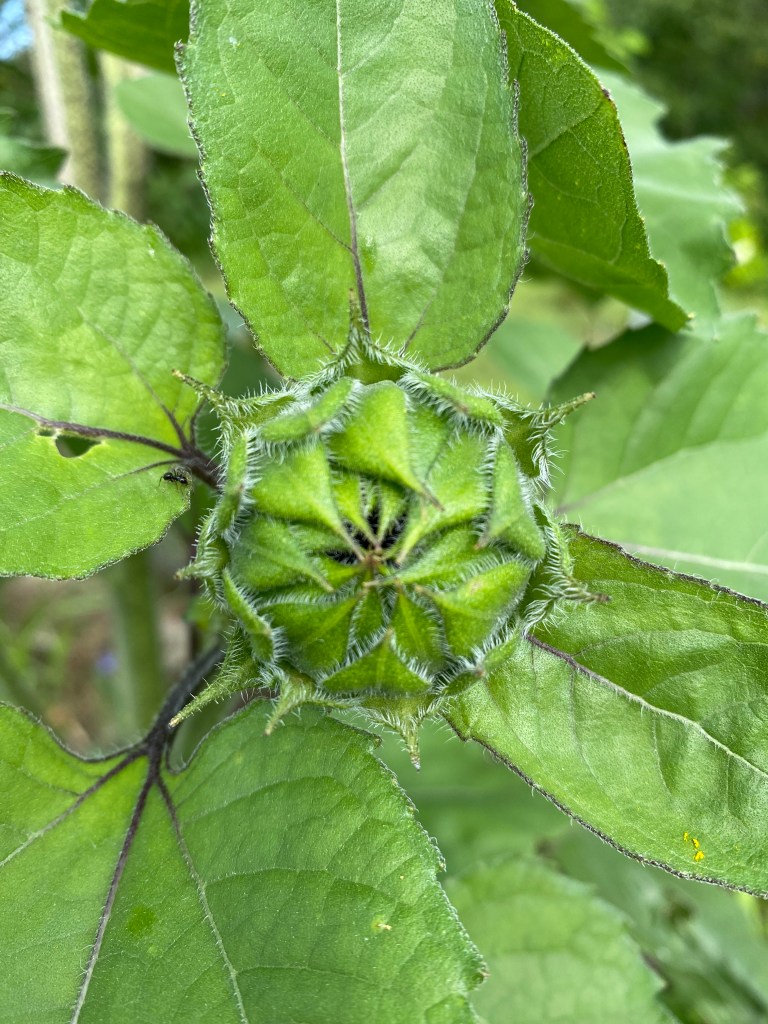
A friend arrives with a box of seedlings, including tithonia, AKA Mexican sunflowers, a tall, brilliantly orange, hopeful plant. A few mornings later, more friends appear with seedlings and a pitchfork. Lucky, lucky me.

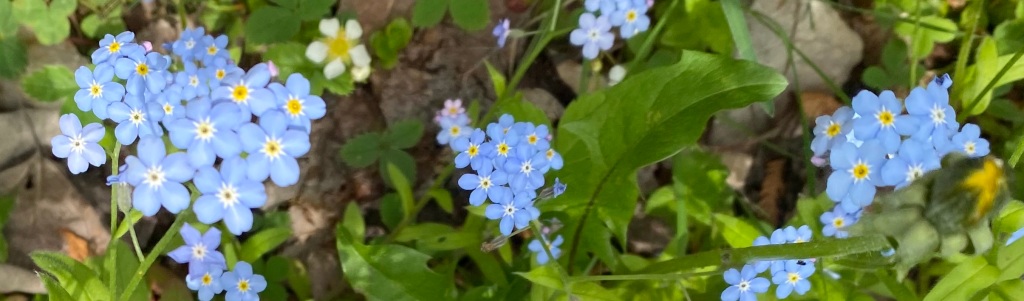
I am a gardener who allows the Johnny-jump-ups and forget-me-nots to spread where they like, pulling back a few and nestling in basil, scallions, poppies. Why unroot a flower? Eventually, I weed diligently, ruthlessly. The garden mirrors my approach to novel writing. My friends leave with their boxes filled with forget-me-nots as a gentle rain falls on the tender seedlings.

Every day is a further day from surgery and chemo, the days and night accumulating like pages read in a book. I put away the narcotics, the Tylenol, the ibuprofen. Mornings, I drink a single cup of café au lait. I sauté mushrooms, bake a quiche. I ask for a ride to drop off my car at the garage, worrying about walking up my hill, but picking it up is mostly downhill. I walk.

For a little bit yet, I’m a person of interest in this small town. The postmistress asks me, no, really, how are you? For months, the PO staff has stuffed my box with cards and books and sheaves of medical bills from two hospitals. I’m there to pick up a book of essays (a gift which quickens my heartbeat). I tell her I’m in remission, that word still awkward as it emerges from my throat. I want to add that remission does not mean cured, does not mean that this strange and uninvited cancer beast has left my body – and certainly not my soul. I don’t know this woman at all well, but she looks steadily at me, as if she understands what I’m thinking.

Here’s the thing: how afraid I was of cancer eight months ago; honestly, I’m still fearful of it. Yet, cancer rooted in me, infested my family, my friends, a great wide circle of people around me, including my readers here. This is not unique. In its myriad forms, cancer spreads widely. I lived for years with the putrifying secrets of addiction. I refuse to repeat that with cancer.

Last November, I thought I wouldn’t live to see spring. I did. If jaywalking doesn’t do me in, cancer certainly might. Or I might die as a scrawny old woman from a stroke or heart attack. In this rainy late spring/early summer, I’m grateful for the possibly random dice throw, for plants and gardeners, for an infinitude of people. Among these are the people who’ve shared their stories with me, of decades-ago cancer diagnoses, almost always offered sotte voce, as if not to tempt the fates. Their stories ring clearly: I endured, I transformed, I thrived. This possibility can be mine (maybe yours, too).

From Suleika Jaoad’s The Book of Alchemy:

But there are also moments when our internal compasses tell us it’s time to change course–to leave something behind and build something new…. Rebuilding is not easy…. But to me, rebuilding unfolds alongside becoming. It is crucial, if we want to keep evolving and flourishing, to get rid of things that are no longer serving us and make space for something new to grow.

Small Soup Bowls. Quarantine. Icicles.

My brother returns home, and I immediately slip up, ignore a morphine dose, am unable to eat. A lesson in my own laziness or foolishness learned: keep to the path.

For days, he sets small bowls of heated soup on my kitchen table – chicken and dumplings, our childhood favorite of pea soup, lentils with savory carrots. One night, my daughter bakes biscuits, opens a gift jar of raspberry jam (July!), and we revel at a nameless soup from a woman we’ve never met. Potatoes with the skins left on, chicken and maybe tarragon, celery, onion. There is nothing we could imagine adding.

Like these soup bowls, my physical life has narrowed to these warm rooms with cats, hours unfurling patiently as I stop counting days and treatments. Each day unfolds. On Saturday, I sit on the couch and return a friend’s call. Sunday, I return another call, listening to my laughter, their laughter, these friends who have been down their own stony journeys.

Quarantined, I’m connected to the world in ways I didn’t anticipate – emails and calls, books, prayers– a rosy swaddling aura. An acquaintance phones me with her cancer story and describes her year so straightforwardly she buoys me with courage. A friend offers to plow our driveway all winter; perpetually on the skimp, I’ve shoveled for years, but it’s a great gift to my people who are anyways busily feeding my wood stove and picking up morphine and antibiotics and driving me to bloodwork and The Good Doctor — not to mention, working their own jobs and walking their dogs and generally going about their lives.

So much kindness has come my way. The night the sainted nurse sat with me for an hour and a half while the final chemo infusion ebbed, ebbed, into my chest beside my heart, she counseled me to cultivate patience, that I will be able to give again, that the world spins and shifts.

In a wind gust, the robins’ nest falls from our porch beam. Icicles hang from the roof, radiant swords of sunlight.

…. A few lines from Louise Dickinson Rich, courtesy of my sister-in-law:

“All ordinary people like us, everywhere, are trying to find the same things. It makes no difference whether they are New Englanders or Texans or Malayans or Finns. They all want to be left alone to conduct their own private search for a personal peace, a reasonable security, a little love, a chance to attain happiness through achievement.”

We are every experience we’ve ever had…

A sunny morning, I’m at a place I’ve never been before, a sizable post-and-beam gallery at the end of a road. A fenced vegetable and flower garden shines orange and gold. A marble bust smiles mysteriously.

I love this about Vermont: these unexpected pockets of mighty talent. The woman’s house is built around the gallery — a beauty of wood and stone and glass. We talk for a while, and we discover that her artist parents were from the same midwest area as my father — Detroit — and then she opens the gallery and takes me in. Let me say here: I’ve been around the block a few times, seen my share of museums and art; I’m also feeling this sunny morning like the dirt road my Subaru tires pounded into, driving uphill.

The gallery ceiling soars in a peak. The wooden space holds the owner’s and her deceased parents’ work. She allows me walk through the metal sculptures wordlessly. Then I stand beside an oil portrait of a woman wearing a black and red dress that reminds me of a velvet blouse I bought for a friend, many years ago, when she graduated from college. The woman in the painting rests her chin on her fist.

The owner looks at me. “It’s always the females who are drawn to her.”

“She’s me.” Woman of a thousand and one sleepless nights, bread baker, hearth tender, the woman who swam under the luscious full harvest moon. Woman hard as these back roads, fragile as coreopsis.

We walk upstairs and finish the tour. Before I leave, though, I stand again before this portrait, a long soulful moment. “Gracious,” I say, “gracious.”

“…we are everything, every experience we’ve ever had, and in some of us, a lot of it translates and makes patterns, poems. But, my God, we don’t even began to touch upon it. There’s an enormous amount, but we can touch such a little.” – Ruth Stone

Messy democracy.

So this whole democracy thing? Since we’re in an election year and all?

I work in a small town for a Selectboard. Monday morning, I pull into work (late, again), and a Selectboard member is eating a blueberry muffin as fast as he can in the parking lot, a muffin I’m certain the town clerk made. I get out and make some comment roughly along the lines of it’s a good thing I don’t do drugs anymore because Your Town….

He counters with, Let’s get serious. What’s your cucumber and zucchini situation? I’m coming back at noon with four full boxes.

Monday morning, it’s revealed that people have stolen signs. People have written letters to the Selectboard and newspapers and the Sheriff about the theft. People arrive in the office with dogs and laptops and questions, eat muffins and disappear. I walk outside with the phone. It’s possible that the thief arrives. It’s also possible there’s some laughter. Or maybe I’m making all this up.

Democracy is messy, chaotic, often brutal. People arrive who look as though they’ve slept in ditches for their entire adult lives and complain about the flood. People complain about their neighbors. People run for election. In all of this, I take off my shoes and walk around barefoot. I do all the things I’m supposed to do and I keep wondering if I’m doing any of these right. I give an old woman a bottle of water. I am always trying to leave, disappearing into the asters around the lake, into the rooms upstairs where it’s just me and the wasps and the open windows. I am always trying to sew the pieces of my life together. Sometimes I crumple paper and throw it at my coworkers, which is not really at all charming or funny.

As a writer, I learned from reading. I learned so much from sugaring — the majesty of the world, the inarguableness of cause and consequence. I learned joy and love as a parent. I learned grief as a broken wife. Working for a small town, I’ve learned the peculiar American craziness of little towns and politics, of gossip. How to spy cowardice and when to lean against the courageous.

There’s not one damn thing perfect about any of this. Here I am as usual, half in, my head and heart filled with my garden gone rampart with rudbeckia and coneflowers. But we’re all that way…. July is the season of joy, January the season of despondence and loneliness. In the heart of midwinter, I leap from the snowy shore to the frozen lake. Far out, I sometimes lie down in the middle of the day, the ice a bed between my bones and the sludgy lightless waters. Overhead, the infinity of the heavens.

But today it’s Good Old July. In the afternoon, I walk with a woman along the forest trails she’s cut. She’s eased white quartz from the soil. The rocks gleam, as if freshly scrubbed with rain.

Some news…

… in a year unlike any other year in my life (youngest off to college with the first year’s bill figured out, grating loneliness and joyous solitude, so much writing and small publications, a radiant writing residency, new friendships, and my mother’s death — say this again, my mother’s death) Regal House Publishing, an Indie press in Raleigh, picked up my second novel, Call It Madness, pub date summer 2026.

Chapter One

            I didn’t know what made my parents drive from Bellingham to faraway Vermont the summer I turned four. I had never met my great-grandfather Opa until that afternoon my mother rolled our station wagon down Breadseed Lane. Earlier that day, a stranger had helped my parents change a flat tire on the New York turnpike, but the spare was a misfit. For hours, our car had been thumping while I stared through the backseat windows at the trees and fields passing by, pondering the puzzle of that strange word breadseed. Could seeds blossom into loaves? We hadn’t stopped for lunch, and I was hungry. Was this Opa character cooking us dinner? Turned out, he was not.

Heart Runneth Over…

The Gihon River runs through the Vermont Studio Center campus, turning as a river does just out my studio window. All day long, the mallards do their duck thing, swimming up and downstream. In the wild honeysuckle’s tiny bits of green leaves, cardinals perch.

In this week I’ve spent at the Vermont Studio Center, I’ve leaned with a ferocity and joy into writing. A week to write, unfettered by the everydayness of commerce and cooking, of checking the car oil, adhering to those endless lists of can the house insurance get a lower premium, and am I ever going to paint the back side of my house? A thousand things comprise a life — some stupidly trivial like repairing a kitchen cabinet knob, some sacredly profound, like mourning a parent’s passing. 

Does writing, does sculpture, printmaking, poetry, make the world a finer place? The jury’s out perhaps, but art certainly unites the finer parts of who we are as humans, and makes this life more bearable.

Thank you again for reading.