Half Moon

I step around the barn in the twilight and see the half moon shimmering above the barn’s back corner, like a surprise.

I empty the ash bucket and set it on the cement step, waiting for my daughters and our twilight walk, as the dusk shakes down.

A year ago, my oldest was in New Mexico, visiting my parents and hanging out with my brother and his girlfriend. After a wild wind and rain storm, the power went out, and my youngest and I ate take-out by candlelight. Always, at this time of year, as the days perceptibly shorter, I realize how profoundly cold and dark has wound into my life, spread physically and metaphorically into the life I’ve shaped as a woman and a mother.

What’s different this year is the collective darkness of disease as the rates of Covid increase around our little world, of the unraveling political world relentlessly marching along.

And yet — there’s that ancient silent moon.

My daughters are laughing as they walk towards me.

What? I ask.

They look at each other again, and my oldest says, Nothing, Mom, and then they laugh again.

“I am more convinced than ever that we are shards of others.”

— Jenn Shapland, My Autobiography of Carson McCullers
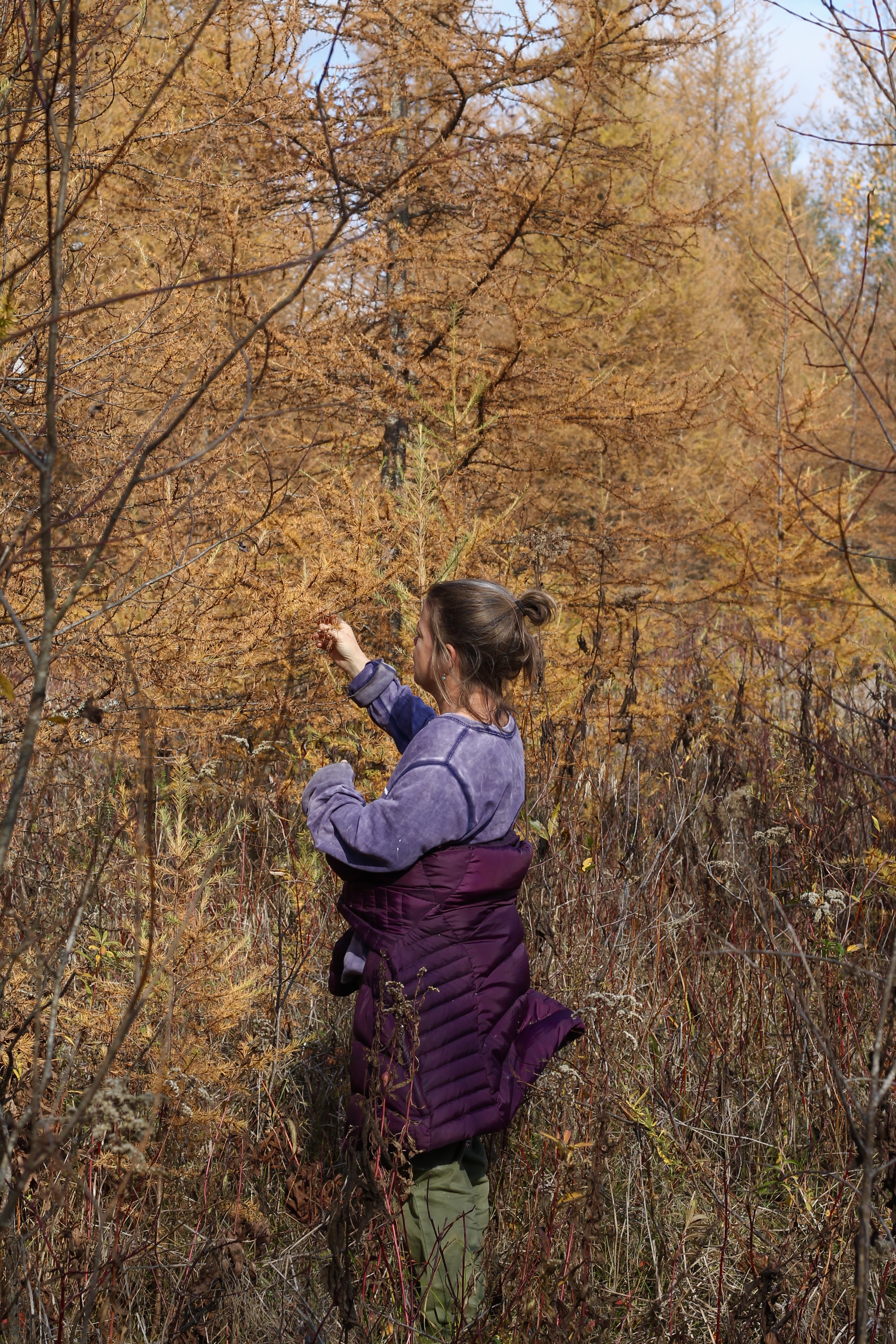
Photo by Molly S.

Homework

How could I have forgotten that the light in October is exquisite?

Unlike hazy summer, Vermont autumn is clear. The woods are emptying of leaves. The wind sweeps through the towns and over the hills.

From my garden, I cut a cabbage, boil the leaves slightly, and roll up meat and rice, filling the pan with sauerkraut — a Romanian recipe from my grandmother, who died before I began cooking.

Bit by bit, our hours migrate from the garden and back porch in the house. We no longer eat dinners in the sunlight. When I return from work, I see crumbs on the kitchen table, remnants of my teen and her friends.

I imagine these girls figuring out their online chemistry class and plotting their future. When I ask what’s happening in those hours, I hear, We’re fine.

In the evening, the teen spreads out her graph paper and notebook. I knit on the floor with the cat beside the wood stove while her sister reads the day’s news aloud.

The teen shoves her graph paper to me and asks if her approach to problem-solving is correct.

I look at the paper and suggest, Call your uncle. That’s out of my skill set.

The cat flips over and purrs.

The teen bites the end of her pencil and goes back to work.

“The world begins at a kitchen table. No matter what, we must eat to live.”

Joy Harjo

Hot Java

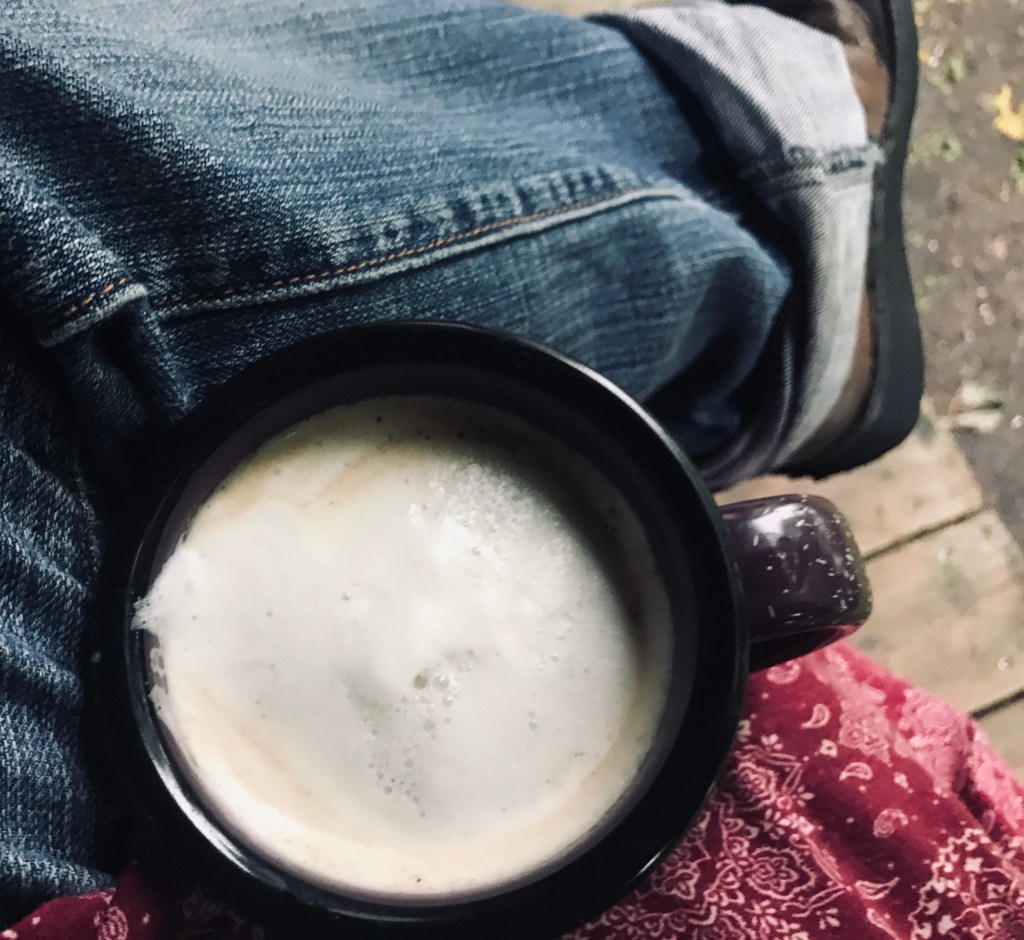
When my girls were little, I occasionally sang a few lines from an old song — just around the corner there’s a rainbow in the sky, so let’s all have another cup of coffee.

For the record, neither daughter is a fan of this song, or of my singing, at all.

These days, there’s no around the corner, or, if there is, we’re just not looking there. Election? Halloween? That once eternal late-fall slide towards the holidays and whatever those might bring….

In a strange kind of way, this hovers on relief — no worries this year about whether we’ll have any family at our holiday table — the divorced mother’s woe — as the answer is clear: we won’t.

In the void, we move from cup of coffee to a spontaneous late afternoon walk with a friend. And the fall foliage is still mighty fine.

The Obvious

In a terrible mood on Friday afternoon, I’m driving too fast through town when I round a corner and see a rainbow spread over Hardwick.

The arc shines so brilliantly and near I imagine I can reach out and touch its particularly vibrant green. I pull into the Village Market, and a woman I know gets out of her car, wearing a mask, too. For a moment we stand there, marveling, then walk towards the market door.

Another woman — vaguely familiar to me, in the way of small town Vermont — is loading her car with groceries. My companion and I urge her to go see the rainbow; it’s just a few steps around the building.

She shakes her head, saying she can’t see it.

But we insist and walk those few steps with her. The rainbow by then has morphed into a double arc. Then, as we watch, the rainbow fades.

Over her mask, the woman looks at us and says, “Well, that’s a nice thing after all today. Something good.”

October 5. So much more winter to come. Watch for rainbows.

It was the Rainbow gave thee birth,

And left thee all her lovely hues;

“The Kingfisher” by William Henry Davies

Crushed Leaves

A colleague tells me her brother contracted Covid in January. A professional chef, he opened an oven and wondered what was wrong with the meatloaf — it had no smell. He survived after an intense illness.

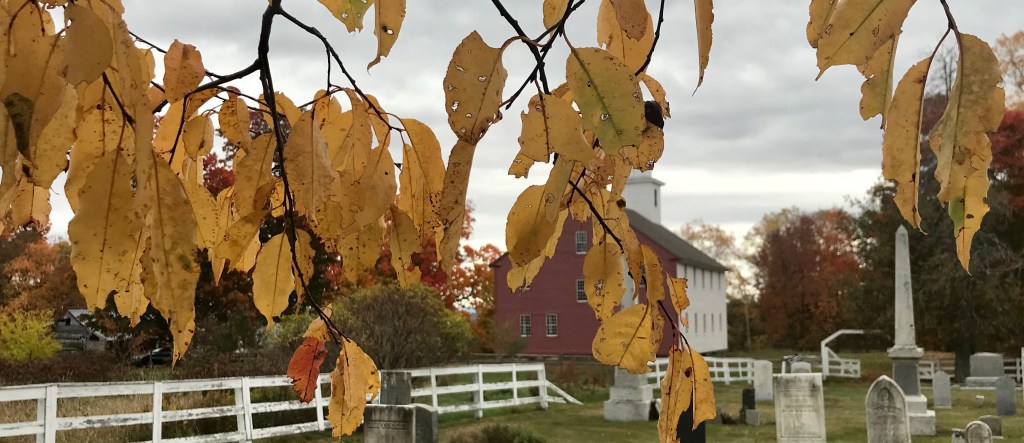
So this week, I know I’m alive as Vermont autumn is all scent. The after school kids ask me to step into their fort. I lean over the wall built of leaf and vine and breathe in, and I’m eight-years-old again, with my siblings and the neighbor kids, building houses of fallen leaves.

Wood smoke and skunk and the soil I’ve turned over in the garden.

As the daylight shrinks noticeably and we turn more and more indoors, inevitably I look for sources of strength — geese flying low over our back porch, their wings rushing, the rising cream-colored moon, our neighbors’ laughing boys — and my youngest daughter on the cusp of young adulthood, sharing bits of her world in snippets, puzzling over this great big world.

Oh, good gigantic smile o’ the brown old earth,

      This autumn morning!

— Robert Browning

Calais, Vermont

Small Victories

Like so many places, I’ve limited occupancy in my one room library, and, for the most part, that’s worked. This afternoon, just before the after school program started for the first time in months, the adults stood around in our usual pow-wow and returned to the same theme: we’ll make do.

We did.

One boy leaned in the open door, begging to come in. I told him to wait, wait, that I’d come for him when the space emptied out a little.

When it did, I stepped out on the grass and spied him across the playground. When I gestured for him and called his name, he came running.

Messed-up world notwithstanding, what utter joy to see this sprinting boy.

In honor of RBG, her words:

Earlier, I spoke of great changes I have seen in women’s occupations. Yet one must acknowledge the still bleak part of the picture. Most people in poverty in the United States and the world over are women and children, women’s earnings here and abroad trail the earnings of men with comparable education and experience, our workplaces do not adequately accommodate the demands of childbearing and child rearing, and we have yet to devise effective ways to ward off sexual harassment at work and domestic violence in our homes. I am optimistic, however, that movement toward enlistment of the talent of all who compose “We, the people,” will continue.

— Ruth Bader Ginsberg

Photo by Molly S.