Winter: the Whale’s Belly

Our kitchen was forty-two degrees this morning. I leaned over the range and chipped a ridge in ice along the bottom of the window, and thought this is getting a little ridiculous. And I forgotten cream for the coffee. Often, in these morning – no Biblical scholar, not even a church-goer – I think of Jonah in the belly of his whale.

But then, home again from a basketball game, the wind blowing snow in our faces, my older daughter sang out, You can tell the light’s coming back! 

Indeed. Through translucent clouds, the day was yet bright, the moon a glowing gem tucked above the bare branches of maple trees. After a frozen day, the end was such a lovely place, with traces of snow falling, the white all around pure and white, and the light familiar and beckoning as that long-off spring.

...Winter is for women ----
The woman, still at her knitting,
At the cradle of Spanis walnut,
Her body a bulb in the cold and too dumb to think.

Will the hive survive, will the gladiolas
Succeed in banking their fires
To enter another year?
What will they taste of, the Christmas roses?
The bees are flying. They taste the spring.

– Sylvia Plath, "Wintering"

IMG_9644

Photo by Molly S./North Bennington, Vermont
Fire & Ice

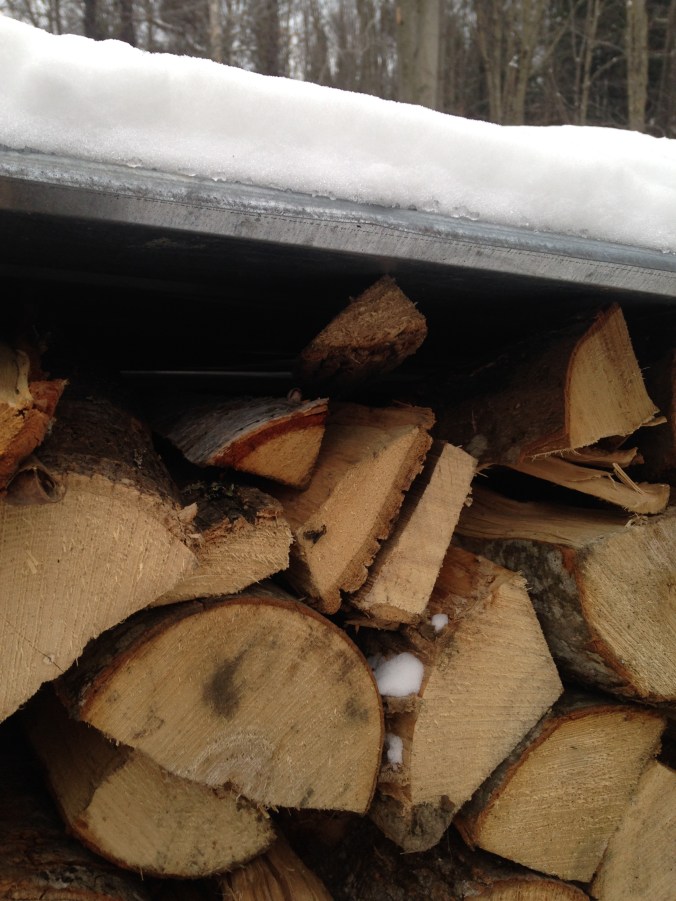
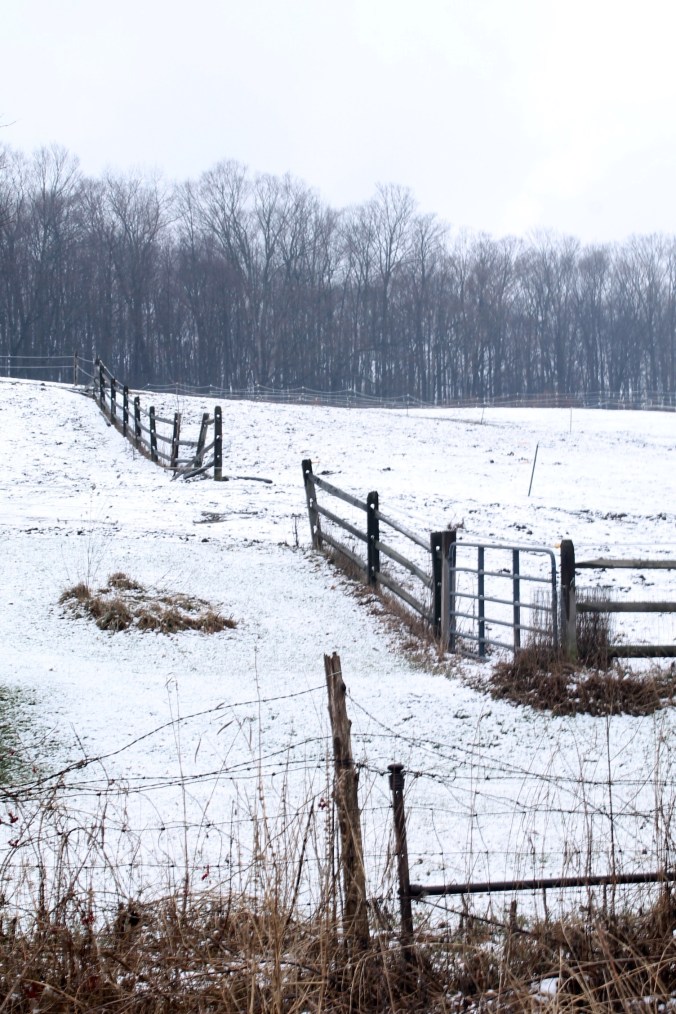
A few inches of loose snow cover the snow all around our house. Beneath this lies rock-hard ice. Maybe someday I’ll live again in a world of shoveled sidewalks, but for now, our footing changes all through the winter and even well into the spring, when mud begins its 10,000 variations. I carried out this morning’s ashes and made a trail to that essential woodpile. A gray dusting of ashes covered a bucket of gleaming coals that hissed, burning down through the ice and snow.

Fire and ice. Why I love Vermont could fill many pages, or simply these three words. The contents of my hearth lie cast out on the frozen ground, dying, while jays cull my compost pile. The girls replenish our woodbox, readying for another night.


Life is, in its very essence and character, a terrible mystery—this whole business of living by killing and eating. But it is a childish attitude to say no to life with all its pain, to say that this is something that should not have been.

– Joseph Campbell

IMG_0558

January, Vermont, 2016


Imagination

Yesterday at dusk, while my daughter in her snowsuit gathered icicles and arranged them in an order known only to her, I walked in the cold along our road, the fresh snow recently plowed and sprinkled with brown dirt. How is it the sky can hold that lightest and palest of blues, complementing the frosty earth? Across the valley, Mt. Mansfield’s ridge gleamed with snow and sunlight.

Walking along the road, I imagined myself a wild creature, a woman around a wolf’s rangy body, my pelt matted with balls of ice, my lungs pulling greedily at the air, eyes keen and cunning, utterly watchful, without fear. Imagination is a word used too mundanely, like a child’s activity we toy with and too often cast away. I used the force of imagination today, descending into the bowels of bureaucracy, through windowless rooms with numbered forms and lengthy procedures and strangers weeping; I carried with me the hoary scent of wet fur, the wildness of snow and open skies, the singleminded hunger for survival.

Around our kitchen door, my child’s icicles glowed in the light through the windows tonight, widening the circle of the world she created.

Reading fiction not only develops our imagination and creativity, it gives us the skills to be alone. It gives us the ability to feel empathy for people we’ve never met, living lives we couldn’t possibly experience for ourselves, because the book puts us inside the character’s skin.

– Ann Patchett

FullSizeRender

Barre, Vermont

Cold – And Warm Communities

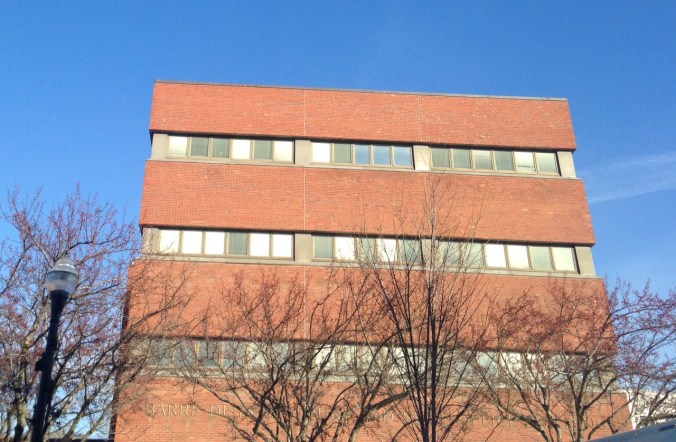
January’s always cold in Vermont. Sure, we may have a few thaws here and there, but generally, January is dependably cold, in any number of permutations. Today, conserving my less-than-ample woodpile, I opted to work at the public library. While the library’s not heated with wood, the building appeared to be metering its fuel, too; the radiators were stone cold all the hours I was there. The other library-goers and I all wore hats, many of us coats, and by mid-afternoon I had pulled the sleeves of my sweater over my palms.

My fellow Vermonters are hearty and generally good-natured. When I packed up my work, an older woman at the table beside me – wearing a well-knit hat – laughed when I raised my eyebrows. Sunny and clear; 3 degrees above zero; a bit crisp.

Most religions turn their adherents toward the things we are afraid to face: mortality, death, illness, loss, uncertainty, suffering – to the ways that life is always something of a disaster. Thus religion can be regarded as disaster preparedness – equipment not only to survive but to do so with equanimity and respond with calmness and altruism to the disaster of everyday life. Many religious practices also emphasize the importance of recognizing the connectedness of all things and the deep ties we all have to communities…..

– Rebecca Solnit, A Paradise Built in Hell

IMG_0514