Fresh Lilacs, Late October.

My daughter sends me a photo of an apple blossom she discovered in Montpelier, Vermont, just this weekend, end of October. For anyone not a Vermonter, this is odd news that evokes suspicion and distrust. In New Englanders, distrust is a carefully curated character trait. Good lord, don’t be naïve. Naïve people don’t put on snow tires, and those people drive off roads.

Later that same afternoon, we walk through a pasture and then cut through a town cemetery. There, the lilac bushes are sticks, as you’d expect at this time of year. But at the very top of one bush, lavender flowers bloom. My daughter stands on her tiptoes and gently pulls down a branch. My house is surrounded on three sides by lilacs; late May is a joy. But this year, there were hardly any blossoms. Now: lilacs in late October in northern Vermont? Any sane person would look at this askance.

Nonetheless, I stand on tiptoes, too, and breathe in that ineffable scent of fresh lilacs.

Here’s a few lines from poet Amy Lowell:

Even the iris bends

When a butterfly lights upon it.
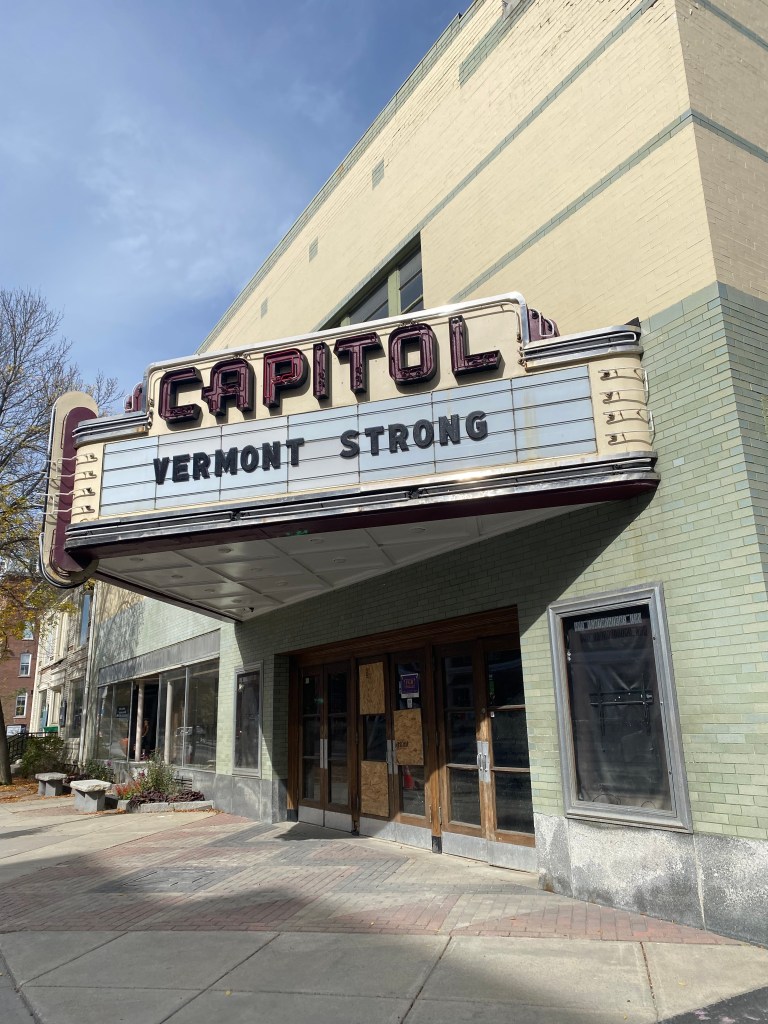
Post-Flood, Montpelier.

As if overnight, the fall foliage has vanished, swept into gray. The secret of Vermont’s autumn is the long lingering twilights, languorous and violet. Branch by branch, the trees are emerging from their summer splendor. Before frost yet, my garden rages on, orange tithonia, candy-colored cosmos, the morning glories that intrepidly vine through sunflowers and tomatoes and borage.

This weekend, I walked through Montpelier. So much of Vermont’s capital remains boarded up after the July flood, in need of money or labor. Other folks have shuttered up and headed elsewhere. It’s impossible to pretend that the world around us isn’t swirling in chaos. Nonetheless, when I come in with my fingers and toes cold, I build a fire. The neighbors string up gold lights. Quickly, quickly, and immensely slowly, the season settles in.

“You must try,
the voice said, to become colder.
I understood at once.
It’s like the bodies of gods: cast in bronze,
braced in stone. Only something heartless
could bear the full weight.” 

— Jane Hirshfield

The Pouring Glory of the World.

Saturday, I’m on the bridge in Winooski taking pictures of my daughters, in a strange, almost dreamy smoke-tinged sunset, the kind that’s become more par for the course than not these days. The river snakes through Winooski, a former mill town beside Burlington. Such effort has gone into this town, converting mills to upscale housing, the downtown bustling with restaurants that spread onto the sidewalks. My brother asks me if the town is on the rise. Wrong question, I think.

We’re at the end of a day of walking and sunlight. My brother owns a brewery, and so, while it’s been many years now since my drinking days ended, we’ve gone in and out of bars and breweries, and I’m reminded that the bars I once loved were such good places, full of the people and their stories, their weariness and joy, these things that have always tugged me.

Oh Vermont, my beloved state, in the gem of October. Walking through the woods with friends, golden light falls through the trees. Roads defined my twenties, mountains and rivers my decades after that. I’m well aware that living in Vermont, living in my hillside house with one foot in the village, the other hidden in a wild ravine, is a kind of undeserved luck. Yet the rivers, jammed with debris of broken buildings and busted vehicles, human junk, are a visible siren call of so much and so many things.

Sunday morning, we drink coffee and eat cornbread on my back porch, and solve, as my brother says, not one whit of the world’s problems. October: redolent of wet soil, broken leaf. Yellow and scarlet, a finale of gray. The month when the leaves will fall, the world open up.

From Jessica Hendry Nelson’s Joy Rides Through the Tunnel of Grief:

Wonder is accepting what we cannot control, which is damn near everything. This, the pouring glory of the world. It goes in all directions.

Post-Flood, More Rain.

Nearly a week into Vermont’s floods, I’m surely not the only one in this town awake at night, listening to rain through my open windows. Lush, lush, our world is. Sunday, I trim the rose bushes that thornily cover a window, then discover moss creeping towards the house. I snip and scrape, then dash inside beneath a sudden downpour.

Sunday, I walk along the Lamoille riverbanks, silty and sandy where the river rose far above its usual path. Red metal lies in twisted sheets, remnants I’m guessing from the motel that tumbled into the river. Twisted towels and clothing, tires, a stepladder are jammed into tree trunks and roots. Cassette tapes of bible stories lie in a puddle, oddly more or less intact. Down the river, smoke churns into the sky where a flooded sawmill has burned debris for days.

There’s an odd kind of quiet hovering around here. What I’ve witnessed is shock and disbelief, a heady kind of euphoria to fix and repair, and now a sodden dullness, the earth as drenched as I’ve ever seen it. My pink poppies have blackened before they’ve bloomed.

We keep on, of course. Our beloved capital city, Montpelier, hoes and bleaches. Word goes around and around about passable and impassable roads, who needs helps, who’s yet marooned by great rifts in the earth.

In the late afternoon, I buy poppyseeds at the co-op and pay off my tab. The staff is out-of-sorts there, too, grousing about a broken cooler and the mud we’re all tracking in. Rain falls, quits, but the day doesn’t cool. I bake a cake and listen to someone on VPR talk about the Buddha. In the evening, that fat woodchuck darts among my gardens. A flock of starlings scatter on the lawn. Robins and rain. The daylilies are brilliant, the flowers poet David Budbill called coarse and beautiful.

As I said, it’s coarse and ordinary and it’s beautiful because
it’s ordinary. A plant gone wild and therefore become
rugged, indestructible, indomitable, in short: tough, resilient,
like anyone or thing has to be in order to survive.

David Budbill

Our World.

Last night, I attended a Development Review Board meeting where only I appeared in person. The other participants all dialed in via their laptops. When we finished, I closed the windows and then walked out, standing for a moment on the steps of the two-story building that had originally been built as the town’s high school. The door in the empty building had been open when I appeared. I closed it behind me.

It’s a strange way to hold a meeting. One small bit of strangeness in a year and a half now of utter weirdness.

Driving home, the air is otherworldly with smoke from fires on the other side of the continent. My daughter and I stand in the garden, and she wonders what the air smells like — it’s not the familiar scent of smoke from our chimney, or the neighbor’s stove. Nor is it pestilent, like a house burning down.

I weed a little while she tells me about her day. Dusk moves in. In the sweet, warm evening, we swim.

Season Change

My daughter and her friend were been hired for the afternoon to harvest pumpkins.

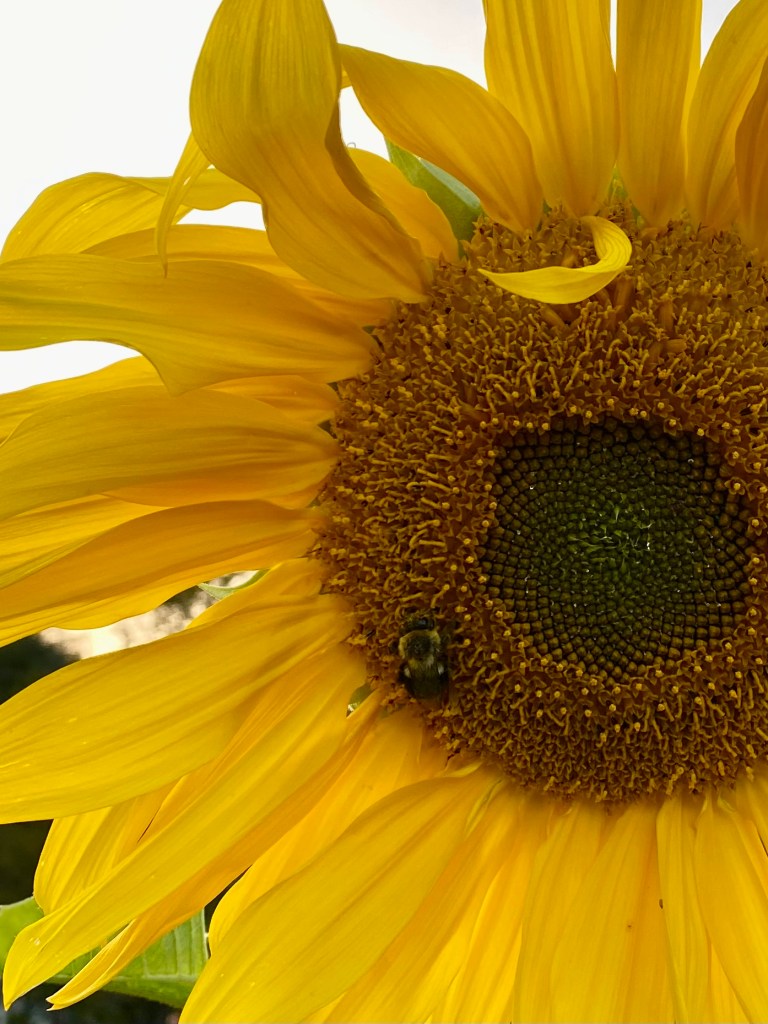
That afternoon, picking up the girls at the farm, I stood talking for awhile with the couple, whom I’ve known since my oldest daughter was a toddler. They showed me the sunflowers they had managed to save from the frost by covering. The flowers, I could see, were not long for living.

Bundled in sweaters and sweatshirts, we stood talking in the late afternoon sunlight. The couple was appreciative of my daughter and her friend — how the girls’ hard work boosted the boys’ output. I laughed, watching the girls walk towards me, out of the field, holding gloves in their hands, talking with each other.

I remembered those long-ago summer and fall days, when I had worn this child on my back while I sold maple syrup and homemade ice cream. Her little fingers reached over my shoulder, looking for snacks.

The couple’s son drove up on a tractor, a father now himself. As I drove back to our warm house, baking lasagne and apple crisp, I kept thinking of how that couple would give my youngest a tiny pumpkin every year at the farmers’ market. She would carry that orange squash in her two hands, like treasure.