Don’t let your cow get the upper hand, er, hoof…?

Ah, February, the month with the strange “U” that children stumble to spell. Two inches of a sugar snow this morning when I carried out the stove’s ashes, the cardinals whistling the day alive, a buttery full moon charming the evening sky. For the past few weeks, my life has overflowed with the challenges of faraway aging parents, with details mundane and immense, and all very very real. There’s that Tolstoy saying about families unhappy in their own way. Carrying in firewood, I remind myself: families endure the unspeakable in their own particular vernacular, swaddled in the way of all human life.

Sugaring season is hustling into Vermont now. The years I spent sugaring with a husband and two young daughters taught me to strip away the unnecessary, to bend into work when bending is required. It’s a habit I’ve carried to writing, and I’ve managed now to write three books against odds that even now seem not in my favor. But it was single parenting that honed my skills to grasp the nourishing in times of hardness, suck hard the marrow of the real. In a conversation with a young homesteader and poet today, she offers me a line of wisdom so pithy and wise I laugh out loud: Don’t let your milk cow get the upper hand on you. Yeah, think that one over.

Here’s a David Goodman interview with Elizabeth Price, mother of the young Palestinian man Hisham Awartani who was shot with two friends in Burlington, Vermont, last November. The family epitomizes courage, knowledge, and depth of heart — highly recommended.
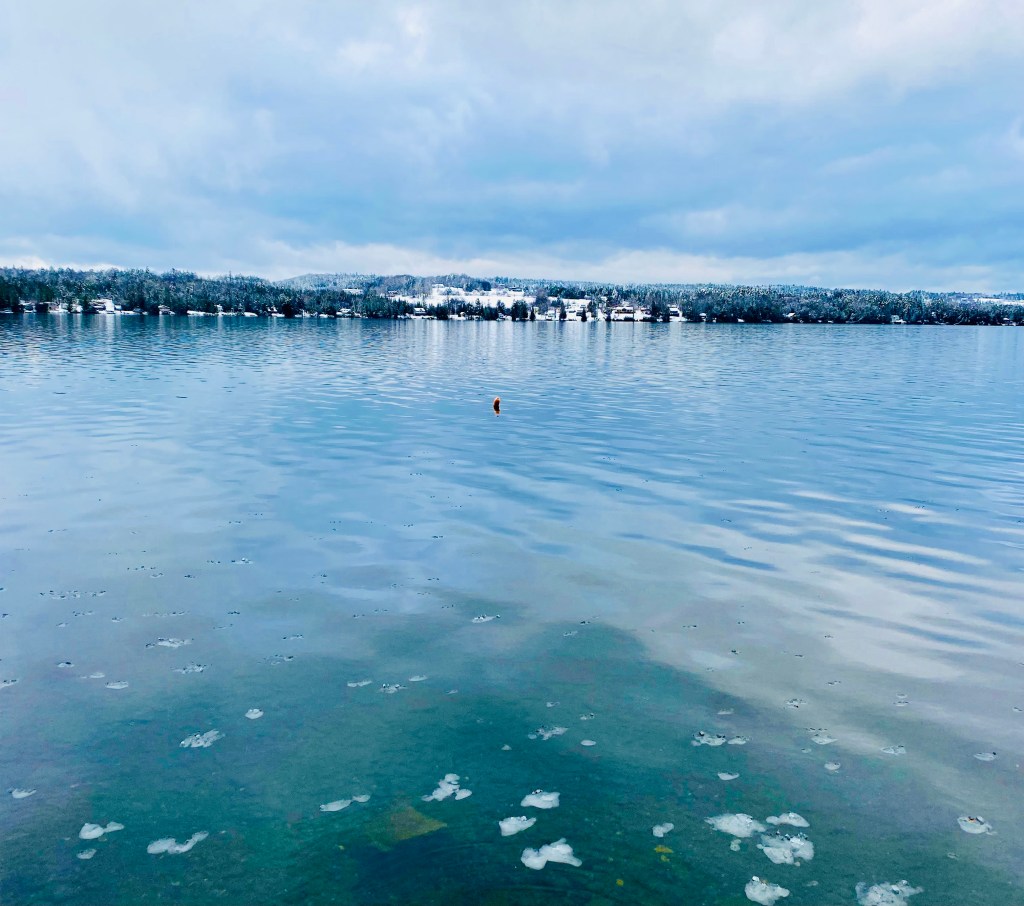
Vermont.

VTDigger‘s reporting about Burlington, Vermont.

Everything Is Made Of Labor 

The inchworm’s trajectory: 

pulse of impulse. The worm 

is tender. It won’t live 

long. Its green glows. 

It found a place to go. 

Arrange us with meaning,

the words plead. Find the thread 

through the dark.

Farnaz Fatemi

Private v. Public

This morning, after driving through a surprisingly thick snowstorm, I found myself in a tiny room in the radio studio of WDEV in Waterbury. Hester Fuller, the host, had kindly read my book and interviewed me for a bit, then Gary Miller (author of the fine collection Museum of the Americas) came in, too, with Joe Citro on the phone line.

We were literally knee-to-knee in a tiny room, talking about the intimacy of writing. Writing is that curious mixture of intense privacy – literally, the stuff of our own experiences – spun into shared stories. John Steinbeck’s East of Eden wound into my life when I was fifteen, lodging deeply in my blood cells, its influence surfacing in my own writing. Over and over, I have hammered myself against Steinbeck’s anvil that insists on seizing human choice despite the chaotic happenstance of human life. How will I understand my life? The lives of those I dearly love?

Driving home in the dark tonight, I realized my character, Fern, understood her life like this: finding an abandoned sweater in a library’s free box, she washed and then unravelled the yarn, discarding what was ruined beyond repair, saving what she could. Then she knitted, by trial and error, a sweater patterned with trees and mountains and Lady Moon, creating a work of beauty – and practicality.

Only after a writer lets literature shape her can she perhaps shape literature. In working-class France, when an apprentice got hurt, or when he got tired, the experienced workers said, “It is the trade entering his body.” The art must enter the body, too.

– Annie Dillard, The Writing Life

FullSizeRender

Burlington, Vermont, March 2016